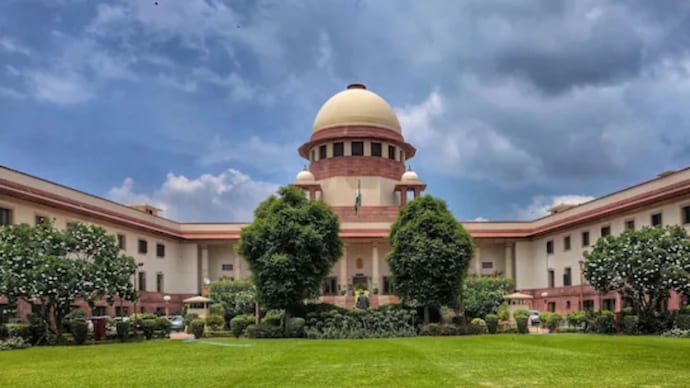
The Supreme Court on Tuesday refused to entertain a petition challenging provisions of the Scheduled Castes and Scheduled Tribes (Prevention of Atrocities) Act, 1989, including the changes introduced through the 2018 amendment. The petitioner had argued that the stringent provisions of the law could violate fundamental rights guaranteed under Articles 14, 21 and 22 of the Constitution and sought additional safeguards against arbitrary arrests and alleged misuse.
A three-judge bench comprising Chief Justice of India Surya Kant and Justices Joymalya Bagchi and V. Mohana held that the principal issues raised in the petition had already been examined by the Supreme Court. The bench pointed to the safeguards available under existing law and declined the request to reconsider the court’s earlier ruling that upheld the constitutional validity of the 2018 amendment.
The case is significant because the 2018 amendment restored several stringent provisions of the SC/ST Act after an earlier Supreme Court judgment had introduced procedural safeguards in cases registered under the statute. The latest proceedings leave that legal framework intact while making clear that individual cases involving allegations of misuse or unlawful arrest can still be examined by courts on their facts.
What did the petition challenging the SC/ST Act argue?
The petition was filed by Brijbhushan Saini and questioned the constitutional validity of provisions of the SC/ST Act, particularly those affected by the 2018 amendment. The petitioner argued that certain provisions could operate harshly against accused persons and sought protection against what was described as arbitrary arrest and malicious prosecution.
Appearing for the petitioner, advocate Hari Shankar Jain argued that the stringent provisions of the Legislation could result in arrests even in cases where allegations were subsequently found to be unsubstantiated. He also challenged restrictions surrounding anticipatory bail and argued that the statutory framework could facilitate the registration of false or motivated First Information Reports.
The petition relied on Articles 14, 21 and 22 of the Constitution. Article 14 guarantees equality before the law and equal protection of the laws. Article 21 protects life and personal liberty, while Article 22 contains constitutional protections relating to arrest and detention.
The arguments therefore raised a broader legal question about how the protections available to members of Scheduled Castes and Scheduled Tribes under a special criminal law should be balanced with procedural safeguards available to an accused person.
Why the 2018 amendment is at the centre of the dispute
The controversy surrounding the SC/ST Act’s arrest provisions goes back to the Supreme Court’s 2018 judgment in Dr Subhash Kashinath Mahajan v State of Maharashtra. In that case, the court had introduced certain safeguards concerning arrests under the statute.
Among the measures discussed in that judgment were preliminary inquiry in appropriate circumstances and approval before an arrest of a public servant or another category of accused. The judgment also held that anticipatory bail could be granted in appropriate cases despite the statutory restrictions.
The ruling prompted a legislative response from Parliament. The government brought in the Scheduled Castes and Scheduled Tribes (Prevention of Atrocities) Amendment Act, 2018, which inserted Section 18A into the statute.
Section 18A removed the requirement of a preliminary inquiry before registration of an FIR under the Act. It also dispensed with the requirement of prior approval before arrest and restored the statutory position restricting anticipatory bail in cases covered by the Act.
The amendment reflected Parliament’s decision to restore the stronger statutory protections available under the SC/ST Act after the 2018 Supreme Court judgment.
Supreme Court upheld the amendment in 2020
The constitutional validity of the 2018 amendment was subsequently considered by the Supreme Court in Prithvi Raj Chauhan v Union of India. On February 10, 2020, the court upheld the amendment and accepted the validity of the legislative changes restoring the stricter framework.
At the same time, the court recognised that the statutory bar on anticipatory bail did not completely remove the jurisdiction of courts in exceptional situations. The judicial framework therefore continued to distinguish between the general statutory rule and the power of courts to intervene where the facts of an individual case justified such intervention.
That earlier ruling became central to the proceedings before the bench on Tuesday. The judges indicated that the questions raised by the latest petition substantially overlapped with issues that had already been considered and decided.
Bench points to safeguards against arbitrary arrest
One of the important aspects of Tuesday’s hearing was the court’s discussion of safeguards that remain applicable even when an arrest is made under a special statute.
Justice Joymalya Bagchi observed that general principles governing arrest and personal liberty would continue to have relevance. Referring to the principles associated with the Supreme Court’s decision in Arnesh Kumar, she noted that Section 35 of the Bharatiya Nagarik Suraksha Sanhita, or BNSS, would also be a relevant consideration when an arrest is made under a special law.
The observation is important because the existence of a special statute does not mean that every arrest automatically becomes immune from judicial scrutiny. Arrest powers must still operate within the broader framework of criminal procedure and constitutional protections.
The court’s approach also means that concerns over unlawful or unjustified arrests are not necessarily required to be addressed by striking down the statutory provisions themselves. Judicial scrutiny can instead operate at the stage of individual cases.
Courts can examine whether a prima facie case exists
The bench also emphasised that courts retain the authority to examine the facts of individual cases. Justice Bagchi observed that courts have the power to examine whether a prima facie case is made out.
Justice V. Mohana similarly pointed out that an FIR invoking provisions of the SC/ST Act can be challenged and quashed on a case-to-case basis where the legal requirements are not satisfied.
This distinction is important in understanding the court’s latest decision. The dismissal of the constitutional challenge does not mean that every complaint registered under the SC/ST Act must automatically proceed to trial. Courts continue to possess powers to scrutinise individual allegations and procedural compliance.
The legal position therefore operates at two levels. Parliament has established a stringent statutory framework for offences covered by the SC/ST Act, while courts retain their authority to examine whether the law has been correctly invoked in a particular case.
Anticipatory bail remains a key point of contention
The petitioner’s challenge also focused heavily on the restrictions on anticipatory bail. Jain argued that limiting access to anticipatory bail could infringe the protections guaranteed under Article 21 and leave individuals vulnerable to arrest on the basis of false or malicious allegations.
The bench did not accept the argument as a basis for reopening the constitutional validity of the statutory framework.
Justice Bagchi observed that legislative choices of this nature fall within Parliament’s domain. During the hearing, she remarked, “We cannot sit in the armchair of the legislator.”
The observation reflects an important constitutional distinction. Parliament is responsible for determining the statutory framework, subject to constitutional limits, while courts determine whether legislation crosses those limits. The Supreme Court’s earlier decision in Prithvi Raj Chauhan had already examined the constitutional challenge to the 2018 amendment.
The latest bench consequently found no basis to revisit that determination merely because similar objections were raised again.
Petitioner raises concerns over alleged misuse
During the hearing, the petitioner also raised concerns about alleged misuse of the SC/ST Act and referred to compensation payments made under the statutory framework. Jain referred to an alleged distribution of around Rs 493 crore in compensation and questioned the legal basis for such payments.
He argued that some aspects of the law amounted to what he described as “reverse discrimination” and contended that the provisions could contribute to divisions within society.
Those assertions formed part of the petitioner’s argument and were not accepted by the Supreme Court as a reason to invalidate the law. The court instead focused on the existing constitutional and judicial safeguards available in individual cases.
The compensation mechanisms under the SC/ST framework are intended to provide relief to victims of offences covered by the law. Questions about the administration, eligibility and disbursement of such assistance can be considered through the applicable statutory and administrative processes and do not by themselves establish that the underlying legislation is unconstitutional.
Why the Supreme Court’s ruling matters
The decision preserves the legal framework Parliament established through the 2018 amendment. The preliminary inquiry requirement removed by Section 18A remains removed, prior approval for arrest is not a general prerequisite under the amended framework, and the statutory restriction on anticipatory bail remains in place.
At the same time, the court’s observations underline that these provisions do not eliminate judicial oversight. An accused person can still challenge the legality of an arrest or the continuation of criminal proceedings, depending on the circumstances of the case.
This distinction is particularly relevant in disputes involving special criminal statutes. A law can impose stricter conditions because Parliament considers certain offences to require stronger protection, while constitutional and procedural safeguards continue to operate around the exercise of police and judicial powers.
The Supreme Court’s latest order therefore does not amount to a declaration that allegations of misuse can never occur. Nor does it create a new blanket safeguard against arrests under the SC/ST Act. Instead, it maintains the existing statutory framework while reaffirming the role of courts in reviewing individual cases.
What the ruling means for future SC/ST Act cases
For police authorities, prosecutors, accused persons and complainants, the immediate legal position remains substantially unchanged. The 2018 amendment continues to govern the registration and investigation of offences under the Act, subject to the broader requirements of criminal procedure and constitutional law.
For accused persons, the court’s observations concerning Section 35 of the BNSS and judicial scrutiny provide an important reminder that arrest powers are not entirely beyond review. The legality and necessity of an arrest can remain relevant questions in appropriate proceedings.
For complainants and members of Scheduled Castes and Scheduled Tribes, the ruling preserves the stronger statutory protections that Parliament introduced after the 2018 judgment. The removal of preliminary inquiry and prior approval requirements remains part of the law, reflecting Parliament’s stated legislative response to the earlier judicial interpretation.
For the judiciary, the ruling reinforces the distinction between reviewing the constitutionality of legislation and examining the facts of an individual prosecution. The Supreme Court has already upheld the 2018 amendment, while lower courts retain the authority to deal with cases where the allegations do not establish a prima facie offence or where legal requirements have not been met.
Supreme Court declines to reopen settled constitutional questions
The Supreme Court’s decision ultimately rests on the fact that the central constitutional questions raised in the petition had already been considered. The bench relied on the safeguards and principles developed in earlier judgments rather than reopening the validity of the 2018 amendment.
The ruling leaves the SC/ST Act’s stringent provisions in force, including the restrictions restored through Section 18A. At the same time, the court’s observations make clear that the operation of the law remains subject to constitutional protections, criminal procedure and judicial scrutiny.
The broader legal balance remains between ensuring effective protection for communities covered by the SC/ST Act and preventing unlawful action in individual cases. Tuesday’s order does not remove that balance; instead, it places continued emphasis on existing judicial mechanisms for addressing disputes over arrest, prima facie allegations and the application of the statute.
For breaking news and live news updates, like us on Facebook or follow us on Twitter and Instagram. Read more on Latest India on thefoxdaily.com.






COMMENTS 0