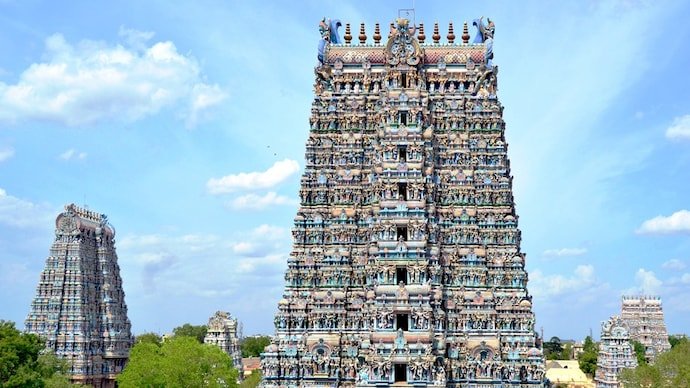
A major alleged land fraud involving property worth approximately Rs 60 crore has come to light in Tamil Nadu, where the Madurai City Central Crime Branch (CCB) has registered a criminal case against 19 individuals over the suspected illegal transfer of land belonging to a charitable trust associated with the renowned Meenakshi Sundareswarar Temple.
The disputed property spans around 1.79 acres on Alagar Kovil Road in Madurai and includes the historic Ashoka Vilas bungalow and its adjoining garden. According to investigators, the land was protected under the terms of a decades-old charitable trust and was never meant to be sold, mortgaged, or transferred. Authorities now allege that fraudulent patta transfers, forged registrations, and mortgage deeds were used to gain unlawful control over the property.
The case has drawn significant public attention because it involves one of Tamil Nadu’s most prominent temple institutions and raises broader concerns about the protection of religious and charitable trust properties across India.
What Is the Meenakshi Temple Land Grab Case?
According to the First Information Report (FIR), the disputed land belongs to a charitable trust created for the benefit of the Meenakshi Sundareswarar Temple and the Alagar Temple.
Officials allege that a group of individuals conspired to take control of the property by manipulating land records, registering documents contrary to legal restrictions, and creating mortgage transactions despite ongoing legal proceedings.
The complaint was filed jointly by the temple administration and the anti-corruption organization Arappor Iyakkam, following a review of historical ownership records and subsequent land transactions.
Case at a Glance
| Category | Details |
|---|---|
| Property Value | Approximately Rs 60 crore |
| Location | Alagar Kovil Road, Madurai, Tamil Nadu |
| Property Size | 1.79 acres |
| Property Owner | Charitable trust associated with Meenakshi Sundareswarar Temple |
| Accused | 19 individuals |
| Investigating Agency | Madurai City Central Crime Branch (CCB) |
| Current Status | FIR registered; investigation underway |
The 1930 Will That Protected the Property
A central piece of the Investigation is a will reportedly registered in 1930 at the Saidapet Sub-Registrar’s Office.
According to the complaint, the will established a charitable trust that owned the Ashoka Vilas bungalow and its surrounding land.
The trust reportedly contained strict conditions regarding the property’s use.
- The land could be leased.
- Ownership could not be transferred.
- The property could not be sold.
- Mortgaging the land was prohibited.
- The trust was intended to benefit temple-related charitable purposes.
Investigators allege that subsequent land transactions violated these long-standing legal restrictions.
How the Alleged Fraud Unfolded
According to the FIR, the alleged irregularities began in 2016.
Investigators claim that on June 24, 2016, the temple’s ownership was removed from official revenue records through an allegedly improper patta transfer.
The complaint alleges that ownership records were changed in favor of nine individuals despite the property’s trust status.
Authorities later reviewed the transaction after questions were raised about its legality.
Timeline of Key Events
| Year/Date | Development |
|---|---|
| 1930 | Will establishes charitable trust governing the property |
| June 24, 2016 | Alleged fraudulent patta transfer removes temple ownership from records |
| Later Review | Revenue Divisional Officer cancels the disputed patta transfer |
| High Court Proceedings | Madurai Bench grants interim relief during legal challenge |
| April 16, 2021 | General Power of Attorney allegedly registered despite disputes |
| July 19, 2021 | Mortgage deed allegedly executed on disputed property |
| 2026 | CCB registers FIR against 19 accused |
Revenue Authorities Reversed the Patta Transfer
Following scrutiny of the alleged irregularities, the Revenue Divisional Officer reportedly cancelled the disputed patta transfer.
Officials reaffirmed that the property belonged to the charitable trust and directed that revenue records be restored in the temple’s name.
The dispute also reached the Madurai Bench of the Madras High Court, which reportedly granted interim relief while legal proceedings continued.
Why the Mortgage Transaction Is Significant
Investigators allege that despite ongoing legal disputes and restrictions contained in the original trust documents, additional transactions were carried out involving the property.
According to the FIR:
- A General Power of Attorney (GPA) was registered in April 2021.
- A mortgage deed was subsequently registered in July 2021.
- These transactions allegedly occurred despite existing legal restrictions and court proceedings.
The investigation seeks to determine whether these registrations were executed lawfully or formed part of a larger conspiracy to gain control over the property.
What Is a Patta?
A patta is a revenue record maintained by state authorities that identifies the lawful holder of a piece of land for administrative and taxation purposes.
While a patta is an important land record, it does not by itself determine ownership in every legal dispute. Courts often examine:
- Sale deeds.
- Gift deeds.
- Trust documents.
- Registered wills.
- Revenue records.
- Historical title documents.
In cases involving charitable or religious trusts, the governing trust documents can play a decisive role in determining legal rights over the property.
Role of the Temple Administration
The complaint leading to the FIR was filed by the Joint Commissioner and Executive Officer of the Meenakshi Temple along with Arappor Iyakkam.
The complaint alleges that officials and private individuals acted together to facilitate unlawful transfers by:
- Changing revenue records.
- Registering disputed documents.
- Executing mortgage transactions.
- Ignoring restrictions contained in the trust.
The investigation will determine whether sufficient evidence exists to support these allegations.
Legal Provisions Invoked
The Madurai City Central Crime Branch has registered the case under provisions of the Bharatiya Nyaya Sanhita (BNS).
| Legal Provision | Purpose |
|---|---|
| Section 318(4) | Cheating |
| Section 61(2) | Criminal conspiracy |
Additional charges may be considered if investigators uncover further evidence during the course of the inquiry.
Why Temple Land Disputes Matter
Religious institutions across India collectively manage large amounts of land donated over centuries for charitable, educational, and religious purposes.
These properties often include:
- Agricultural land.
- Commercial buildings.
- Residential properties.
- Historic structures.
- Vacant urban land.
Protecting these assets is considered important because income generated from them frequently supports temple maintenance, religious activities, charitable programs, Education, and public welfare initiatives.
Comparison: Lawful Trust Management vs Alleged Fraudulent Transactions
| Lawful Trust Administration | Alleged Irregularities Under Investigation |
|---|---|
| Property managed according to trust deed | Alleged unauthorized patta transfers |
| Revenue records reflect trust ownership | Temple ownership allegedly removed from records |
| Transfers comply with legal restrictions | Documents allegedly registered despite restrictions |
| Court orders observed | Transactions allegedly continued during legal dispute |
Expert Insight: Historic Trust Properties Require Strong Record Protection
Legal experts frequently note that disputes involving charitable and religious trust properties often arise because ownership records span several decades and involve multiple government departments.
Digitization of land records, stricter verification during document registration, and closer coordination between revenue and registration authorities are increasingly viewed as important safeguards against fraudulent transactions.
Cases involving historically protected trust properties also highlight the importance of preserving archival documents such as registered wills and trust deeds, which can become critical evidence in ownership disputes.
What Happens Next?
The registration of an FIR marks the beginning of the criminal investigation rather than a determination of guilt.
Investigators are expected to examine:
- Historical ownership records.
- Revenue department files.
- Registration documents.
- Mortgage records.
- Witness statements.
- Official correspondence related to the property.
Depending on the evidence collected, authorities may file a chargesheet before the competent court for further judicial proceedings.
Future Outlook
The outcome of the investigation could have implications beyond this single property. It may influence how temple and charitable trust lands are monitored, how historical ownership records are verified, and how registration authorities process transactions involving protected properties.
The case is also likely to renew discussions about strengthening safeguards against fraudulent land transfers involving religious and charitable institutions across India.
Conclusion
The alleged Rs 60 crore Meenakshi Temple land grab has emerged as one of the most significant property fraud investigations involving a religious trust in recent times. Authorities allege that a series of fraudulent patta transfers, registrations, and mortgage transactions were used to gain control over land protected under a charitable trust established nearly a century ago.
With an FIR now registered against 19 individuals and investigations underway, officials will examine whether the disputed transactions violated trust conditions, revenue laws, and court orders. As the legal process unfolds, the case is expected to be closely watched for its potential impact on the protection and Governance of religious trust properties in India.
For breaking news and live news updates, like us on Facebook or follow us on Twitter and Instagram. Read more on Latest India on thefoxdaily.com.






COMMENTS 0