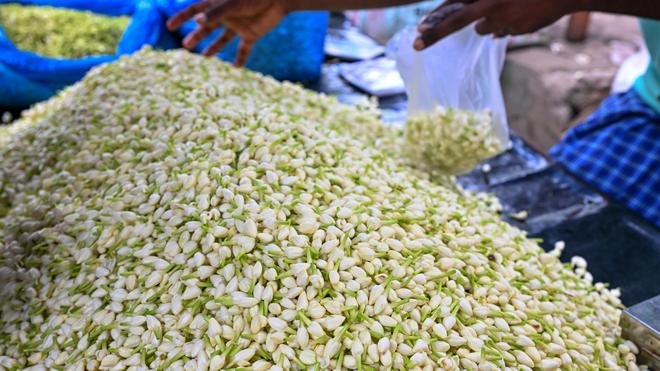
From jasmine and mullai to sevandhi and marigolds, the flowers in demand change with Madurai’s festivals and seasons. With around five tonnes of flowers being used for decorations during the Meenakshi Amman Temple’s Kumbabishekam, the city’s flower markets are reflecting the scale and variety of its religious celebrations. Each festival brings its own preferences, while familiar blooms continue to connect Madurai’s daily life with its temples, rituals and traditions.
Five Tonnes of Flowers for the Meenakshi Temple Kumbabishekam
The Meenakshi Amman Temple in Madurai is preparing for its Kumbabishekam with elaborate floral decorations. The large quantity of flowers required for the occasion highlights how closely flowers are woven into temple ceremonies in the city.
For devotees and visitors, the visual impact of the decorations is only one part of the story. Behind the arrangements are flower growers, wholesalers, retailers and decorators who work according to seasonal availability and the changing demands of Madurai’s festival calendar.
Different flowers bring different colours, fragrances and textures to temple spaces. Some are selected for their traditional association with worship, while others are valued for their ability to withstand the heat and remain visually attractive through long hours of decoration.
Jasmine Remains Closely Linked With Madurai
No discussion of Madurai’s flowers is complete without jasmine. The city is internationally associated with Madurai jasmine, locally known as Madurai Malli, prized for its fragrance and distinctive appearance.
Jasmine is widely used for garlands, hair adornment and religious offerings. Its strong fragrance makes it especially popular during temple festivals and auspicious occasions.
Mullai, another fragrant white flower, also occupies an important place in Tamil cultural traditions. Though jasmine and mullai may appear similar to those unfamiliar with the flowers, they have their own botanical identities and cultural associations.
Marigolds Bring Bright Colour to Temple Decorations
Marigolds are another staple of Indian religious decoration. Their yellow and orange shades can be used to create dense garlands, borders and large floral arrangements.
One practical reason for their popularity is their ability to work well in substantial decorations. Their strong visual presence makes them suitable for entrances, pillars, mandapams and other spaces where flowers need to create an immediate festive effect.
In Madurai, marigolds appear alongside locally preferred fragrant flowers, creating a combination of colour and scent that is characteristic of large temple celebrations.
Sevandhi Adds Another Seasonal Shade
Sevandhi, or chrysanthemum, is another familiar flower in Madurai’s markets. Available in several colours, it can be used both for individual offerings and larger decorative arrangements.
Its versatility makes sevandhi particularly useful when decorators need to work with a specific colour palette. White, yellow and other shades can be combined with jasmine, marigolds and foliage to create layered floral designs.
Champak and Other Fragrant Flowers
Champak, known for its intense fragrance and golden-yellow flowers, is another bloom associated with worship and traditional flower offerings.
Fragrant flowers have a special place in temple rituals because flowers are not used merely as visual decoration. Their scent contributes to the sensory atmosphere of a shrine, particularly during festivals when large quantities of flowers are brought into temple premises.
Depending on the season and availability, flower sellers and temple suppliers may also handle other varieties used for garlands, offerings and decorative work.
Madurai’s Flower Demand Changes With the Festival Calendar
The flower trade in Madurai follows a rhythm of its own. Demand rises around major festivals, weddings, religious ceremonies and auspicious days, but the preferred flowers can change depending on the occasion.
A temple festival may require large quantities of particular colours or varieties for decoration, while a wedding may generate greater demand for jasmine garlands and other fragrant flowers. During different seasons, availability and price also influence what consumers and decorators choose.
This means that the city’s flower markets are constantly adjusting to a combination of seasonality, religious traditions, local preferences and supply.
Flowers Are More Than Decoration in Temple Rituals
In Hindu worship, flowers are traditionally offered to deities as part of puja and other rituals. Their role can extend from small individual offerings to elaborate temple decorations created for major ceremonies.
The scale changes dramatically during an event such as a Kumbabishekam. Thousands of individual flowers may become part of garlands, floral panels, arrangements and other decorative elements across the temple complex.
The five-tonne requirement for the Meenakshi Temple ceremony illustrates the extensive network needed to supply flowers for a major religious event.
From Farms to Flower Markets
Every large temple flower order begins much earlier, with cultivation and harvesting. Flowers must be picked at the right stage, sorted and transported quickly, particularly in Madurai’s warm climate.
Wholesalers then distribute the produce to retailers, temple suppliers, decorators and individual customers. For delicate flowers such as jasmine, freshness is particularly important because fragrance and appearance can diminish with time.
Large festival orders can therefore create a temporary surge in demand throughout this supply chain, benefiting growers and traders while also putting pressure on availability and prices.
Why Jasmine, Marigold and Chrysanthemum Remain Popular
Each of the flowers seen in Madurai’s festival season serves a different purpose:
- Jasmine and mullai: valued for their fragrance and traditional use in garlands and offerings.
- Marigold: popular for its vivid yellow and orange colours and suitability for large decorations.
- Sevandhi: available in multiple colours and useful for creating varied floral designs.
- Champak: appreciated for its distinctive fragrance and association with worship.
Together, these flowers create a balance of fragrance, colour and texture that can transform temple spaces during major celebrations.
A City Coloured by Its Flower Traditions
Madurai’s relationship with flowers extends beyond the temple. Jasmine strands are a familiar sight in markets and streets, flowers are bought for homes and family functions, and garlands remain an important part of ceremonies and celebrations.
During major festivals, however, the scale becomes extraordinary. Orders that run into tonnes turn flowers into an important part of the city’s temporary festival economy, connecting agricultural production with religious and cultural life.
Meenakshi Temple Kumbabishekam Highlights Madurai’s Floral Heritage
The five tonnes of flowers being used for the Meenakshi Temple Kumbabishekam decorations offer a glimpse into the role flowers continue to play in Madurai’s religious traditions. From the unmistakable fragrance of jasmine and mullai to the bright presence of marigolds and sevandhi, each flower contributes something different to the festival landscape.
As Madurai moves through its calendar of temple festivals, weddings and seasonal celebrations, the demand for flowers will continue to change. But the relationship between the city and its blooms remains constant: flowers are not simply something to look at. They are part of the fragrance, ritual, memory and identity of Madurai’s celebrations.
For breaking news and live news updates, like us on Facebook or follow us on Twitter and Instagram. Read more on Latest Lifestyle on thefoxdaily.com.

COMMENTS 0