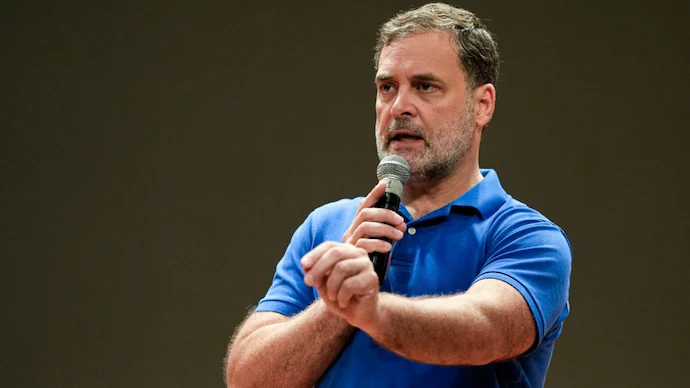
Congress leader Rahul Gandhi has accused the BJP government in Uttarakhand of exaggerating its investment achievements, alleging that investments exist only on paper while employment opportunities remain limited to political slogans. He has demanded that Chief Minister Pushkar Singh Dhami release the complete list of 3,300 investors cited by the state government.
The allegations focus on the Uttarakhand Global Investors Summit, which the government promoted as a major initiative to attract businesses, investment and employment to the state. Gandhi has questioned how the administration calculated its investment figures and whether the reported commitments have translated into actual economic activity.
Sharing a media report on social media, the Leader of the Opposition in the Lok Sabha alleged that several entities were counted among the state’s investors despite questions about their financial records, employment figures and contribution to new investment.
The dispute has brought scrutiny to the difference between investment proposals signed at a summit and projects that subsequently become operational. It has also placed the BJP government’s development claims under renewed political pressure ahead of the next Uttarakhand Assembly elections.
Rahul Gandhi Calls Uttarakhand Investment Drive a ‘Sham’
In a Hindi post on X, Gandhi criticised the Dhami government’s approach to attracting investment, describing the initiative as an example of what he called the BJP’s double-engine model of governance.
“A sham by the Pushkar Dhami government in the name of investment in Uttarakhand yet another example of the BJP’s ‘double-engine’ model,” Gandhi said, according to the report shared by him.
Gandhi alleged that the government had made extensive claims about investment commitments but had not adequately demonstrated how those promises translated into economic activity on the ground.
His criticism centres on figures associated with the Global Investors Summit, including the value of memoranda of understanding signed, public expenditure on promotional roadshows and the government’s subsequent claim that a substantial amount of investment had been realised.
The Congress leader has argued that these figures should be examined against the actual financial and operational status of the entities identified as investors.
Rs 3.56 Lakh Crore in MoUs and Rs 100 Crore in Roadshows
According to the figures cited by Gandhi and reported by the Press Trust of India (PTI), the Uttarakhand Global Investors Summit resulted in the signing of 1,779 memoranda of understanding worth Rs 3.56 lakh crore.
The government also reportedly spent nearly Rs 100 crore of public money on roadshows intended to attract investment and promote Uttarakhand as a business destination.
Following the summit, the state government claimed that investments worth Rs 1 lakh crore had been realised on the ground. Gandhi has questioned the credibility of the reported progress and called for greater transparency about the companies and organisations included in the figures.
The distinction between signed agreements and realised investment is central to the dispute. A memorandum of understanding generally records an intention or commitment to pursue a project, but it does not necessarily mean that the proposed investment has been fully deployed.
Projects may require further approvals, financing, land arrangements and other preparations before construction or commercial operations begin. Consequently, the value of signed MoUs and the amount of investment actually implemented can differ significantly.
To assess the government’s performance, the underlying figures would need to show how much capital has been invested, which projects have advanced and how many jobs have been created. Gandhi’s demand for the full investor list reflects his argument that the headline figures require closer examination.
Rahul Gandhi Questions the Classification of Investors
One of Gandhi’s main allegations concerns the types of organisations included in Uttarakhand’s investor figures. Sharing the media report, he claimed that public sector undertakings, fertiliser shops and flour mills were counted among the investors following the summit.
He also cited examples that he said raised questions about how investment contributions were recorded.
According to Gandhi, a school funded through corporate social responsibility contributions and donations was categorised as an investor contributing Rs 24.49 crore. He also referred to another entity credited with Rs 1,200 crore in investment, alleging that it had reported no earnings for four years and listed no employees in its records.
These examples form part of the Congress leader’s challenge to the state’s reported investment achievements. He has argued that the inclusion of such entities requires the government to explain the criteria used to classify investors and calculate the amount of investment attributed to them.
However, the allegations do not by themselves establish that the figures are incorrect. Determining whether an entity was properly classified would require examination of the relevant records, the definition of investment applied by the government and the nature of the projects associated with each entry.
The state government’s methodology and supporting documentation are therefore important to resolving the dispute. A complete list of investors, together with project details and implementation status, would allow the reported figures to be assessed more clearly.
Dubai and London Roadshows Under Scrutiny
Gandhi also questioned the results of investment roadshows organised in Dubai and London. According to his statement, the events were claimed to have generated investment proposals worth Rs 27,975 crore.
He alleged that neither city had any company represented on the list of investors whose investments had subsequently been reported as realised on the ground.
“Roadshows in Dubai and London were claimed to have generated Rs 27,975 crore in investments; yet, not a single company from either city appears on the list of investors who have actually ‘invested on the ground’,” Gandhi said.
The allegation raises a question about how the government tracks commitments made during promotional events and reports their progress afterward.
International roadshows are often organised to introduce investors to business opportunities, explain policy incentives and encourage companies to explore projects in a particular region. However, expressions of interest and preliminary agreements do not automatically result in completed investments.
To evaluate the outcome of the Dubai and London events, it would be necessary to identify the companies involved, examine the commitments they made and determine whether their projects progressed to implementation.
The absence of companies from a particular list, as alleged by Gandhi, would need to be assessed against the scope and criteria of that list before conclusions could be drawn about the overall performance of the roadshows.
Alleged Change in Investment Definition Before the Summit
Another part of Gandhi’s criticism concerns the definition of investment used by the Uttarakhand government.
The Congress leader alleged that the definition was diluted on December 1, 2023, seven days before the Global Investors Summit. He described the sequence as an example of changing the rules before presenting the investment figures.
The allegation raises a methodological issue: changes in the criteria used to classify or measure investment can affect the figures reported by a government.
For example, the totals may differ depending on whether the calculation includes only capital already deployed or also counts commitments, projects at preliminary stages and other forms of economic activity. The precise effect of any change depends on the wording of the revised definition and how the administration applied it.
Establishing whether the definition was changed as Gandhi alleged, and whether the change materially affected the reported totals, would require a comparison of the relevant government notifications and the underlying investment records.
Without that documentation, the allegation remains a claim made by the Congress leader rather than an independently established finding.
Rahul Gandhi Demands Full List of 3,300 Investors
Gandhi has called on Chief Minister Pushkar Singh Dhami to release the complete list of the 3,300 investors referenced in the controversy.
“The chief minister must make the full list of these 3,300 ‘investors’ public. Investments exist only on paper, jobs exist only in slogans. And for the youngsters of Uttarakhand? Nothing but paper leaks,” Gandhi said, according to PTI.
The demand is intended to place the names and records of the reported investors at the centre of the debate. Public disclosure could help clarify which entities were counted, how much investment was attributed to each and whether the associated projects have progressed.
Useful information would include the names of investors, the sectors in which they operate, the locations of proposed projects, the investment amounts announced and the status of implementation. Details about employment commitments and jobs actually created would also help distinguish between projected benefits and measurable outcomes.
Such information would allow the public to examine the government’s claims beyond the headline figures announced after the summit.
Investment Claims and Employment Remain Key Questions
Gandhi’s criticism also focuses on the relationship between investment announcements and job creation. He has alleged that Uttarakhand’s young people have not received the promised benefits, describing employment claims as slogans and referring to paper leaks as a continuing concern.
Investment can support employment by financing factories, infrastructure, services and other business activities. However, the number and quality of jobs created depend on the nature of the projects, the amount of capital actually deployed, the skills required and whether businesses begin operating as planned.
Investment commitments alone cannot establish how many jobs have been created. A more complete assessment would compare employment targets with actual hiring and examine whether projects are operational.
Gandhi’s allegations therefore raise two related questions for the state government: how much of the announced investment has been implemented, and what measurable employment benefits have followed?
Answering those questions would require project-level information rather than relying solely on the total value of agreements signed at the summit.
Uttarakhand Investment Row Ahead of Assembly Elections
The controversy comes as Uttarakhand prepares for its next Assembly elections, scheduled for early next year according to the supplied report. Investment, employment and the opportunities available to young people are likely to remain important issues in the political debate.
For the BJP government led by Dhami, the investment summit forms part of its development narrative. For Congress, the figures provide an opportunity to challenge the administration’s claims and demand evidence that announced projects have translated into economic activity.
The competing positions reflect a broader political debate over how governments should demonstrate development outcomes. Large investment commitments can signal interest from businesses, but their economic significance depends on implementation, capital expenditure and the benefits delivered to local communities.
The controversy cannot be settled by the total value of MoUs alone. It requires a clearer picture of the projects that have progressed, the money invested and the employment opportunities created.
What Needs to Be Verified in the Investment Dispute?
The central issue is whether the Uttarakhand government’s reported investment figures accurately reflect the progress of projects associated with the Global Investors Summit.
Several details would help establish a clearer picture: the official definition of realised investment, the complete list of investors, the financial status of the entities cited by Gandhi, the progress of projects linked to the Dubai and London roadshows, and the number of jobs created against announced targets.
The allegations concerning the December 1, 2023, change in the investment definition would also need to be examined through the relevant official documents.
Until those details are available and assessed, Gandhi’s claims should be understood as political allegations requiring documentary scrutiny. The demand for transparency, however, highlights the importance of measuring investment initiatives through verifiable outcomes rather than announcements alone.
As the political debate intensifies ahead of the Assembly elections, the disclosure of detailed investment and employment data could help clarify the gap, if any, between commitments announced at the summit and projects implemented on the ground.
For breaking news and live news updates, like us on Facebook or follow us on Twitter and Instagram. Read more on Latest India on thefoxdaily.com.




COMMENTS 0