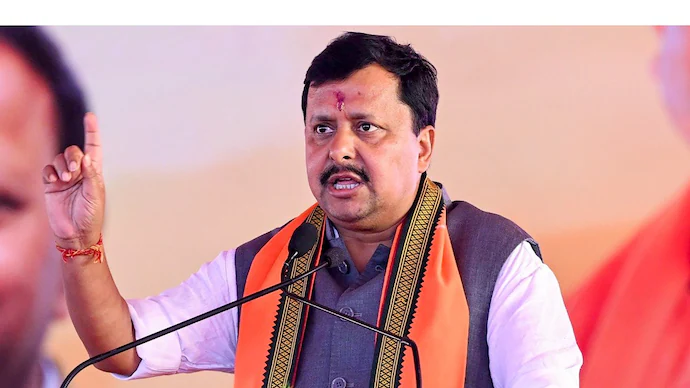
The Bharatiya Janata Party (BJP) is promoting younger politicians within its organisation, but its latest youth-wing appointments suggest that advancement comes with carefully defined limits. The party’s new leadership lists for the Bharatiya Janata Yuva Morcha (BJYM) show a preference for first-time winners, grassroots organisers and leaders without established political family networks, while several young legislators with greater public visibility remain outside the organisation’s national structure.
The appointments, announced on October 20 and 21, 2026, offer a glimpse into how the ruling party manages its next generation of political talent. Young leaders can gain organisational experience, build networks and establish their credentials, but the party leadership retains control over who receives these opportunities and which roles they occupy.
The distinction matters because political advancement within the BJP can follow different routes. Some leaders move through the party organisation, while others enter government and pursue ministerial responsibilities. The party’s rules governing organisational posts and government positions further shape those choices, leaving young legislators dependent on decisions made by senior leadership.
What the BJP’s latest youth-wing appointments reveal
Late on October 20, the BJP announced seven vice-presidents, three general secretaries and seven secretaries for the BJYM. The following morning, it released a separate list naming 34 members of the organisation’s national executive.
Four BJP legislators aged 35 or younger featured across the two lists. Hemang Joshi, the 35-year-old MP from Vadodara who has led the youth wing since August, remains at the centre of the organisation. Shagun Parihar, 31, an MLA from Kishtwar in Jammu and Kashmir, and Soumen Karfa, 34, who represents Bhatar in West Bengal, were appointed national vice-presidents. Maithili Thakur, the 26-year-old folk singer and MLA from Alinagar in Bihar, secured a place on the national executive but did not receive an office-bearing position.
At least four other young legislators were absent from both lists: Anshuman Singh Bhati, 29, the youngest BJP MLA in Rajasthan; Umang Bajaj, 33, the youngest member of the Delhi Assembly; Hardik Patel, 33, the former Congress leader associated with the Patidar agitation in Gujarat; and Arijit Roy, a West Bengal MLA who turned 35 the day before the first announcement.
The contrast does not establish a single reason for every omission. Government responsibilities, existing organisational positions, political background and local circumstances differ among the legislators. Nevertheless, the appointments provide a basis for examining the criteria that appear to influence the party’s selection of younger leaders.
Shagun Parihar and Soumen Karfa: The leaders the BJP chose to promote
Parihar and Karfa stand out because both received national vice-presidencies despite being relatively new legislators. Their political journeys also differ from those of several young figures who have already developed prominent public profiles or arrived in the BJP from other political backgrounds.
Parihar’s rise followed a family tragedy. In 2018, when she was 23, gunmen in Kishtwar killed her father and uncle, both BJP workers. Six years later, the BJP nominated her for the Kishtwar Assembly seat, which is in a Muslim-majority area and had been held by the National Conference for two consecutive terms. Parihar won by 521 votes.
Her appointment to the BJYM’s national leadership gives her a role beyond her constituency. It also places a first-term legislator from Jammu and Kashmir within the party’s organisational network, where she can gain experience and visibility beyond the state legislature.
Karfa’s electoral breakthrough came in a different political setting. Bhatar had been associated with the Left for three decades before becoming a Trinamool Congress stronghold. Karfa won the seat for the BJP in April, securing victory by 6,528 votes.
Before the election, Karfa was little known outside his district, according to the supplied report. His elevation to national vice-president therefore represents a significant organisational opportunity for a first-term MLA who helped the BJP win a seat it had not previously held.
The party has a history of using the youth wing as a training ground for future leaders. Rajnath Singh headed the organisation in 1988, while Shivraj Singh Chouhan led it in 2000. Both subsequently built substantial political careers, illustrating how a youth-wing role can provide organisational experience and a route to wider responsibilities.
Karfa and Parihar’s appointments fit that tradition. Their elevation suggests that the party is willing to invest in legislators whose electoral victories expand its presence, even if they do not yet command national recognition.
Why Maithili Thakur received an executive role instead of a top post
Maithili Thakur occupies a different position within the BJP’s younger generation. A well-known folk singer before entering electoral politics, she is among the party’s most recognisable young faces in Bihar and the only celebrity included in the two newly announced lists.
Thakur won the Alinagar Assembly seat in Bihar in the election described in the supplied report. Her inclusion on the BJYM’s national executive gives her an organisational platform, but she was not appointed among the national office-bearers.
The distinction is important. Executive membership provides a place within the organisation, while an office-bearing role can carry more direct responsibility for its day-to-day political work. Thakur’s appointment therefore offers organisational access without placing her in one of the youth wing’s principal leadership positions.
The reason for that decision has not been publicly established in the supplied material. It could reflect a preference to give a new legislator time to learn the organisation, or a decision to use her public profile in other ways. Those possibilities remain interpretations rather than confirmed explanations.
Her appointment nevertheless illustrates that public popularity and organisational rank are not necessarily the same thing within the BJP. A prominent public figure can be included in the party’s structure without immediately receiving one of its leading posts.
Hardik Patel’s uncertain position in Gujarat politics
Among the young legislators left off the lists, Hardik Patel’s position is particularly notable. He became nationally recognised through the Patidar agitation before joining the Congress and later moving to the BJP in 2022.
Patel was not included in the Gujarat cabinet expansion in October 2025, when Harsh Sanghavi became deputy chief minister and Rivaba Jadeja entered the cabinet, according to the supplied account. Two months earlier, Patel had written to the chief minister threatening to undertake a fast over stalled development works in Viramgam, the constituency he represents.
In May, Patel was given an Assembly committee assignment. The supplied report characterises that responsibility as a possible consolation, but the appointment itself does not establish what the party intended. His absence from the BJYM lists leaves his immediate organisational role unchanged.
Patel’s case highlights the uncertainty facing a young politician whose public profile predates his entry into the BJP. Electoral recognition and media visibility can help a politician build a personal following, but they do not automatically translate into a cabinet position or a national party role.
His trajectory also differs from that of leaders such as Karfa, whose organisational elevation followed a first electoral victory for the BJP in a constituency it had not previously held. The contrast raises questions about how the party balances a leader’s existing public prominence against its preferences for organisational experience and political background.
Why Umang Bajaj, Anshuman Singh Bhati and Arijit Roy were left out
The other omissions show why the appointments cannot be explained through age or legislative status alone.
Umang Bajaj, 33, represents a constituency in Delhi and chairs the Delhi Assembly’s education committee. The supplied report notes that his public profile has remained largely limited to that role. It also says the party has not clearly explained whether an Assembly committee position falls under its one-person-one-post principle.
Anshuman Singh Bhati, 29, became the youngest BJP MLA in Rajasthan and entered politics with a significant family legacy. His grandfather, Devi Singh Bhati, represented the Kolayat constituency for 33 years. Devi Singh left the BJP for five years before returning in 2023, saying his grievances had been resolved. His grandson received the party ticket within weeks of that return.
In July, a public hearing held by a minister in Kolayat became a local controversy after stage banners reportedly omitted the sitting MLA’s name and photograph. Bhati’s supporters protested, and the minister apologised on stage. The incident provides context for the local political tensions described in the report, but it does not by itself explain why Bhati was excluded from the national youth-wing appointments.
Arijit Roy, who represents Barabani in West Bengal, has a different organisational background. Before the election, he served as the BJP’s district general secretary in Paschim Bardhaman. His father had contested the Barabani seat for the BJP in 2016, and local workers reportedly expressed concerns about another ticket going to the family.
If Roy continues to hold his district-level organisational position, the party’s one-person-one-post rule could help explain why he did not receive a national youth-wing role. The supplied report, however, does not conclusively establish whether that is the reason for his omission.
Considered together, the four cases demonstrate that a young legislator’s absence from the list can arise from different circumstances. Political background, family connections, existing responsibilities and the party’s organisational calculations may all matter, but the evidence does not support treating every omission as a deliberate punishment or rejection.
The BJP’s preference for grassroots organisers
The wider composition of the BJYM leadership offers another clue to the party’s approach. The 17 office-bearers include few figures widely recognised by a national television audience. Instead, the list features people with backgrounds in state-level organisation, student politics and local party work.
Under Tejasvi Surya’s leadership in 2021, the youth wing included figures such as Tejinder Pal Singh Bagga and Rohit Chahal from Delhi, both familiar to television audiences. Madhukeshwar Desai, a Mumbai lawyer who had become a vice-president at 25, was another prominent name.
The new team is more heavily oriented towards organisers whose political work has taken place within state and regional structures. Nikhil Mani Tiwari, from Chandadih village in Ballia, worked in the Lucknow region as the BJYM’s Awadh regional general secretary and has never contested an election. Harsh Vardhan Singh of Ayodhya, a state general secretary, was considered for the Ayodhya Assembly ticket in 2022 before the nomination went elsewhere.
Arvind Damani, an organiser from Dimapur, has spent a decade in the Nagaland youth wing and now represents the state at the national level. His elevation reflects a model of political advancement based on long-term organisational involvement rather than prior electoral success or national celebrity.
Arpita Aparajita Badajena of Bhubaneswar is the only member of Surya’s 17 office-bearers to remain in the new team. A former student-union general secretary and Akhil Bharatiya Vidyarthi Parishad state executive member, she had become Odisha BJYM secretary by 2017 and is now a national general secretary.
Vineet Vats Tyagi, who managed Surya’s central office, has been appointed treasurer. Maharashtra’s secretary is Sayali Kulkarni, a sitting Mumbai corporator, while Jharkhand’s representation goes to Aman Yadav from the Sisai block in Gumla. The report describes Yadav as an Other Backward Classes organiser working in a tribal district where the BJP has struggled.
The policy cell, newly created for this team, has gone to Akhila Bandam, a LAMP fellow and Chevening scholar at University College London. Her placement in a staff-oriented policy role, rather than a prominent political office, adds another example of how the party separates specialist expertise from its public-facing leadership positions.
The overall pattern points to the value the BJP places on sustained organisational work. Regional experience, student politics and the ability to operate within party structures appear prominently in the profiles of the new office-bearers.
Age limits, central control and the one-person-one-post rule
The new appointments also reflect a tighter application of organisational rules. The BJYM’s stated age limit is 35, although the supplied report notes that it had not always been consistently enforced. Madhukeshwar Desai, now 39, is out of the new team, while Roy turned 35 one day before the first letter was issued.
The speed of the appointments is another point of difference. Surya took 10 months to announce his team, while Joshi named his office-bearers within seven weeks of taking charge. The appointment letter said the names were issued on the orders of the BJP’s national president.
The new youth-wing list is part of a broader organisational reshuffle that began in August. Nitin Nabin retained one of 11 national secretaries and replaced the heads of the party’s morchas and cells, with many new appointments drawn from state units.
These decisions show the importance of central approval in determining who advances within the organisation. A young politician may build a local following or establish a record of party work, but a national appointment ultimately depends on the leadership’s selection.
The BJP’s one-person-one-post principle creates an additional division between government and party responsibilities. Ministers are expected to serve in government rather than simultaneously hold organisational office. Biraj Biswas, a minister of state for law in West Bengal, is therefore outside the youth-wing leadership structure. The same principle applies to Shreyasi Singh, the Jamui MLA who became the youngest minister in Bihar’s cabinet at 35.
Legislators who are not ministers can hold organisational positions, as Joshi demonstrates by leading the BJYM while serving as an MP. The result is a choice between different routes: government office may offer a faster path to executive responsibility, while party organisation can provide a slower route through grassroots work and internal leadership roles.
Does the BJP apply the same standards to senior leaders?
The apparent emphasis on organisational background among youth-wing office-bearers contrasts with the more varied political histories of some senior BJP leaders.
Nabin’s senior team includes Manpreet Singh Badal, who joined the BJP after being associated with the Akali Dal and the Congress, and Baijayant Jay Panda, formerly of the Biju Janata Dal. The one national secretary retained in the reshuffle is the son of a Congress defence minister. Nabin himself entered the Bihar Assembly in 2006 by winning the seat his father had represented for seven terms.
These examples illustrate that political background is not an absolute barrier to advancement within the BJP. Leaders who have switched parties, come from established political families or built their careers outside the organisation can hold senior roles.
The distinction described in the supplied report is one of function: youth-wing positions are presented as rewards for organisational work, while senior leadership appointments can accommodate politicians whose electoral strength or political experience makes them useful to the party.
That division can be understood as a form of political management. A party may want its younger cadre to learn internal organisation and build a record before moving into higher office, while relying on more established figures to win elections or manage senior responsibilities. Whether this approach is applied consistently is harder to establish from the appointment lists alone.
What career path does the BJP offer young legislators?
For a young BJP legislator, an organisational appointment can bring a title, access to party networks and an opportunity to work on campaigns across several states. The supplied report notes that seven states are due to vote the following year, with Uttar Pradesh receiving particular attention. The state has three senior youth-wing posts and five national executive positions, giving Joshi’s team a substantial organisational presence there.
Such assignments can offer experience in campaign coordination, cadre management and communication with local party units. They may also help leaders establish relationships beyond their constituencies, although the eventual political benefit depends on the work they do and how the party evaluates it.
Legislators who enter government follow a different path and, under the party’s stated rule, cannot simultaneously hold a party organisational post. Those who receive neither a ministerial role nor an organisational appointment have no clearly defined route to advancement in the cases described.
Hardik Patel illustrates that uncertainty. Four years after entering the BJP, he remains a recognisable young legislator in Gujarat but was not included in the new youth-wing structure. His Assembly committee assignment gives him a responsibility, yet the latest appointments do not provide a new national organisational role.
The broader question is whether the BJP’s system creates a dependable ladder for young politicians or leaves advancement largely dependent on individual decisions by senior leaders. The appointments establish which figures have received organisational opportunities, but they do not reveal a formal, guaranteed path from youth-wing office to ministerial or senior party leadership.
The lesson from the previous BJYM leadership
The experience of the 2021 team provides a useful comparison. Surya’s leadership group was also presented as a potential bench for the future. Five years later, the best-known members of that team were largely those who had already possessed public visibility when they were appointed.
Surya left the youth-wing leadership in August amid reports that he had wanted a cabinet berth that did not materialise. The supplied report does not establish the private reasons behind that outcome, but it highlights the uncertainty attached to organisational appointments: a prominent role can create opportunities without guaranteeing the next promotion.
The current list signals a different emphasis. Grassroots organisers have been placed ahead of some high-profile public figures, first-time winners from constituencies newly won by the BJP have received prominent roles, and Thakur has entered the executive without becoming an office-bearer.
Those choices offer a snapshot of the party’s priorities at this stage, rather than proof of how every young leader’s career will develop. The office-bearers and executive members now have time to demonstrate whether organisational experience translates into greater influence and future responsibilities.
Why the BJP keeps its young leaders within defined limits
The BJP’s latest youth-wing appointments reveal a system that promotes younger politicians while maintaining central control over the opportunities available to them. For some, such as Parihar and Karfa, a national organisational role offers a route to wider recognition after a first electoral victory. For others, including Thakur, executive membership provides a place in the party structure without immediate elevation to a leading post.
The omissions are more complicated. Patel’s political trajectory, Bajaj’s Assembly responsibilities, Bhati’s family legacy and Roy’s existing organisational background differ too much to support one explanation for all four. The one-person-one-post rule and the party’s age limit help explain some decisions, but the supplied evidence does not establish every motive behind the selections.
What is clear is that youth-wing advancement is neither automatic nor determined by age alone. Organisational work, electoral background, current responsibilities and approval from senior leadership all shape who receives a national role.
The party’s approach offers young politicians a route to develop their careers, but it does not guarantee a clear next step. As the new team works towards the elections ahead of 2029, its members will have to demonstrate the value of the opportunities they have received. For those left outside the structure, the question of when and how their next opportunity will arrive remains open.
For breaking news and live news updates, like us on Facebook or follow us on Twitter and Instagram. Read more on Latest India on thefoxdaily.com.




COMMENTS 0