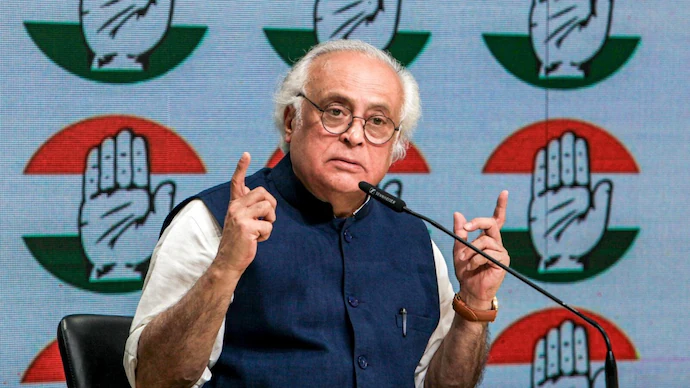
The Congress on Thursday hit back at Prime Minister Narendra Modi over his remarks on the party’s performance in the recent Legislative Council elections, urging him to stop “trolling” the opposition and reflect on the Bharatiya Janata Party’s (BJP) defeats in both seats in his parliamentary constituency of Varanasi.
Congress general secretary in charge of communications Jairam Ramesh said voters in several cities, including Varanasi, Nagpur, Lucknow, Prayagraj and Patna, had sent a message about the government’s policies through their electoral choices. He described the results as a “no-confidence motion” against the Prime Minister’s policies.
Ramesh’s remarks came amid a political exchange over the BJP-led National Democratic Alliance’s performance in Legislative Council elections across four states. While the BJP and its allies secured a majority of the contested seats, the Congress questioned Modi’s criticism of the opposition and pointed to the BJP’s losses in Varanasi and Nagpur.
Jairam Ramesh asks Modi to reflect on BJP’s Varanasi defeat
In a post written in Hindi on X, Ramesh argued that the Prime Minister should examine the BJP’s electoral setbacks before commenting on the Congress’s performance.
“The Prime Minister needs to introspect, but instead, he’s sermonising others! Before counting Congress’s seats, I wish he’d also reflect on why the BJP lost both seats in his own parliamentary constituency of Varanasi, and how Congress managed to defeat the BJP in RSS’s stronghold of Nagpur?” Ramesh said.
The Congress leader used the results to challenge the Prime Minister’s criticism of the opposition. His remarks focused particularly on Varanasi, which Modi represents in the Lok Sabha, and Nagpur, which Ramesh described as a stronghold of the Rashtriya Swayamsevak Sangh (RSS).
Ramesh also accused Modi of being disconnected from economic concerns affecting households and young people. He argued that the Prime Minister should address issues such as inflation, unemployment and weak private investment instead of using election results to criticise political opponents.
“Mr. Modi, stop the trolling. Crores of families are reeling from back-breaking inflation, the youth are unemployed, and private investment has ground to a halt,” Ramesh said.
He urged the Prime Minister to set aside what he described as arrogance and reflect on the concerns raised by voters. Ramesh maintained that the election results from multiple cities should prompt the government to reassess its policies.
Congress calls election results a verdict on government policies
Expanding his criticism beyond Varanasi and Nagpur, Ramesh referred to results from Lucknow, Prayagraj and Patna. He argued that the electoral outcomes in these cities represented a broader message about public dissatisfaction with the government’s approach.
“From Varanasi and Nagpur to Lucknow, Prayagraj, and Patna, the people have clearly passed a no-confidence motion against your policies,” the Congress leader said.
The remark was a political interpretation of the election results rather than a formal parliamentary no-confidence motion. Ramesh used the phrase to argue that voters had expressed dissatisfaction with the policies pursued by the Prime Minister and the BJP-led government.
The BJP and its allies, however, won 16 of the 28 seats in Legislative Council elections held across four states. The Congress secured one seat, while the Samajwadi Party won five seats in Uttar Pradesh, including two in Varanasi.
The results therefore provided both sides with different points to emphasise. The BJP-led alliance could point to its overall tally, while the Congress highlighted specific defeats and sought to challenge the government’s interpretation of the outcome.
Modi’s remarks trigger another Congress-BJP confrontation
The latest exchange followed Modi’s criticism of the Congress over its performance in the Legislative Council elections. The Prime Minister reportedly taunted the party over its poor showing despite the use of paper ballots, an electoral method that several opposition parties have advocated as an alternative to electronic voting machines (EVMs).
The Congress responded by challenging Modi to demonstrate confidence in the BJP’s electoral strength through action rather than rhetoric. The party argued that if the Prime Minister believed EVMs did not influence election outcomes, he should agree to the use of paper ballots in future Lok Sabha and Assembly elections.
The demand linked the immediate dispute over the MLC results to the wider political debate about India’s voting system. Opposition parties have raised concerns about EVMs and called for greater reliance on ballot papers, while the Congress used Modi’s remarks to question whether the BJP would accept its proposed alternative.
By pointing to the use of paper ballots in the Legislative Council elections, Modi’s criticism placed the opposition’s performance at the centre of the debate. The Congress countered by arguing that the results should also be examined in terms of the BJP’s losses in constituencies where it had expected to perform strongly.
Congress challenges BJP over EVMs and ballot papers
On Wednesday, the Congress called on Modi to commit to holding all future Lok Sabha and Assembly elections using ballot papers if he was convinced that EVMs had no bearing on electoral outcomes.
The party’s challenge was framed as a test of the Prime Minister’s confidence in the BJP’s electoral strength. Congress leaders argued that support for ballot-paper voting would demonstrate whether the ruling party was willing to accept the opposition’s preferred method of conducting elections.
The dispute reflects a broader political disagreement over electoral procedures. While the Congress and other opposition parties have questioned the use of EVMs, the immediate exchange centred on Modi’s remarks about the opposition’s performance in elections conducted using paper ballots.
The Congress sought to turn that criticism back on the BJP by pointing to the party’s defeats in Varanasi and Nagpur. Ramesh’s comments also attempted to shift the discussion from the number of seats won to broader concerns about economic conditions and the government’s policies.
BJP-led alliance wins 16 of 28 MLC seats
The BJP and its National Democratic Alliance partners won 16 of the 28 seats contested in Legislative Council elections held across four states, according to the results cited in the supplied report.
The Congress won one seat, while the Samajwadi Party secured five seats in Uttar Pradesh. The Samajwadi Party’s tally included two seats in Varanasi, where the BJP lost both contested seats in the constituency.
The results became the basis for competing political arguments. The BJP’s overall tally gave the ruling alliance a clear majority of the seats, while the Congress focused on the opposition’s victories and the BJP’s losses in specific constituencies.
For Ramesh, the defeats in Varanasi and Nagpur offered grounds to question the Prime Minister’s criticism of the Congress. His comments suggested that the BJP should examine the results in areas where it suffered setbacks rather than focus exclusively on the opposition’s performance.
The election figures alone do not establish that voters across all the cities mentioned by Ramesh rejected the government’s policies. His “no-confidence motion” description represents the Congress’s political assessment of the results, while the overall seat tally shows that the BJP-led alliance won more seats than any other political grouping in the elections covered by the report.
Inflation, unemployment and investment enter the political debate
Ramesh’s criticism extended beyond the election results to economic issues. He cited inflation, unemployment among young people and a slowdown in private investment as concerns that he believes should receive greater attention from the Prime Minister.
By raising these issues, the Congress sought to broaden the discussion from the relative performance of political parties to questions about the government’s economic record. Ramesh argued that the Prime Minister should reflect on these concerns instead of using election results to criticise the opposition.
His remarks formed part of the Congress’s wider political response to Modi’s comments. The party combined its criticism of the BJP’s defeats in Varanasi and Nagpur with its demand for a commitment to ballot-paper voting in future national and state elections.
The supplied information does not include detailed economic data to substantiate the claims made in Ramesh’s post. His statements on inflation, unemployment and private investment should therefore be understood as criticism voiced by the Congress leader rather than independently established findings within the election report.
Political tensions continue after the MLC elections
The exchange between the Congress and the Prime Minister illustrates how the Legislative Council results have become part of a wider political contest over electoral performance, voting methods and government policy.
Modi criticised the Congress’s performance despite the use of paper ballots, while the opposition party responded by pointing to the BJP’s defeats in Varanasi and Nagpur. Congress leaders also renewed their demand for ballot papers in future Lok Sabha and Assembly elections.
Ramesh’s message placed particular emphasis on Varanasi because it is Modi’s parliamentary constituency. By highlighting the BJP’s losses there, he challenged the Prime Minister to consider the results in his own political stronghold before criticising the opposition.
At the same time, the BJP-led alliance’s victory in 16 of the 28 seats remained a significant part of the overall results. The Congress’s criticism focused on selected constituencies and broader policy questions rather than overturning the alliance’s overall numerical advantage.
The political dispute is likely to remain centred on how each party interprets the results and whether the debate over EVMs and ballot papers leads to further demands for changes in election procedures. For now, the Congress has used the MLC results to challenge Modi’s criticism, calling on him to reflect on the BJP’s defeats and address the concerns it says voters have raised.
For breaking news and live news updates, like us on Facebook or follow us on Twitter and Instagram. Read more on Latest India on thefoxdaily.com.





COMMENTS 0