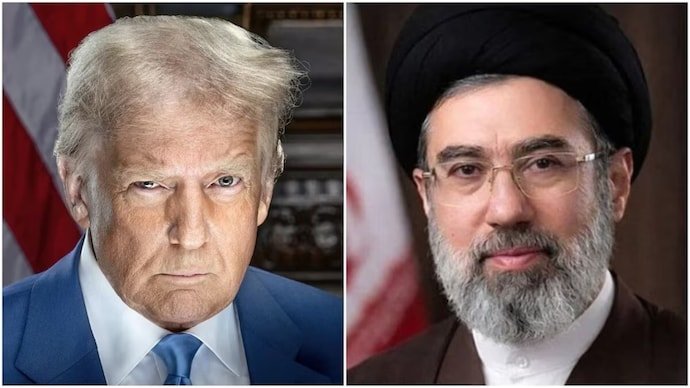
The first major test of the newly signed US-Iran peace agreement has hit an unexpected hurdle. Talks scheduled in Switzerland between American and Iranian negotiators to begin implementing the accord were abruptly cancelled, creating uncertainty around a deal that was intended to end months of conflict and establish a framework for long-term peace.
The cancellation comes only days after US President Donald Trump and Iranian President Masoud Pezeshkian signed a 14-point memorandum aimed at ending hostilities, restoring regional stability, and launching negotiations over Iran’s nuclear program and economic reintegration.
While neither side has formally withdrawn from the agreement, the sudden postponement highlights the deep mistrust that continues to define relations between Washington and Tehran.
What Happened in Switzerland?
Officials had planned to hold implementation discussions at Switzerland’s Burgenstock resort, where representatives from both countries were expected to begin translating the broad political agreement into practical steps.
US Vice President JD Vance was scheduled to lead the American delegation. However, the White House announced that Vance’s trip had been delayed, and shortly afterward Swiss authorities confirmed that the planned meeting would not take place.
The cancellation reportedly followed disagreements over a proposed formal signing ceremony in Geneva.
American officials had indicated that a ceremonial event would be organized to publicly reinforce the agreement. Iranian officials questioned the need for such a ceremony, arguing that both presidents had already signed the accord and that further symbolism was unnecessary.
Although seemingly procedural, the dispute reflects deeper disagreements regarding how the agreement should be implemented and presented to domestic audiences.
The 14-Point Peace Agreement Explained
The agreement signed earlier this week was designed to halt a conflict that had destabilized the Middle East, disrupted global energy markets, and caused thousands of casualties.
Key provisions reportedly include:
- Immediate ceasefire between the United States and Iran.
- A 60-day negotiation period to finalize technical arrangements.
- Gradual sanctions relief for Iran.
- Release of frozen Iranian assets.
- Waivers permitting renewed Iranian oil exports.
- International monitoring of Iran’s nuclear activities.
- Economic reconstruction assistance.
- A proposed $300 billion development and recovery framework.
The agreement was presented as a pathway toward de-escalation after months of military confrontation and rising regional tensions.
Why the Cancellation Matters
Peace agreements are often easier to sign than to implement.
The cancellation of the first implementation meeting is significant because it delays discussions on the most sensitive aspects of the deal, including sanctions relief, nuclear verification mechanisms, financial arrangements, and regional Security commitments.
Without continuous engagement, misunderstandings can quickly emerge and create new friction.
Diplomatic experts often view the early implementation phase as the most vulnerable period for any peace agreement. Both sides must demonstrate compliance while simultaneously addressing domestic political pressures and maintaining trust.
The absence of immediate talks therefore increases uncertainty about whether the momentum generated by the agreement can be sustained.
Iran’s Position Remains Firm
Iran has continued to insist that it will not develop nuclear weapons, a position it has publicly maintained for years.
At the same time, Tehran remains unwilling to accept certain American demands regarding its enriched uranium stockpile.
One of the most contentious issues involves whether highly enriched uranium should remain inside Iran or be transferred abroad.
Iran has reportedly agreed to enhanced monitoring and on-site down-blending of enriched material but has resisted proposals requiring complete removal of nuclear material from the country.
Iranian leaders argue that retaining peaceful nuclear capabilities remains a sovereign right under international agreements.
Challenges Facing the Trump Administration
The agreement has generated significant debate within the United States.
Supporters argue that the deal prevents a prolonged and costly war while creating opportunities for diplomatic engagement.
Critics, however, contend that Washington made major concessions without fully achieving its stated objectives.
Before the agreement, President Trump repeatedly emphasized goals such as dismantling Iran’s nuclear ambitions, restricting missile capabilities, reducing support for regional militant groups, and applying maximum pressure on Tehran.
The final framework leaves several of these issues unresolved, leading opponents to argue that the United States compromised more than expected.
These domestic political debates could complicate future negotiations during the 60-day implementation period.
The Israel Factor
Another major challenge comes from developments in Lebanon.
Israel has continued military operations against Hezbollah despite the broader US-Iran agreement.
Israeli officials were not directly involved in negotiating the accord and have publicly distanced themselves from aspects of the arrangement.
The continued fighting raises concerns that regional tensions could undermine the ceasefire framework.
If hostilities intensify between Israel and Hezbollah, pressure may increase on both Washington and Tehran, potentially complicating efforts to maintain diplomatic progress.
Economic Stakes Are Enormous
The war significantly affected global energy markets and international trade routes.
One reason investors and governments closely watched the agreement was the expectation that reduced tensions could stabilize oil prices and improve confidence across global markets.
The agreement’s provisions concerning sanctions relief and renewed Iranian oil exports carry major economic implications.
Iran possesses some of the world’s largest oil and natural gas reserves, and any increase in its energy exports could influence global supply dynamics.
For Iran, access to frozen assets and international financial channels could provide a substantial economic boost after years of sanctions pressure.
What Happens Next?
Despite the cancellation of the Switzerland talks, neither side has formally abandoned the agreement.
The 60-day implementation timeline remains in place, and both governments continue to publicly state their commitment to the diplomatic process.
Future meetings could be rescheduled once disagreements over procedures and Logistics are resolved.
The coming weeks will likely focus on several key issues:
- Nuclear verification mechanisms.
- Management of enriched uranium stockpiles.
- Sanctions relief schedules.
- Release of frozen Iranian assets.
- Regional security arrangements.
- Economic reconstruction commitments.
Progress in these areas will determine whether the agreement evolves into a durable framework or becomes another failed chapter in the long history of US-Iran Diplomacy.
Conclusion
The cancellation of the planned Switzerland talks is an early setback for a peace process that was already facing significant challenges. While the agreement remains officially in force, the incident underscores the fragility of relations between Washington and Tehran.
For now, the ceasefire continues and both sides insist they remain committed to negotiations. However, disagreements over implementation, continued regional tensions, and domestic political opposition mean that the road ahead remains uncertain.
The next few weeks will be critical in determining whether the US-Iran agreement becomes a lasting diplomatic breakthrough or merely a temporary pause in a much longer conflict.
For breaking news and live news updates, like us on Facebook or follow us on Twitter and Instagram. Read more on Latest World on thefoxdaily.com.




COMMENTS 0