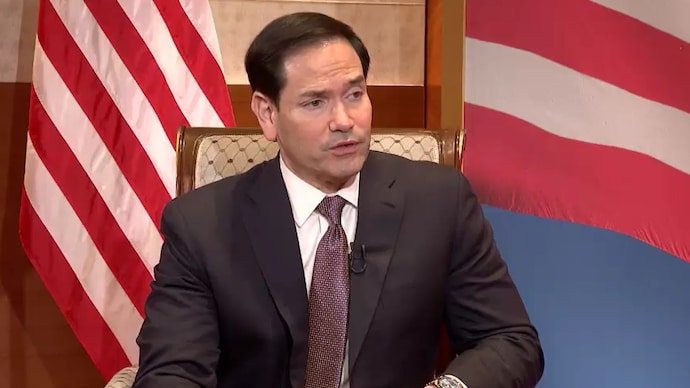
The relationship between India and the United States has entered a new phase and this time, the language coming out of Washington is more direct than ever.
During his high-profile visit to India, US Secretary of State Marco Rubio described India as one of America’s “most important strategic allies,” a statement that goes far beyond routine diplomatic praise. In a world increasingly shaped by geopolitical tensions, economic fragmentation and security challenges, Rubio’s remarks indicate that Washington now sees India not merely as a regional partner, but as a central pillar in its long-term global strategy.
The timing of these comments is significant.
Wars in Europe and West Asia, rising tensions in the Indo-Pacific, disruptions in global supply chains and increasing competition with China have forced the United States to rethink its global partnerships. India, with its massive economy, strategic geography, military capabilities and growing diplomatic influence, has emerged as one of the few countries capable of balancing multiple global power centres simultaneously.
Rubio’s meetings with Prime Minister Narendra Modi and External Affairs Minister S. Jaishankar were officially focused on trade, security and cooperation. But beneath the diplomatic language lies a much bigger story: the United States is accelerating its strategic pivot toward India.
And unlike earlier phases of the relationship, this partnership is no longer limited to symbolism.
Why Marco Rubio’s Statement Is Geopolitically Significant
Diplomatic statements are often carefully worded. When a senior American official publicly calls India one of the United States’ most important strategic allies, it sends a message not only to India, but also to China, Russia, Europe and America’s own domestic audience.
Rubio’s remarks reflect how dramatically India-US relations have evolved over the last two decades.
During the Cold War, relations between Washington and New Delhi were often tense. India pursued non-alignment while maintaining close defence ties with the Soviet Union, whereas the US frequently tilted toward Pakistan during regional crises.
Today, the situation is completely different.
The United States increasingly sees India as:
- A counterbalance to China in Asia
- A trusted technology and manufacturing partner
- A critical player in Indo-Pacific security
- A major future economic engine
- A democratic partner in a fragmented global system
This transformation did not happen overnight. It is the result of years of expanding cooperation in defence, trade, intelligence-sharing, energy and strategic diplomacy.
US-India Trade Talks Enter a Crucial Stage
One of the most important takeaways from Rubio’s visit was his optimism regarding an upcoming trade agreement between India and the United States.
According to Rubio, negotiations are now focused on “final details,” suggesting that both sides may be closer to a breakthrough than at any point in recent years.
That matters because trade has long been one of the few complicated aspects of India-US relations.
Disagreements over tariffs, market access, digital regulations and agricultural policies have occasionally slowed progress. However, both governments now appear motivated to resolve those issues because the global economic environment has fundamentally changed.
Supply chain disruptions caused by geopolitical conflicts and the Covid-19 pandemic exposed the risks of overdependence on a single manufacturing hub.
This has triggered what many analysts call the “China Plus One” strategy where global companies seek alternative production bases outside China.
India is increasingly positioning itself as the biggest beneficiary of that shift.
Why the US Needs India Economically
America’s growing economic interest in India goes beyond simple trade numbers.
The United States sees India as a long-term strategic economic partner capable of helping diversify global supply chains in sectors such as:
- Semiconductors
- Critical minerals
- Pharmaceuticals
- Defence manufacturing
- Artificial intelligence
- Clean energy technologies
India’s large domestic market also makes it impossible for global businesses to ignore.
Unlike many export-driven economies, India offers both manufacturing potential and enormous consumer demand. This dual advantage makes it uniquely attractive for American companies seeking long-term growth opportunities.
Rubio’s emphasis that the trade deal is “not just about tariffs” reflects this broader strategic thinking.
The real objective is building a durable economic partnership capable of surviving geopolitical shocks.
The Quad Is Becoming More Than a Diplomatic Forum
Rubio also highlighted the growing importance of the Quad alliance involving India, the United States, Japan and Australia.
Originally viewed by critics as a loose diplomatic grouping, the Quad is now evolving into a much more practical strategic framework.
The United States wants the Quad to move beyond meetings and declarations toward operational cooperation in areas like:
- Maritime security
- Supply chain resilience
- Critical infrastructure
- Cybersecurity
- Disaster response
- Emerging technologies
This evolution is largely driven by growing concerns over China’s expanding influence across the Indo-Pacific region.
Beijing’s aggressive posture in the South China Sea, its growing naval capabilities and border tensions with India have pushed Quad members closer together.
Interestingly, the Quad is designed carefully enough to avoid being labelled a formal military alliance. But in practical terms, strategic coordination among its members is clearly deepening.
Maritime Security Has Become a Global Priority
One of the most underrated aspects of Rubio’s comments was his emphasis on maritime security.
For decades, global trade relied on relatively stable shipping routes. But recent crises have changed that assumption dramatically.
Conflicts in the Red Sea, uncertainty around the Strait of Hormuz and rising Indo-Pacific tensions have exposed how vulnerable the global economy is to disruptions at sea.
India’s geographic position makes it critically important in this context.
Located near key maritime routes connecting Asia, the Middle East and Africa, India has become indispensable to maintaining regional stability.
That explains why the US increasingly views India as a security partner rather than simply an economic ally.
| Strategic Area | Why It Matters | India’s Role |
|---|---|---|
| Indo-Pacific Security | Countering regional instability | Naval presence and strategic location |
| Supply Chains | Reducing dependence on China | Alternative manufacturing hub |
| Critical Minerals | Essential for future technologies | Partnership and processing potential |
| Technology Cooperation | AI, semiconductors, cybersecurity | Large talent pool and innovation sector |
| Energy Security | Diversifying global energy routes | Major energy consumer and strategic market |
The China Factor Behind US-India Relations
Although Rubio did not directly frame India-US relations as anti-China, the geopolitical context is impossible to ignore.
China remains the single biggest strategic challenge shaping American foreign policy.
Washington understands that containing or balancing China cannot be achieved alone. It requires partnerships with major regional powers and India is by far the most significant democratic power in Asia outside America’s traditional alliance system.
At the same time, India approaches the relationship differently.
New Delhi values strategic autonomy and has historically avoided becoming part of formal military blocs. India continues maintaining relationships with Russia, engages economically with China and pursues an independent foreign policy.
This creates an interesting dynamic.
The US wants India as a close strategic partner, while India wants cooperation without becoming fully dependent on Washington.
So far, both sides appear comfortable managing that balance.
India’s Global Importance Is Rising Beyond Military Power
One major insight often missing from typical news coverage is that India’s importance is no longer driven only by Geopolitics.
Its demographic and economic trajectory matters just as much.
India is now one of the world’s fastest-growing major economies and recently became the world’s most populous country. Over the next decade, it is expected to become a central driver of global growth.
For the United States, building stronger ties with India is not simply about security strategy. It is also about securing long-term economic relevance in Asia.
American companies increasingly see India as:
- A massive future consumer market
- A technology talent hub
- A manufacturing destination
- A research and innovation partner
That combination is extremely rare.
Why Rubio’s India Visit Feels Different
Senior American officials have visited India many times before. But Rubio’s messaging stands out because of its clarity and urgency.
Instead of speaking only in diplomatic generalities, he openly described India as one of America’s most important strategic allies.
That wording reflects how Washington increasingly views global politics through the lens of long-term strategic competition.
In previous decades, America’s closest allies were mostly concentrated in Europe and East Asia.
Today, India is being positioned much closer to that inner strategic circle.
The invitation extended to Prime Minister Narendra Modi for a standalone bilateral visit to the White House reinforces this trend.
The Energy and Technology Connection
Another key area quietly shaping the India-US relationship is energy cooperation.
As global energy markets face instability due to conflicts in West Asia and shipping disruptions, the US is pushing to expand energy exports to India.
Washington sees India as one of the largest future energy markets in the world.
At the same time, clean energy collaboration is becoming increasingly important.
Both countries are investing heavily in renewable energy, battery technologies and climate-focused infrastructure.
Technology cooperation is also accelerating rapidly.
India’s digital economy, startup ecosystem and engineering talent pool make it an attractive partner for Silicon Valley and American tech giants.
Artificial intelligence, quantum computing, semiconductor production and cybersecurity are expected to become major pillars of future collaboration.
Can India and the US Overcome Their Remaining Differences?
Despite the optimism, challenges still exist.
India and the United States do not always agree on:
- Trade regulations
- Data localisation policies
- Relations with Russia
- Climate commitments
- Human rights discussions
However, what has changed is the willingness on both sides to prevent disagreements from damaging the broader relationship.
That marks a significant maturity in the partnership.
Earlier disputes often dominated headlines and slowed momentum. Today, both governments appear more focused on long-term strategic alignment.
The Bigger Insight Most Analysts Are Missing
The most important shift may actually be psychological.
For decades, India and the United States approached each other cautiously, often limited by historical mistrust and different strategic priorities.
Now, both countries increasingly see each other as necessary partners in an unstable world.
The relationship is no longer transactional.
It is becoming structural.
That distinction matters because structural partnerships tend to survive political changes, leadership transitions and temporary disagreements.
The growing depth of India-US defence cooperation, technology investment and supply chain integration suggests the partnership is becoming increasingly difficult to reverse.
Future Outlook: What Comes Next?
The next phase of India-US relations will likely focus on implementation rather than symbolism.
Key developments to watch include:
- Finalisation of the trade agreement
- Expansion of defence manufacturing partnerships
- Joint semiconductor and AI initiatives
- Deeper Quad coordination
- Energy and infrastructure investments
- Greater maritime security cooperation
The relationship will also be shaped by how both countries manage future crises involving China, global trade disruptions and regional conflicts.
But one thing is increasingly clear: Washington no longer views India as simply another important partner.
It now sees India as central to America’s long-term geopolitical and economic strategy.
Conclusion
Marco Rubio’s declaration that India is among America’s most important strategic allies reflects a profound transformation in global politics.
The India-US relationship has evolved far beyond diplomacy and trade. It now sits at the intersection of security, economics, technology and global power competition.
As the world becomes more fragmented and unpredictable, both countries are recognising that their partnership offers mutual strategic advantages that neither can easily replace.
For India, closer ties with the United States provide access to investment, technology and global influence. For America, India represents a democratic, economically rising and strategically positioned partner capable of helping shape the balance of power in the 21st century.
The significance of Rubio’s visit lies not only in what was said publicly, but in what it reveals privately: the India-US partnership is no longer emerging. It has already arrived.
For breaking news and live news updates, like us on Facebook or follow us on Twitter and Instagram. Read more on Latest India on thefoxdaily.com.





COMMENTS 0