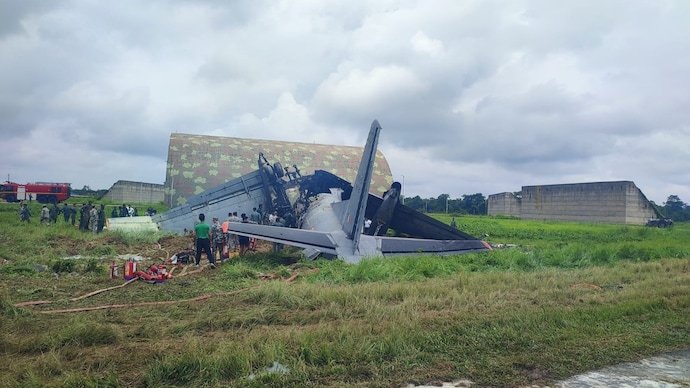
An Indian Air Force (IAF) AN-32 transport aircraft was involved in an accident while landing at the Jorhat Air Force Station in Assam on Saturday, triggering an Emergency Response and raising concerns about the condition of the crew and the extent of damage to the aircraft.
According to the IAF’s initial statement, the aircraft met with an accident during operations at the airbase. Reports from the scene indicated that a fire broke out after the aircraft landed, prompting immediate firefighting operations within the military installation.
While authorities have not yet confirmed casualties or the precise cause of the accident, the incident is being closely monitored due to the AN-32’s vital role in India‘s military logistics network and the strategic importance of the Jorhat airbase in northeastern India.
What Happened at Jorhat Air Base?
The accident occurred at the Indian Air Force station in Jorhat’s Rowriah area, one of the most important Military Aviation hubs in Northeast India.
Initial information suggests that the aircraft experienced an accident during landing operations. Shortly after touchdown, reports indicated that a fire broke out, leading emergency teams to rush to the scene.
The Indian Air Force released a brief statement confirming the incident:
“Today an AN-32 of IAF met with an accident. Further update will be provided once more details are available.”
Senior Air Force officials immediately proceeded to the accident site while emergency response teams began firefighting and safety operations.
As of now, officials have not publicly disclosed:
- The number of crew members onboard
- The condition of the crew
- The extent of injuries, if any
- The level of structural damage to the aircraft
- The exact cause of the accident
Why Jorhat Air Base Is Strategically Important
Jorhat Air Force Station is one of India’s most significant military airbases, particularly for operations in the northeastern region.
The base serves as a critical logistics and transport hub supporting:
- Border operations near Arunachal Pradesh
- Supply missions to remote Himalayan regions
- Disaster relief operations
- Military troop movements
- Humanitarian assistance missions
The airbase frequently handles transport aircraft carrying personnel, equipment, ammunition, medical supplies, and humanitarian aid to some of the country’s most inaccessible locations.
Its location makes it especially important for maintaining operational readiness along India’s eastern frontier.
Understanding the AN-32: The Backbone of Tactical Airlift Operations
The AN-32 is one of the most recognizable aircraft in the Indian Air Force transport fleet.
Developed by the Soviet Union’s Antonov Design Bureau, the aircraft was specifically designed to operate in demanding environments, including mountainous terrain, extreme temperatures, and high-altitude airfields.
India remains one of the largest operators of the AN-32 globally.
| Feature | AN-32 Capability |
|---|---|
| Role | Medium Tactical Transport Aircraft |
| Primary Use | Troop and Cargo Transport |
| Special Strength | High-altitude Operations |
| Operational Regions | Himalayas, Northeast India, Remote Airfields |
| Disaster Relief Role | Emergency Logistics and Evacuation |
Over decades of service, the aircraft has become indispensable for missions where larger transport aircraft cannot easily operate.
Why Aircraft Landing Is One of the Most Critical Phases of Flight
Aviation experts often describe takeoff and landing as the most demanding stages of any flight.
During landing, pilots must manage:
- Aircraft speed
- Altitude adjustments
- Weather conditions
- Wind patterns
- Runway alignment
- Aircraft systems monitoring
Even highly trained military crews face challenges when operating heavy transport aircraft under varying conditions.
At this stage, investigators have not indicated whether weather, mechanical issues, operational factors, or other circumstances contributed to the accident.
As a result, any conclusions regarding the cause would be premature.
How the Indian Air Force Investigates Aircraft Accidents
Whenever an aircraft accident occurs, the Indian Air Force follows a structured investigative process designed to determine exactly what happened and identify lessons that can improve future safety.
Typically, investigators examine:
- Flight data
- Aircraft maintenance records
- Pilot communications
- Air traffic control records
- Weather conditions
- Witness statements
- Mechanical components
- Operational procedures
The objective is not only to determine the immediate cause but also to identify any systemic factors that may have contributed to the incident.
Such investigations often result in recommendations that strengthen operational safety across the entire fleet.
The AN-32’s Long Service History in India
The AN-32 has played a major role in Indian military aviation for decades.
The aircraft has supported countless missions, including:
- Military deployments
- High-altitude supply operations
- Flood relief efforts
- Earthquake response missions
- Evacuation operations
- Strategic logistics support
Its ability to operate from challenging airstrips has made it particularly valuable in regions where infrastructure is limited.
Over time, many aircraft in the fleet have undergone modernization programs aimed at extending service life and improving operational capabilities.
Military Aviation Safety and Operational Challenges
Military aviation differs significantly from commercial aviation.
Unlike passenger airlines, military aircraft often operate under conditions that include:
- Remote airfields
- Short runways
- Mountainous terrain
- Heavy cargo loads
- Rapid deployment requirements
- Adverse weather conditions
These operational demands increase complexity and place additional pressure on both aircraft systems and flight crews.
Despite these challenges, military aviation organizations worldwide continuously invest in safety improvements, pilot training, predictive maintenance, and technological upgrades.
Potential Implications for IAF Operations
While it is too early to determine the full impact of the accident, incidents involving transport aircraft often lead to temporary operational reviews.
Depending on preliminary findings, authorities may:
- Inspect similar aircraft in the fleet
- Review maintenance procedures
- Examine operational protocols
- Issue precautionary advisories
- Conduct technical assessments
Such measures are standard practice and are designed to ensure continued operational safety while investigations proceed.
The response will largely depend on what investigators discover during their initial assessment.
The Human Side of Military Aviation Incidents
Behind every military aviation incident are highly trained personnel who dedicate their careers to national service.
Whenever an accident occurs, attention naturally turns to the wellbeing of the crew and emergency responders involved.
The uncertainty surrounding casualties often becomes the most closely watched aspect of the developing story.
Until official confirmation is released, authorities typically avoid speculation and focus on rescue, recovery, and assessment efforts.
What Happens Next?
The coming hours are likely to provide greater clarity regarding the circumstances surrounding the accident.
Officials are expected to release information on:
- The status of crew members
- The extent of aircraft damage
- Preliminary findings from the scene
- Whether a formal Court of Inquiry has been initiated
- Any immediate safety measures being implemented
Further technical analysis may take days or weeks, depending on the complexity of the Investigation.
Conclusion
The accident involving an Indian Air Force AN-32 aircraft at Jorhat Air Force Station has triggered an immediate emergency response and prompted questions about crew safety, aircraft condition, and the factors that led to the incident.
While firefighting operations and on-site assessments continue, authorities have rightly cautioned against drawing conclusions before the investigation begins. What is already clear, however, is the significance of the AN-32 fleet to India’s military logistics network and the strategic importance of Jorhat as a key operational hub in Northeast India.
As the Indian Air Force gathers evidence and provides further updates, attention will remain focused on the wellbeing of those involved and on understanding what lessons can be learned to strengthen Aviation Safety in one of the world’s most demanding military operating environments.
For breaking news and live news updates, like us on Facebook or follow us on Twitter and Instagram. Read more on Latest India on thefoxdaily.com.





COMMENTS 0