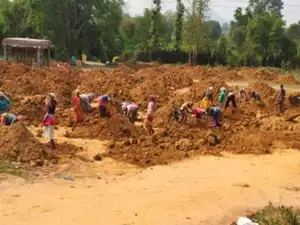
The Centre has stepped up efforts to strengthen fodder security and livestock-related infrastructure in rural India by asking states and Union Territories to make better use of permissible works under the Viksit Bharat–Guarantee for Rozgar and Ajeevika Mission (Gramin), or VB-G RAM G Act, 2025.
A joint advisory issued by the Department of Rural Development and the Department of Animal Husbandry and Dairying identifies 22 works from the programme’s list of 375 permissible activities. The selected works focus on improving fodder availability, developing community grazing resources and creating infrastructure that supports animal husbandry, dairy activities and rural livelihoods.
The initiative is intended to benefit rural households that depend on livestock for income, particularly small and marginal farmers and landless families. It also seeks to connect rural employment generation with the creation of productive assets that can support Agriculture and allied activities over the longer term.
Among the proposed interventions are fodder cultivation, community pastures, silvipasture, fodder banks, silage units, livestock shelters, milk collection centres and veterinary health facilities. States have been encouraged to integrate these activities into village development plans according to local requirements.
What Are the 22 Works Identified Under the VB-G RAM G Act?
The 22 identified works cover different stages of livestock support, beginning with fodder production and storage and extending to animal shelters, dairy infrastructure and veterinary facilities.
The Centre has selected these activities from the broader schedule of 375 permissible works under the VB-G RAM G framework. Their inclusion provides states and local administrations with a defined set of options for addressing livestock-related needs through rural development planning.
The major categories of work include:
- Fodder cultivation: Growing fodder for individual rural households and community use.
- Community fodder resources: Developing shared resources to improve access to animal feed.
- Pasture and grazing land development: Improving community pastures, grazing areas and silvipasture resources.
- Fodder storage: Establishing fodder banks, storage facilities and silage units.
- Livestock shelters: Constructing, repairing and maintaining shelters for cattle, goats, pigs, poultry and other eligible livestock.
- Dairy infrastructure: Constructing and repairing community milk collection centres.
- Veterinary facilities: Developing and repairing community veterinary health centres.
- Animal drinking facilities: Constructing community cattle and animal troughs.
- Azolla cultivation infrastructure: Creating Azolla tanks for individual beneficiaries, as provided in the approved list.
These activities are designed to address several practical requirements of livestock-dependent households. Fodder cultivation and storage can support feed availability, while shelters can provide dedicated spaces for animals. Community milk collection centres and veterinary facilities can strengthen the infrastructure needed to sustain dairy and animal husbandry activities.
Why Fodder Security Is Important for Rural Households
Livestock plays an important role in the rural economy. Cattle, buffaloes, goats, sheep, pigs and poultry can provide income through milk, meat, eggs and other animal-based products. For many households, animal husbandry also offers an additional source of livelihood alongside crop cultivation and wage employment.
However, maintaining livestock requires reliable access to fodder, water, shelter and veterinary care. When these resources are insufficient or difficult to access, livestock owners can face higher maintenance costs and difficulties sustaining their animals.
Fodder availability is particularly important because animal feed is a recurring requirement. Unlike infrastructure that may be constructed once and used for several years, fodder must be produced, collected or purchased regularly. Rural households with limited land or financial resources may find it difficult to maintain adequate supplies throughout the year.
The identified works address this challenge through a combination of individual and community-level interventions. Fodder cultivation can help households produce feed locally, while community fodder resources and grazing lands can provide shared support where individual landholdings are limited.
Storage facilities, fodder banks and silage units are also important components of the approach. They can help communities preserve fodder for periods when fresh supplies are less readily available. The advisory therefore covers not only fodder production but also the infrastructure needed to store and manage it.
Fodder Banks and Silage Units to Support Feed Availability
Fodder banks and silage units are among the notable interventions identified under the advisory. Both relate to the storage and management of animal feed, although they serve different purposes.
Fodder banks
Fodder banks are facilities or organised resources used to store fodder for future use. They can help communities maintain a reserve of animal feed instead of depending entirely on immediate availability. Such facilities may be particularly useful in areas where fodder production varies across seasons.
Community-based fodder resources can also make feed management more organised. Their usefulness will depend on local planning, the availability of suitable land, storage arrangements and how access is managed among livestock owners.
Silage units
Silage is prepared by preserving suitable green fodder through controlled fermentation. The process allows farmers to store feed for use when fresh green fodder is less available.
Silage units can therefore form part of a broader village-level fodder management system. Their development under the identified works may help rural communities improve the availability of stored feed, subject to suitable crops, technical practices and local requirements.
By including both fodder banks and silage infrastructure, the advisory recognises the importance of storage alongside cultivation. Producing fodder is only one part of the challenge; ensuring that it remains available when livestock owners need it is equally relevant.
Community Pastures and Silvipasture Included in the Plan
The advisory also identifies pasture development, grazing lands and silvipasture as important areas for investment. These interventions focus on improving the natural resources available to livestock owners.
Community pastures and grazing lands can provide shared areas where animals can feed. Their development may be particularly relevant in villages where individual households have limited space for fodder cultivation or where livestock owners depend on common resources.
Silvipasture combines trees, shrubs and grasses in a land-use system that supports both vegetation and livestock. Depending on local conditions and the species selected, such systems can contribute to fodder availability while maintaining vegetation cover.
The inclusion of these activities also connects livestock development with natural resource management. Local administrations can consider the condition of existing grazing areas, the availability of community land and the suitability of different fodder varieties while preparing village-level plans.
The advisory encourages attention to climate-resilient interventions, including suitable fodder varieties and perennial grasses. Integrated crop-livestock systems are also highlighted where they are relevant and covered by the permissible works.
Livestock Shelters, Milk Collection Centres and Veterinary Facilities
Beyond fodder security, the 22 identified works include infrastructure intended to support animal care and dairy-related activities.
Construction and repair of livestock shelters
Livestock shelters are included for cattle, goats, pigs, poultry and other animals specified in the approved list. The works cover construction, repair and maintenance for eligible individual beneficiaries and communities.
Suitable shelters provide dedicated spaces for animals and form part of the basic infrastructure required for livestock management. The focus on both construction and repair also allows existing facilities to be considered rather than limiting activity to new structures.
Community milk collection centres
Milk collection centres are another identified category. These facilities can support the collection of milk from local producers and provide shared infrastructure for dairy-related activities.
For households that depend on milk production, access to community collection facilities can form an important link between livestock rearing and the wider dairy supply chain. The advisory includes both construction and repair of such centres.
Community veterinary health centres
Veterinary health facilities are included to strengthen access to animal healthcare infrastructure. The construction and repair of community veterinary centres can support local arrangements for livestock health services.
Animal healthcare is an essential part of sustainable livestock management. The inclusion of veterinary facilities alongside fodder and shelter works reflects the broader range of requirements involved in supporting animal husbandry.
Community animal troughs and Azolla tanks
The identified works also include community cattle and animal troughs, which provide infrastructure for animal drinking water. Azolla tanks for individual beneficiaries are another listed intervention.
Azolla is an aquatic fern that is used as a supplementary feed resource in livestock and poultry systems. Its inclusion provides another option for eligible households to develop feed-related infrastructure at the individual level.
States Encouraged to Move Towards 5% Expenditure on Fodder and Livestock Works
The advisory encourages states and Union Territories to progressively increase expenditure on fodder and livestock-supportive works towards at least 5% of total programme expenditure.
However, this is an encouragement linked to local requirements and approved plans, rather than an unconditional spending requirement. The advisory specifies that the proposed expenditure should be supported by local needs, approved plans and applicable guidelines.
This approach allows states to consider the importance of livestock in their rural economies while preparing their investment priorities. Areas with substantial dependence on dairy, animal husbandry and other livestock activities may have different infrastructure requirements from regions where such activities play a smaller role.
The advisory also suggests that Gram Panchayats may give particular attention to areas where more than 30% of the population is dependent on livestock. This can help local planning bodies identify communities where fodder resources and animal-related infrastructure are especially relevant.
The proposed focus is intended to make rural development expenditure more responsive to the livelihood patterns of individual villages rather than relying on a uniform list of projects for every location.
Gram Panchayats to Play a Central Role in Project Planning
The Centre has emphasised decentralised, bottom-up planning through Panchayati Raj Institutions. Fodder development and livestock-supportive infrastructure are expected to be integrated into Viksit Gram Panchayat Plans, with priorities aligned to local requirements and approved through the Gram Sabha.
This arrangement places village-level institutions at the centre of identifying and planning suitable works. Local representatives and communities can consider issues such as the availability of grazing land, the number of livestock-dependent households, fodder requirements and gaps in existing infrastructure.
The Gram Sabha’s role is important because the needs of rural communities can differ significantly. A village with a large dairy-dependent population may prioritise milk collection facilities, while another may require more community fodder resources or livestock shelters.
Planning through Viksit Gram Panchayat Plans is intended to connect these local priorities with the permissible works under the Act. It also provides a framework for coordinating investments and avoiding projects that do not reflect the needs of the community.
States Asked to Prepare Action Plans Through Departmental Coordination
The joint advisory calls on states and Union Territories to prepare comprehensive State Action Plans for fodder security and livestock infrastructure. These plans are expected to involve coordination among the departments responsible for rural development, animal husbandry, agriculture and other relevant sectors.
Such coordination is important because fodder production, livestock management and rural infrastructure are connected areas. A project involving pasture development, for example, may require agricultural and animal husbandry expertise alongside rural development planning.
The advisory also points to State-specific Fodder Resource Development Plans prepared by the ICAR–Indian Grassland and Fodder Research Institute. These documents may serve as guiding resources for planning at district and block levels.
Using these plans can help local administrations consider regional fodder requirements and suitable development options. The advisory also encourages the use of climate-resilient fodder varieties, perennial grasses and integrated crop-livestock systems wherever appropriate.
What Is the VB-G RAM G Act and How Does It Support Rural Development?
The Viksit Bharat–Guarantee for Rozgar and Ajeevika Mission (Gramin) Act, 2025, provides a statutory guarantee of 125 days of wage employment per rural household. It came into force on July 1, 2026, and focuses on creating durable rural assets through a framework organised around four thematic areas.
These areas include water security, core rural infrastructure, livelihood-related infrastructure, and special works for extreme weather events and disaster preparedness.
The framework includes activities connected with agriculture and allied sectors, allowing rural employment and asset creation to support productive livelihood infrastructure. The 22 works identified in the latest advisory fall within this broader system of permissible activities.
The Ministry of Rural Development notified 375 permissible works under the Act in October 2026. These replaced the earlier schedule of 266 works, expanding the range of activities that can be considered under the rural development framework.
The latest advisory does not create a separate employment scheme for livestock owners. Instead, it asks states and Union Territories to use relevant works already permitted under the Act to address fodder and livestock infrastructure requirements.
Safeguards and Rules That States Must Follow
Although the advisory encourages states to expand investment in livestock-supportive works, implementation must follow the statutory provisions and guidelines of the VB-G RAM G Act.
The Centre has reiterated several safeguards that apply to the identified activities:
- Decentralised planning: Works must follow the prescribed Panchayati Raj Institution-led planning framework.
- Gram Sabha approval: Village-level priorities must be aligned with the applicable planning and approval process.
- Social audits: Mandatory social audit provisions must be followed.
- Material component ceiling: The district-level ceiling of 40% on the material component must be maintained.
- Beneficiary selection: Individual beneficiaries must be selected according to the provisions of Schedule I.
- Public disclosure: Weekly public disclosure requirements must be observed.
- Grievance redressal: The prescribed grievance redressal arrangements must remain applicable.
These requirements are intended to ensure that projects are selected through the prescribed process and that public resources are subject to transparency and accountability. States have also been asked to circulate the advisory among relevant departments, Panchayati Raj Institutions and field-level officials.
What the New Advisory Could Mean for Rural Livelihoods
The identification of 22 livestock-related works creates a clearer route for states to connect rural employment activities with the needs of households engaged in animal husbandry and dairy production.
For small and marginal farmers, fodder cultivation and storage facilities could provide additional options for managing animal feed. Community grazing areas may support villages where livestock owners rely on shared land, while shelters and veterinary facilities can address infrastructure gaps.
Landless households that depend on livestock may also benefit from community-level assets, depending on local planning, eligibility and implementation. The inclusion of milk collection centres could further support villages where dairy activities are an important source of income.
However, identifying permissible works is only the first step. Their practical value will depend on how effectively states prepare action plans, how accurately Gram Panchayats identify local requirements and whether the resulting infrastructure is maintained and used.
Fodder banks, for example, need suitable storage arrangements and a workable system for managing supplies. Pasture development requires appropriate land and long-term maintenance. Veterinary centres need the necessary arrangements to provide useful services to livestock owners.
The advisory therefore places importance on convergence between departments, local planning and compliance with the Act’s safeguards. The extent to which these works improve rural livelihoods will depend on their implementation and their alignment with the actual needs of livestock-dependent communities.
Conclusion
The Centre’s identification of 22 permissible works under the VB-G RAM G Act brings fodder security and livestock infrastructure into sharper focus within rural development planning. The proposed activities cover fodder cultivation, storage, community pastures, silvipasture, animal shelters, dairy facilities and veterinary infrastructure.
By encouraging states to integrate these works into Viksit Gram Panchayat Plans and prepare coordinated State Action Plans, the advisory seeks to connect rural employment and asset creation with the needs of livestock-dependent households.
The emphasis on local planning, climate-resilient fodder resources and interdepartmental coordination will be important during implementation. Whether the initiative delivers lasting benefits will ultimately depend on how effectively the identified works are selected, completed and maintained at the village level.
For breaking news and live news updates, like us on Facebook or follow us on Twitter and Instagram. Read more on Latest India on thefoxdaily.com.






COMMENTS 0