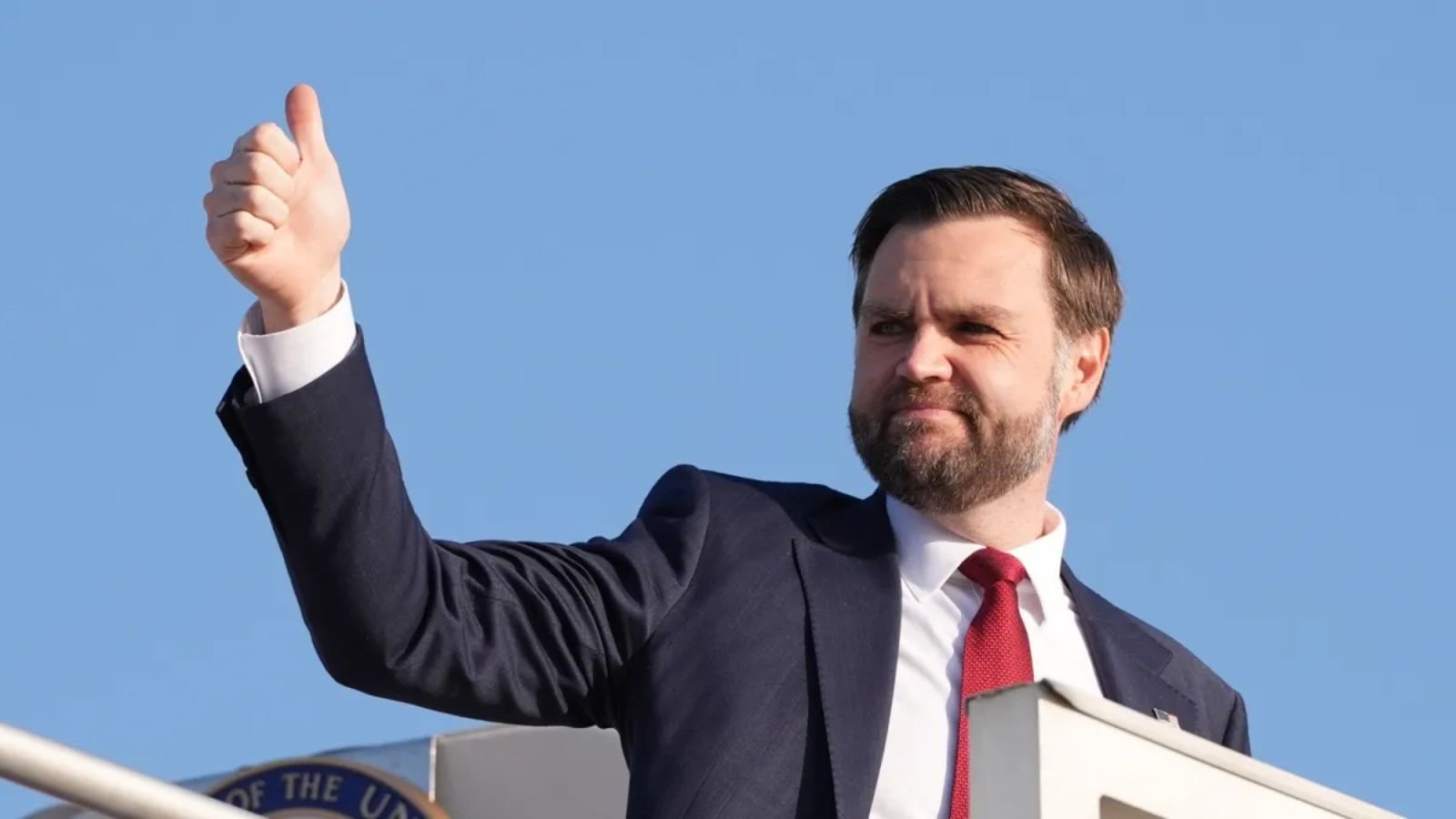
The announcement of a new US-Iran agreement was presented by President Donald Trump as a major diplomatic breakthrough capable of ending months of military confrontation, stabilising energy markets, and preventing Iran from acquiring nuclear weapons. Yet within hours of the deal’s unveiling, Vice President JD Vance delivered a stark reminder that peace remains conditional.
Speaking in multiple media interviews, Vance stated that the United States is prepared to restart military operations, including potential bombing campaigns and economic blockades, if Iran fails to fulfil its obligations under the agreement. The statement immediately shifted attention from celebration to uncertainty, exposing the reality that the deal remains more of a ceasefire framework than a guaranteed path to long-term peace.
The warning underscores a broader truth often overlooked in diplomatic announcements: ending a war is usually easier than sustaining peace. For the United States, Iran, regional allies, and global markets, the coming months could determine whether this agreement becomes a historic breakthrough or merely a temporary pause before another confrontation.
What the New US-Iran Deal Is Designed to Achieve
The agreement seeks to address one of the most contentious issues in international politics: Iran’s nuclear programme.
For years, Washington and its allies have argued that Iran’s nuclear activities could eventually lead to the development of nuclear weapons. Tehran has consistently maintained that its programme serves peaceful civilian purposes, including energy generation and scientific research.
The latest framework attempts to bridge that divide through a combination of verification measures, Sanctions Relief, and nuclear restrictions.
Key objectives reportedly include:
- Preventing Iran from obtaining nuclear weapons capability.
- Reducing regional military tensions.
- Reopening diplomatic channels between Washington and Tehran.
- Restoring stability to global energy markets.
- Ensuring freedom of navigation through critical shipping routes.
- Creating conditions for future economic engagement.
However, unlike a comprehensive peace treaty, the current agreement functions primarily as a framework that requires extensive implementation and verification before either side receives the full benefits.
Why JD Vance’s Comments Matter
Vice President JD Vance’s remarks are significant because they reveal the administration’s negotiating philosophy.
Rather than presenting the agreement as an unconditional diplomatic settlement, the White House is framing it as a performance-based arrangement. In other words, Iran receives benefits only if it demonstrates compliance.
According to Vance, sanctions relief and economic benefits will follow verified actions by Tehran, including cooperation with inspectors and steps related to enriched uranium stockpiles.
The message is straightforward: trust alone is insufficient.
The administration wants verification before rewards.
This approach reflects lessons learned from previous nuclear agreements where disputes often emerged over compliance, inspection access, and interpretation of obligations.
The Nuclear Question Remains the Core Issue
At the heart of the agreement lies a fundamental question: can the international community ensure that Iran never develops a nuclear weapon?
The challenge is complex because modern nuclear programmes often involve technologies that have both civilian and military applications.
For example:
- Uranium enrichment can support civilian energy production.
- The same technology can potentially be used for weapons development if enriched to higher levels.
- Nuclear infrastructure can serve multiple purposes depending on oversight and transparency.
This is why inspection regimes play such a crucial role.
International monitoring bodies must be able to verify activities, inspect facilities, and confirm that nuclear materials are being used according to agreed standards.
Without robust verification, any agreement risks becoming a political document rather than a meaningful security arrangement.
How Sanctions Relief Fits Into the Deal
Economic sanctions have been one of Washington’s primary tools for pressuring Iran.
These measures have affected:
- Oil exports.
- Banking access.
- Foreign investment.
- International trade.
- Financial transactions.
Iran’s economy has faced years of pressure as a result, making sanctions relief one of Tehran’s most important negotiating priorities.
Under the framework being discussed, sanctions relief is not expected to arrive immediately. Instead, benefits appear tied to measurable actions and compliance milestones.
This conditional structure explains why Vance repeatedly emphasised that Iran would not receive economic advantages unless it fulfilled its commitments.
The $300 Billion Controversy Explained
One of the most debated aspects of the emerging agreement concerns reports of a proposed $300 billion reconstruction or investment package.
The controversy stems from competing narratives.
| Perspective | How the $300 Billion Is Described |
|---|---|
| Iranian Media | Reconstruction assistance and compensation linked to war damage. |
| Western Reporting | Investment funds and economic development initiatives involving international participation. |
| Trump Administration | Denies reports suggesting direct cash payments to Iran. |
President Trump has publicly dismissed claims that the United States is paying Iran hundreds of billions of dollars, calling such reports “fake news.”
The disagreement illustrates one of the biggest challenges facing the agreement: both sides are presenting the deal differently to their domestic audiences.
That divergence could create future misunderstandings if expectations fail to align.
Why Gulf Countries Are Watching Closely
Regional powers have perhaps the most to gain or lose from the success of the agreement.
Countries across the Gulf have spent years navigating tensions involving Iran, proxy conflicts, maritime security concerns, and energy market disruptions.
Vance acknowledged that many regional partners remain cautious.
Even if governments welcome de-escalation, there remains uncertainty about whether the current agreement can survive political changes, security incidents, or future disagreements.
For Gulf economies, stability means:
- Reliable energy exports.
- Lower shipping risks.
- Reduced insurance costs.
- Improved investment confidence.
- Greater economic growth opportunities.
As a result, regional governments are likely to judge the agreement based on outcomes rather than promises.
The Global Oil Market Has a Huge Stake in the Outcome
The economic implications extend far beyond the Middle East.
Recent tensions have demonstrated how quickly geopolitical conflicts can influence global energy prices.
Any disruption involving Iran affects markets because the country occupies a strategically important position near key shipping routes.
Energy traders, governments, and businesses worldwide are watching developments closely.
If the agreement succeeds:
- Oil supply concerns could ease.
- Shipping routes may become more secure.
- Energy price volatility could decline.
- Inflation pressures may moderate in some economies.
If the agreement collapses:
- Oil prices could rise sharply.
- Shipping disruptions could return.
- Global inflation risks could increase.
- Economic uncertainty may intensify.
This explains why financial markets reacted almost as closely to diplomatic announcements as political observers did.
The Verification Challenge Could Determine Success or Failure
History shows that verification often becomes the decisive factor in nuclear agreements.
Negotiators can sign documents and make public commitments, but implementation requires constant monitoring.
Several critical questions remain:
- How frequently will inspections occur?
- What level of access will inspectors receive?
- How quickly can disputes be resolved?
- What evidence would trigger sanctions relief?
- What actions would constitute a violation?
These operational details may ultimately matter more than political speeches.
Even a well-designed agreement can unravel if verification mechanisms prove inadequate or contentious.
A Comparison With Previous Nuclear Agreements
The current framework differs from earlier diplomatic efforts in one important respect.
Previous agreements often focused on long-term restrictions combined with phased sanctions relief.
The current approach appears more transactional.
Benefits are closely tied to specific actions, and American officials are openly discussing consequences for non-compliance before implementation has even begun.
This reflects a broader shift in diplomatic strategy toward conditional engagement rather than broad upfront concessions.
Whether this approach increases accountability or creates additional friction remains to be seen.
The Hidden Risk Many Analysts Are Missing
Much of the public debate has focused on uranium, sanctions, and military threats.
However, the biggest risk may actually be expectations management.
Both governments need to convince domestic audiences that they achieved favourable outcomes.
If citizens, lawmakers, military leaders, or political factions believe their side conceded too much, internal pressure could weaken support for implementation.
In many international agreements, domestic politics has proven just as important as diplomacy itself.
A deal that appears successful internationally can still struggle if key constituencies reject it at home.
What Happens If Iran Violates the Agreement?
According to Vance, Washington retains multiple response options.
These potentially include:
- Reimposing sanctions.
- Expanding economic restrictions.
- Restoring maritime blockades.
- Conducting military operations.
- Increasing diplomatic pressure through allies.
The administration’s position is intended to deter violations by making consequences explicit from the outset.
However, critics argue that such warnings could also complicate trust-building efforts.
The challenge for policymakers is balancing deterrence with diplomacy.
Future Outlook: Peace, Pause or Another Crisis?
The US-Iran agreement represents an important diplomatic achievement, but it is far from a final resolution.
President Trump sees the framework as evidence that military pressure combined with negotiation can produce results. Iran views economic relief and international recognition as essential components of any sustainable settlement.
Both sides have incentives to make the agreement work, yet both remain deeply sceptical of one another.
The coming months will likely focus on verification measures, sanctions implementation, nuclear inspections, and political negotiations surrounding long-term commitments.
The most likely scenario is neither immediate peace nor immediate collapse, but a prolonged period of cautious implementation punctuated by disputes and negotiations.
Ultimately, JD Vance’s warning serves as a reminder that this agreement is not the destination it is merely the starting point. Whether it evolves into lasting stability or becomes another chapter in the decades-long US-Iran confrontation will depend on compliance, verification, political will, and the ability of both governments to transform a fragile ceasefire into a durable peace.
For breaking news and live news updates, like us on Facebook or follow us on Twitter and Instagram. Read more on Latest World on thefoxdaily.com.




COMMENTS 0