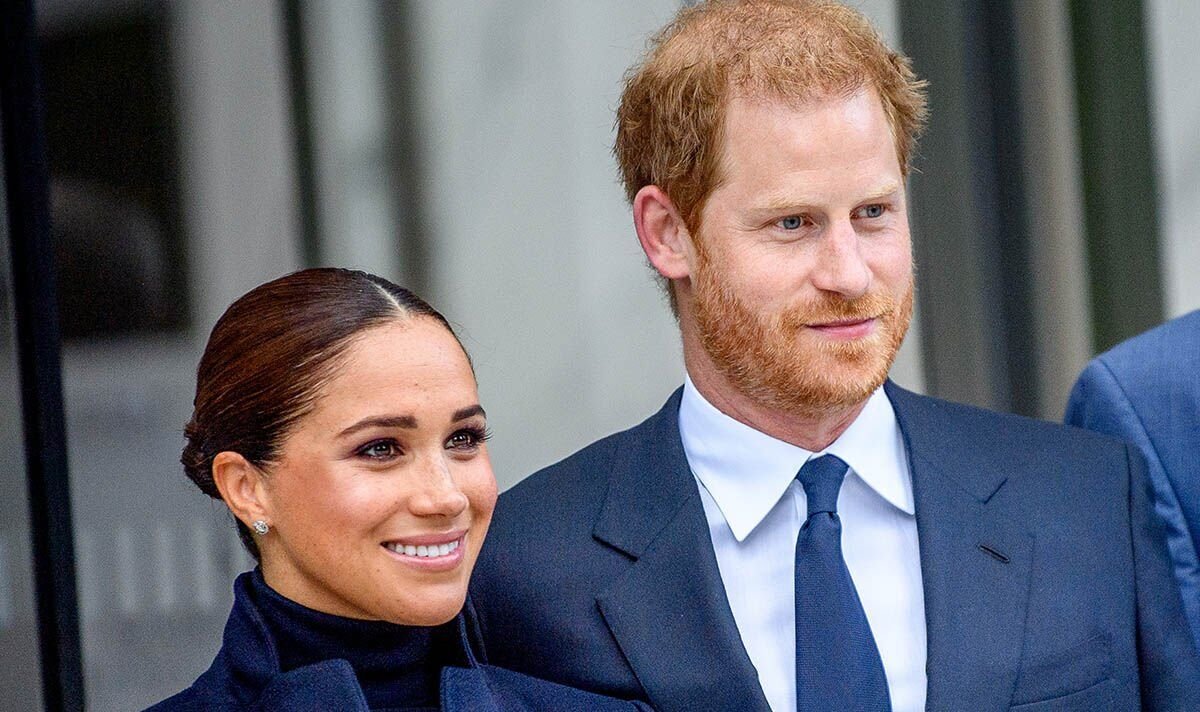
Prince Harry and Meghan Markle are preparing to move back to Britain with their children, Prince Archie and Princess Lilibet, in one of the most significant changes to the Sussexes’ lives since they stepped away from royal duties in 2020.
Reports from British and international media say the family is expected to relocate from California later this month, with Archie and Lilibet due to begin school in the UK in September. The family is expected to live at a private residence outside London rather than at a royal property, and Harry and Meghan will remain non-working members of the royal family.
The reported move does not represent a return to official royal duties. Instead, it would mark a return to British family and private life after roughly six years in the United States. That distinction is important because the Sussexes’ departure from royal life was formalised after the so-called Sandringham discussions in 2020, and there is no indication that their status is being reversed.
What makes the development particularly significant is everything surrounding it. Harry has spent years publicly discussing his strained relationships with members of his family, his concerns about security in Britain and his desire for reconciliation. At the same time, the royal family has continued to evolve without him and Meghan as working royals.
The decision to educate Archie and Lilibet in Britain could therefore have consequences extending well beyond the school gates. It places the children closer to their royal relatives, gives Harry a more permanent presence in the country and could create more opportunities for contact between the Sussexes and the wider royal family.
Why Prince Harry and Meghan are returning to the UK
The exact reasons behind the move have not been publicly detailed by Harry and Meghan, and their representatives have not provided a comprehensive explanation of the plans. Reports nevertheless point to a combination of family, Education and long-term ties to Britain.
Harry has repeatedly spoken about his connection to the UK despite leaving the country with Meghan. He has also expressed a desire for his children to have a relationship with their British heritage and members of the royal family.
The timing is notable. In July, Harry, Meghan, Archie and Lilibet were understood to have met King Charles III and Queen Camilla privately at Highgrove in Gloucestershire. It was the first known meeting between Charles and his two grandchildren since 2022. The meeting was described as a private family occasion, with no photographs or detailed account released.
That reunion does not prove that all divisions inside the royal family have been resolved. It does, however, demonstrate that contact between the two sides is possible after years of limited interaction.
For Charles, having his grandchildren living in Britain could make regular private meetings considerably easier than when the family was based in California.
Archie and Lilibet’s British schooling changes the picture
The most practical part of the reported move is the decision to enrol Archie and Lilibet in British schools.
Archie, born in the UK in 2019, spent his earliest months in Britain before the family moved abroad. Lilibet was born in California in 2021, after Harry and Meghan had stepped back from royal duties and established their new life in North America.
Both children have therefore spent most of their lives outside Britain. Starting school in the UK would be a major change in their daily environment, even if the Sussexes continue to maintain a home in California.
The reported school arrangements have not been publicly identified. That privacy is unsurprising given the family’s long-running concerns about media attention and security. It also means that many details circulating online about the children’s education should be treated cautiously unless confirmed by the family or another authoritative source.
For Harry and Meghan, schooling is also a long-term decision rather than a short visit. A child’s education involves years of routine, friendships and community connections. If the children remain in Britain through multiple school years, the move could represent a much deeper reintegration into British life than the couple’s previous short visits.
This is not a return to royal duties
One of the easiest ways to misunderstand the announcement is to describe it as a return to the monarchy.
Harry and Meghan are not reported to be resuming their former roles as working royals. Their move is expected to take place at a private, non-royal residence, and they will remain outside the working structure of the monarchy.
That distinction separates their situation from that of Prince William and Catherine, Princess of Wales, whose public responsibilities are directly connected to the future of the Crown.
The Sussexes’ return therefore creates an unusual arrangement: two branches of the same family living in the same country while operating under very different public roles.
There is also no indication that the couple will receive a new version of the “half-in, half-out” arrangement that was rejected when their departure from royal duties was negotiated in 2020. Their return to Britain is consequently best understood as a personal and family decision rather than an institutional change inside the monarchy.
The biggest unresolved issue may be Prince William
King Charles is not the only member of the royal family affected by the Sussexes’ return. The more difficult relationship may be the one between Harry and his elder brother, Prince William.
The brothers’ relationship deteriorated sharply after Harry and Meghan’s departure, and the dispute became increasingly public through interviews, documentaries and Harry’s memoir, Spare.
Harry described conflicts within the royal household and his experience of life as a senior royal. Meghan and Harry also discussed allegations involving the treatment of Meghan and the response of palace officials to her Mental health difficulties. Their public accounts added another layer to an already complicated family relationship.
William has largely avoided engaging publicly with many of the accusations, but the distance between the brothers has remained visible.
The Sussexes’ physical return to Britain changes the circumstances. Harry can no longer be separated from the family simply by geography. Even without public reconciliation, the possibility of private contact becomes easier.
That does not mean an immediate reunion should be expected. Family relationships cannot be repaired simply because people live closer together. Trust, privacy and the handling of past grievances are likely to remain important barriers.
King Charles’ health adds another layer
The return also comes as King Charles continues treatment for cancer, a condition that Buckingham Palace disclosed in 2024 without identifying the specific type.
Harry has previously spoken publicly about his concern over his father’s health and about the limited time family members may have together. His decision to bring his children closer to Britain could therefore have a particularly personal dimension.
Charles’ meeting with Archie and Lilibet at Highgrove in July was significant because the children had not seen their grandfather in person since the Platinum Jubilee celebrations in 2022.
It would be wrong to assume that the meeting automatically signals a complete reconciliation between Harry, Meghan and the monarchy. But regular proximity can create opportunities that were difficult to maintain when the Sussexes lived thousands of miles away.
For Charles, the potential benefit is straightforward: more opportunities to see his grandchildren. For Harry, living in Britain could also allow him to rebuild a relationship with his father without every meeting requiring international travel.
Security remains the most difficult practical question
The Sussexes’ return also revives the issue that Harry has repeatedly identified as one of the main obstacles to bringing his family back to Britain.
Harry has been involved in a long-running legal dispute over his security arrangements in the UK. In May 2025, the Court of Appeal rejected his challenge concerning the level of taxpayer-funded protection available to him and his family.
The dispute matters because Harry has argued that his circumstances remain different from those of an ordinary private citizen. He has said that his family faces security risks connected with his royal status, public profile and previous work.
Government authorities, meanwhile, have maintained that security decisions are based on risk assessments and established procedures rather than simply on a person’s status as a member of the royal family.
The family’s new security arrangements have not been publicly disclosed. That is itself significant because detailed information about protective measures could create risks for the people being protected.
Harry’s decision to return despite the unresolved security debate suggests that security concerns have not made a British base impossible. It does not necessarily mean that the disagreement has disappeared.
Harry’s relationship with the British press remains another complication
Security is not the only British dispute Harry has continued to fight.
The Duke of Sussex has spent years pursuing legal action against British newspaper publishers over allegations of unlawful information gathering and intrusion into privacy. He has argued that press behaviour contributed to his decision to leave Britain and has repeatedly criticised sections of the British media.
In July 2026, Harry and six other claimants lost a major privacy case against Associated Newspapers, the publisher of the Daily Mail. The claims were dismissed in their entirety by the High Court.
The outcome adds another complication to Harry’s relationship with the British press at precisely the moment when he and his family are preparing to live in the country again.
Moving back to Britain will inevitably increase the amount of attention directed toward the Sussexes. Archie and Lilibet’s schooling, family visits and Harry’s public activities are likely to attract interest, even if the couple maintain a private lifestyle.
That creates a delicate balance. The family wants greater privacy, while their royal connections make complete anonymity unrealistic.
What the return could mean for the monarchy
The monarchy has spent the years since Harry and Meghan’s departure adjusting to a smaller group of working royals. Their return does not change the formal structure, but it could change the public conversation surrounding the royal family.
One possible consequence is increased media attention on family relationships. Royal events that previously involved William and other working royals could once again be examined through the lens of Harry and Meghan’s presence in Britain.
That is particularly relevant because William’s public role is expanding as he moves closer to becoming king. The royal household has an interest in ensuring that the work of the monarchy is not consistently overshadowed by old family disputes.
At the same time, a quieter outcome is possible. If Harry and Meghan live privately, keep their children away from unnecessary public attention and gradually rebuild family relationships, their presence could eventually become less controversial.
The distinction between those two outcomes will depend less on the fact that the Sussexes have returned and more on how they conduct their lives after returning.
Why this move is different from the Sussexes’ earlier visits
Harry has visited Britain several times since moving to the United States, including for royal and legal matters. Those trips, however, were temporary.
A residential move with children attending British schools is fundamentally different.
It establishes a routine rather than a series of short visits. School calendars, family occasions and everyday life will create more opportunities for interaction with relatives and British society.
It also means that any future disagreement is more likely to occur against the backdrop of physical proximity. Conversely, positive developments within the family could also become easier to sustain.
The reported decision therefore has significance beyond geography. It changes the practical conditions under which reconciliation, if it happens, could take place.
What happens next for Harry, Meghan and the royal family?
The immediate priority will be the family’s relocation and the start of the children’s school year. The precise location of their home and the identity of their schools are expected to remain private.
The next major question will be whether Harry can turn improved contact with his father into a more stable relationship with the wider family.
Charles’ recent meeting with his grandchildren provides evidence of renewed contact, but there is much less evidence of a comparable breakthrough between Harry and William. That relationship is likely to be the hardest to repair because years of public disagreement have made the dispute larger than a private family argument.
There is also the question of how Harry and Meghan will balance British life with their existing connections to the United States. The couple are expected to retain their California home, meaning the move does not necessarily represent a complete severing of their American life.
The available evidence therefore points to a return to Britain rather than a simple reversal of Megxit. Harry and Meghan are not returning as working royals, and the monarchy is not reverting to its pre-2020 structure.
Instead, the Sussexes appear to be creating a new arrangement: a private family life in Britain, children educated in the country where Harry was raised, continued links to the United States and the possibility of more regular contact with relatives.
Whether that arrangement becomes a genuine family reset or another chapter in the Sussexes’ long-running dispute with the royal establishment will depend on what happens after the headlines fade.
For now, the clearest change is that Harry and Meghan are choosing proximity over distance. By bringing Archie and Lilibet into the British school system, they are making Britain part of their children’s everyday lives. That decision could ultimately prove more consequential for the future of the Sussex family than any public statement about reconciliation.
For breaking news and live news updates, like us on Facebook or follow us on Twitter and Instagram. Read more on Latest World on thefoxdaily.com.



COMMENTS 0