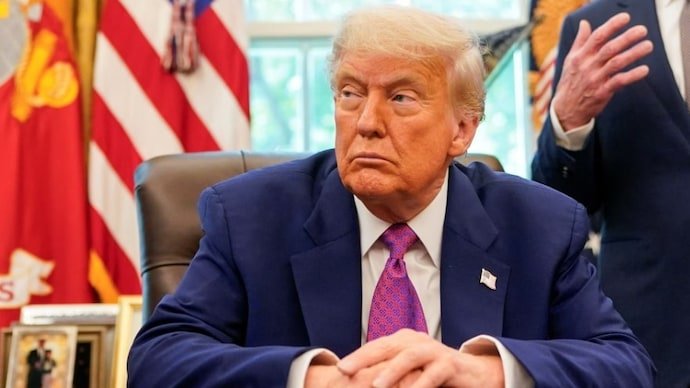
The Trump administration is preparing a major expansion of economic pressure on Iran as the war approaches its six-month mark, betting that a tougher sanctions campaign can force Tehran to make concessions after military action and diplomatic efforts have failed to deliver a decisive outcome.
The new strategy goes beyond targeting Iranian banks, oil networks and government-linked entities. Treasury Secretary Scott Bessent has warned that countries and companies continuing to trade with Iran could also face penalties, potentially widening the confrontation to major economic partners such as China and India.
The shift reflects a difficult reality for Washington. The United States has already imposed extensive sanctions on Iran and used military force against the country, while the continuing dispute over the Strait of Hormuz has kept pressure on Global Energy Markets. At the same time, concerns over depleted American stocks of some advanced weapons have added another constraint to a conflict that has proved harder to end than the Trump administration initially expected.
For Trump, the economic campaign therefore represents more than another sanctions package. It is an attempt to create a new source of leverage without relying entirely on additional military escalation.
What Trump’s new Iran sanctions strategy is trying to achieve
The administration has described the latest phase as part of Operation Economic Fury, a campaign designed to restrict Iran’s access to money, international financial institutions, oil revenues and the networks Tehran uses to move funds around sanctions.
Washington’s stated objectives include forcing Iran to end its nuclear programme and reopening the Strait of Hormuz to oil and natural gas tankers. The waterway has become a central point of the conflict because disruption there affects not only Iran and the United States but also energy markets and countries that depend on Gulf oil shipments.
On August 7, the U.S. Treasury Department announced action against networks it said were helping Iran move hundreds of millions of dollars through clandestine financial channels. Earlier measures have also targeted Iranian oil-smuggling networks, weapons procurement networks and companies accused of supporting the Islamic Revolutionary Guard Corps.
The new phase would make the enforcement effort broader. Rather than focusing only on Iranian entities, Washington could increasingly target foreign businesses and governments that maintain commercial relationships with Tehran.
That is the significance of secondary sanctions. They give the United States the ability to threaten companies in third countries with restrictions on access to the American financial system if they continue prohibited transactions with Iran.
Why secondary sanctions could change the pressure on Iran
Iran has lived under American sanctions for decades and has developed extensive methods for bypassing them. Tehran has relied on intermediaries, front companies, alternative financial channels, shipping networks and other mechanisms to keep portions of its economy connected to international trade.
Secondary sanctions attempt to make those workarounds more expensive.
If a company has to choose between maintaining a relatively limited commercial relationship with Iran and preserving access to the much larger U.S. financial system, Washington is betting that many companies will choose the latter.
That calculation has worked in some previous sanctions campaigns. But applying it on a much wider scale also carries risks. Countries that depend on Iranian oil or have significant commercial interests in Iran may resist pressure rather than automatically accept Washington’s demands.
China is particularly important because of its role as a major buyer of Iranian oil. India also has commercial ties with Iran, making any aggressive secondary-sanctions policy potentially sensitive for U.S. relations with major Asian partners.
The administration therefore faces a difficult balancing act: make sanctions severe enough to hurt Iran’s ability to finance its war effort while avoiding a backlash that damages relationships with countries Washington may need for broader geopolitical objectives.
Washington is returning to the logic of maximum pressure
The latest strategy resembles Trump’s first-term maximum pressure campaign, when Washington attempted to squeeze Iran’s economy in an effort to force Tehran into accepting tougher restrictions on its nuclear programme and regional activities.
There is, however, an important difference this time. Economic pressure is being applied alongside military action rather than as a stand-alone strategy.
That combination could give sanctions greater leverage if military operations have damaged Iran’s ability to produce weapons, move supplies or generate revenue. But it could also make Tehran more resistant to compromise.
Sanctions work differently from military strikes. A bomb can destroy a target immediately. Financial restrictions usually require time to affect government revenue, imports, currency availability and the ability of businesses to operate.
That timing matters because the Trump administration is under pressure to demonstrate that its strategy is producing results.
The US weapons problem adds another layer to the strategy
The economic escalation also comes amid concerns about U.S. military inventories after months of fighting.
Reports have pointed to pressure on American stocks of advanced munitions, including missile interceptors and other precision weapons. The issue is not necessarily that the United States has run out of weapons, but that prolonged high-intensity operations can consume sophisticated systems faster than they can be replaced.
That creates a strategic problem.
The United States has to consider not only the requirements of the Iran conflict but also its ability to respond to other crises around the world. Washington’s military commitments extend beyond the Middle East, while American allies also depend on U.S. weapons production and missile-defense capacity.
For that reason, a stronger economic campaign could provide the administration with an alternative form of pressure at a moment when continued military escalation carries higher costs.
Sanctions cannot replace military capabilities, but they can potentially constrain an opponent’s access to the money needed to replenish weapons, pay personnel and sustain military operations.
The Strait of Hormuz remains at the centre of the dispute
The sanctions campaign cannot be separated from the continuing confrontation over the Strait of Hormuz.
The narrow waterway connecting the Persian Gulf with the Gulf of Oman is one of the world’s most strategically important energy routes. Any prolonged disruption can affect crude oil supplies, shipping costs and fuel prices far beyond the Middle East.
For Washington, reopening the strait is therefore both an economic and strategic objective.
Iran, meanwhile, has used control over access to the waterway as a major source of leverage. The dispute has made the strait a central bargaining point in the broader conflict, with each side seeking terms that preserve its strategic position.
This is also why sanctions against Iran’s shipping and oil networks are particularly significant. If Washington can reduce the revenue Iran receives from oil exports while simultaneously restricting the financial channels through which those earnings move, Tehran’s ability to sustain its position could weaken.
But the opposite outcome is also possible. More pressure could encourage Iran to rely even more heavily on alternative trading partners and informal networks, making the conflict increasingly difficult to resolve through conventional economic diplomacy.
Why the UAE’s position matters
The United Arab Emirates is another important piece of the economic picture.
The UAE has historically been an important commercial gateway for Iran, including through re-export activity. A decision by the UAE to suspend trade with Iran following an alleged missile attack would therefore remove one of the channels through which Iranian businesses could maintain access to regional commerce.
For Washington, broader regional participation would strengthen the sanctions campaign. The more countries that enforce restrictions, the harder it becomes for Iranian companies to shift transactions from one jurisdiction to another.
For Tehran, however, the loss of established commercial routes would increase the cost of importing goods, receiving payments and moving money internationally.
The development also illustrates how the Iran conflict is affecting countries that are not direct participants in the fighting. Gulf states are being forced to balance economic interests, security concerns and relationships with both Washington and Tehran.
Iran says sanctions have failed before
Iranian officials have rejected the idea that another round of economic pressure will force Tehran to surrender.
Foreign Ministry spokesman Esmail Baghaei has argued that Washington repeatedly returns to sanctions when diplomacy becomes difficult and that decades of economic restrictions have not produced the political outcome sought by the United States.
That argument points to one of the central weaknesses of the new strategy.
Economic pain does not automatically translate into political concessions. A government may respond to pressure by negotiating, but it can also become more defensive, strengthen internal controls or portray external pressure as a national-security threat.
That is especially relevant after a prolonged military conflict. Iranian leaders may view accepting American demands under those circumstances as a strategic defeat rather than a practical economic compromise.
The biggest question: Can pressure create an exit route?
One of the most important issues facing the Trump administration is not simply how much pressure it can impose, but what happens after the pressure is applied.
Sanctions can close financial channels and reduce revenue. Military action can destroy infrastructure and military assets. But neither automatically produces a negotiated settlement.
That is why some analysts have questioned whether maximum pressure can succeed without a credible diplomatic pathway.
If Iranian leaders believe that making one concession will simply lead Washington to demand another, the incentive to compromise may remain weak. Tehran could conclude that enduring sanctions is safer than accepting an agreement that leaves the government exposed to additional demands later.
In that scenario, pressure could become an end in itself rather than a mechanism for reaching a settlement.
On the other hand, if sanctions significantly reduce Iran’s ability to finance its military and economic operations, the calculation inside Tehran could change. The effectiveness of the strategy will therefore depend not only on the number of sanctions imposed but on whether they materially restrict the networks Iran uses to generate and move revenue.
China and India could become critical tests for Washington
The threat of secondary sanctions raises an especially difficult question for U.S. diplomacy: how far is Washington willing to go against countries it considers strategically important?
China and India have their own energy requirements and relationships with Iran. A sanctions campaign that targets companies connected to Iranian oil could therefore create tension with governments that Washington also wants as partners on trade, security and regional stability.
This is where enforcement becomes more complicated than simply publishing a list of sanctioned entities.
The United States would have to decide which transactions to punish, which exemptions to allow and how aggressively to enforce restrictions. Every waiver reduces some of the pressure on Iran, but excessive enforcement could create diplomatic and economic costs for Washington.
The Trump administration’s first-term experience showed that sanctions policy often involves such trade-offs. Restrictions can be powerful, but maintaining an international coalition around them requires diplomacy of its own.
What happens next
The next stage of the Iran conflict will depend heavily on whether the new sanctions produce a measurable change in Tehran’s calculations.
There are several possible outcomes.
- Iran could face deeper economic isolation: If more foreign companies withdraw from Iranian trade, Tehran could find it increasingly difficult to access international finance and generate usable foreign currency.
- Iran could harden its position: Rather than compromise, the government could respond by expanding sanctions-evasion networks and relying more heavily on countries willing to continue trading with it.
- Diplomacy could return: If economic and military pressure creates enough incentive for both sides, negotiations could eventually become the mechanism for resolving the dispute over Iran’s nuclear programme and the Strait of Hormuz.
- Economic pressure could spill over: If major oil buyers or financial institutions are targeted, the consequences could extend beyond Iran and affect international energy markets and U.S. relationships with trading partners.
The most important test will be whether Washington can turn economic pressure into a clearly defined political outcome.
Trump is betting that financial pressure can succeed where war has stalled
The Trump administration’s renewed Iran sanctions campaign represents a significant shift in emphasis, but not necessarily a retreat from confrontation. Instead, Washington is adding financial warfare to a strategy that already includes military pressure and attempts to control the strategic environment around Iran.
The administration believes that tighter restrictions on oil revenues, banking networks, shipping and foreign business partners could eventually force Tehran to reconsider its position.
Critics see a different risk: that sanctions without a credible diplomatic opening could make Iran less willing to compromise and prolong the conflict further.
That tension will define the next phase of the crisis. If sanctions sharply reduce Iran’s financial room for manoeuvre, Washington may gain leverage for negotiations. If they instead push Tehran toward deeper resistance and greater reliance on alternative economic networks, the strategy could extend the stalemate.
For now, Trump is making a high-stakes bet that economic isolation can deliver what military force and diplomacy have not: enough pressure on Iran to change its calculations without requiring the United States to intensify an already costly war.
For breaking news and live news updates, like us on Facebook or follow us on Twitter and Instagram. Read more on Latest World on thefoxdaily.com.




COMMENTS 0