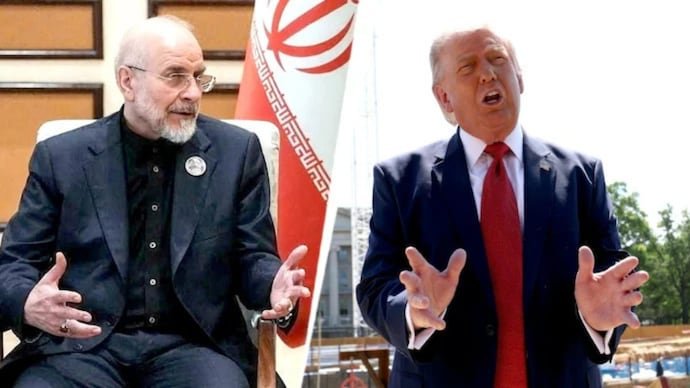
The latest round of US-Iran talks in Switzerland was expected to focus on reducing tensions, advancing nuclear negotiations, and creating a framework for regional stability. Instead, the discussions opened against a backdrop of renewed confrontation after US President Donald Trump issued a direct warning to Iran over Hezbollah’s activities in Lebanon.
Trump’s statement, posted shortly after negotiations began, threatened tougher military action if Iran failed to restrain Hezbollah. The response from Tehran was immediate and unusually sharp. Iranian negotiators accused Washington of undermining Diplomacy and warned the United States to “be careful with its words,” while insisting that Iran’s military remains prepared for any escalation.
The developments underscore a central reality shaping the Middle East in 2026: while diplomacy is advancing, deep mistrust continues to define relations between Washington and Tehran. The negotiations involve not only Iran’s nuclear programme but also regional security, sanctions relief, energy markets, Hezbollah’s role in Lebanon, and the future of global oil supplies passing through the Strait of Hormuz.
Why the Switzerland Talks Matter
The Switzerland negotiations represent the most significant diplomatic engagement between the United States and Iran since the recent conflict that disrupted energy markets and destabilised much of West Asia.
At the heart of the talks are several critical objectives:
- Preventing further military escalation in the Middle East
- Addressing Iran’s nuclear activities
- Creating a framework for sanctions relief
- Ensuring maritime security in the Strait of Hormuz
- Reducing the risk of proxy conflicts across the region
- Stabilising Global Energy Markets
Both countries entered the negotiations with significant leverage and equally significant concerns. The United States wants stronger assurances regarding Iran’s nuclear programme, while Tehran seeks economic relief through sanctions waivers and access to frozen financial assets.
The challenge is that both sides are attempting to negotiate while simultaneously managing ongoing regional conflicts, particularly in Lebanon.
Trump’s Warning and Its Strategic Significance
Donald Trump’s warning regarding Hezbollah was not merely a political statement. It reflected Washington’s broader concern that Iranian-backed groups could undermine any diplomatic progress achieved during negotiations.
By specifically referencing Hezbollah, Trump signalled that the United States views regional proxy activity as inseparable from the nuclear negotiations.
The message also revealed a familiar feature of Trump’s foreign policy approach: combining diplomatic engagement with public pressure.
Historically, American administrations have often separated nuclear discussions from regional conflicts. However, the current US strategy appears increasingly focused on treating these issues as interconnected.
From Washington’s perspective, any long-term agreement with Tehran must address:
- Iran’s nuclear activities
- Missile development programmes
- Regional proxy networks
- Maritime security threats
- Energy supply stability
This broader framework significantly increases the complexity of negotiations.
Iran’s Strong Response Reveals Deep Distrust
Iran’s reaction was notable because it extended beyond diplomatic criticism.
The refusal to participate in a planned photo opportunity with American officials sent a clear message. Tehran wanted to demonstrate that it would not allow negotiations to become a public relations victory for Washington.
The brief walkout by Iranian negotiators further highlighted the fragile nature of the discussions.
Iranian officials argue that successful diplomacy requires mutual respect rather than public threats. From Tehran’s perspective, statements warning of military action weaken trust and create political pressure on Iranian negotiators at home.
Domestic Politics remain an important factor. Iranian leaders must convince political factions and the public that negotiations will protect national interests rather than appear as concessions to American demands.
The Lebanon Factor: A Major Obstacle to Peace
One of the biggest challenges facing negotiators is the ongoing instability in Lebanon.
Although violence has reduced compared to previous weeks, tensions between Israel and Hezbollah continue to threaten regional stability.
Iran has repeatedly linked progress in negotiations to developments in Lebanon. Iranian officials argue that continued Israeli military operations make it difficult to build confidence in broader diplomatic agreements.
This creates a complicated situation:
- The United States wants progress on nuclear issues.
- Iran wants security assurances regarding regional allies.
- Israel wants guarantees against future attacks.
- Lebanon seeks an end to military operations on its territory.
Each objective influences the others, making compromise difficult.
The Nuclear Programme Remains the Core Issue
Despite discussions surrounding Hezbollah and regional security, Iran’s nuclear programme remains the central issue driving negotiations.
Western governments continue to express concern regarding Iran’s enriched uranium stockpiles and nuclear capabilities.
Iran maintains that its programme is intended solely for peaceful purposes, including energy generation and scientific research.
The negotiations aim to establish mechanisms that provide transparency while allowing Iran to pursue legitimate nuclear activities.
Achieving that balance has historically been difficult because both sides interpret security risks differently.
The United States seeks extensive monitoring and verification measures. Iran seeks recognition of its sovereign right to develop civilian nuclear technology.
Sanctions Relief Could Become the Breakthrough Issue
Among the most significant developments emerging from the talks is the reported progress on sanctions waivers.
Iran has consistently argued that meaningful economic relief must accompany any diplomatic agreement.
Years of sanctions have affected:
- Oil exports
- Banking transactions
- Foreign investment
- Industrial growth
- Currency stability
The reported draft agreement concerning sanctions waivers suggests negotiators may be moving toward practical solutions.
For Tehran, sanctions relief represents tangible proof that diplomacy can deliver economic benefits.
For Washington, phased sanctions relief can serve as an incentive for compliance with future commitments.
Frozen Iranian Assets and Economic Recovery
Another major issue involves billions of dollars in Iranian assets frozen in international financial institutions.
Iranian negotiators have identified access to these funds as a critical priority.
Releasing frozen assets could provide Iran with resources to:
- Stabilise domestic markets
- Support reconstruction efforts
- Strengthen public services
- Improve economic confidence
However, international stakeholders will likely seek safeguards to ensure the funds are used for economic recovery rather than military activities.
This makes the asset-release mechanism one of the most technically complex elements of the negotiations.
The Strait of Hormuz: The World’s Energy Lifeline
Perhaps no issue has greater global implications than the future of the Strait of Hormuz.
The narrow waterway remains one of the world’s most important energy corridors, handling a significant portion of global oil and liquefied natural gas shipments.
Any disruption to traffic through the Strait can quickly affect international energy prices.
| Issue | Global Impact |
|---|---|
| Strait of Hormuz Disruption | Higher oil and gas prices worldwide |
| Sanctions on Iranian Oil | Reduced global supply availability |
| Lebanon Escalation | Regional instability affecting markets |
| Nuclear Negotiation Failure | Increased geopolitical risk premium |
| Successful Agreement | Greater market stability and investment confidence |
The continued uncertainty surrounding the Strait remains one of the most closely watched elements of the negotiations.
Why Global Markets Are Watching Closely
Financial markets, energy traders, and governments are monitoring every development emerging from Switzerland.
The reason is simple: geopolitical stability directly influences economic stability.
oil prices, shipping costs, airline fuel expenses, manufacturing inputs, and inflation levels can all be affected by developments involving Iran and the wider Middle East.
Even modest diplomatic progress tends to reduce uncertainty premiums built into energy markets.
Conversely, aggressive rhetoric or military escalation can trigger rapid price volatility.
How India and Other Importing Nations Are Affected
Countries heavily dependent on imported energy have a strong interest in the outcome of these negotiations.
India, China, Japan, South Korea, and several European economies rely significantly on stable energy supplies from the Gulf region.
For India in particular, stability in the Strait of Hormuz directly affects:
- Crude oil import costs
- Fuel prices
- Inflation management
- Industrial production costs
- Economic growth prospects
A successful diplomatic process could help support energy security and reduce volatility in global commodity markets.
The Bigger Picture: Diplomacy Versus Deterrence
The current negotiations illustrate a broader debate that has shaped international relations for decades.
Can diplomacy succeed while threats remain on the table?
Supporters of Trump’s approach argue that strong pressure encourages compromise and prevents adversaries from exploiting negotiations.
Critics contend that public threats undermine trust and make agreements harder to achieve.
The answer likely lies somewhere in between. Successful negotiations often require both incentives and consequences.
The challenge is maintaining the correct balance without triggering escalation.
What Happens Next?
The coming weeks are expected to determine whether the current diplomatic effort produces lasting results or becomes another missed opportunity.
Key developments to watch include:
- Progress on sanctions waivers
- Movement on frozen Iranian assets
- Developments in Lebanon
- Future nuclear verification arrangements
- Status of maritime security commitments
- Potential high-level political meetings
Negotiators face significant obstacles, but they also have strong incentives to avoid renewed conflict.
Conclusion: A Fragile Opportunity That Could Shape the Region
The latest US-Iran negotiations highlight both the promise and the fragility of diplomacy in one of the world’s most volatile regions. While discussions in Switzerland represent a genuine opportunity to reduce tensions, Trump’s warning over Hezbollah and Iran’s sharp response demonstrate how quickly progress can be threatened by mistrust and competing strategic interests.
The talks are about far more than nuclear policy. They encompass regional security, global energy markets, economic recovery, sanctions, and the future balance of power in West Asia. Every statement, concession, and disagreement carries implications that extend well beyond Washington and Tehran.
If negotiators can convert preliminary understandings into a durable framework, the result could be greater stability across the Middle East and improved confidence in global markets. If diplomacy falters, however, the region risks returning to a cycle of confrontation that would affect economies, governments, and millions of people far beyond its borders.
The next phase of negotiations may therefore determine not only the future of US-Iran Relations but also the broader geopolitical landscape of the decade ahead.
For breaking news and live news updates, like us on Facebook or follow us on Twitter and Instagram. Read more on Latest World on thefoxdaily.com.





COMMENTS 0