- Who Was Azzam al-Hayya and Why His Death Matters
- Why the Timing of the Strike Is So Sensitive
- The Strategy Behind Military Pressure During Negotiations
- How the Gaza Conflict Reached This Stage
- Why Hamas Disarmament Remains the Biggest Obstacle
- The Human Cost Is Reshaping Regional Politics
- The International Dimension: Why the World Is Watching Closely
- A Unique Reality Often Ignored: Wars Today Are Also Information Battles
- Could the Strike Harden Hamas’ Negotiating Position?
- Comparison: Why Gaza Negotiations Differ From Earlier Middle East Ceasefires
- The Bigger Question: Can Diplomacy Survive Ongoing Violence?
- Future Outlook: What Happens Next?
- Conclusion
The killing of Azzam al-Hayya, the son of senior Hamas negotiator Khalil al-Hayya, has added a volatile new layer to already fragile negotiations surrounding Gaza’s future. The Israeli strike in Gaza City came at a critical moment, as Hamas representatives, regional mediators, and international actors were attempting to keep a shaky ceasefire framework alive amid growing mistrust and continued violence.
The development is significant not only because of who was killed, but because of when it happened. Hamas leaders were engaged in discussions in Cairo over a US-backed framework tied to post-war Governance, reconstruction, humanitarian access, and potential disarmament conditions. The timing has fueled accusations from Hamas that Israel is deliberately increasing military pressure during negotiations to extract political concessions.
The broader issue extends beyond one strike or one family tragedy. The incident highlights how the Gaza conflict has evolved into a complex battle fought simultaneously on military, political, psychological, and diplomatic fronts.
Who Was Azzam al-Hayya and Why His Death Matters
Azzam al-Hayya was the son of Khalil al-Hayya, one of Hamas’ most influential political leaders and a central figure in indirect negotiations involving Israel, the United States, Egypt, and Qatar. Khalil al-Hayya has long been considered one of Hamas’ most prominent diplomatic operators, especially in discussions surrounding ceasefires, hostage exchanges, and post-war arrangements.
According to Hamas officials, Azzam al-Hayya died after being wounded during an Israeli airstrike in Gaza City. Hamas said he became the fourth son of Khalil al-Hayya to be killed since the conflict escalated following the October 7, 2023 attacks.
For Hamas supporters, the deaths are likely to reinforce narratives of sacrifice and resistance. For Israeli military planners, targeted pressure on networks connected to Hamas leadership may be viewed as part of a broader strategy aimed at weakening the organization’s operational and psychological structure.
But the diplomatic implications could be even more important than the military ones.
Why the Timing of the Strike Is So Sensitive
The strike occurred while negotiators were attempting to salvage progress around a ceasefire arrangement linked to international mediation efforts. Talks have reportedly centered on several deeply contentious issues:
- Whether Hamas would eventually disarm
- The future presence of Israeli troops inside Gaza
- Humanitarian aid distribution
- The reconstruction of Gaza
- Governance structures after the war
- Hostage and prisoner arrangements
Each of these topics alone has the potential to collapse negotiations. Combined together, they create one of the most politically sensitive diplomatic efforts in the region in years.
Hamas has repeatedly insisted that Israel must first honor previous ceasefire commitments, including reducing military operations and allowing greater humanitarian access. Israel, meanwhile, maintains that Hamas cannot remain militarily intact if long-term stability is to be achieved.
The death of a negotiator’s son during such talks risks deepening distrust precisely when mediators are trying to prevent another escalation.
The Strategy Behind Military Pressure During Negotiations
One of the less discussed realities of modern conflict is that negotiations and military operations often happen simultaneously. Wars rarely “pause” neatly for Diplomacy. Instead, battlefield pressure is frequently used to strengthen bargaining positions.
Hamas officials argue that Israel is intentionally using targeted strikes to pressure negotiators emotionally and politically. Israeli officials have not publicly framed operations in those terms, but Israeli military doctrine has historically emphasized maintaining operational pressure against militant infrastructure even during negotiations.
This creates a dangerous cycle:
| Military Action | Diplomatic Impact |
|---|---|
| Targeted strikes increase pressure on Hamas | Negotiators become less willing to compromise publicly |
| Continued conflict weakens trust | Ceasefire implementation becomes harder |
| Civilian casualties fuel outrage | Regional tensions increase |
| Political leaders harden positions | Peace talks slow or collapse |
In conflicts like Gaza, military and diplomatic timelines constantly overlap. That overlap often produces moments where one side views pressure as strategic leverage while the other sees it as sabotage.
How the Gaza Conflict Reached This Stage
The current war traces back to the October 7, 2023 Hamas attack on Israel, which triggered one of the deadliest and most destructive periods in the region’s modern History. Israel responded with extensive military operations across Gaza aimed at dismantling Hamas infrastructure and leadership.
Since then, the conflict has evolved through multiple phases:
- Large-scale Israeli airstrikes and ground operations
- Hostage negotiations mediated by Qatar and Egypt
- Temporary humanitarian pauses
- International pressure over civilian casualties
- Growing debates over Gaza’s post-war governance
- Renewed ceasefire attempts
Despite periods of reduced violence, lasting stability has remained elusive. The latest strike illustrates how fragile the situation remains even during diplomatic engagement.
Why Hamas Disarmament Remains the Biggest Obstacle
Perhaps the single largest barrier in negotiations is the issue of Hamas disarmament.
Israel views Hamas’ military capabilities as an existential security threat and has repeatedly stated that the group cannot remain armed if there is to be a long-term settlement.
Hamas, however, sees disarmament as politically and strategically unacceptable without guarantees regarding Palestinian sovereignty, security, and Israeli withdrawal.
This disagreement goes beyond weapons. It touches on identity, legitimacy, power, and survival.
For Hamas, surrendering arms could weaken its influence internally among Palestinians and regionally among supporters. For Israel, allowing Hamas to retain military capabilities risks future attacks.
That fundamental contradiction is why negotiations continue to stall despite international mediation.
The Human Cost Is Reshaping Regional Politics
Beyond military calculations and diplomatic statements, the humanitarian toll continues to shape political realities across the Middle East.
Tens of thousands of people have been killed since the war began, according to various local and international estimates. Large parts of Gaza’s infrastructure have been destroyed, while humanitarian organizations continue warning about shortages of food, medical supplies, fuel, and shelter.
The emotional impact of repeated family losses — including among Hamas leadership — is also becoming part of the conflict narrative.
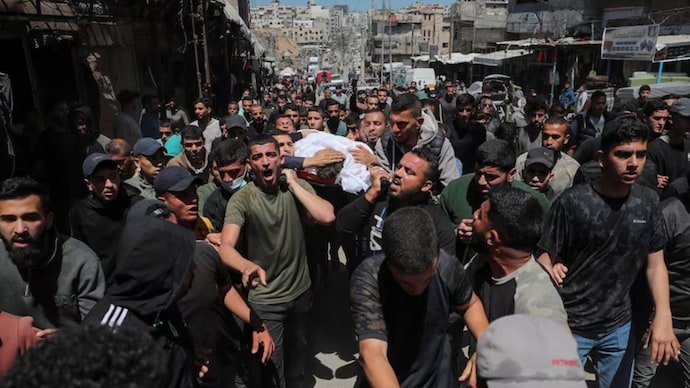
Funerals in Gaza increasingly serve not only as mourning ceremonies but as political symbols. Public gatherings, chants, and speeches reinforce collective identity during wartime, especially when civilian suffering is widespread.
This emotional dimension matters because conflicts are not driven solely by military strength. Public sentiment, grief, anger, and resilience all influence how long wars continue and how negotiations unfold.
The International Dimension: Why the World Is Watching Closely
The Gaza conflict is no longer viewed as an isolated regional crisis. It has become a geopolitical issue involving multiple international actors:
- The United States
- Egypt
- Qatar
- Iran
- Turkey
- European nations
- United Nations agencies
Washington has pushed for broader regional stabilization while balancing support for Israel with increasing global pressure over humanitarian concerns.
Egypt and Qatar continue to act as key mediators because both maintain communication channels with Hamas and Israel. Their role has become essential in preventing negotiations from collapsing entirely.
Meanwhile, regional powers are closely monitoring whether the conflict could trigger wider instability involving Lebanon, Syria, the Red Sea, or Iran-backed groups.
The longer ceasefire efforts fail, the greater the risk of broader regional escalation.
A Unique Reality Often Ignored: Wars Today Are Also Information Battles
One major angle often overlooked in traditional coverage is how modern warfare now operates heavily through narratives and information management.
Every strike, funeral, statement, and negotiation becomes part of a broader messaging war.
Israel seeks to demonstrate operational reach and security control. Hamas seeks to portray endurance, sacrifice, and resistance despite military pressure.
Social media has accelerated this dramatically.
Within minutes of major incidents, videos, reactions, and political messaging spread globally, shaping public opinion before official investigations or diplomatic responses even begin.
This means battlefield events increasingly influence international Politics in real time.
The death of a negotiator’s son is therefore not just a military development — it becomes a symbolic event with political consequences far beyond Gaza.
Could the Strike Harden Hamas’ Negotiating Position?
One critical question now facing mediators is whether the killing will harden Hamas’ negotiating posture rather than weaken it.
Historically, armed groups under pressure often become less flexible publicly, especially when leadership families are directly affected. Internal political dynamics matter enormously during wartime negotiations.
Concessions made immediately after emotionally charged events can be interpreted internally as weakness.
That creates a paradox:
The more pressure applied during negotiations, the more politically difficult compromise can become.
This does not necessarily mean talks will collapse entirely. In many conflicts, negotiations continue quietly even amid escalating violence. But trust erodes quickly, and implementation becomes significantly harder.
Comparison: Why Gaza Negotiations Differ From Earlier Middle East Ceasefires
Unlike many past regional ceasefires, the current Gaza negotiations involve not only ending immediate violence but redesigning the territory’s political future.
| Traditional Ceasefires | Current Gaza Negotiations |
|---|---|
| Temporary military pause | Long-term governance restructuring |
| Focus on troop positions | Focus on political control and reconstruction |
| Limited international involvement | Heavy international diplomatic pressure |
| Short-term stability goals | Broader regional security implications |
This is why the negotiations are extraordinarily complex. They are not simply about stopping fighting for a few weeks. They are about defining what Gaza becomes afterward.
The Bigger Question: Can Diplomacy Survive Ongoing Violence?
The latest strike revives an uncomfortable reality seen repeatedly in global conflicts: diplomacy often struggles to survive when violence continues uninterrupted.
At the same time, many wars only move toward negotiations because both sides continue applying pressure.
This contradiction explains why ceasefire processes are often messy, fragile, and emotionally charged.
In Gaza, every new strike risks pushing talks backward. Yet every failed negotiation risks extending the humanitarian catastrophe further.
That leaves mediators trapped between urgency and political reality.
Future Outlook: What Happens Next?
Several possible scenarios could emerge in the coming weeks:
- Negotiations continue quietly despite public anger
- Ceasefire implementation stalls further
- International pressure increases on both sides
- Humanitarian access becomes the central issue
- Regional actors push for interim agreements instead of a full settlement
One likely outcome is that future negotiations will become even more heavily focused on guarantees and enforcement mechanisms. Both sides increasingly distrust verbal commitments alone.
Another growing reality is that post-war governance questions may become harder than the military conflict itself.
Even if large-scale fighting slows, unresolved political disputes could continue fueling instability for years.
Conclusion
The killing of Azzam al-Hayya has become far more than a single wartime casualty. It has exposed the fragile intersection of military pressure, diplomacy, political symbolism, and human tragedy that now defines the Gaza conflict.
As ceasefire talks continue under immense strain, the incident underscores how deeply personal this war has become for leaders, negotiators, and ordinary civilians alike.
The broader challenge facing mediators is no longer simply stopping violence temporarily. It is determining whether any sustainable political framework can survive in an Environment where trust is collapsing faster than diplomacy can rebuild it.
For now, Gaza remains caught between negotiations that cannot fully succeed and a conflict that neither side appears able to fully end.
For breaking news and live news updates, like us on Facebook or follow us on Twitter and Instagram. Read more on Latest World on thefoxdaily.com.






COMMENTS 0