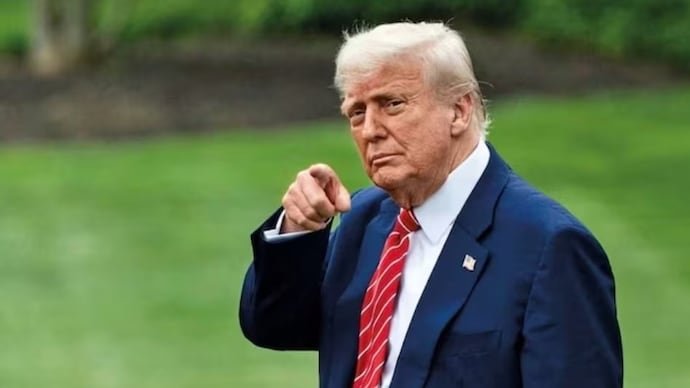
The possibility of fresh US military strikes on Iran has once again pushed the Middle East to the edge of uncertainty. President Donald Trump is reportedly weighing military action if ongoing diplomatic talks fail to produce a breakthrough, according to multiple American media reports and officials familiar with the discussions.
The developments come at a delicate moment for global security. Behind closed doors, Washington is reviewing military options while diplomatic teams scramble to prevent another phase of direct confrontation between the United States and Iran. Pakistan Army chief Field Marshal Asim Munir and a Qatari delegation have arrived in Tehran in what many observers describe as an emergency diplomatic effort to salvage negotiations before the crisis spirals further.
The renewed tensions are not just about missiles, drones, or military power. They are about regional influence, oil markets, global trade routes, nuclear anxieties, domestic Politics inside the United States and Iran, and the growing risk of a wider Middle East conflict that could involve multiple nations.
What makes this moment especially significant is that it arrives only weeks after a fragile ceasefire had temporarily reduced hostilities. Intelligence assessments now suggesting that Iran has restarted portions of its drone production network have reportedly deepened concerns within Washington and Israel.
Why the US-Iran Crisis Has Reached a Dangerous Stage Again
The current crisis did not emerge overnight. Relations between Washington and Tehran have remained deeply hostile for decades, but recent months have seen a sharp rise in direct military tension.
The three-month conflict between Iran, the United States, and Israel marked one of the most dangerous phases in the region since the Iraq War era. Although the ceasefire paused active combat, it never resolved the underlying disputes.
Several core disagreements remain unresolved:
- Iran’s expanding missile and drone capabilities
- Tehran’s regional alliances and proxy networks
- US sanctions on Iran’s economy
- Security concerns surrounding Israel
- The future of nuclear-related negotiations
- Military influence in the Persian Gulf region
Diplomatic channels have remained open, but officials from both sides increasingly appear frustrated. Reports indicate that draft proposals have been exchanged repeatedly without meaningful progress on the most sensitive issues.
One major concern for Washington is the belief that Iran may be using negotiations to buy time while rebuilding parts of its military infrastructure damaged during recent hostilities.
Trump’s Shift From Patience to Pressure
Inside the White House, the tone surrounding Iran appears to have changed significantly in recent days.
Earlier in the week, Trump reportedly favored allowing diplomacy more time. However, sources close to the administration now suggest the President has grown increasingly impatient with the pace of negotiations.
The latest National Security meeting reportedly included Vice President JD Vance, Defense Secretary Pete Hegseth, CIA Director John Ratcliffe, and senior White House officials. Discussions focused not only on diplomatic efforts but also on military contingency plans should talks collapse.
That detail matters because administrations generally do not activate high-level contingency reviews unless military options are being taken seriously.
Trump’s decision to alter his weekend schedule and remain in Washington instead of attending family events has further fueled speculation that the administration believes the next 24 to 72 hours could be critical.
Observers familiar with Trump’s political style note that he often combines pressure tactics with diplomacy. His approach typically involves creating uncertainty around possible military action while simultaneously leaving space for negotiations.
That strategy has appeared before in previous geopolitical confrontations involving North Korea, China, and Iran itself.
Pakistan and Qatar Enter the Diplomatic Spotlight
One of the most overlooked developments in the crisis is the growing diplomatic role of Pakistan and Qatar.
Pakistan’s military leadership has historically maintained relationships with both Washington and Tehran, making Islamabad one of the few regional actors capable of communicating with both sides during periods of extreme tension.
Field Marshal Asim Munir’s visit to Tehran signals that regional powers are deeply concerned about the consequences of another military escalation.
Qatar’s involvement is equally important. Doha has increasingly positioned itself as a mediator in complex international conflicts, including negotiations involving Afghanistan, Hamas, and various regional ceasefire efforts.
The participation of these intermediaries suggests that backchannel diplomacy remains active even as public rhetoric intensifies.
| Key Stakeholder | Primary Interest | Current Position |
|---|---|---|
| United States | Prevent Iranian military expansion | Considering both diplomacy and strikes |
| Iran | Preserve strategic influence and deterrence | Negotiating while rebuilding capabilities |
| Israel | Reduce Iranian military threat | Supports stronger pressure on Tehran |
| Pakistan | Prevent regional instability | Acting as mediator |
| Qatar | Maintain regional diplomatic balance | Supporting negotiations |
Iran’s Drone Network Is Becoming a Major Concern
A key factor driving Washington’s urgency appears to be intelligence suggesting that Iran has resumed parts of its drone manufacturing operations far sooner than expected.
Iran’s drone program has become one of the most strategically important elements of its defense system over the past decade.
Unlike traditional air forces that require massive budgets and advanced aircraft, drone warfare allows Iran to project influence at a lower cost while complicating enemy defense systems.
Military analysts say Iran has invested heavily in:
- Long-range attack drones
- Surveillance UAVs
- Precision strike systems
- Electronic warfare capabilities
- Swarm drone tactics
These systems have increasingly reshaped modern Middle East warfare. Drones can bypass expensive missile defenses, target infrastructure, and create psychological pressure without requiring full-scale invasions.
For Washington and Israel, the rapid restoration of Iran’s drone network raises fears that Tehran could quickly recover military capabilities despite previous strikes.
The Global Economic Stakes Are Massive
While military headlines dominate attention, the economic implications of another US-Iran conflict could be enormous.
The Middle East remains central to global energy markets, and any disruption involving Iran could immediately affect oil prices, shipping routes, and Inflation worldwide.
The Strait of Hormuz, located near Iran, handles a significant portion of global oil transportation. Even the threat of instability in that region can trigger market volatility.
Financial markets are already highly sensitive to geopolitical uncertainty due to ongoing economic pressures, inflation concerns, and fragile global supply chains.
If military action resumes, possible consequences could include:
- Sharp increases in crude oil prices
- Higher fuel costs globally
- Disruptions to shipping insurance markets
- Pressure on Asian and European energy imports
- Renewed inflation risks
- Instability in global stock markets
This is one reason why several countries are quietly pushing for diplomacy even if they publicly avoid taking sides.
How This Crisis Differs From Previous US-Iran Confrontations
There are several important differences between the current standoff and earlier US-Iran crises.
Direct Military Exposure
Previous confrontations often involved proxy conflicts. This time, the conflict has included more direct military engagement and openly acknowledged threats.
Drone Warfare Has Changed the Battlefield
Iran’s growing drone capabilities create a very different security environment compared to earlier decades.
Regional Alliances Are More Complicated
The Middle East diplomatic landscape has shifted significantly. Countries like Saudi Arabia, Qatar, Turkey, and Pakistan are pursuing more flexible foreign policies rather than strictly aligning with one side.
Trump’s Political Position Matters
Trump’s leadership style plays a major role in shaping perceptions of risk. Supporters view aggressive pressure as necessary deterrence, while critics fear sudden escalation.
Could a Last-Minute Diplomatic Breakthrough Still Happen?
Despite rising fears, diplomacy has not completely collapsed.
Officials involved in the negotiations reportedly believe there remains a narrow opportunity for a temporary understanding that could delay or prevent military action.
Such agreements often emerge at the last possible moment during high-pressure geopolitical crises.
Potential areas for compromise could include:
- Temporary military restraint commitments
- Limits on drone production
- Monitoring arrangements
- Phased sanctions discussions
- Regional security guarantees
However, the challenge is that both Washington and Tehran face domestic political pressures that make compromise difficult.
Iranian leaders cannot appear weak internally, especially after recent military confrontations. Meanwhile, Trump faces pressure from hawkish voices demanding stronger action against Tehran.
What Happens If Talks Fail?
If negotiations collapse entirely, several scenarios become possible.
Limited Precision Strikes
The most likely immediate option would involve targeted strikes on Iranian military facilities, drone infrastructure, or strategic assets.
Regional Escalation
Iran could respond indirectly through regional allies or asymmetric tactics rather than immediate conventional warfare.
Cyber Warfare
Cyberattacks against infrastructure, banking systems, or energy facilities could become part of the conflict.
Global Diplomatic Fallout
A fresh military operation could deepen divisions between major powers and complicate broader international diplomacy.
The Bigger Strategic Picture Competitors Are Missing
Many reports are focusing only on whether strikes will happen. But the deeper story is about the transformation of modern deterrence.
This crisis highlights how warfare has evolved beyond traditional armies and tanks.
Today’s geopolitical confrontations involve:
- Drone networks
- Cyber operations
- Economic sanctions
- Information warfare
- Proxy influence
- Energy leverage
- Diplomatic pressure campaigns
The United States is not simply trying to stop one specific military capability. It is trying to prevent Iran from building a sustainable long-term deterrence system capable of reshaping regional power dynamics.
Iran, meanwhile, views its military capabilities as essential protection against external pressure and regime vulnerability.
That fundamental strategic clash explains why negotiations remain so difficult despite repeated diplomatic efforts.
Why Global Leaders Are Watching Closely
Governments across Europe, Asia, and the Middle East are monitoring the situation closely because the consequences extend far beyond Iran and the United States.
China depends heavily on Middle Eastern energy imports. European economies remain vulnerable to energy price shocks. Gulf nations fear regional instability. Israel views Iranian military expansion as an existential threat.
Even countries geographically far from the conflict could feel economic and security consequences if tensions escalate.
This explains why diplomatic efforts involving multiple countries have intensified simultaneously.
Conclusion: The Next Few Days Could Shape the Middle East’s Future
The confrontation between the United States and Iran has entered another critical phase where diplomacy and military escalation are moving in parallel.
President Trump’s apparent willingness to consider fresh strikes reflects growing frustration inside Washington over stalled negotiations and concerns about Iran rebuilding military capabilities.
At the same time, active mediation efforts by Pakistan and Qatar show that regional powers still believe a diplomatic solution may be possible.
The outcome of the next round of negotiations could determine whether the region moves toward temporary stability or returns to another dangerous cycle of military confrontation.
For now, the world is watching a geopolitical chess match where every move carries consequences not only for the Middle East, but also for global energy markets, international diplomacy, and the future balance of power in one of the world’s most volatile regions.
For breaking news and live news updates, like us on Facebook or follow us on Twitter and Instagram. Read more on Latest World on thefoxdaily.com.


COMMENTS 0