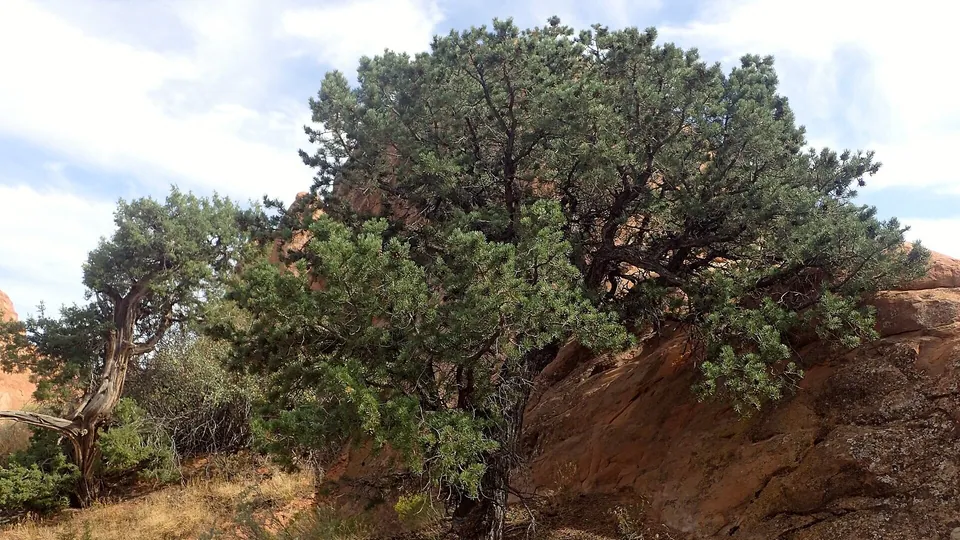
Rising temperatures can make drought more deadly for trees, even when the trees are adapted to dry conditions. A 2009 study led by ecologist Henry Adams and his colleagues found that drought-stressed piñon pines exposed to warmer conditions died significantly sooner than trees experiencing temperatures closer to their natural environment.
In an experiment conducted at the University of Arizona’s Biosphere 2 facility, researchers found that unwatered piñon pines in a warmer environment survived an average of 18 weeks, compared with 25.1 weeks for those kept at normal temperatures. This represented a 28% reduction in survival time.
The researchers also examined more than a century of regional climate records from the southwestern United States. Their analysis suggested that temperature increases alone could make droughts severe enough to cause forest die-offs around five times more frequently.
However, the researchers cautioned that the experiment involved only one tree species and that results from container-grown trees should not be directly applied to wild forests.
How Researchers Tested the Effect of Higher Temperatures on Piñon Pines
Piñon pines are adapted to relatively dry environments, but prolonged water shortages can still cause them to die. To understand how rising temperatures influence their survival during drought, researchers transferred 20 mature piñon trees from a ranch in New Mexico to a climate-controlled environment at Biosphere 2 in Arizona.
The trees were divided into two groups of 10. One group experienced temperatures similar to the trees’ natural conditions, while the other was kept in an environment approximately 4.3 degrees Celsius warmer.
Researchers then withheld water from five trees in each group, allowing them to compare how drought affected trees under different temperature conditions.
The results showed a clear difference in survival time. The unwatered trees in the warmer environment died after an average of 18 weeks, while those in the normal-temperature environment survived for an average of 25.1 weeks.
This indicated that even without changing the level of water stress, higher temperatures significantly accelerated the decline of drought-stressed trees.
Why Did Higher Temperatures Make the Trees Die Faster?
The researchers investigated the biological processes behind the shorter survival time. Drought can kill trees through two major mechanisms.
The first occurs when trees close the small openings on their leaves, known as stomata, to reduce water loss. This also restricts the intake of carbon dioxide needed for photosynthesis, limiting the production of new sugars. Trees then begin relying on stored carbon reserves to maintain essential functions. If these reserves become depleted, the trees may eventually die.
The second mechanism involves hydraulic failure. Severe water stress can create air bubbles inside the water-conducting tissues of trees, disrupting the movement of water from roots to leaves.
The study found that the warmer conditions accelerated the depletion of stored carbon reserves. Researchers observed that photosynthesis declined rapidly in both groups of unwatered trees, approaching zero by the third week.
Respiration rates, however, began to differ between the two groups during the third and fourth weeks. Trees exposed to higher temperatures consumed their stored carbon more rapidly, leaving them with less energy to survive prolonged drought.
The researchers also found that measures of water stress were similar in both groups. This suggested that the difference in survival was not primarily caused by greater hydraulic damage in the warmer trees.
How Heat Speeds Up the Depletion of Stored Energy
In an April 2010 interview with Southwest Climate Outlook, published by the Climate Assessment for the Southwest (CLIMAS), Adams used a marathon comparison to explain the findings.
He described two runners who consume the same meal before a race, with one competing in Chicago and the other running in Tucson in temperatures reaching 100 degrees Fahrenheit. The runner in the hotter conditions would use energy more quickly and exhaust available reserves sooner.
The same principle applies to drought-stressed trees. When they can no longer absorb enough carbon dioxide to sustain photosynthesis, they continue using stored energy to maintain their living tissues. Higher temperatures increase the rate at which those reserves are consumed.
As a result, warmer conditions can shorten the period trees are able to survive without water, even when the degree of water stress remains similar.
Climate Records Suggest Forest Die-Offs Could Become Five Times More Frequent
After examining the laboratory results, Adams and his colleagues analysed 103 years of regional climate records from four southwestern US states to understand what the findings could mean for forests in the region.
The researchers found that the major forest die-off in 2002 coincided with a drought lasting 26.1 weeks. It was the only six-month regional drought identified in their dataset.
However, the experiment showed that warmer temperatures reduced the survival time of drought-stressed piñon pines by 28%. Based on this reduction, the researchers estimated that a drought lasting approximately 18.7 weeks under warmer conditions could have similarly damaging effects.
The historical climate records contained at least five droughts of this shorter duration.
Using their model, the researchers projected that temperature increases alone could make droughts severe enough to cause forest dieback around five times more frequently.
They described this as a conservative projection because the analysis did not account for possible increases in drought frequency or bark beetle activity, both of which could place additional pressure on forests.
What the 2002-2003 Piñon Pine Die-Off Meant for the Southwest
The CLIMAS interview described the scale of the 2002-2003 forest die-off, which affected approximately 4,500 square miles of piñon forest in the Four Corners region of the American Southwest.
The affected areas were left with extensive dry stands of trees. Such dead vegetation can increase wildfire risks and change the appearance of landscapes that attract visitors, particularly during the autumn season when piñon forests contribute to regional scenery.
The interview also discussed a separate forest die-off in British Columbia that covered approximately 50,200 square miles. The event placed pressure on the timber industry and contributed to the release of carbon previously stored in trees.
These effects highlight why widespread forest mortality matters beyond the loss of individual trees. Forests absorb carbon dioxide and store carbon, meaning large-scale die-offs can weaken their role in the carbon cycle while adding to the amount of carbon released into the atmosphere.
Why the Researchers Cautioned Against Applying the Results to All Forests
Although the experiment demonstrated how higher temperatures can accelerate drought-related tree mortality, Adams acknowledged important limitations.
The trees used in the experiment were grown in containers, which means their survival times could differ from those of trees growing naturally in forests. Adams cautioned that wild piñon pines would likely survive longer than the container-grown trees used in the study.
The research also focused on a single species. Different tree species may respond differently to heat, drought and changes in their stored energy reserves. Therefore, the findings cannot automatically be applied to every forest ecosystem.
The research team later replicated the experiment in Flagstaff, Arizona. For that study, researchers moved piñon trees to a warmer location and used tarps to prevent rainfall from reaching them.
What the Study Reveals About Rising Temperatures and Forest Health
The Biosphere 2 experiment showed that temperature can influence how quickly drought-stressed trees use their stored energy and how long they survive without water. Even a relatively modest increase in temperature can make prolonged drought more damaging.
The researchers’ historical analysis further suggested that droughts capable of causing major forest die-offs could become more frequent as temperatures rise, even without accounting for changes in rainfall patterns or other environmental pressures.
While the findings are limited to the species and experimental conditions studied, they highlight an important challenge for forest ecosystems: trees adapted to dry environments may still face greater mortality risks when drought and higher temperatures occur together.
For breaking news and live news updates, like us on Facebook or follow us on Twitter and Instagram. Read more on Latest World on thefoxdaily.com.






COMMENTS 0