- A Carefully Staged Beginning: Optics Set the Tone
- The Build-Up: Key Leaders Take Their Positions
- Opposition Signals: Focused Yet Fragmented
- Prime Minister Modi’s Entry and Opening Tone
- Real-Time Reactions: Notes, Glances, and Subtext
- The OBC Flashpoint: Turning Challenge into Opportunity
- Rahul Gandhi’s Entry: Signals of Coordination
- Moments of Disruption and Spontaneity
- A Strategic Shift: Offering Credit to the Opposition
- Opposition Strategy: Huddles and Preparation
- The Final Moments: Ending on a Lighter Note
- Beyond Words: Politics as Performance
- Conclusion: A Defining Moment in Parliamentary Messaging
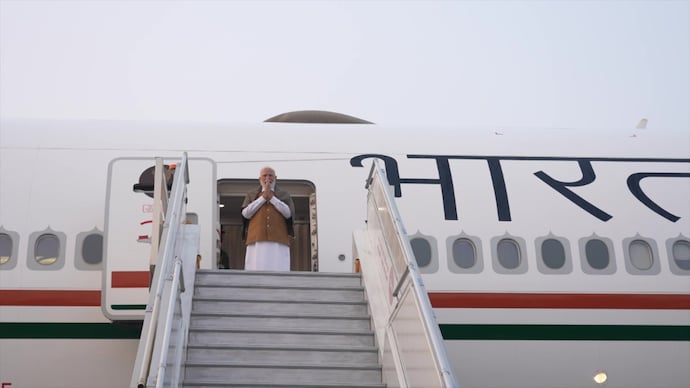
Introduction: Prime Minister Narendra Modi delivered a carefully crafted 37-minute speech in the lok Sabha during the debate on the Women’s Reservation Bill, turning a routine legislative discussion into a strategic political moment. The debate took place on Thursday afternoon in New Delhi, where both the ruling party and the Opposition brought their top leaders to the floor. The session was not just about policy it was about messaging, optics, and positioning ahead of key political battles. From coordinated appearances and symbolic gestures to sharp exchanges on OBC representation and subtle attempts at consensus-building, the Prime Minister used the platform to shape the narrative, while the Opposition signaled resistance through notes, timing, and visible coordination.
A Carefully Staged Beginning: Optics Set the Tone
Even before the Prime Minister began speaking, the Lok Sabha chamber reflected a sense of deliberate preparation. Observers noted a strong visual presence of women in the public galleries, including groups dressed in traditional attire. The symbolism was hard to ignore, especially with upcoming Elections in key states.
Interestingly, both Prime Minister Modi and Priyanka Gandhi Vadra were seen wearing shades of blue an apparent coincidence that nonetheless added to the visual narrative of the day. In Politics, such details rarely go unnoticed.
The atmosphere resembled a high-stakes event rather than a routine parliamentary sitting, with every movement and presence contributing to a broader message.
The Build-Up: Key Leaders Take Their Positions
In the minutes leading up to the speech, the Lok Sabha floor gradually filled with prominent political figures, creating a sense of anticipation.
- Priyanka Gandhi Vadra arrived early, prepared with a notepad and pen
- Finance Minister Nirmala Sitharaman took her seat in the front rows
- Actor-turned-MP Kangana Ranaut added visibility to the treasury benches
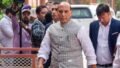
- Home Minister Amit Shah and Defence Minister Rajnath Singh completed the leadership lineup
The coordinated presence of senior leaders signaled the importance of the debate. It was clear that both sides viewed the session as politically significant.
Opposition Signals: Focused Yet Fragmented
While the Congress benches showed visible engagement particularly through Priyanka Gandhi’s attentive note-taking the broader Opposition presence appeared uneven in the early moments.
Key leaders such as Rahul Gandhi, Akhilesh Yadav, and Asaduddin Owaisi were initially absent, creating a perception of staggered participation. However, this absence did not necessarily indicate disinterest; rather, it hinted at timing strategies often used in parliamentary debates.
Priyanka Gandhi’s demeanor stood out. Focused and methodical, she continuously noted points, reflecting a tactical approach to responding later in the debate.
Prime Minister Modi’s Entry and Opening Tone
Prime Minister Modi entered the Lok Sabha shortly before 3 pm, accompanied by senior ministers. His arrival was met with slogans from the treasury benches, while the Opposition maintained relative silence a contrast that set the tone for the session.
He began speaking at 3:02 pm, opening with a lighter remark that subtly targeted the Opposition. This approach blending humor with critique is a hallmark of his speaking style.
By starting on a less confrontational note, he created space to gradually build toward more substantive arguments.
Real-Time Reactions: Notes, Glances, and Subtext
As the speech progressed, the interplay between speakers and listeners became increasingly significant. Priyanka Gandhi’s continuous note-taking reflected active engagement, while the Prime Minister occasionally directed his gaze toward Opposition benches.
These small gestures glances, pauses, reactions often carry as much meaning as the spoken words in parliamentary settings.
For observers, the debate unfolded as a layered performance, where communication extended beyond microphones.
The OBC Flashpoint: Turning Challenge into Opportunity
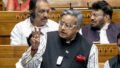
A key moment in the debate came around 3:16 pm, when Samajwadi Party MPs raised concerns about representation for Other Backward Classes (OBCs) within the Women’s Reservation framework.
The Prime Minister responded by identifying himself as belonging to an OBC background, effectively reframing the argument. This move allowed him to connect personally with the issue while countering the Opposition’s narrative.
The exchange with Akhilesh Yadav added energy to the debate, highlighting differing perspectives on representation and inclusion.
This moment demonstrated a key political skill: turning a challenge into an opportunity to reinforce one’s own position.
Rahul Gandhi’s Entry: Signals of Coordination
Rahul Gandhi’s arrival midway through the speech added another layer to the unfolding drama. His brief interaction with Priyanka Gandhi a tap on the shoulder was a subtle yet noticeable moment.
Shortly after, he exchanged gestures with Akhilesh Yadav, indicating coordination among opposition leaders. These non-verbal cues suggested ongoing communication and alignment, even as the Prime Minister continued his address.
Such gestures, though brief, often signal deeper strategic planning within parliamentary proceedings.
Moments of Disruption and Spontaneity
Like many high-stakes debates, this session was not without interruptions. Slogans were raised, and some Opposition members attempted to interject.
One notable moment came when a member attempted to speak without an active microphone. The Prime Minister responded with a light remark, suggesting the member be allowed to speak a comment that blended humor with subtle political messaging.
These moments added unpredictability to the session, reinforcing the dynamic nature of parliamentary debates.
A Strategic Shift: Offering Credit to the Opposition
As the debate progressed, the Prime Minister adopted a conciliatory tone, offering the Opposition full credit for the Women’s Reservation Bill.
This move was both unexpected and strategic. By extending credit, he positioned himself as open to consensus while simultaneously shaping the narrative around cooperation.
He even suggested that government-funded advertisements could feature Opposition leaders, reinforcing the message of inclusivity.
In political communication, such gestures can serve multiple purposes:
- Reducing immediate confrontation
- Projecting statesmanship
- Shifting public perception toward collaboration
It was a calculated blend of magnanimity and messaging.
Opposition Strategy: Huddles and Preparation
As the Prime Minister continued speaking, key Opposition leaders including Rahul Gandhi and KC Venugopal were seen engaging in discussions.
These huddles indicated ongoing strategy adjustments, likely focused on shaping their response to the speech.
Meanwhile, Priyanka Gandhi remained consistently focused on note-taking, suggesting a structured approach to her upcoming intervention.
The contrast between visible coordination and individual preparation highlighted different styles within the Opposition.
The Final Moments: Ending on a Lighter Note
The Prime Minister concluded his speech at 3:39 pm, ending on a lighter note by thanking members for what he described as a “kala tika,” referencing black attire worn by some MPs.
This closing remark served to soften the tone after a politically charged discussion, leaving the House with a mix of seriousness and subtle humor.
Ending speeches on lighter notes is a common rhetorical technique, helping to balance intensity with relatability.
Beyond Words: Politics as Performance
What unfolded during these 37 minutes was more than a legislative debate it was a carefully orchestrated political performance.
Key elements included:
- Optics: Strategic presence of women and coordinated appearances
- Timing: Staggered entry of key leaders
- Messaging: Blending humor, critique, and consensus
- Non-verbal cues: Notes, gestures, and glances shaping the narrative
Each of these factors contributed to a broader communication strategy aimed at influencing both the House and the public.
Conclusion: A Defining Moment in Parliamentary Messaging
Prime Minister Narendra Modi’s 37-minute address on the Women’s Reservation Bill stands out as a significant example of modern political communication. It combined policy discussion with strategic messaging, using both words and visuals to shape perception.
While the debate itself continues, the session highlighted how parliamentary proceedings have evolved into multi-layered platforms where optics, timing, and narrative-building are as important as legislation.
Looking ahead, the real impact of this debate will depend on how the bill progresses and how both the government and Opposition carry forward their messaging. However, one thing is clear: in today’s politics, what is said matters but how it is said, and everything that surrounds it, matters just as much.
For breaking news and live news updates, like us on Facebook or follow us on Twitter and Instagram. Read more on Latest India on thefoxdaily.com.

COMMENTS 0