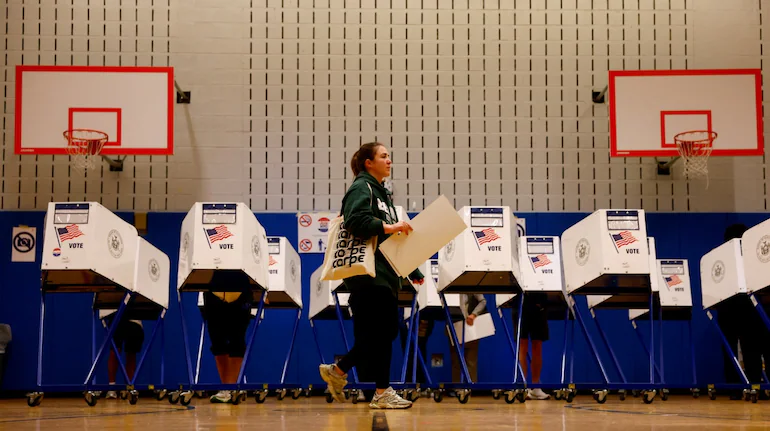
Indian Americans‘ opposition to Republicans in the 2026 US midterm elections was driven largely by dissatisfaction with President Donald Trump‘s domestic policies rather than concerns about his administration’s relationship with India. Political scientist Sumitra Badrinathan has said that jobs, economic conditions, immigration restrictions and the cost of living played a greater role in shaping voters’ choices.
Badrinathan, an assistant professor of political science at American University, made the remarks in an interview with PTI following the November 3 midterm elections, in which Democrats won control of both the US House of Representatives and the Senate.
A survey released by the Carnegie Endowment for International Peace on November 2 found that 62% of Indian American citizens intended to vote for Democratic candidates in congressional elections, compared with 19% who favoured Republicans.
Key Highlights
- 62% of Indian American citizens surveyed intended to support Democratic candidates in the 2026 midterm elections.
- Only 19% said they planned to vote for Republican candidates, according to the Carnegie survey.
- Jobs, the economy and the cost of living were among the main concerns influencing Indian American voters.
- Immigration restrictions, H-1B visa policies and concerns about discrimination may also have affected voting preferences.
- Researcher Sumitra Badrinathan said voters’ views on US domestic policies mattered more than politicians’ positions towards India.
Why Indian Americans Turned Away from Trump’s Republicans
According to Badrinathan, Indian American voters were primarily concerned about issues affecting their everyday lives. These included employment opportunities, economic conditions and rising living costs rather than the US government’s relationship with India.
“We’ve consistently asked Indian Americans whether they care about their politicians’ stance towards India, and the answer always seems to be a ‘no’,” she told PTI.
She explained that Indian Americans were motivated by many of the same issues influencing the wider American electorate. Economic concerns remained central, while immigration policies and experiences of discrimination may have added to dissatisfaction with the Republican administration.
Badrinathan also cautioned against explaining the election results only through inflation and higher oil prices linked to the Iran war. She said immigration-related concerns, including H-1B visa policies, may have played a greater role in voters’ decisions.
Carnegie Survey Shows Strong Democratic Preference
The Carnegie Endowment for International Peace released its Indian American Attitudes Survey on November 2, one day before the midterm elections. Conducted in partnership with YouGov between October 7 and October 27, the survey covered 1,000 Indian American adults.
The findings showed that 62% of Indian American citizens intended to support Democratic candidates in congressional elections, while 19% favoured Republicans. These figures represent voting intentions recorded before the election, not the actual votes cast.
The results suggested a reversal of the Republican Party’s earlier gains among Indian American voters. In the 2024 presidential election, 30% of respondents supported Donald Trump, compared with 62% who backed Democratic candidate Kamala Harris.
However, the two sets of figures relate to different elections and should not be treated as a direct comparison of voting behaviour in identical contests.
Immigration and H-1B Visa Policies Become Major Concerns
Immigration policy was another important issue highlighted by Badrinathan. Restrictions affecting immigrants, uncertainty surrounding H-1B visas and concerns about discrimination may have influenced how Indian American voters viewed the Republican administration.
The H-1B visa programme is particularly relevant to many Indian professionals seeking employment in the United States. Changes to immigration rules can affect workers, employers and families who depend on these pathways.
An earlier Carnegie survey released in February found that 64% of Indian Americans disapproved of Trump’s immigration policies. The same survey reported that 68% opposed his handling of the domestic economy, while 70% disapproved of his international economic policies.
These findings indicate that dissatisfaction with several policy areas existed before the November midterm elections.
Controversial Remarks About South Asian Students Add to Debate
The election campaign also featured controversy over remarks targeting South Asian students at the University of Texas by Republican politician Bo French.
Badrinathan said it was difficult to determine whether French’s comments alone influenced voting decisions. She pointed to the wider political environment, including immigration debates, economic concerns and rhetoric surrounding discrimination.
The controversy formed part of a broader discussion about how political messaging and public attitudes towards immigrant communities may affect electoral preferences.
Vivek Ramaswamy’s Defeat in Ohio Governor’s Race
Another notable outcome of the midterm elections was Republican Vivek Ramaswamy’s defeat to Democrat Amy Acton in the Ohio governor’s race.
The result attracted attention because Ramaswamy is a prominent Indian American Republican politician. However, his defeat does not by itself establish why Indian American voters made their choices across the country.
The broader Carnegie survey and Badrinathan’s comments point towards economic and domestic policy concerns as important factors behind Indian American voting intentions.
Will Democratic Control of Congress Change US Policy Towards India?
The Democrats’ control of both chambers of Congress raises questions about the possible impact on Washington’s approach towards India. However, Badrinathan said it remained unclear whether the election results would lead to significant policy changes or political gridlock.
Congressional control can influence legislation, oversight and political debate, but it does not automatically determine every aspect of US foreign policy. The administration’s role and the positions of lawmakers will also matter.
Badrinathan also noted that concerns about immigration restrictions and discrimination had not translated into a broader departure from the United States among Indians seeking education and employment opportunities.
Conclusion
The 2026 US midterm results and Carnegie survey suggest that Indian American voting preferences were shaped more by domestic concerns than by the Trump administration’s approach towards India. Economic conditions, jobs, living costs, immigration restrictions and discrimination emerged as important issues. While 62% of surveyed Indian American citizens intended to support Democrats, the findings measured pre-election intentions rather than actual ballots. The extent to which Democratic control of Congress will affect US domestic and foreign policy remains uncertain.
For breaking news and live news updates, like us on Facebook or follow us on Twitter and Instagram. Read more on Latest Business on thefoxdaily.com.






COMMENTS 0