US President Donald Trump’s Board of Peace has formally asked Italy to provide police, firefighting and Carabinieri advisers for a proposed security force in the Gaza Strip, opening a new discussion about Rome’s potential role in the post-war administration and reconstruction of the Palestinian territory.
Letters sent to Italian Prime Minister Giorgia Meloni’s government last month requested that Italy commit to the initiative, nominate a point of contact and appoint a senior Carabinieri officer as the Board of Peace’s deputy police programme manager, according to correspondence reviewed by Bloomberg News.
Italy is considering the request, but security concerns and uncertainty surrounding the proposed force have complicated the decision. People familiar with the Italian government’s thinking said Rome was weighing the appointment of a senior officer, although no final decision had been made.
The request comes as the Board of Peace seeks international support for its Gaza plan, nearly nine months after its official launch. Despite announcing reconstruction funding and seeking contributions from several governments, the initiative has yet to establish a stabilisation force or a Palestinian administration on the ground.
What Has the US Asked Italy to Provide?
The letters reportedly ask Italy to contribute advisers from three areas: the national police, firefighting services and the Carabinieri. The most specific request concerns the nomination of a senior Carabinieri officer to serve as deputy police programme manager.
The proposed role would involve supporting the development of security and policing arrangements for Gaza. The Board of Peace has also asked Rome to formally commit to the initiative and designate an official who can coordinate with the organisation.
The Carabinieri are Italy’s military police force and operate under the country’s Ministry of Defence. They have experience in international missions and have provided training to Palestinian police officers over several years.
Italy has also participated in European Union missions connected to the Rafah border crossing in southern Gaza. Its previous involvement has largely focused on training and capacity-building rather than deploying combat personnel into the territory.
The Board of Peace has indicated that the discussions are not about sending Italian tactical forces into active combat areas. An official told Bloomberg that the proposed support would focus on capacity-building and assistance to institutions involved in Gaza’s future administration.
Why Italy Is Hesitant About Joining the Initiative
Italy’s position on the Board of Peace has remained cautious. Meloni declined earlier this year to sign the organisation’s charter, citing constitutional constraints. Although Washington had previously approached Italy about joining the proposed Gaza stabilisation force as a founding member, Rome limited its involvement to offering police training.
The latest request therefore presents the Italian government with a decision about whether to expand its existing role without necessarily committing personnel to a security deployment inside Gaza.
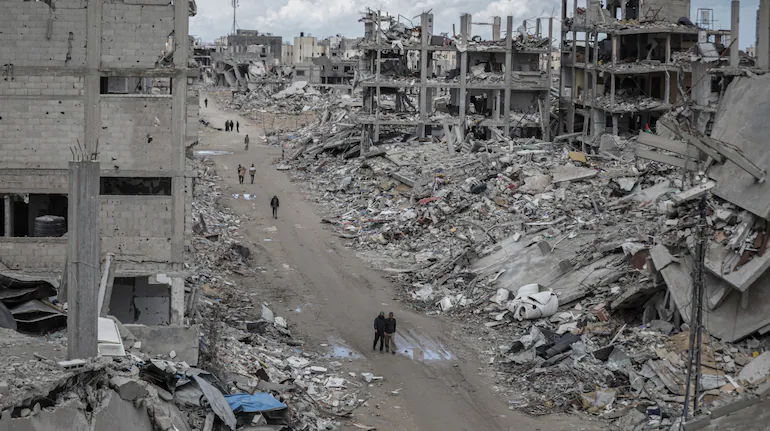
Security conditions remain a major concern. Any international policing mission would have to operate in a territory affected by extensive destruction, unresolved political arrangements and uncertainty over the future role of armed groups.
The mandate of the proposed force is also important. Italy would need clarity about its responsibilities, operating conditions and relationship with the Palestinian authorities before deciding what personnel or institutional support it could provide.
Relations between Meloni and Trump have also reportedly experienced tensions following a disagreement earlier this year. People familiar with the matter told Bloomberg that the episode temporarily strained relations between Rome and Washington, adding another consideration to the Italian government’s deliberations.
Meloni is also preparing for Italy’s next general election, scheduled for 2027. Her government will have to weigh the diplomatic value of supporting the US initiative against domestic political considerations and concerns about the risks of involvement in Gaza.
Italy Has Previously Offered to Train Palestinian Police
Italy’s potential contribution would build on an existing record of cooperation with Palestinian security institutions. The Carabinieri have provided training to Palestinian police officers, including through programmes connected to international efforts in the region.
In January 2026, Italian Foreign Minister Antonio Tajani said Rome had been willing to provide Carabinieri instructors to train Gaza police officers, including through arrangements in Jordan or Egypt. He also referred to the possibility of supporting the Rafah crossing and strengthening the training presence in Jericho in the occupied West Bank.
That position suggested Italy was open to supporting the development of Palestinian policing capabilities but remained cautious about joining a wider international security deployment. ANSA reported at the time that the US had sought Italy’s participation in the proposed stabilisation force, while Rome’s proposed contribution was centred on training rather than sending troops.
The latest request could give Italy a more formal role in shaping the police programme, although the extent of its participation remains uncertain.
Board of Peace Faces Delays in Gaza Stabilisation Plan
The request to Italy comes amid questions about the progress of the Board of Peace’s wider plan for Gaza. Nine months after its official launch, the organisation has yet to establish a stabilisation force or a Palestinian administration inside the territory. Reconstruction work has also not begun on the scale outlined in its plans.
Last month, the board earmarked $2.45 billion for Gaza’s reconstruction. However, the amount represents only a fraction of the estimated $71 billion that the organisation says will be required over a decade to rebuild the war-damaged territory.
The gap between the announced funding and the projected reconstruction requirement highlights the scale of the challenge. Gaza requires extensive work on housing, hospitals, schools, roads, water systems, electricity networks and other essential infrastructure.
Reconstruction also depends on political and security arrangements that can provide a workable environment for international organisations, contractors and humanitarian agencies.
The proposed international security force is intended to form part of those arrangements. However, questions about its mandate, composition and responsibilities have made it difficult to secure commitments from potential contributors.
Hamas Disarmament Remains a Major Challenge
The wider peace framework also faces uncertainty over the future of Hamas and the group’s weapons. The 2025 agreement brokered with US involvement requires Hamas to disarm, but the group has yet to do so.
Disarmament is central to the proposed post-war security arrangements because international contributors would need to understand how the force would operate alongside existing armed groups and any future Palestinian administration.
Countries considering participation are likely to seek clarity on whether the stabilisation force would be responsible for enforcing disarmament, maintaining public order, securing border areas or supporting Palestinian police institutions.
These questions carry significant implications for countries such as Italy, which may be willing to provide training and technical advisers but reluctant to place personnel in situations where they could become directly involved in armed confrontations.
The Board of Peace has sought to reassure potential partners that the assistance being discussed with Italy does not involve deploying tactical forces into active combat areas.
Board of Peace Says Discussions With Italy Are Ongoing
The Italian government declined to comment when contacted by Bloomberg News. The US State Department referred questions to the Board of Peace.
A Board of Peace official said the organisation was in active discussions with several governments about possible contributions to Gaza’s reconstruction and future administration.
The official praised Italy’s previous work on police capacity-building and said the board had held positive discussions with Italian authorities about potential support for the technocratic National Committee for the Administration of Gaza.
The official also stressed that the discussions did not involve sending tactical forces into areas of active fighting, adding that the decision on how to support Gaza ultimately rested with the Italian government.
The statement indicates that Washington is seeking contributions that extend beyond military deployments. Police training, institutional advice and technical assistance could allow countries to support the initiative without committing combat personnel.
What Italy’s Decision Could Mean for Gaza
Italy’s response could influence how the Board of Peace develops its proposed policing and administrative support structure. A commitment to appoint a senior Carabinieri officer would provide the initiative with experienced security advisers and build on Rome’s existing cooperation with Palestinian police institutions.
However, an advisory role would not by itself establish a functioning security force or resolve the political questions surrounding Gaza’s future governance. The initiative still needs clear arrangements for public security, Palestinian administration, international oversight and the relationship between the proposed force and other actors operating in the territory.
For Italy, the challenge will be finding a level of participation that supports Palestinian institutional capacity without exposing its personnel to unclear operational responsibilities or unacceptable security risks.
For the Board of Peace, securing Rome’s support could strengthen its effort to attract international partners. But the broader test will be whether it can turn diplomatic commitments and reconstruction funding into a credible security framework and tangible improvements for Gaza’s population.
As discussions continue, Italy has not made a final commitment to the latest request. Its decision will depend on the details of the proposed role, the security situation and the wider political arrangements governing the territory.
Source: Bloomberg News :chatgpt-content-reference{index=”0″}
For breaking news and live news updates, like us on Facebook or follow us on Twitter and Instagram. Read more on Latest World on thefoxdaily.com.





COMMENTS 0