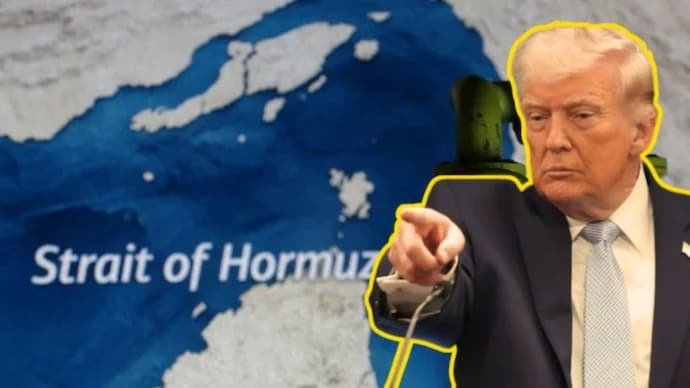
- Why This Narrow Stretch of Water Carries Global Weight
- A Route Redrawn But Not Yet Trusted
- Iran’s Strategy: Control Without Confrontation
- The Silent Standoff Playing Out at Sea
- The Real Decision-Makers: Ship Captains and Insurers
- What This Means for the World Beyond the Gulf
- A Different Kind of Conflict Is Taking Shape
- Can the US Sustain This Strategy?
- What Happens Next Feels Uncertain Because It Is
- Conclusion: A Route Opened, But Not Yet Proven
For weeks, the Strait of Hormuz has felt less like a trade route and more like a waiting room for crisis. Ships have been idling, crews stuck in uncertainty, and global markets quietly bracing for impact. Now, the United States has stepped in with a plan redrawing exit routes and offering Military-backed safe passage. It sounds decisive. It looks strategic. But out here, nothing is ever that simple.
At the heart of it, this is about movement. Who controls it, who allows it, and who risks it. The US wants ships moving again. Iran wants control acknowledged. And in between, hundreds of vessels are left calculating which risk feels smaller.
Why This Narrow Stretch of Water Carries Global Weight
The Strait of Hormuz is one of those places that rarely makes headlines until it does. And when it does, the ripple effects are immediate. A significant portion of the world’s oil flows through this narrow corridor. Block it, disrupt it, or even cast doubt over it, and markets react within hours.
But beyond oil, there’s something more human at play. Thousands of sailors are currently caught in this standoff, waiting for instructions that change by the day. For them, this isn’t geopolitics it’s whether they move forward or stay stuck.
A Route Redrawn But Not Yet Trusted
The US plan is straightforward in theory: guide ships along a safer path, closer to friendly waters, and back them up with visible military strength. Warships, aircraft, surveillance the full presence is there. The message is clear: if you move through this corridor, you won’t be alone.
But here’s the catch security is not just about presence. It’s about perception.
For shipping companies and captains, the question isn’t “Is the US there?” It’s “What happens if something goes wrong?” Because in a region this tense, even a small incident can spiral quickly.
What the US Is Trying to Achieve
- Get stranded ships moving again without triggering escalation
- Show dominance without crossing into open conflict
- Reassure global markets that the route is usable
- Quietly push back against Iran’s influence in the strait
It’s a careful balancing act almost like walking a tightrope while carrying global trade on your shoulders.
Iran’s Strategy: Control Without Confrontation
Iran isn’t responding with outright force. Instead, it’s doing something more subtle and arguably more effective. It’s creating uncertainty.
By issuing its own guidance to ships and insisting on control over certain routes, Iran is forcing every vessel to make a choice. Follow the US, or follow Iran. Either way, there’s risk.
This isn’t about stopping ships entirely. It’s about making every movement a negotiation.
And that changes everything.
The Silent Standoff Playing Out at Sea
What makes this situation different from past flare-ups is its quiet intensity. There are no dramatic declarations of war, no clear start or end. Instead, there’s a constant push and pull actions, counter-actions, claims, denials.
Both sides are operating just below the line that would trigger a full-scale conflict. It’s deliberate. It’s calculated. And it’s exhausting for everyone involved.
Because in this kind of Environment, even routine movement feels risky.
The Real Decision-Makers: Ship Captains and Insurers
While governments make strategies, it’s the shipping industry that ultimately decides whether those strategies work. And right now, their calculations are brutally practical.
| Concern | Why It Matters |
|---|---|
| Crew Safety | No cargo is worth risking lives |
| Insurance Premiums | Costs can skyrocket in conflict zones |
| Route Clarity | Conflicting instructions create hesitation |
| Escalation Risk | One incident can shut everything down |
Even with US protection, not every ship will move immediately. Trust takes time and right now, trust is in short supply.
What This Means for the World Beyond the Gulf
It’s easy to think of this as a regional issue, but the effects travel far. oil prices react quickly to uncertainty in Hormuz. Shipping delays ripple through supply chains. Industries far removed from the Gulf manufacturing, transport, even food can feel the impact.
This is the hidden reality of globalisation: a narrow stretch of water in one region can quietly shape economies everywhere.
A Different Kind of Conflict Is Taking Shape
This isn’t a traditional confrontation. There are no frontlines, no clear victories. Instead, it’s about endurance.
Who can maintain pressure longer? Who can control the narrative? Who can make the other side hesitate?
In many ways, this is what modern conflict looks like less dramatic, but more persistent.
Can the US Sustain This Strategy?
In the short term, the US has the capability. Its naval presence is unmatched, its coordination strong, its intent clear. But sustaining this over weeks or months is another matter.
Military operations like this are expensive, complex, and mentally taxing. The longer they continue, the greater the chance of fatigue or worse, miscalculation.
And in a place like Hormuz, miscalculation doesn’t stay small for long.
What Happens Next Feels Uncertain Because It Is
There are a few possible paths forward, none of them entirely comfortable.
- Ships begin moving again, slowly restoring confidence
- The standoff continues, with limited movement and rising tension
- A single incident escalates the situation dramatically
If there’s one thing History teaches about this region, it’s that stability here is rarely permanent it’s negotiated, tested, and often temporary.
Conclusion: A Route Opened, But Not Yet Proven
The United States has done something significant it has created a pathway where none seemed possible just days ago. But creating a route is one thing. Convincing the world to trust it is another.
Right now, the Strait of Hormuz remains what it has always been: a place where power, risk, and perception collide.
The ships will move eventually. The question is not if but when, and under whose terms.
For breaking news and live news updates, like us on Facebook or follow us on Twitter and Instagram. Read more on Latest World on thefoxdaily.com.





COMMENTS 0