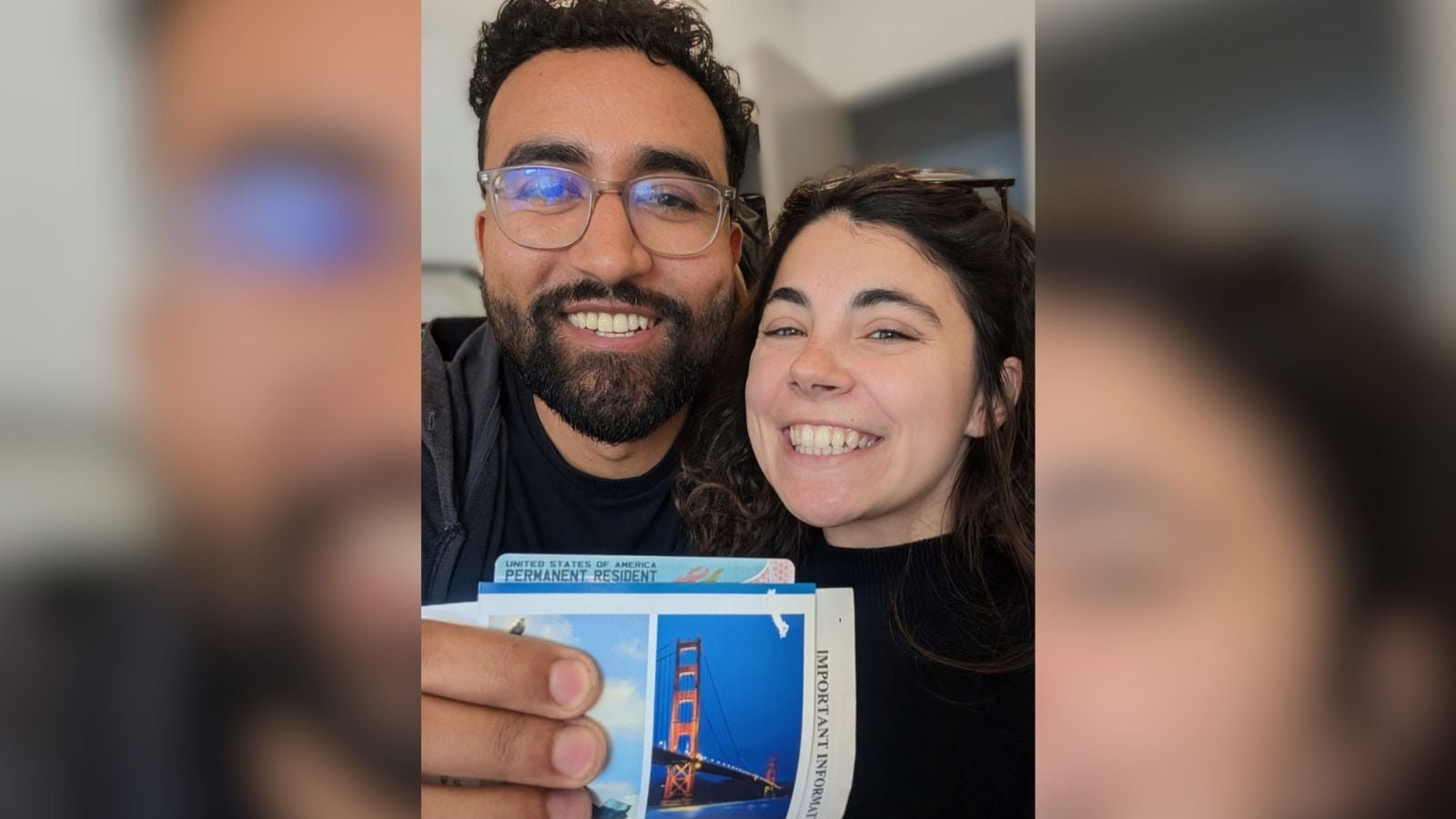
For thousands of highly skilled immigrants working in the United States, the H-1B Visa lottery can feel like a game of chance that determines the course of their lives. Every year, talented professionals face uncertainty despite holding prestigious jobs, advanced degrees, and valuable skills.
One such professional was Pratik Karki, a Google employee whose future in the United States appeared increasingly uncertain after being rejected four consecutive times in the H-1B visa lottery. Faced with the possibility of leaving the country, moving to Canada, or returning to Nepal, Karki made a decision that would dramatically alter his career and life.
Instead of accepting defeat, he left a high-paying role at Google, launched an Artificial Intelligence startup, secured an O-1 visa, and ultimately received a Green Card. His story highlights not only the challenges of America’s immigration system but also the opportunities that can emerge when adversity forces people to rethink their path.
The H-1B Lottery Problem Facing Skilled Immigrants
The H-1B visa program remains one of the most sought-after pathways for foreign professionals seeking employment in the United States. The program is especially popular among workers in technology, engineering, healthcare, and scientific research.
However, demand consistently exceeds the annual visa cap, creating a lottery system where even highly qualified candidates can face repeated rejection.
For many professionals, the process creates years of uncertainty. Careers, family plans, financial decisions, and long-term goals often depend on a lottery outcome over which applicants have little control.
Karki’s experience reflects a challenge shared by thousands of international professionals who contribute to America’s innovation Economy while navigating an unpredictable immigration process.
When Four Rejections Forced a Life-Changing Decision
After being rejected in the H-1B lottery for the fourth time, Karki found himself confronting a reality that many immigrants fear.
Despite working at one of the world’s most prestigious technology companies, his ability to remain in the United States was no longer guaranteed.
The situation forced him to consider difficult alternatives, including relocating to Canada or returning to Nepal, thousands of miles away from the life he had built.
What made the moment especially challenging was the level of uncertainty. Career success could not guarantee immigration security, and years of hard work suddenly seemed vulnerable to factors outside his control.
Like many entrepreneurs, Karki’s turning point emerged during a period of crisis rather than comfort.
The Kitchen Table Conversation That Changed Everything
Many successful startup stories begin with an idea. This one began with a conversation.
Faced with uncertainty about his future, Karki sat down with his wife to discuss their options. Instead of focusing solely on the risks, they evaluated the possibilities.
The couple had savings that could support them for a period of time. More importantly, they shared confidence in a dream that had been waiting beneath the surface.
That discussion became the catalyst for a decision many people only imagine making: walking away from a secure, high-paying corporate career to build something from scratch.
The moment illustrates a common theme among successful founders. Behind every entrepreneurial leap is often a support system willing to embrace uncertainty alongside them.
Leaving a Multi-Crore Google Salary Behind
At just 27 years old, Karki reportedly walked away from a compensation package worth approximately Rs 2.8 crore annually.
For most professionals, leaving such a position would appear financially irrational. Google is widely regarded as one of the most desirable employers in the technology industry, offering competitive compensation, career growth, and stability.
Yet Entrepreneurship often requires founders to prioritize long-term vision over short-term security.
The decision underscores an important reality about startup creation: opportunity cost is frequently one of the biggest risks founders face.
Giving up a stable income means betting on an uncertain future where success is far from guaranteed.
How a Google Experience Sparked a Startup Idea
One of the most valuable aspects of working at leading technology companies is exposure to large-scale problems.
While exploring different business opportunities, Karki drew on insights gained during his time at Google. He observed challenges related to artificial intelligence implementation and recognized a growing need for high-quality human data to support advanced AI systems.
This observation eventually evolved into the foundation for Anthromind, the company he would later build.
The startup focuses on creating what Karki described as a definitive human data layer for frontier AI laboratories and enterprise AI teams.
As artificial intelligence becomes increasingly central to business operations, the demand for reliable, human-generated training and evaluation data continues to grow.
The AI Industry’s Growing Demand for Human Intelligence
Karki’s startup emerged at a pivotal moment in the AI industry.
While artificial intelligence models continue advancing rapidly, their effectiveness depends heavily on the quality of data used during development and evaluation.
Many organizations have discovered that building powerful AI systems requires more than computing power and algorithms. Human expertise remains essential for:
- Training AI models.
- Evaluating outputs.
- Reducing bias.
- Improving accuracy.
- Supporting enterprise applications.
- Enhancing decision-making systems.
This growing demand has created opportunities for startups focused on solving critical infrastructure challenges within the AI ecosystem.
From Idea to Startup: Building Anthromind
The journey from concept to company happened quickly.
After refining his vision, Karki immersed himself in San Francisco’s entrepreneurial ecosystem, discussing ideas with founders, investors, advisors, and technology professionals.
These conversations helped validate the market opportunity and refine the company’s direction.
A breakthrough came when he met his future co-founder, Mannat, at a founders’ event.
Like many successful startups, Anthromind’s early momentum came from a combination of timing, networking, and execution.
The company soon secured its first pilot project and attracted venture capital interest.
What had initially been an uncertain experiment suddenly became a real business.
| Key Stage | Development |
|---|---|
| Google Career | Gained experience with AI challenges |
| Fourth H-1B Rejection | Faced immigration uncertainty |
| Entrepreneurial Leap | Left Google to build a startup |
| Co-Founder Partnership | Met future business partner |
| First Pilot Project | Validated business concept |
| VC Investment | Secured funding support |
| O-1 Visa Approval | Obtained alternative immigration pathway |
| Green Card Success | Achieved permanent residency |
The O-1 Visa: An Alternative Route for Entrepreneurs
One of the lesser-known aspects of America’s immigration system is the existence of alternative visa pathways beyond the H-1B program.
Karki pursued an O-1 visa, often granted to individuals who demonstrate extraordinary ability in fields such as science, business, technology, education, or the arts.
The approval provided stability and allowed him to continue building his company without relying on the H-1B lottery.
For many entrepreneurs and highly accomplished professionals, alternative immigration pathways can offer greater flexibility than traditional employment-based visas.
The Immigrant Entrepreneur Advantage
Karki’s story reflects a broader trend in American entrepreneurship.
Immigrants have played a significant role in building some of the country’s most successful companies, particularly in technology and innovation.
Many founders cite similar motivations:
- Willingness to take calculated risks.
- Strong motivation to succeed.
- Global perspectives.
- Adaptability in uncertain environments.
- Deep appreciation for opportunity.
These characteristics often emerge from navigating the challenges of immigration itself.
In many ways, entrepreneurship and immigration share common themes: resilience, uncertainty, and the pursuit of a better future.
The Influence of Family and Sacrifice
One of the most compelling aspects of Karki’s story is the role his father played in shaping his ambitions.
His father completed postdoctoral research at prestigious American institutions before personal circumstances forced him to return to Nepal and raise his children there.
The sacrifices made during that period left a lasting impression.
For Karki, building a life in the United States was not merely a career objective. It represented the continuation of a dream that his father had once pursued but could not complete.
That emotional connection provided additional motivation during moments of uncertainty and doubt.
What Entrepreneurs Can Learn From This Journey
Karki’s experience offers several practical lessons for aspiring founders.
- Setbacks can reveal new opportunities.
- Career security should not prevent exploration.
- Networks and relationships matter.
- Problems often contain business opportunities.
- Resilience is more valuable than perfect circumstances.
- Alternative paths frequently exist when traditional routes fail.
Perhaps the most important lesson is that adversity often forces people to reconsider assumptions about what is possible.
The event that initially appeared to threaten Karki’s future ultimately became the catalyst for building a company.
Why This Story Resonates Globally
Beyond immigration and entrepreneurship, the story resonates because it reflects a universal human experience.
Many people encounter moments when carefully constructed plans suddenly collapse. Jobs disappear, opportunities vanish, and circumstances change unexpectedly.
The challenge becomes deciding whether to retreat or reinvent.
Karki’s journey demonstrates how unexpected obstacles can sometimes redirect individuals toward opportunities they may never have pursued otherwise.
Future Outlook for Anthromind and AI Startups
The artificial intelligence sector continues to attract significant investment and attention worldwide. As businesses increasingly integrate AI into their operations, demand for specialized infrastructure, evaluation systems, and human data solutions is expected to grow.
This trend positions companies like Anthromind within one of the fastest-growing segments of the technology industry.
While startup success is never guaranteed, the broader market environment remains favorable for entrepreneurs addressing fundamental AI challenges.
Conclusion
Pratik Karki’s journey from repeated H-1B lottery rejections to startup founder and green card holder is a powerful example of turning uncertainty into opportunity. Faced with the possibility of leaving the United States, he chose a path that involved greater risk but ultimately delivered greater rewards.
His story highlights the resilience required to navigate both entrepreneurship and immigration, two journeys that often demand persistence in the face of setbacks. By leaving a prestigious Google career, building Anthromind, securing an O-1 visa, and eventually obtaining a green card, Karki transformed what appeared to be a professional crisis into a defining success.
For aspiring entrepreneurs, immigrants, and professionals facing uncertainty, the lesson is clear: sometimes the obstacle blocking one path becomes the reason a better path is discovered.
For breaking news and live news updates, like us on Facebook or follow us on Twitter and Instagram. Read more on Latest World on thefoxdaily.com.






COMMENTS 0