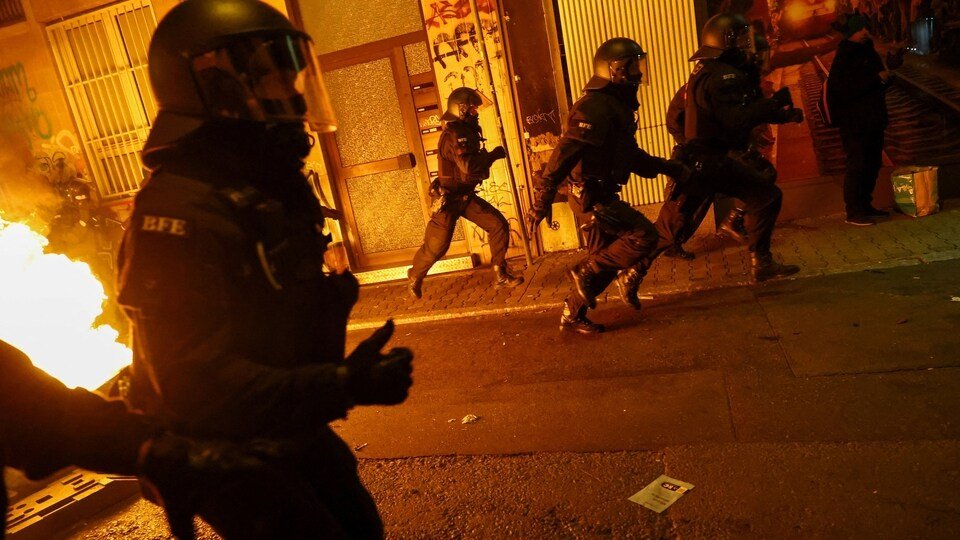
protests swept across several European countries over the Halloween weekend, with demonstrations in France, Germany, Portugal and the Netherlands reflecting growing public frustration over living costs, education, housing and government policies. While thousands marched peacefully in several cities, parts of Germany witnessed serious violence, including shop looting, petrol bomb attacks and clashes between protesters and police.
France experienced its third consecutive weekend of demonstrations, with students, labour unions and other groups joining rallies against rising living costs and deteriorating public services. In Germany, youth-led demonstrations organised by the campaign group Gen Z regelt spread across dozens of cities, with violent confrontations reported in Frankfurt, Hamburg, Berlin and Cologne.
The protests highlighted different but overlapping concerns across Europe, particularly among younger generations struggling with housing affordability, education opportunities, economic pressures and uncertainty over compulsory military service.
France Sees Clashes and Hundreds of Arrests
France witnessed another major day of demonstrations on Saturday, October 31, as protesters took to the streets for the third consecutive weekend. The movement initially gained momentum through high school student protests over teacher shortages, deteriorating school buildings and dissatisfaction with the university admissions system.
However, the demonstrations gradually expanded as labour unions, climate activists and other groups joined the movement, bringing additional concerns about living costs, employment conditions and economic inequality into the protests.
According to figures released by the French government, approximately 320,000 people participated in demonstrations nationwide on Saturday. The turnout was lower than the estimated 550,000 protesters recorded on October 17 and 410,000 on October 24. Organisers reportedly claimed higher participation figures, although their estimates were not available at the time of reporting.
In Paris, demonstrators marched along the Boulevards des Maréchaux, the network of avenues surrounding the French capital. The atmosphere initially remained largely peaceful, with techno music playing and some participants incorporating Halloween activities into the march.
However, tensions escalated near Porte de Charenton, where protesters reportedly threw glass bottles and fireworks. Police responded by deploying tear gas and stun grenades to disperse the crowd.
French authorities reported that more than 560 people had been arrested nationwide by Saturday night, highlighting the scale of the security operation surrounding the demonstrations.
Different Groups Bring Their Grievances to the Streets
The demonstrations in Paris brought together people from different backgrounds, with each group highlighting its own concerns through banners, placards and slogans.
High school students protested against teacher shortages, inadequate school infrastructure and problems within the university admissions system. Climate activists used the demonstrations to highlight environmental concerns, while other participants focused on the rising cost of living and economic pressures affecting ordinary households.
The participation of labour unions and groups associated with the Yellow Vests movement broadened the demonstrations beyond education-related grievances. Their involvement reflected wider dissatisfaction with economic conditions and the financial difficulties faced by lower-income households.
The diversity of participants also demonstrated how the protests had developed into a broader expression of frustration rather than remaining limited to a single student-led campaign.
What People on the Ground Said
For many young protesters, deteriorating living conditions and inadequate public services were among the main reasons for joining the demonstrations.
Twenty-one-year-old student Corentin Cabreux described the poor conditions at his state-run student residence. He said the walls had damp stains, sections of the surface were peeling away, and the accommodation had problems with cockroaches and rats.
His account reflected concerns about the quality of student housing and the difficulties faced by young people who depend on publicly supported accommodation while pursuing their education.
Other demonstrators joined the march in solidarity with students and family members struggling financially. An IT worker said she was supporting students as well as her mother, who was finding it difficult to manage on a minimum-wage job.
The demonstration also attracted older participants. One woman with grey hair carried a sign reading, “The Old are Fed Up Too,” illustrating how dissatisfaction over living costs and public services extended beyond younger generations.
The participation of people from different age groups gave the French demonstrations a wider social character, connecting student concerns with broader debates about wages, living standards and economic security.
German Gen Z Protests Turn Violent in Frankfurt
Germany experienced some of the most serious violence during the Halloween weekend demonstrations. Thousands of people joined youth-led protests organised by the campaign group Gen Z regelt, whose name translates roughly as “Gen Z takes charge”.
The campaign organised demonstrations across 34 German cities, including Berlin, Munich and Frankfurt. Participants demanded greater investment in education, improved public services and measures to address rising living costs.
One of the central issues was opposition to compulsory military service. Protesters argued that young people should not be forced into military obligations while education and healthcare systems require greater financial support.
Although the demonstrations were organised around youth concerns and political demands, parts of the protests descended into violence, particularly in Frankfurt.
Rioters Loot Shops and Throw Petrol Bombs in Germany
In Frankfurt, masked individuals reportedly looted shops and damaged commercial properties as clashes broke out between demonstrators and police. Several police officers were injured during the unrest, according to reports from the city.
Protesters threw stones, fireworks and petrol bombs at police officers and emergency personnel. Authorities responded by deploying water cannons and pepper spray to control the situation and disperse violent crowds.
Several stores were reportedly broken into and damaged, including a gun shop. Police said a suspect had been arrested and two weapons had been seized during the operation.
Frankfurt police issued a warning on social media, urging people who were not involved in the violence to avoid the city centre or leave the area.
“In the city center area, windows of several shops have been smashed. Additionally, Molotov cocktails were also being thrown at emergency forces. We urge all uninvolved individuals to avoid or leave the city center area.”
The violence was not limited to Frankfurt. Barricades were set on fire in Hamburg, while confrontations and scuffles were also reported in Berlin and Cologne.
The incidents created additional pressure on police forces, which had deployed personnel across multiple cities to manage the demonstrations and prevent further violence.
Thousands Participate in German Demonstrations
Despite the violent incidents, the demonstrations attracted thousands of participants across Germany. Police in Frankfurt, Munich and Berlin reported approximately 18,000 protesters, around half the figure of roughly 36,000 listed on the organisers’ website.
The difference between the police estimate and the organisers’ figure reflected the competing assessments of participation during the nationwide demonstrations.
The scale of the protests demonstrated that opposition to compulsory military service and demands for better public investment had gained visibility among younger Germans.
However, the violence in Frankfurt and other cities also raised questions about public safety, the protection of businesses and the ability of organisers and authorities to keep large demonstrations peaceful.
What Gen Z Regelt Organisers Said
Gen Z regelt spokesperson Lina Friedrich defended the movement’s political demands during a demonstration in Berlin on Saturday.
She said participants wanted to stand up for peace and freedom rather than accept what they viewed as war and coercion.
“We are here today to fight for peace and freedom, rather than for war and coercion.”
Friedrich also emphasised the need for stronger support for Germany’s healthcare and education systems. She said the campaign opposed compulsory military service and wanted a fairer distribution of responsibilities.
“What matters most to us is better support for the health and education systems. We are against compulsory military service, and we are in favour of a fairer distribution of the burden.”
The statements reflected the central message of the campaign: young people want greater investment in essential public services and do not want military obligations to take priority over their social and economic concerns.
Portugal Protests Highlight Europe’s Housing Crisis
Beyond France and Germany, public dissatisfaction also surfaced in Portugal, where demonstrators gathered in Lisbon to protest against the country’s worsening housing crisis.
Protesters returned to one of the Portuguese capital’s main squares on Saturday, October 31, carrying placards with slogans including “Houses or Fire” and “We are not Afraid”. Their demonstrations focused on housing affordability and opposition to proposed changes to rental regulations.
Portugal has experienced a significant increase in housing costs, with younger residents particularly affected. House prices have more than doubled since 2017, while rents for new rental agreements have nearly doubled, according to the figures cited in reports on the protests.
Demonstrators demanded that the government withdraw a proposed bill that would make evictions easier and end rent caps on new leases. They argued that the proposed changes could increase pressure on tenants already struggling to find affordable accommodation.
Portugal Government Refuses to Withdraw Rental Bill
Prime Minister Luis Montenegro ruled out scrapping the proposed legislation on Thursday, maintaining the government’s position despite growing pressure from housing activists.
However, Montenegro indicated that the government was open to making amendments before the legislation reaches a final vote in the coming weeks.
The government’s position has left housing campaigners dissatisfied, as they continue to demand stronger protections for renters and measures to address the rapid increase in property prices and rents.
The demonstrations in Lisbon showed how housing affordability has become a major political issue in Europe, particularly for younger people who face difficulties securing stable accommodation in expensive urban areas.
Netherlands Increases Security Amid Fears of Looting
Concerns over possible unrest also prompted a heightened police presence in the Dutch city of The Hague. Heavy police forces were deployed in and around the downtown shopping district on Saturday afternoon.
The increased security followed online appeals calling for demonstrations and concerns that gatherings could lead to looting or rioting.
Authorities maintained a visible presence around commercial areas as a precaution, reflecting the wider security concerns emerging across European cities during the Halloween weekend.
Unlike the reported violence in Frankfurt, the developments in The Hague centred on preventive policing and efforts to protect shopping areas from potential disorder.
Why Are Protests Spreading Across Europe?
Although the demonstrations in France, Germany, Portugal and the Netherlands were organised around different demands, several common concerns emerged across the countries.
Rising living costs: Economic pressure has become a central issue for demonstrators, particularly students, young workers and lower-income households. Higher housing expenses and difficulties managing everyday costs have contributed to growing dissatisfaction.
Education and public services: French students highlighted teacher shortages, deteriorating school buildings and problems with university admissions. German protesters demanded greater investment in education and healthcare.
Housing affordability: Demonstrations in Portugal focused on rapidly increasing property prices and rents. Younger residents have faced particular difficulties finding affordable homes in major cities.
Opposition to compulsory military service: In Germany, Gen Z regelt made opposition to compulsory military service a central part of its campaign, arguing that young people should have greater freedom and that public investment should prioritise essential services.
These issues differ from country to country, but together they point to growing concerns about economic security, access to public services and the future opportunities available to younger generations.
Halloween Weekend Puts European Authorities on Alert
The protests presented a significant challenge for authorities across Europe, as demonstrations coincided with Halloween weekend activities and large crowds in major urban centres.
In France, police faced clashes near Porte de Charenton and reported hundreds of arrests nationwide. In Germany, officers dealt with petrol bomb attacks, damaged shops, looting and burning barricades. Meanwhile, Dutch authorities increased security around shopping areas in The Hague amid fears of possible disorder.
At the same time, the demonstrations in Lisbon showed that public frustration was not limited to education or military service. Housing affordability and rental policies also emerged as major sources of public discontent.
With protests continuing across different European countries, governments face pressure to respond to demands over living costs, public services, housing and youth opportunities. The violence reported in parts of Germany has also raised concerns about public safety and the challenges of managing large demonstrations.
The Halloween weekend protests ultimately revealed a broad range of frustrations across Europe, with younger generations increasingly visible in movements demanding better living conditions, stronger public services and a greater say in decisions affecting their future.
For breaking news and live news updates, like us on Facebook or follow us on Twitter and Instagram. Read more on Latest World on thefoxdaily.com.



COMMENTS 0