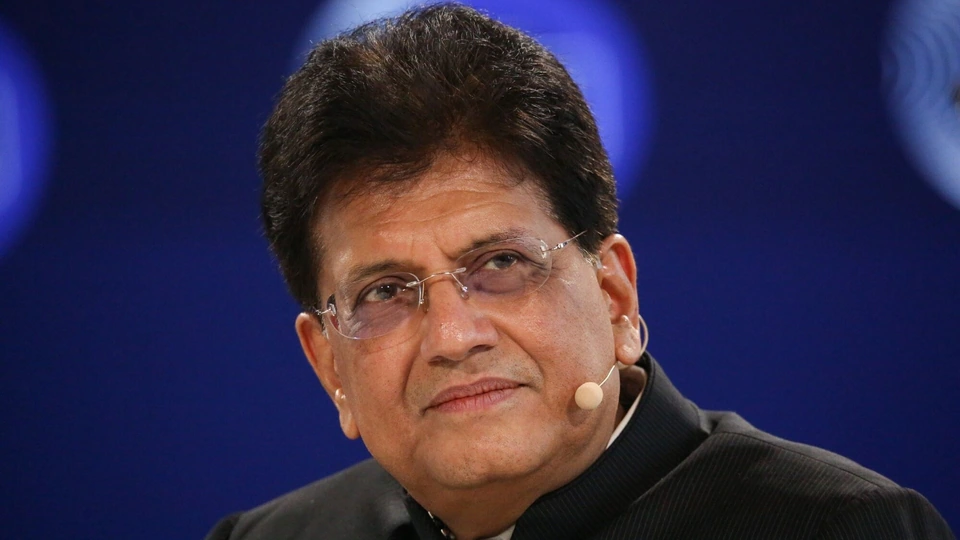
Union Commerce and Industry Minister Piyush Goyal has described the Indian community as peace-loving, saying Indians generally do not take to the streets to cause public disturbances or engage in vandalism. His remarks, made in Berlin, came amid protests in France, Italy and other parts of Europe, drawing a comparison between the conduct of Indian communities abroad and unrest witnessed in several European countries.
Goyal said the Indian community is welcomed in other countries because people recognise its reputation for peaceful behaviour, family values and social responsibility. He also acknowledged that exceptions exist, describing them as circumstances beyond the community’s control.
The comments come against a broader backdrop of public demonstrations in Europe and a protest movement in India directed at the Election Commission. However, the remarks did not identify specific European demonstrations or provide evidence comparing protest-related behaviour across countries.
What Piyush Goyal Said About Indians Living Abroad
Addressing the Indian community in Berlin on Monday, Goyal emphasised the importance of how Indians are perceived in their host countries. He said Indians are wanted and welcomed because they are not generally associated with vandalism or street disturbances.
“Important statistic is, how well you are respected in this country,” Goyal said, adding that Indians are “very wanted, very welcome here.”
He went on to contrast the community’s reputation with disturbances he said were being seen in other parts of Europe. According to Goyal, people recognise that Indian families tend to focus on their households and care for their relatives.
“They know you don’t indulge in vandalism. They know you don’t go on the streets and create disturbance to society, like we are seeing in other parts of Europe,” he said.
Goyal described Indians as a “peace-loving” community and linked that characterisation to their family life and standing in the countries where they live. He added that there could be exceptions, which he said were beyond the community’s control.
His remarks presented peaceful conduct and social reputation as factors contributing to the welcome Indian communities receive overseas. They were framed as a general observation about the community rather than a comparison supported by specific statistics on crime, vandalism or public demonstrations.
Remarks Come Amid Protests Across Europe
Goyal’s comparison came as protests were taking place in France, Italy and other parts of Europe. Demonstrations can arise from a range of political, economic and social disputes, and the reasons for individual protests vary by country and event.
The minister did not specify which demonstrations he was referring to or distinguish between peaceful rallies and incidents involving property damage or public disorder. His comments therefore expressed a broad comparison without establishing that European protests as a whole were violent or disruptive.
Public demonstrations are also a form of political expression in democratic societies. Their character can differ significantly, from peaceful marches and organised gatherings to events in which clashes or vandalism occur. A general reference to unrest does not, by itself, describe every protest taking place in a country.
Goyal’s statement focused on the perceived reputation of Indian communities abroad. It did not provide figures showing how Indian residents compare with other communities in relation to public-order offences, nor did it cite a study measuring how host countries view Indian nationals.
Indian Community’s Reputation and Integration Abroad
Indian communities live and work in countries around the world, including across Europe. Their experiences vary depending on their location, occupation, immigration status and local social conditions. Goyal’s remarks highlighted the positive reputation he believes Indians have developed in their host societies.
His emphasis on family responsibilities and peaceful behaviour reflected a broader argument that a community’s public image can influence how its members are received. Respect for local laws, participation in civic life and constructive engagement with neighbours can all form part of how immigrant communities establish relationships in their adopted countries.
However, community reputation is not uniform, and individual conduct should not automatically be treated as representative of an entire nationality. Goyal’s comments were a political statement about the Indian community rather than a detailed assessment of the experiences of all Indians living abroad.
The minister’s reference to exceptions also acknowledged that the conduct of individuals can differ from the general image he described. His remarks did not identify those exceptions or offer further details about them.
Reference to Protest Movement in India
The comments also came against the backdrop of a protest movement in India against the Election Commission. The supplied account does not provide details about the movement’s organisers, demands, location or scale, making it difficult to establish a direct connection between those demonstrations and Goyal’s remarks in Berlin.
The contrast is notable because the minister’s comments focused on Indians avoiding street disturbances abroad, while protests against public institutions can also take place within India. However, participating in a demonstration does not necessarily involve vandalism or creating a public disturbance. The nature of any protest depends on its conduct and circumstances.
Goyal did not elaborate in the reported remarks on the Indian protest movement or explain whether he considered it comparable to the demonstrations taking place in Europe. The available account establishes the timing of the two developments but does not establish a direct link between them.
What the Statement Does and Does Not Establish
Goyal’s remarks underline his view that the Indian community’s reputation for peaceful behaviour contributes to its acceptance overseas. His comments also draw attention to the difference between how communities are perceived and how specific events are documented.
There is an important distinction between a political leader’s description of a community and measurable evidence about public behaviour. The reported remarks did not include comparative data on demonstrations, vandalism, arrests or public-order incidents involving Indian communities and other populations in Europe.
Similarly, protests across Europe cannot be treated as a single category. Some demonstrations may remain peaceful, while others may involve clashes or damage to property. Assessing the scale and nature of unrest requires information about individual events rather than generalisations about an entire region.
The comments also raise a broader point about the public image of diaspora communities. The conduct of individuals can affect perceptions of a wider group, but broad claims about national communities require careful interpretation. Positive descriptions of one group should not automatically imply negative conclusions about others.
Why Goyal’s Berlin Remarks Matter
Goyal’s statement placed the reputation of Indians living abroad at the centre of his message. By highlighting peaceful conduct, family responsibilities and the absence of vandalism, he argued that these characteristics help explain why Indian communities are welcomed in their host countries.
The comparison with protests in Europe gave the remarks a wider political context. Yet the available report does not identify the demonstrations in question or provide evidence that would allow a systematic comparison between the behaviour of different communities.
For now, the key takeaway is the minister’s stated view: Indian communities are generally regarded as peaceful and socially responsible, and that reputation matters to their standing overseas. The extent to which this perception can be measured across countries remains unaddressed in the reported comments.
For breaking news and live news updates, like us on Facebook or follow us on Twitter and Instagram. Read more on Latest India on thefoxdaily.com.






COMMENTS 0