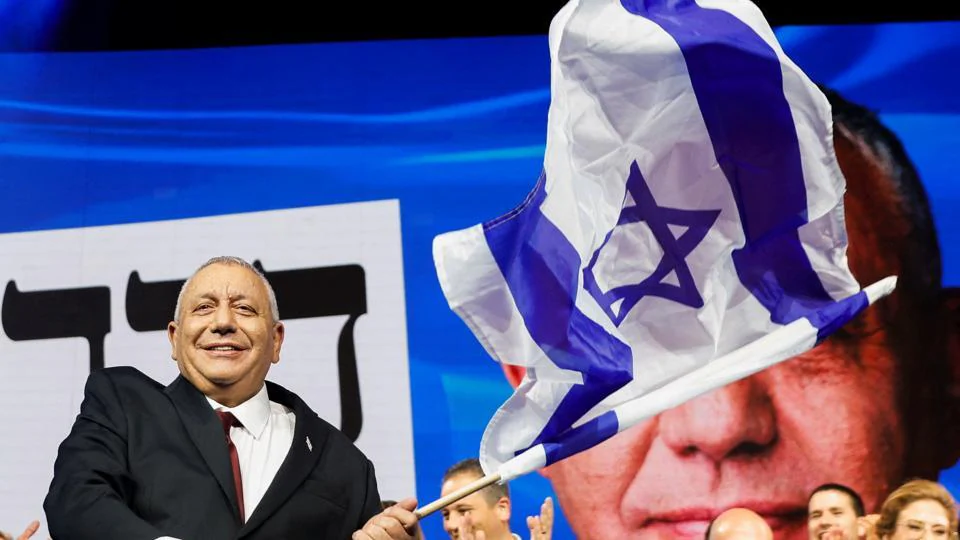
Gadi Eisenkot, a former chief of staff of the Israel Defense Forces who entered politics in 2022, has emerged as a central figure in Israel’s opposition to Prime Minister Benjamin Netanyahu. With the country’s wartime election appearing deadlocked in exit polls, Eisenkot’s opposition bloc was running neck and neck with Netanyahu’s camp, leaving neither side with a clear path to forming the next government.
At 66, Eisenkot brings four decades of military experience to a political contest shaped by security concerns, the war in Gaza and disagreements over Israel’s future leadership. He has positioned himself as a more moderate alternative to Netanyahu while maintaining a hard line on national security.
Eisenkot currently leads Yashar!, described in the supplied report as the largest opposition party. His military background, criticism of Netanyahu’s wartime leadership and family losses in the Gaza conflict have placed him at the centre of the political debate.
If Eisenkot succeeds in assembling a governing coalition, he could become Israel’s first prime minister of Mizrahi descent, marking a historic development in a country where people of North African and Middle Eastern Jewish ancestry have historically faced discrimination from European-descended elites.
Who Is Gadi Eisenkot?
Gadi Eisenkot is a former Israeli military chief who entered politics in 2022 after a career spanning approximately four decades in the armed forces. His rise from a working-class family to the highest ranks of Israel’s military has become an important part of his public profile.
Eisenkot comes from a family of Jewish immigrants from Morocco. He spent decades advancing through the military hierarchy before becoming chief of staff of the Israel Defense Forces, a position that placed him at the centre of Israel’s national security establishment.
His military experience has helped shape his political identity. Unlike politicians whose careers developed primarily through party organisations or parliamentary positions, Eisenkot built his reputation through military service before entering electoral politics.
His background has also given him a distinctive position in debates over security policy. He has maintained a hawkish approach to defence while seeking to distinguish himself from Netanyahu on the management of the war and the need for a clear strategic direction.
From the Military’s Top Ranks to Israeli Politics
Eisenkot’s transition into politics followed a long career in Israel’s military. As a former chief of staff, he entered the political arena with extensive experience in security and military strategy.
He joined politics in 2022 and subsequently became a prominent figure in the opposition. His leadership of Yashar! has placed him in a position to challenge Netanyahu at a time when Israel’s political landscape remains deeply divided over the government’s handling of the war.
His approach combines a commitment to national security with criticism of the prime minister’s leadership. Eisenkot has argued that Israel needs a clearer strategy for its military campaign, a position that became particularly significant after the October 7 attacks and the subsequent war in Gaza.
His military credentials may appeal to voters who prioritise security, while his criticism of Netanyahu could attract those seeking a change in political leadership. However, the ability to translate that appeal into a governing majority depends on election results and negotiations among Israel’s numerous political parties.
Gadi Eisenkot’s Criticism of Netanyahu’s War Strategy
Eisenkot served as an observer in Netanyahu’s war cabinet but resigned after eight months. His departure followed accusations that the prime minister lacked a clear strategy for the war.
The disagreement highlighted a central issue in Israel’s wartime politics: how the government intends to achieve its military objectives and determine what should follow the fighting.
Eisenkot’s criticism has helped distinguish his political position from Netanyahu’s. Although both have backgrounds associated with a strong security approach, Eisenkot has presented himself as an alternative focused on the need for a defined strategic direction.
His resignation from the war cabinet also demonstrated that his differences with Netanyahu extended beyond ordinary party competition. The dispute concerned the leadership and direction of the war itself, an issue with significant implications for Israel’s security and political future.
Nevertheless, Eisenkot’s criticism of Netanyahu does not mean that he advocates a less forceful military posture in every circumstance. His record and public positions indicate that he remains hawkish on security, even as he presents himself as a more moderate political alternative.
The Dahiyeh Doctrine and Eisenkot’s Security Philosophy
Eisenkot is credited with formulating Israel’s so-called Dahiyeh Doctrine, a military strategy that calls for the use of disproportionate force in areas from which militants launch attacks.
The doctrine reflects a security approach centred on using overwhelming military power against areas associated with attacks on Israel. It is an important element of Eisenkot’s military legacy and helps explain why his political positioning combines criticism of Netanyahu with a hard line on defence.
His background in military strategy may appeal to voters seeking leadership with direct experience of Israel’s security challenges. At the same time, the doctrine illustrates that Eisenkot’s differences with Netanyahu should not automatically be interpreted as a rejection of forceful military action.
Instead, his political argument has focused in part on leadership and strategic direction: how military power should be used, what objectives it should serve and how the government should determine the course of a conflict.
Eisenkot’s Position on Iran’s Nuclear Programme
Iran remains another major issue in Eisenkot’s security outlook. He has said that Iran’s nuclear programme must be curbed, using military action if necessary.
However, he has also argued that regime change in Tehran is “not an achievable goal.” The position distinguishes his stated objective of restricting Iran’s nuclear capabilities from a broader attempt to replace the Iranian government.
His comments reflect a security approach that prioritises limiting a perceived threat while acknowledging constraints on what military action can accomplish.
The distinction is relevant to his broader political profile. Eisenkot has not presented himself as a candidate who would abandon a strong defence policy. Instead, he has sought to combine military experience and a hawkish security position with criticism of Netanyahu’s wartime leadership.
Personal Losses in the Gaza War
The war in Gaza has affected Eisenkot personally as well as politically. His son and two nephews were killed in combat in Gaza following the October 7 attacks.
The deaths of close family members have added a deeply personal dimension to his involvement in Israel’s wartime debate. His military background and family losses place him among the political figures whose public lives have been directly shaped by the conflict.
His criticism of Netanyahu’s strategy has therefore unfolded against the backdrop of both his professional experience and personal bereavement. The available information does not establish how voters have weighed those experiences in deciding whether to support his political leadership.
Could Eisenkot Become Israel’s First Mizrahi Prime Minister?
If Eisenkot succeeds in forming a coalition and becoming prime minister, he could become the first Israeli prime minister of Mizrahi descent.
Mizrahi Jews trace their ancestry to communities across the Middle East and North Africa. Eisenkot’s family background reflects that heritage, with his parents coming from a Jewish Moroccan immigrant family.
The prospect of a Mizrahi prime minister carries historical significance because Mizrahi communities have faced discrimination from Israel’s European-descended elite. Eisenkot’s possible rise to the country’s highest political office could therefore represent a milestone in the country’s political representation.
However, his ancestry is only one part of his political identity. His military career, security policies, criticism of Netanyahu and leadership of the opposition are also central to his challenge.
Whether he reaches the premiership will depend on the election outcome and his ability to assemble a coalition capable of commanding a majority in the Knesset.
Why Israel’s Coalition System Could Decide the Election
Israel’s fragmented political system means that winning the largest share of the vote does not automatically guarantee the premiership. A prospective prime minister must be able to assemble a coalition with sufficient support in the Knesset.
Exit polls in the reported election indicated that Eisenkot’s opposition bloc and Netanyahu’s camp were running neck and neck. Neither side had a clear path to power, leaving the final results and subsequent negotiations crucial to determining the next government.
Final results could take days, while coalition negotiations may extend for weeks or months. Smaller parties can become kingmakers when neither of the main blocs has enough support to govern independently.
Political parties must negotiate over the composition and direction of a prospective government, sometimes requiring alliances between groups with differing ideological positions. The outcome can depend on which parties are willing to cooperate and what arrangements they can reach.
For Eisenkot, this means that electoral momentum alone may not be enough. He would need to secure support from other parties and build a coalition that can maintain a parliamentary majority.
Naftali Bennett Could Emerge as a Kingmaker
Former prime minister Naftali Bennett could play an important role if neither major bloc can form a majority. Bennett, 54, leads Beyachad, or Together, a joint ticket with centrist politician Yair Lapid, according to the supplied report.
Bennett is a right-wing, religiously observant politician who opposes Palestinian independence and supports settlement-building in the occupied West Bank. His political background combines conservative positions with a history of working alongside parties from different parts of Israel’s political spectrum.
Before entering the Knesset in 2013, Bennett served as Netanyahu’s chief of staff and headed the Yesha Council, an umbrella organisation representing local authorities inside Israeli settlements.
His conservative Yamina party won seven seats, helping him assemble a coalition that included left-wing and Arab parties. Bennett subsequently served as prime minister in 2021 under a power-sharing agreement with Lapid.
That experience could become relevant if the latest election leaves the main blocs without a clear majority. Bennett may be able to influence the formation of the next government by extending support to a coalition, potentially returning to a central position in national politics.
His role would depend on the final distribution of seats and the willingness of the competing blocs to negotiate with him and other smaller parties.
What Happens Next in Israel’s Political Contest?
The immediate question is whether Eisenkot’s opposition bloc or Netanyahu’s camp can secure enough parliamentary support to form the next government. With exit polls showing a close contest, the final results and negotiations with smaller parties could determine who becomes prime minister.
Eisenkot’s military background and criticism of Netanyahu have made him a prominent alternative, but his route to power remains dependent on coalition-building. Israel’s political system gives smaller parties considerable influence when the main blocs cannot independently command a majority.
Bennett could become a key player in those negotiations, particularly if his political alliance holds the balance between competing coalitions. His previous experience leading a government supported by parties from different ideological backgrounds may also shape expectations about the possible arrangements.
For Eisenkot, the election represents a test of whether his military credentials, security platform and criticism of Netanyahu can translate into the parliamentary support required to govern. For Israel, the result could determine not only its next prime minister but also the direction of its leadership during an ongoing period of conflict and political uncertainty.
Key Points
- Gadi Eisenkot, 66, is a former Israel Defense Forces chief of staff who entered politics in 2022 and leads the opposition party Yashar!.
- He has criticised Netanyahu for lacking a clear strategy for the war in Gaza while maintaining a hawkish approach to national security.
- If he forms a governing coalition, Eisenkot could become Israel’s first prime minister of Mizrahi descent.
- With the main blocs reportedly neck and neck in exit polls, Naftali Bennett and smaller parties could play decisive roles in coalition negotiations.
Frequently Asked Questions
Who is Gadi Eisenkot?
Gadi Eisenkot is a former chief of staff of the Israel Defense Forces who entered politics in 2022. He leads the opposition party Yashar! and has positioned himself as an alternative to Prime Minister Benjamin Netanyahu.
Why is Gadi Eisenkot challenging Benjamin Netanyahu?
Eisenkot has criticised Netanyahu for lacking a clear strategy for the war in Gaza. He has sought to offer an alternative in leadership while maintaining a strong position on national security.
What is the Dahiyeh Doctrine?
The Dahiyeh Doctrine is a military strategy credited to Eisenkot that calls for the use of disproportionate force in areas from which militants launch attacks.
What is Eisenkot’s position on Iran?
Eisenkot has said Iran’s nuclear programme must be curbed, militarily if necessary. He has also described regime change in Tehran as “not an achievable goal.”
Could Gadi Eisenkot become Israel’s first Mizrahi prime minister?
Yes. If he succeeds in forming a governing coalition and becomes prime minister, he could be the first Israeli prime minister of Mizrahi descent. The outcome depends on the election results and coalition negotiations.
Why could Naftali Bennett influence the formation of Israel’s next government?
If neither major political bloc secures enough support to form a government, Bennett and smaller parties could become kingmakers by providing the parliamentary backing needed for a coalition.
Why do coalition negotiations matter in Israel?
Israel’s fragmented political system often requires parties to form alliances to secure a parliamentary majority. As a result, the final composition of the government may depend on negotiations after the election rather than the exit polls alone.
For breaking news and live news updates, like us on Facebook or follow us on Twitter and Instagram. Read more on Latest World on thefoxdaily.com.






COMMENTS 0