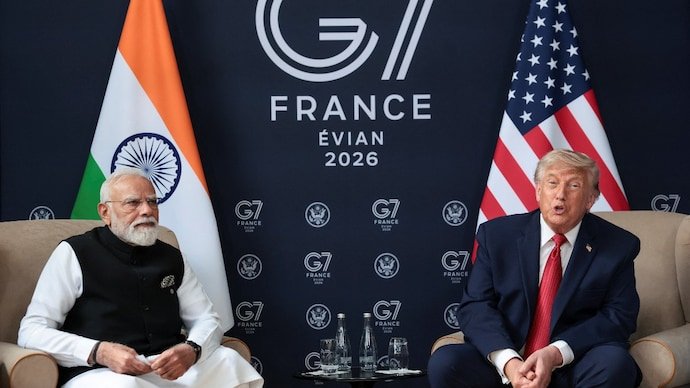
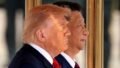
In a moment that quickly grabbed international attention, US President Donald Trump publicly declared that the United States would come to India’s aid if the country were attacked while Prime Minister Narendra Modi remained in office. The remarks, made during Trump’s meeting with PM Modi on the sidelines of the G7 Summit in France, went beyond routine diplomatic niceties and signaled the depth of the personal and strategic relationship that has developed between the two leaders over the years.
While world leaders often exchange compliments during high-profile meetings, Trump’s comments stood out because they touched directly on security commitments, geopolitical alignment, and the future direction of one of the world’s most important bilateral Relationships.
The meeting was particularly significant because it was the first face-to-face interaction between the two leaders since several developments had tested ties between New Delhi and Washington, including trade disputes, Immigration concerns, regional security issues, and differing narratives surrounding South Asian Geopolitics.
Beyond the headlines, Trump’s remarks reveal broader trends that are shaping the future of the Indo-Pacific region and the evolving partnership between two of the world’s largest democracies.
Why the Trump-Modi Meeting Matters
The United States and India have steadily transformed their relationship over the past two decades from one marked by caution to one defined by strategic cooperation.
Today, both countries work together across multiple areas:
- Defense and military cooperation
- Counterterrorism initiatives
- Technology partnerships
- Trade and investment
- Critical supply chains
- Energy security
- Indo-Pacific maritime security
- Space and emerging technologies
Trump’s meeting with PM Modi came at a time when both countries are navigating an increasingly complex international Environment. The rise of China, ongoing conflicts in multiple regions, supply chain disruptions, and economic uncertainty have made strategic partnerships more important than ever.
Against this backdrop, the symbolism of a strong public endorsement carries significant diplomatic weight.
Understanding Trump’s Remark: Symbolism vs Formal Commitment
One of the most discussed aspects of Trump’s statement was whether it represented a formal security guarantee.
In practical terms, the answer is no.
Unlike NATO allies, India and the United States do not share a mutual defense treaty that automatically obligates military intervention if one country is attacked.
However, Trump’s comments are still meaningful because they reflect political intent and strategic alignment.
Diplomatic language often serves as a signal to allies, rivals, and global markets. By publicly stating that America would stand with India, Trump reinforced the perception that New Delhi remains one of Washington’s most important strategic partners in Asia.
Such statements can influence regional calculations even without creating legally binding commitments.
The Evolution of India-US Relations
The relationship between India and the United States has undergone a dramatic transformation since the Cold War era.
For decades, the two nations maintained cordial but limited engagement. Differences over geopolitics, economic policy, and security issues often created distance.
The turning point came in the early 2000s when both countries recognized shared interests in economic growth, regional stability, and democratic values.
Several milestones accelerated the partnership:
- Civil nuclear cooperation agreements
- Defense technology sharing
- Expanded military exercises
- Intelligence cooperation
- Strategic dialogues on Indo-Pacific security
- Growing trade and investment flows
Today, the relationship is among the most consequential partnerships in Global Politics.
The Personal Chemistry Between Trump and Modi
One factor that has consistently shaped India-US relations during Trump’s political career is his personal rapport with PM Modi.
Large public events such as “Howdy Modi” in Houston and “Namaste Trump” in Ahmedabad showcased an unusually visible level of engagement between the two leaders.
Political analysts often note that personal relationships can influence Diplomacy, especially when leaders enjoy direct communication and mutual trust.
Trump’s latest remarks appear to reinforce that dynamic.
His comments highlighted not only institutional cooperation between the two countries but also his confidence in Modi’s leadership.
Security Cooperation Has Expanded Significantly
Even without a formal military alliance, India and the United States have deepened defense cooperation substantially in recent years.
| Area | India-US Cooperation |
|---|---|
| Military Exercises | Joint land, air, and naval drills |
| Defense Technology | Advanced equipment and technology sharing |
| Intelligence Sharing | Counterterrorism and regional security cooperation |
| Maritime Security | Indo-Pacific surveillance and coordination |
| Cybersecurity | Emerging technology and cyber defense initiatives |
| Space Cooperation | Joint projects and strategic dialogue |
These developments have made India one of America’s most important defense partners outside traditional treaty alliances.
The Indo-Pacific Factor
One reason the India-US partnership continues to grow is the increasing importance of the Indo-Pacific region.
The region is home to:
- Some of the world’s fastest-growing economies
- Critical global shipping routes
- Major energy transit corridors
- Important technology supply chains
- Several geopolitical flashpoints
Both Washington and New Delhi share an interest in maintaining regional stability, freedom of navigation, and open trade routes.
This convergence of interests has created a strong strategic foundation that extends beyond individual administrations.
Trade Remains a Major Challenge
Despite close strategic ties, economic disagreements continue to create friction.
Trump has frequently criticized trade imbalances and market access issues involving India. During both his first and second presidencies, trade negotiations have often been tough and highly publicized.
Interestingly, Trump himself acknowledged PM Modi’s negotiating abilities, calling him a “tough trader.”
That remark reflects a reality of modern India-US relations: cooperation and competition often exist simultaneously.
Both countries benefit from strong economic engagement, but differences over tariffs, regulations, and market access remain recurring issues.
Why Trump’s Comments Matter for Regional Security
Political statements from major world leaders can influence strategic calculations across an entire region.
When the President of the United States publicly expresses support for India, multiple audiences take notice:
- Regional governments
- Defense establishments
- Global investors
- Strategic analysts
- International markets
Such messaging can strengthen deterrence by signaling political solidarity between major powers.
Even if no formal defense guarantee exists, perceived alignment often carries geopolitical significance.
Operation Sindoor and the Broader Context
The meeting also gained attention because it was the first one-on-one interaction since Operation Sindoor in May 2025.
The operation became an important reference point in discussions surrounding regional security and India’s evolving strategic posture.
Although several issues have generated debate between Washington and New Delhi since then, the G7 meeting demonstrated both sides’ willingness to maintain dialogue and strengthen cooperation.
This reflects a broader reality: mature strategic partnerships are capable of managing disagreements while continuing to collaborate on shared interests.
The Growing Importance of India in Global Politics
Trump’s comments also highlight India’s increasingly important role in world affairs.
India today is:
- The world’s most populous country
- One of the fastest-growing major economies
- A leading technology and innovation hub
- A major military power
- An influential voice in global governance discussions
- A critical player in Indo-Pacific security
As India’s economic and geopolitical influence expands, major powers are placing greater emphasis on their relationships with New Delhi.
This trend is expected to continue throughout the coming decade.
What Investors and Businesses Are Watching
Beyond politics and security, business communities closely monitor high-level diplomatic interactions.
Strong political relationships often create favorable conditions for:
- Foreign direct investment
- Technology partnerships
- Manufacturing cooperation
- Supply chain diversification
- Infrastructure projects
- Energy investments
Trump’s positive comments about India’s future under PM Modi may be viewed by some investors as a sign of continued economic engagement between the two countries.
Future Outlook: Where India-US Relations Could Head Next
Looking ahead, several areas are likely to dominate the India-US agenda:
- Advanced technology cooperation
- Artificial intelligence partnerships
- Semiconductor manufacturing
- Defense modernization
- Critical minerals supply chains
- Clean energy initiatives
- Maritime security collaboration
- Counterterrorism efforts
While disagreements on trade and immigration may continue to emerge, the broader strategic relationship appears positioned for further expansion.
The underlying drivers of cooperation—including economic opportunity, security interests, and geopolitical alignment—remain strong.
Conclusion
Donald Trump’s declaration that the United States would support India if it faced an attack under Prime Minister Narendra Modi generated headlines because it touched on issues far larger than a routine diplomatic meeting.
The remarks underscored the growing strategic importance of India, highlighted the personal rapport between Trump and Modi, and reinforced perceptions of a deepening partnership between two major democratic powers.
Although the statement does not constitute a formal defense guarantee, it sends a powerful political message about the direction of India-US relations.
As geopolitical competition intensifies and the Indo-Pacific becomes increasingly central to global affairs, the partnership between Washington and New Delhi is likely to remain one of the defining relationships shaping the international order in the years ahead.
The G7 meeting demonstrated that despite occasional disagreements over trade, immigration, and policy details, both nations continue to view each other as indispensable partners in an increasingly uncertain world.
For breaking news and live news updates, like us on Facebook or follow us on Twitter and Instagram. Read more on Latest India on thefoxdaily.com.


COMMENTS 0