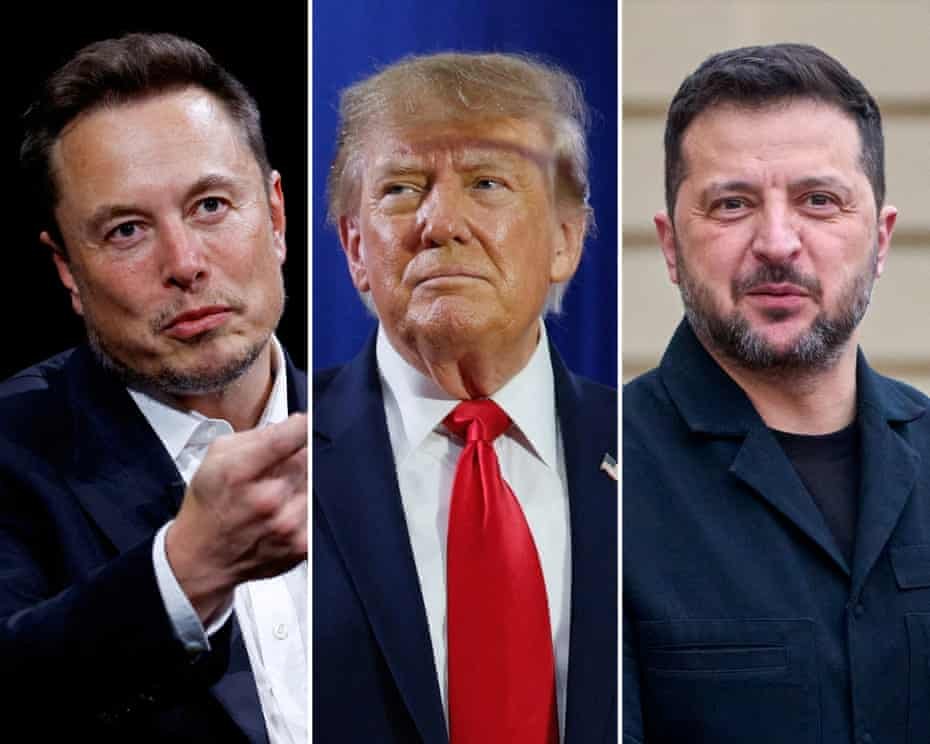
A dispute over Ukraine’s access to SpaceX’s military-grade Starshield satellite communications system has triggered a war of words between US President Donald Trump, billionaire Elon Musk and Ukrainian President Volodymyr Zelenskyy. The disagreement centres on who ordered restrictions on the service, which Ukrainian officials say have disrupted military operations against Russian forces.
According to Ukrainian officials, restrictions on Starshield have rendered some drones used by Kyiv to strike targets behind Russian frontlines inoperable and hampered air defence systems designed to counter Russian attacks. The dispute has also raised questions about the role of private technology companies in wartime and the extent of the US government’s control over military communications capabilities.
Trump said on Thursday that the service was operating at full speed again. However, a European official speaking to the Associated Press disputed that assessment, saying Starshield was not yet fully functioning. Zelenskyy had also said that full service had not been restored to Ukraine.
As the dispute continues, Trump, Musk and Zelenskyy have offered different accounts of who was responsible for the restrictions. Their statements reveal a broader disagreement over US policy towards Ukraine, the authority of the American government and the role of SpaceX in the conflict.
What Is the Ukraine-Starlink Dispute About?
The controversy concerns restrictions on Starshield, SpaceX’s military-grade satellite communications service. According to Ukrainian officials, the changes affected drones used by Ukrainian forces to conduct strikes behind Russian frontlines and disrupted air defence systems used to counter Russian attacks.
The restrictions emerged during a period of strained relations between Washington and Kyiv. Trump has criticised Ukraine over several aspects of the war and its economic consequences, while Musk has publicly challenged Zelenskyy and supported calls for changes in Ukraine’s leadership.
The central question is who authorised the restrictions. Trump initially denied ordering any changes, while Musk argued that decisions about Starshield’s use were controlled by the US government and military. Zelenskyy, meanwhile, blamed both SpaceX and the United States, suggesting that the restrictions were deliberate.
Reports have offered competing accounts of how the decision was made. The Wall Street Journal reported that Musk ordered the slowdown, while its sources disagreed over whether the move was coordinated with Trump. The precise chain of responsibility remained disputed in the supplied reporting.
1. Donald Trump: ‘It Wasn’t Me’
Trump initially denied responsibility for the restrictions on Starshield, saying that neither he nor Musk was responsible for the changes.
The dispute emerged as relations between the United States and Ukraine reached a particularly difficult point since Russia launched its full-scale invasion nearly five years earlier, according to the supplied report.
Trump had also accused Ukraine of driving up diesel prices for Americans through attacks on Russian oil refineries. However, a BBC analysis cited in the report found that the US-Israel war on Iran and resulting restrictions on oil exports from the Gulf had likely had a greater impact on global diesel supplies.
White House Denies Requesting Changes to Starshield
Trump told reporters last Friday: “I don’t know if it was anybody, but it wasn’t me, and I don’t think it was Elon.”
His administration subsequently defended the position that the president had not ordered the restrictions. US Secretary of State Marco Rubio said on Wednesday that neither Trump nor anyone in the US government had requested changes to the system.
Rubio also emphasised that Starlink and Starshield were operated by a private company, suggesting that decisions concerning their services rested with Musk and SpaceX rather than the president directly.
His remarks added another dimension to the dispute. While the administration denied requesting restrictions, its argument that the company was privately controlled appeared to place responsibility for operational decisions outside the White House.
Trump Says Starshield Service Is Back
The Wall Street Journal reported on Thursday that Trump had asked Musk to restore the service. Trump subsequently told reporters that the system was “back”, although he declined to say whether he had personally spoken to Musk about the issue.
He appeared to suggest that Musk had the authority to restore access, saying: “I guess the bottom line, he put it back.”
However, the claim that the service had returned to normal was disputed. A European official speaking to the Associated Press said Starshield was not fully functioning, while Zelenskyy had also indicated that full operating speed had not been restored.
Republican Senator John Cornyn offered a different interpretation of the White House’s role. He told US media that he did not believe Musk would have acted “without at least the acquiescence of the White House”.
The competing statements have left unresolved whether the restrictions were initiated independently by SpaceX, influenced by US government policy or implemented through some form of coordination between the company and the administration.
2. Elon Musk: US Military and President Control the Restrictions
Elon Musk, SpaceX’s chief executive and a political ally of Trump, has also denied responsibility for the Starshield restrictions. Musk has been highly critical of Zelenskyy and has supported Trump’s calls for changes in Ukraine’s leadership.
However, when the restrictions became a public controversy, Musk argued that the systems were owned and controlled by the US government.
Writing on X last week, Musk said that any limits on the service were determined by the US military and ultimately the president of the United States.
His position placed responsibility for the restrictions on the American government rather than SpaceX. It also raised questions about how control over the service is divided between the company that operates the technology and the government that determines its military use.
Wall Street Journal Report Raises Questions About Musk’s Role
Despite Musk’s public statements, the Wall Street Journal reported on Tuesday that he had ordered the slowdown of Starshield in Ukraine.
According to the report, sources disagreed over whether the order was made in coordination with Trump. That distinction is central to the dispute because it concerns whether the restrictions reflected a company-level decision or a broader policy choice involving the White House.
The report added to uncertainty over the chain of responsibility. Musk maintained that the US military and president ultimately controlled the limits, while the newspaper’s account attributed the order to Musk himself.
The available information does not conclusively establish how the decision was made or whether the White House directly approved it.
JD Vance Defends Musk
US Vice-President JD Vance defended Musk on Thursday, arguing that the billionaire should not be expected to make decisions about the war without direction from the American government.
Vance said Musk did not want to become involved in a conflict between two state actors without the US government effectively directing him on what to do.
He added that the dispute was fundamentally about American policy towards Russia and Ukraine rather than Musk personally.
Vance’s remarks reinforced the administration’s broader argument that the controversy should be viewed in the context of Washington’s approach to the war. They also highlighted the difficulty of separating the decisions of a private technology company from the foreign policy priorities of the government whose military operations depend on its services.
3. Volodymyr Zelenskyy: Restrictions Could Cost Lives
Ukrainian President Volodymyr Zelenskyy initially blamed both SpaceX and the United States for the restrictions, warning that the move could have serious consequences for Ukrainian forces and civilians.
Speaking last Wednesday, Zelenskyy said the restrictions would lead to significant human losses and warned that people would die as a result.
His comments reflected concerns about the reported impact on drones used by Ukrainian forces and air defence systems designed to stop Russian attacks.
Zelenskyy Questions Why Restrictions Applied to Ukraine
Zelenskyy said there were no similar restrictions on Starshield terminals in European Union countries and argued that the measures applied specifically to Ukraine.
“In other words, this is a planned operation,” he said, suggesting that the restrictions were deliberate rather than the result of a technical malfunction.
At the weekend, Zelenskyy said SpaceX was ultimately responsible for suddenly limiting the speed at which Starshield operated in Ukraine. He also suggested that the decision had originated with the American government before being implemented by the company.
According to Zelenskyy, the restrictions were a message from the US government to limit the service, which SpaceX then implemented technically.
His account placed responsibility on both Washington and SpaceX, differing from Musk’s claim that the US military and president controlled the restrictions.
Zelenskyy Disputes Trump’s Claim That Service Has Returned to Normal
Trump said on Thursday that Starshield was operating at full speed again. However, Zelenskyy had previously stated that full operating speed had not been restored in Ukraine.
A senior European official speaking to the Associated Press also disputed the claim that the service was fully functioning.
The disagreement over the service’s operational status is important because the reported restrictions have affected systems used by Ukrainian forces during the war. The supplied report does not provide a definitive technical assessment confirming whether all affected capabilities had been restored.
Zelenskyy said he hoped to hold talks with Rubio in the coming days, suggesting that diplomatic engagement remained an option as Kyiv sought clarification and the restoration of full access.
Who Is Blaming Whom in the Starshield Dispute?
The three principal figures have offered different explanations for the restrictions, with each placing responsibility on a different actor or institution.
- Donald Trump: Initially denied responsibility for the changes and said he did not believe Musk was responsible. He later indicated that Musk had restored the service. Reports also said Trump had asked Musk to bring it back.
- Elon Musk: Argued that Starshield was controlled by the US government and that restrictions were determined by the US military and ultimately the president. A Wall Street Journal report, however, attributed the slowdown order to Musk, while its sources disagreed about White House coordination.
- Volodymyr Zelenskyy: Blamed both SpaceX and the United States, arguing that the restrictions were deliberate and warning of potential human losses. He said SpaceX implemented a restriction that originated with the American government.
- Marco Rubio: Said the president and the US government had not requested changes, while emphasising that Starlink and Starshield were private-company services.
- JD Vance: Defended Musk and argued that the dispute was fundamentally about US policy towards Russia and Ukraine.
- John Cornyn: Suggested that Musk would not have acted without at least the White House’s acquiescence.
The statements reveal a clear disagreement over responsibility, but they do not establish a single, independently confirmed account of who initiated the restrictions. Reports attributing the order to Musk and statements placing ultimate control with the US government remain central to the controversy.
Why Starshield Access Matters for Ukraine
The dispute extends beyond a disagreement between political leaders and a technology executive. Ukrainian officials say the restrictions affected drones used to strike targets behind Russian frontlines and hampered air defence systems used to counter Russian attacks.
Satellite communications can play an important role in maintaining connectivity for military systems operating in challenging environments. Any limitation affecting those systems can raise operational concerns, particularly during an active conflict.
The reported impact has also brought attention to the relationship between private technology providers and governments that rely on their services. SpaceX operates the relevant satellite technology, while Musk has argued that the US military and president ultimately determine the restrictions applicable to Starshield.
This arrangement raises questions about how decisions concerning access are made, communicated and implemented when a service is used in wartime. It also highlights the importance of clear agreements over operational control and responsibility.
However, the supplied report does not quantify the full military impact of the restrictions or independently establish how many drones or air defence systems were affected.
Rising Civilian Casualties Add Urgency to the Dispute
The dispute has unfolded amid a reported surge in civilian casualties in Ukraine. Ukrainian officials have warned that restricting access to the satellite communications system could have consequences for military operations and the systems used to defend against Russian attacks.
Zelenskyy warned that the restrictions could lead to additional deaths, while Trump later said the service had returned to full speed. The disagreement over whether normal operations had resumed left questions about the situation on the ground unanswered.
The humanitarian implications make the controversy more than a dispute over corporate authority or political responsibility. The reported disruption to military systems has prompted concerns about how changes to communications access may affect Ukraine’s ability to respond to Russian attacks.
The available report does not establish a direct numerical link between the Starshield restrictions and the reported rise in civilian casualties. The two developments nevertheless form part of the wider context in which Ukrainian officials have raised concerns about the consequences of limiting access.
What Happens Next in the Ukraine-Starlink Row?
The immediate questions concern whether Starshield has returned to full functionality in Ukraine, who authorised the restrictions and whether the United States and SpaceX have agreed on the conditions governing future access.
Trump’s statement that the service was back at full speed contrasted with the assessment attributed to a European official and Zelenskyy’s comments that full speed had not been restored. Further clarification of the system’s operational status would help establish whether the reported disruption had ended.
The question of responsibility also remains unresolved. Trump initially denied involvement, Musk said the US military and president controlled the limits, and Zelenskyy blamed both the American government and SpaceX. Media reports have attributed the slowdown order to Musk but have offered differing accounts of whether the White House was involved.
The dispute also highlights a broader policy question for Washington: how the United States intends to manage its support for Ukraine and the role of private technology providers in that effort.
As Kyiv seeks the restoration of full service and clarification from US officials, the Starshield row has become another point of tension in relations between Trump and Zelenskyy. Whether the disagreement leads to a clearer arrangement over access and control remains uncertain.
Conclusion
The Ukraine-Starshield dispute has exposed competing accounts of responsibility among Donald Trump, Elon Musk and Volodymyr Zelenskyy. Trump has denied ordering the restrictions, Musk has pointed to the authority of the US government and military, and Zelenskyy has blamed both Washington and SpaceX for limiting access.
Reports that Musk ordered the slowdown have complicated those explanations, while disagreements over whether the service has returned to full operation have left its current status uncertain.
Beyond the political dispute, the controversy has raised important questions about Ukraine’s reliance on satellite communications, the role of private technology companies in wartime and the extent to which US policy determines access to critical systems. Until the competing accounts are clarified, responsibility for the restrictions will remain contested.
For breaking news and live news updates, like us on Facebook or follow us on Twitter and Instagram. Read more on Latest World on thefoxdaily.com.






COMMENTS 0