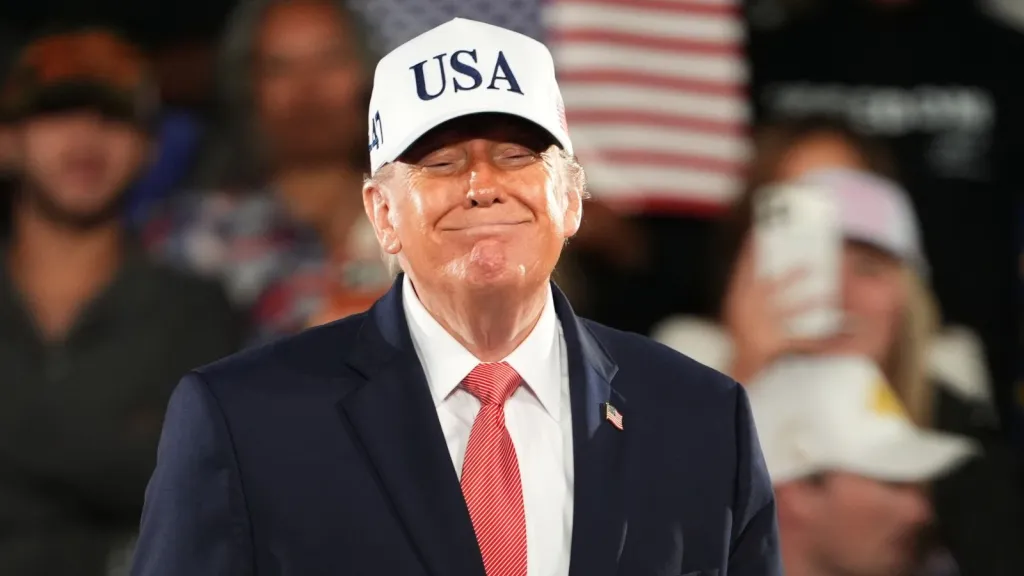
US President Donald Trump clashed with a reporter from The Independent after being questioned about the financial incentives offered under his administration’s newly unveiled Fraud Whistleblower Incentive Program (WHIP). The tense exchange unfolded on Tuesday, October 20, 2026, following a press conference announcing the programme, with Trump telling journalist Andrew Feinberg, “You better be careful,” before accusing him of behaving improperly.
The confrontation centred on a question about why potential whistleblowers would choose the new programme when the long-established False Claims Act offers eligible individuals rewards of up to 25% of the money recovered by the government in qualifying cases. Feinberg’s question raised concerns about how the new initiative would compare with existing legal mechanisms for reporting fraud and whether its incentives would be attractive enough to encourage disclosures.
Trump responded sharply, questioning the reporter personally and interrupting his attempts to continue the exchange. Vice President JD Vance subsequently defended the administration’s position, describing Feinberg’s question as “fundamentally dishonest” and arguing that the False Claims Act covers only a narrow category of government fraud.
The confrontation has drawn attention to two issues: the administration’s proposed approach to uncovering fraud involving public funds and the increasingly contentious relationship between Trump and journalists who question his policies. The exchange also highlights the importance of understanding how whistleblower reward programmes differ in their eligibility rules, scope and financial incentives.
Trump Confronts Andrew Feinberg Over Whistleblower Rewards
The dispute began after the press conference on the Fraud Whistleblower Incentive Program had concluded. Andrew Feinberg, a reporter for The Independent, questioned why individuals with information about suspected fraud would use the newly announced initiative when the False Claims Act already provides a route for eligible whistleblowers to receive substantial financial rewards.
Under the False Claims Act, qualifying whistleblowers can receive a portion of the money recovered by the government through successful cases. The potential reward can reach up to 25% in certain circumstances, making the financial incentives under the existing law an important point of comparison for any new programme intended to encourage people to report fraud.
Feinberg’s question focused on the practical appeal of the administration’s initiative. If an established law already offers significant rewards in qualifying cases, potential whistleblowers may want to understand what additional advantages the new programme provides and which categories of suspected fraud it is designed to address.
Trump did not respond to the question with a detailed explanation of the programme’s comparative reward structure during the exchange. Instead, he challenged the reporter’s conduct and questioned his intentions.
“I don’t know who the hell you are,” Trump said from the podium before adding, “But you better be careful.”
When Feinberg attempted to interject with another question, Trump raised his voice and told him to stop speaking.
“Quiet. Quiet. What’s wrong with you? Are you a sick person?” Trump asked. “I actually think there is something wrong with you.”
The exchange quickly shifted away from the technical details of whistleblower compensation towards a personal confrontation between the president and the journalist. Rather than resolving the question about incentives, the interaction highlighted the administration’s objections to the way the reporter framed his inquiry.
What Is the Fraud Whistleblower Incentive Program?
The Fraud Whistleblower Incentive Program, referred to as WHIP, was introduced by the Trump administration as an initiative intended to encourage people to report fraud involving the federal government. The programme is presented as part of a broader effort to identify improper payments, uncover fraudulent activity and help authorities recover public money.
Whistleblower programmes generally seek to encourage individuals with relevant information to report suspected wrongdoing to government authorities. Such individuals may include people who have observed questionable financial practices, identified suspicious transactions or obtained information that could help investigators establish whether public funds have been improperly obtained or spent.
Financial incentives can play an important role in encouraging disclosures, particularly when reporting suspected misconduct involves professional risks, legal uncertainty or the possibility of retaliation. A reward may help motivate people to provide information that authorities would otherwise struggle to obtain.
However, the practical value of any programme depends on its specific rules. Important questions include what kinds of fraud qualify, who can submit information, how claims are evaluated, what evidence is required and how rewards are calculated.
The exchange between Trump and Feinberg brought these questions into focus because the reporter sought to compare WHIP with an existing federal law that already offers rewards in qualifying cases.
For potential whistleblowers, the distinction between the programmes could be significant. If WHIP covers forms of government fraud that fall outside the False Claims Act, it could provide an additional reporting route. If the programmes overlap substantially, the differences in eligibility, procedure and potential compensation could influence which mechanism an individual chooses.
The information provided during the confrontation did not settle all these questions. A full assessment of WHIP would require examining its official eligibility requirements, reward provisions and relationship with existing federal whistleblower laws.
Why the False Claims Act Became Central to the Dispute
The False Claims Act is a longstanding US federal law used to address certain forms of fraud involving claims for government money. It allows the government to pursue individuals or organisations that knowingly submit false claims for payment or engage in other conduct covered by the statute.
The law also includes a mechanism commonly associated with whistleblower cases, known as a qui tam action. Under this arrangement, eligible private individuals can bring information or legal claims on behalf of the government, subject to the statute’s requirements. If a case results in a qualifying recovery, the whistleblower may be entitled to a share of the proceeds.
Depending on the circumstances and applicable provisions, whistleblower awards can reach a substantial percentage of the money recovered. The possibility of receiving up to 25% in qualifying cases was the basis of Feinberg’s question about why someone might choose WHIP instead.
However, the False Claims Act does not cover every type of fraud that could occur within the federal government. Its provisions apply to specified forms of misconduct involving claims and other conduct within the statute’s scope. Other suspected wrongdoing may fall under different laws, administrative procedures or investigative authorities.
This distinction became the central point of Vance’s response. He argued that the reporter’s question failed to recognise the limitations of the existing law and the administration’s stated intention to encourage the reporting of fraud beyond the categories covered by the False Claims Act.
The legal distinction matters because two programmes can pursue the broad objective of identifying fraud while applying to different categories of cases. A new initiative could potentially complement an existing law rather than replace it, provided the programmes have sufficiently different scopes and clearly defined procedures.
At the same time, the existence of different programmes does not automatically establish which one would be more attractive to a potential whistleblower. That assessment would depend on the rules governing each programme, including the availability of rewards and the protections provided to individuals who report suspected wrongdoing.
JD Vance Calls the Reporter’s Question ‘Fundamentally Dishonest’
Vice President JD Vance defended Trump following the confrontation, arguing that Feinberg’s comparison between WHIP and the False Claims Act misrepresented the scope of the new initiative.
Vance claimed that more than 99% of the fraud being uncovered in the federal government was not covered by the False Claims Act. He used that figure to argue that the administration wanted a mechanism through which people could report a wider range of suspected fraud and potentially benefit when their information helped the government recover money.
“That’s a fundamentally dishonest question,” Vance said.
He continued by arguing that the False Claims Act applied to a narrow category of cases and that the president wanted to expand the opportunities available to people who uncovered government fraud.
“What the President is saying is he wants all fraud to be the sort of thing where if you find it, if you uncover it, you find evidence and allow us to undo the money, you should be able to benefit,” Vance said.
He added that the administration did not want rewards to be limited to the comparatively narrow category of cases covered by the False Claims Act.
Vance’s defence therefore focused on the intended scope of WHIP rather than the precise comparison of financial incentives raised by Feinberg. His argument was that an additional programme could potentially encourage reporting in cases for which the existing law does not provide the same route.
However, the claim that more than 99% of federal government fraud falls outside the False Claims Act is a broad statistical assertion. Assessing it would require a clear definition of the fraud being measured, an explanation of the data used and evidence showing how cases were classified under the law.
Without those details, the figure should be understood as Vance’s stated justification for the programme rather than an independently established measure of the proportion of federal fraud outside the statute.
Vance Launches a Further Attack on Feinberg
The dispute continued after the press conference, with Vance criticising Feinberg on social media. In a post dated October 20, the vice president said Trump had “eviscerated imbecile journalist” Andrew Feinberg over what he described as misconduct in the Oval Office.
Vance’s post repeated Trump’s remarks questioning the reporter’s behaviour and character. The language used by the vice president extended the confrontation beyond the original question about whistleblower incentives and turned it into a public dispute over the journalist’s conduct.
The episode illustrates how political disagreements during press briefings can continue across social media, where officials can directly address audiences and reinforce their own interpretation of an exchange.
Such exchanges can also shift public attention away from the underlying policy issue. In this case, the original question concerned how the new whistleblower initiative would operate alongside an established federal law. The subsequent personal criticism from Trump and Vance became a major part of the story.
For journalists, questions about government programmes are an important part of scrutinising public policy, particularly when a new initiative involves financial incentives, public money and legal procedures. For government officials, explaining the distinctions between new and existing programmes is essential if the public is to understand how the policies are intended to work.
The confrontation demonstrated the tension that can arise when those responsibilities collide with a combative political communication style.
Trump’s Longstanding Clashes With Journalists
Trump has repeatedly clashed with journalists and media organisations whose reporting he considers unfair. He has frequently criticised news outlets and accused sections of the media of spreading what he calls “fake news”. His exchanges with reporters have often involved challenges to their questions, criticism of their professionalism and disputes over how his administration’s actions are portrayed.
The confrontation with Feinberg follows this broader pattern of tense interactions between the president and the press. In this instance, the disagreement began with a question about the design of a government programme but quickly developed into a personal exchange.
Presidential press conferences serve as an important forum for journalists to question officials about policies, spending decisions and the administration’s claims. Such scrutiny can help clarify details that are not fully addressed in prepared announcements and allow the public to assess the reasoning behind government decisions.
At the same time, exchanges marked by personal insults or warnings can intensify debates about the relationship between political power and independent journalism. Critics of confrontational rhetoric may view such remarks as discouraging journalists from asking challenging questions, while supporters may interpret them as a forceful response to what they consider unfair or misleading reporting.
Understanding the exchange requires distinguishing between the substantive policy question and the personal language used in response. The issue of whether WHIP offers a useful additional route for reporting fraud can be assessed through its legal framework and practical operation, independently of the confrontation itself.
What the Dispute Means for Government Fraud Reporting
The disagreement over WHIP raises broader questions about how governments can encourage people to report suspected misuse of public funds. Whistleblower systems can help authorities identify wrongdoing that might otherwise remain hidden, but their effectiveness depends on public confidence in the process and clear rules about how information will be handled.
Potential whistleblowers may consider several factors before reporting suspected fraud. These include whether their information falls within a programme’s scope, whether they can remain confidential where the rules permit it, what legal protections may apply, how long an investigation could take and whether a financial reward is available.
Reward structures are only one part of the decision. People may also be concerned about workplace retaliation, litigation costs, reputational damage or the consequences of reporting information about an employer or organisation with significant resources.
A well-designed programme must therefore establish transparent eligibility criteria, credible investigative procedures and appropriate safeguards for individuals who provide information. It should also make clear how its processes relate to existing legal mechanisms so that potential whistleblowers can determine where to report their concerns.
If WHIP is intended to cover categories of fraud outside the False Claims Act, its practical effectiveness will depend on how clearly those categories are defined and whether the programme offers a credible path from disclosure to investigation and potential recovery.
The programme’s announced existence alone does not establish how many people will use it, how much fraud it will uncover or how much money it might help recover. Those outcomes would need to be assessed using evidence from its implementation.
For the administration, the challenge will be to demonstrate that WHIP adds meaningful value to the existing system rather than simply creating another layer of procedures. Clear public guidance on eligibility, reporting processes and reward calculations would help potential whistleblowers understand how the initiative differs from established mechanisms.
Key Questions About WHIP Remain Unanswered
The confrontation between Trump and Feinberg has placed the new programme under public scrutiny, but several important questions remain central to assessing its likely impact.
- Who is eligible? The programme’s precise eligibility rules will determine which individuals can report suspected fraud and qualify for any available rewards.
- What types of fraud are covered? The administration has argued that WHIP is intended to address wrongdoing beyond the scope of the False Claims Act. Clear definitions will be necessary to establish where the programmes differ.
- How are rewards calculated? Potential whistleblowers will need to understand whether awards are tied to money recovered, how eligibility is determined and whether limits apply.
- What protections are available? Confidentiality and safeguards against retaliation can influence whether people feel able to report suspected wrongdoing.
- How will the programme be evaluated? Information about disclosures, investigations, confirmed cases and recoveries would help determine whether WHIP is meeting its stated objectives.
These questions are relevant regardless of the political dispute surrounding the announcement. A whistleblower programme can only be judged effectively when its legal scope, operating procedures and results are clear.
Conclusion: Policy Questions Overshadowed by a Heated Exchange
Trump’s confrontation with Andrew Feinberg began with a question about why whistleblowers would choose the newly announced WHIP programme over the False Claims Act, which can provide substantial rewards in qualifying cases. The president responded with personal criticism and a warning, while Vance defended the initiative by arguing that the existing law does not cover most of the fraud the administration says it is seeking to uncover.
The central policy question remains whether WHIP offers a meaningful additional route for reporting suspected government fraud. Answering it requires a detailed understanding of the programme’s eligibility requirements, reward structure and relationship with existing federal law.
The exchange also renewed attention on Trump’s contentious relationship with journalists and the role of press scrutiny in explaining government policy. While the personal confrontation dominated the immediate headlines, the programme’s actual value will ultimately depend on its implementation, the protections it offers and whether it helps authorities identify and recover public money.
For now, the dispute has brought WHIP into the spotlight before its practical effectiveness can be fully assessed. Clear rules, transparent reporting and measurable results will be essential to determining whether the new initiative delivers on the administration’s stated goal of expanding the fight against fraud.
For breaking news and live news updates, like us on Facebook or follow us on Twitter and Instagram. Read more on Latest World on thefoxdaily.com.






COMMENTS 0