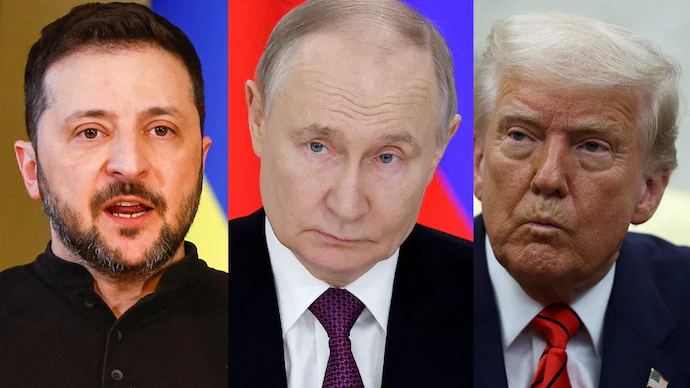
Russian President Vladimir Putin has indicated that Moscow is prepared in principle to resume trilateral peace talks with Ukraine and the United States next month, raising the possibility of renewed diplomatic efforts to end the war. Kremlin aide Yuri Ushakov said on Wednesday that Putin conveyed Russia’s willingness to return to negotiations during a meeting with US special envoy Steve Witkoff.
The proposed talks could revive a diplomatic process that has remained on hold since February. According to the Kremlin, the next round of discussions could focus on establishing a security system for Russia and Ukraine after the conflict ends. Abu Dhabi has emerged as a possible venue for the proposed meeting, although no confirmed date or final arrangements have been announced.
The latest development comes amid continuing diplomatic contacts involving Washington, Moscow, Kyiv and European leaders. Ushakov said Witkoff briefed Putin on his recent meetings in Oslo, where he met Ukrainian President Volodymyr Zelenskyy, the Norwegian prime minister and the Finnish president. The US envoy reportedly discussed new approaches proposed by European countries and Ukraine, though Moscow expressed doubts about their usefulness in resolving the conflict.
Despite the Kremlin’s stated willingness to resume negotiations, the prospect of a meeting should not be confused with a confirmed peace agreement. Significant questions remain about the terms of a potential settlement, future security arrangements and whether Russia and Ukraine can reach mutually acceptable conditions to end the war.
Putin Signals Readiness to Resume Russia-Ukraine Peace Negotiations
According to Ushakov, Putin told Witkoff that Russia was prepared in principle to restart trilateral negotiations involving Russia, Ukraine and the United States next month. The Kremlin aide’s remarks indicate that Moscow is open to returning to a negotiating format that brings the principal parties and Washington together.
The proposed discussions would mark a potential resumption of talks that have not taken place since February. However, the Kremlin has not announced a confirmed date for the next round, and the details of the proposed agenda remain subject to further diplomatic discussions.
Trilateral negotiations would provide an opportunity for Russian and Ukrainian representatives to discuss possible ways of ending the conflict with the United States involved in the process. Washington’s participation could also provide a channel for communicating proposals, addressing disagreements and exploring possible arrangements for a post-war settlement.
For now, the Kremlin’s statement establishes Moscow’s willingness in principle to participate, rather than confirming that negotiations will definitely take place. Whether the proposal leads to a meeting will depend on further coordination among the countries involved.
The prospect of renewed talks is significant because diplomatic engagement remains one of the possible routes towards ending the war. However, a return to negotiations would be only an initial step. Any lasting agreement would require the parties to address the central political, territorial and security questions underlying the conflict.
Could the Ukraine War End Soon?
The Kremlin’s latest comments have raised fresh questions about whether the Russia-Ukraine war could be approaching a diplomatic turning point. Interfax reported Ushakov as saying that the conflict was nearing an end, a remark that has added to attention surrounding the possibility of renewed negotiations.
However, such a statement does not establish that a peace deal is imminent. No final agreement has been announced, and the proposed trilateral talks have yet to take place. A willingness to negotiate does not necessarily mean that the two sides have resolved their differences or agreed on the terms needed to stop the fighting.
Peace negotiations in a prolonged conflict can involve several stages, including agreeing on an agenda, identifying areas of common ground, addressing security concerns and determining how any eventual settlement would be implemented. Even if the proposed meeting takes place next month, these issues could require further discussions.
One of the central questions will be whether Russia and Ukraine can find acceptable terms for ending hostilities. The Kremlin has indicated that future security arrangements could form part of the discussions, but the available information does not establish what specific proposals would be presented or whether Kyiv and Moscow would accept them.
The United States’ role will also be important. Witkoff’s discussions with Putin and his meetings with Ukrainian and European leaders suggest that Washington is continuing diplomatic engagement with several parties. Whether these contacts can produce a workable framework for negotiations remains uncertain.
For Ukraine, Russia and the international community, the distinction between diplomatic activity and an actual settlement remains crucial. The latest statements point to a possible reopening of talks, but the timing and outcome of any peace process are not yet clear.
Abu Dhabi Emerges as a Possible Venue for the Next Round of Talks
Abu Dhabi could host the proposed trilateral negotiations involving Russia, Ukraine and the United States, according to remarks attributed to Ushakov by Russian state broadcaster Vesti.
The possible venue is one of the few logistical details to emerge from the Kremlin’s latest announcement. However, Abu Dhabi has not been confirmed as the final location, and no official meeting date has been announced in the information provided by the Kremlin aide.
The choice of a venue can be an important part of organising diplomatic discussions, particularly when representatives of countries involved in an active conflict need to meet. A location acceptable to the participants can provide a setting for negotiations without requiring the meeting to take place in one of the countries directly involved in the fighting.
Nevertheless, the location alone will not determine whether negotiations make progress. The agenda, the positions presented by Russia and Ukraine, and the willingness of the parties to consider compromises will be more important to the substance of any discussions.
If the proposed meeting proceeds, it could provide an opportunity to explore whether the diplomatic contacts of recent weeks have created sufficient common ground for more formal negotiations. Until arrangements are confirmed, however, Abu Dhabi should be regarded as a possible venue rather than an established location for the next round of talks.
What Did US Envoy Steve Witkoff Discuss With Putin?
Witkoff met Putin for discussions that lasted almost three hours, Ushakov said. The meeting covered the possibility of resuming negotiations on Ukraine as well as other issues involving Russia and the United States.
According to the Kremlin aide, Witkoff briefed Putin on his meetings in Oslo on Tuesday. Those meetings included discussions with Ukrainian President Volodymyr Zelenskyy, the Norwegian prime minister and the Finnish president.
Ushakov said the US envoy highlighted what he described as new approaches in the positions of European countries and Kyiv. However, he added that Moscow believed these approaches offered little that could help resolve the conflict.
The comments suggest that the parties continue to differ over possible ways forward. While diplomatic contacts may help communicate proposals and clarify positions, the Kremlin’s response indicates that Moscow does not consider the approaches discussed by Witkoff sufficient to resolve the conflict in their current form.
The available details do not specify all the proposals discussed during the meeting or explain how Kyiv and European governments responded to Moscow’s assessment. Further diplomatic engagement would be needed to determine whether the differences can be narrowed.
The meeting also demonstrates that discussions about Ukraine are taking place alongside other matters affecting relations between Moscow and Washington. This broader diplomatic agenda could influence the context in which the two countries engage with one another, although the Kremlin’s statement does not establish a direct link between the separate issues.
Russia Questions European and Ukrainian Approaches to Ending the War
One of the important aspects of Ushakov’s account was his description of the approaches presented by Witkoff following the envoy’s meetings in Oslo. According to the Kremlin aide, the US representative outlined new positions from European countries and Ukraine, but Moscow viewed them as offering little assistance in resolving the conflict.
The statement highlights the challenge of building agreement among the parties involved in the diplomatic process. Ukraine, Russia, the United States and European governments may have different priorities concerning the conditions for ending the war and the arrangements needed to prevent renewed hostilities.
For negotiations to move forward, proposals must be examined in sufficient detail to establish whether the parties can accept them, modify them or develop alternatives. A disagreement over the usefulness of an approach does not necessarily rule out further talks, but it demonstrates that important differences remain.
Witkoff’s discussions with Zelenskyy and European leaders could provide Washington with information about their positions before any new trilateral meeting. Russia’s response, as described by Ushakov, offers an indication of Moscow’s assessment of those proposals.
However, the Kremlin’s account represents Moscow’s description of the discussions. The available information does not provide the full details of the positions exchanged in Oslo or establish whether the parties have reached agreement on any substantive element of a potential settlement.
The proposed resumption of negotiations would therefore need to be assessed on the basis of concrete developments, including an agreed agenda, confirmed participation and substantive progress on the issues separating Russia and Ukraine.
Security Arrangements Could Feature in Post-War Discussions
The Kremlin has said that a new round of trilateral negotiations could focus on establishing a security system for Russia and Ukraine after the conflict ends. This suggests that discussions may extend beyond stopping the immediate fighting to consider how security would be managed in the period following a settlement.
Post-war security arrangements can be a central issue in negotiations because a ceasefire or peace agreement does not automatically resolve concerns about future hostilities. The parties may need to consider how commitments would be implemented, how compliance would be assessed and what mechanisms could help address disputes.
In the current case, the Kremlin has not provided detailed information about the security framework it has in mind. The available statement does not establish whether Russia and Ukraine share a common understanding of the proposed system or what specific commitments might be included in any agreement.
The question of future security could be closely connected to the broader terms of a settlement. An arrangement that one side views as necessary for its security may be regarded differently by the other, making the wording and implementation of any agreement important areas for negotiation.
If the proposed talks take place, the security issue could offer a framework for discussing how a post-conflict situation might be managed. However, the existence of a possible agenda does not mean the parties have already agreed on the relevant principles or their practical application.
Putin and Trump Agreement on Russian Diesel Also Discussed
Ushakov said Putin and Witkoff also discussed implementing an agreement dated October 9 between Putin and US President Donald Trump concerning the supply of Russian diesel to the United States and global markets.
The diesel issue formed another part of the nearly three-hour meeting. Its inclusion indicates that the discussions between the Kremlin and the US envoy extended beyond the war in Ukraine to include energy supplies and wider economic considerations.
Energy-related arrangements can be significant in relations between countries because they involve commercial interests, supply considerations and broader diplomatic priorities. However, the available details do not provide the terms of the October 9 agreement, the quantities involved or a timetable for implementation.
It would therefore be premature to draw conclusions about the agreement’s wider economic effects from the Kremlin aide’s brief description alone. What the statement establishes is that implementation of the arrangement was discussed during Witkoff’s meeting with Putin.
The issue also illustrates that the two countries’ diplomatic engagement covers several subjects at the same time. The proposed Ukraine talks, diesel supplies and the crisis involving Iran were all mentioned in the Kremlin’s account, although no direct connection between the issues was established.
Iran Crisis Also Featured in Putin-Witkoff Meeting
The crisis involving Iran was another topic discussed by Putin and Witkoff, according to Ushakov. The Kremlin aide said Putin emphasised that diplomatic options remained available and that reaching agreements with Tehran was both possible and necessary.
Ushakov also described Iran as a strategic partner of Russia and said Moscow was prepared to continue supporting efforts to find political and diplomatic solutions to the Iranian issue.
“Russia reaffirmed its readiness to continue facilitating the search for political and diplomatic solutions to the Iranian issue,” Ushakov said.
The remarks reflect Moscow’s stated preference for diplomatic engagement on Iran. However, the Kremlin’s account does not provide details of specific proposals, the participants involved in any potential negotiations or the steps that might follow from the discussion.
The inclusion of Iran in the meeting indicates that the talks covered multiple international issues. Nevertheless, the available information does not establish that progress on Iran or energy supplies would determine the prospects for negotiations over Ukraine.
What Needs to Happen Before a Russia-Ukraine Peace Deal?
Although the Kremlin has indicated that Russia is prepared in principle to resume trilateral negotiations next month, several steps would be needed before the process could produce a lasting agreement.
- Confirmation of talks: Russia, Ukraine and the United States would need to agree on the date, location and format of the proposed meeting.
- An agreed agenda: The participants would need to determine which issues should be discussed and how negotiations would be organised.
- Progress on key disagreements: The parties would need to examine their differences and determine whether any proposals could form the basis of a settlement.
- Security arrangements: If post-war security is included in the discussions, the parties would need to clarify the principles and commitments involved.
- Implementation of any agreement: A final settlement would require practical arrangements for carrying out its terms and addressing possible disputes.
These are general requirements for a negotiated settlement, not confirmation that the countries have already agreed to any of these steps beyond Moscow’s stated willingness to resume talks in principle.
The proposed negotiations could provide a channel for exploring possible solutions, but a meeting by itself would not guarantee an end to the fighting. The substance of the proposals and the willingness of the parties to reach an agreement would determine whether the diplomatic process could move forward.
What Happens Next in the Ukraine Peace Process?
The immediate question is whether the Kremlin’s stated willingness to resume trilateral negotiations will translate into a confirmed meeting next month. Abu Dhabi has been mentioned as a possible venue, but further details about the arrangements remain outstanding.
Attention will also focus on the positions of Ukraine and the United States. Witkoff’s meetings with Zelenskyy and European leaders indicate that Washington has been engaging with several parties, but the available information does not establish that all participants have agreed to the same framework for negotiations.
Another important development to watch will be whether the discussions produce specific proposals on security arrangements or other issues related to ending the conflict. The Kremlin has identified post-war security as a possible focus, but the details of any proposed framework have not been disclosed.
For now, Putin’s reported readiness to return to negotiations offers a potential opening for renewed diplomacy. It does not, however, confirm that the war will end soon or that a peace agreement is within reach.
The next significant milestone would be confirmation that Russia, Ukraine and the United States will meet, followed by evidence that the discussions are addressing the substantive disagreements preventing a settlement. Until those developments occur, the prospect of peace remains uncertain despite Moscow’s stated willingness to resume talks.
Conclusion
Russian President Vladimir Putin has indicated that Moscow is prepared in principle to resume trilateral negotiations with Ukraine and the United States next month, according to Kremlin aide Yuri Ushakov. The proposed talks could take place in Abu Dhabi and may include discussions on a post-war security system for Russia and Ukraine.
The announcement follows a nearly three-hour meeting between Putin and US special envoy Steve Witkoff, who briefed the Russian leader on his recent discussions with Zelenskyy and European leaders. The meeting also covered Russian diesel supplies and the crisis involving Iran.
While the Kremlin’s remarks point to the possibility of renewed diplomatic engagement, no confirmed date, final venue or peace agreement has been announced. Russia’s willingness to resume talks is an important development in the diplomatic process, but whether negotiations can lead to an end to the Ukraine war will depend on the positions of the parties and the progress they make on the issues separating them.
For breaking news and live news updates, like us on Facebook or follow us on Twitter and Instagram. Read more on Latest World on thefoxdaily.com.





COMMENTS 0