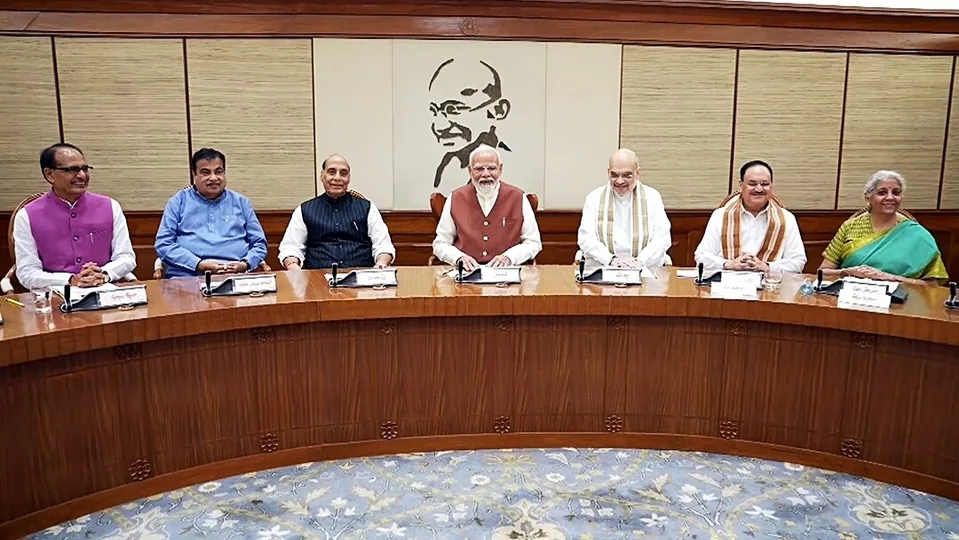
The Union Cabinet has approved two proposed legislative measures that could significantly reshape India’s parliamentary representation, clearing the way for a 50% increase in Lok Sabha seats across states and Union Territories and a freeze on their relative share until 2051. The plan would raise the constitutional ceiling of the Lower House to 850 members and provide a framework for implementing the 33% reservation for women in Parliament and state legislative assemblies after a fresh delimitation exercise.
The proposals are contained in the Constitution (One Hundred and Thirty-second Amendment) Bill, 2026, and the Delimitation (Second) Bill. If Parliament passes the constitutional amendment and the required number of state legislatures ratify it, the measures would establish a new framework for delimitation, increase the strength of state assemblies and preserve the existing relative distribution of parliamentary seats among states.
The proposed changes are politically significant because delimitation has long been contentious, particularly between northern and southern states. The revised formula seeks to increase representation without allowing differences in population growth to substantially alter the relative share of states in the Lok Sabha. However, the bills still need to clear Parliament and the constitutional ratification process before they can take effect.
What the 50% Lok Sabha Seat Increase Means
Under the proposed constitutional amendment, the number of Lok Sabha seats allocated to every state and Union Territory would increase by 50% over its existing allocation before delimitation. The maximum strength of the Lower House would rise to 850 members, comprising up to 815 representatives from states and 35 from Union Territories.
The Constitution currently provides for a maximum of 550 Lok Sabha members, including up to 530 representatives from states and 20 from Union Territories. The proposed ceiling of 850 would create considerably more room for parliamentary representation as well as the introduction of reserved seats for women.
The key feature of the revised formula is that the increase would apply proportionately across states and Union Territories. Rather than reallocating parliamentary seats primarily according to differences in population growth, the proposal seeks to preserve their existing relative shares while expanding the overall size of the House.
For example, a state that currently holds a particular percentage of Lok Sabha seats would broadly retain that proportion after the proposed expansion. Its number of representatives would rise, but the formula is designed to prevent its relative parliamentary weight from falling simply because other states experienced faster population growth.
The final number of seats will depend on the delimitation exercise and the application of the 50% increase to individual state and Union Territory allocations, including the treatment of fractional figures.
Why the 2051 Freeze Matters for Southern States
The proposed freeze addresses one of the most politically sensitive aspects of delimitation: the possibility that states with faster population growth could gain a larger share of parliamentary representation at the expense of states that have achieved greater success in controlling population growth.
India’s delimitation framework has been shaped by this disagreement for decades. Southern states, in particular, have argued that they should not lose political influence because they implemented population-control measures more effectively than some northern states.
The current distribution of Lok Sabha seats has its roots in the 1971 Census. The Constitution’s provisions froze the allocation of seats among states to prevent population differences from immediately changing the balance of representation. Subsequent constitutional amendments extended the freeze, with the existing arrangement linked to the first Census conducted after 2026.
The new proposal would extend the protection of states’ relative representation until 2051. This means that the next delimitation exercise would not be allowed to substantially change the inter-state distribution of Lok Sabha seats simply on the basis of population differences.
The distinction is important: the proposed freeze concerns the relative allocation of parliamentary seats among states and Union Territories. It does not mean that constituency boundaries within each state would remain unchanged until 2051. Those boundaries would still be redrawn through the delimitation process.
The government has presented the revised formula as a response to concerns raised during the earlier legislative attempt. By combining a uniform expansion with a protection of existing state shares, it is seeking to make the proposed changes more acceptable to parties concerned about regional representation.
How the Earlier Delimitation Bill Failed in Parliament
The latest proposal follows an unsuccessful attempt by the government in April 2026 to advance legislation connecting Women’s Reservation with delimitation. The government had introduced the Constitution (131st Amendment) Bill along with two related legislative measures.
The earlier constitutional amendment failed to secure the required two-thirds majority in the Lok Sabha after Opposition parties united against it. It was a significant setback because constitutional amendments require a higher threshold than ordinary legislation.
One of the central objections concerned the potential redistribution of parliamentary representation among states. Opposition parties, particularly those representing southern states, raised concerns that a population-based delimitation exercise could reduce their relative influence in the Lower House.
The revised 132nd Amendment Bill attempts to address that concern by explicitly providing for a 50% increase in the number of seats allocated to each state and Union Territory. It also proposes extending the freeze on relative representation until 2051.
Since the April defeat, the political calculations surrounding the legislation have also changed. The reported willingness of parties such as the Dravida Munnetra Kazhagam and the Sharad Pawar-led Nationalist Congress Party faction to consider supporting the revised framework has become important to the government’s efforts to secure the necessary numbers.
However, indications of support do not guarantee passage. The constitutional amendment will still require the prescribed majority in both Houses of Parliament, followed by ratification by at least half of the state legislatures.
Women’s Reservation Could Become Operational Before the 2029 Election
A central objective of the proposed legislation is to bring the 33% reservation for women in the Lok Sabha and state legislative assemblies into operation through the new delimitation exercise.
The 106th Constitutional Amendment, passed in 2023, introduced the framework for reserving one-third of seats for women in the Lower House and state assemblies. However, its implementation was linked to a future Census and the subsequent delimitation exercise, creating uncertainty about when the reservation would become effective.
The new proposal seeks to accelerate that process. It would connect the implementation of the women’s quota to a delimitation exercise based on the latest published Census figures available when the proposed legislation comes into force.
Since the 2021 Census was not conducted and the next Census exercise is underway, the relevant published figures are expected to be from the 2011 Census if the legislation commences before newer figures become available.
Once delimitation is completed, one-third of the seats in the expanded Lok Sabha would be reserved for women. The proposed expansion could translate into approximately 270 to 272 reserved seats in the Lower House, depending on the final number of constituencies.
The reservation would also cover women belonging to Scheduled Castes and Scheduled Tribes in accordance with the constitutional framework. Seats reserved for women would be rotated among constituencies in accordance with the Delimitation Commission’s orders.
The proposed reservation would remain in operation for 15 years, subject to the constitutional provisions governing its continuation. The government intends to complete the process in time to facilitate implementation before the 2029 general election, although that timeline will depend on the passage of the bills and the completion of delimitation.
State Assemblies Will Also Expand by 50%
The proposed changes are not limited to Parliament. The strength of state legislative assemblies would also increase by 50% over their existing numbers, subject to a maximum ceiling of 650 members.
The revised ceiling is higher than the earlier limit of 500. This change is particularly relevant for large states whose current assembly strength would otherwise make a proportional expansion difficult under the previous cap.
Uttar Pradesh provides a prominent example. Its Legislative Assembly currently has 403 seats. A 50% increase would take the figure to approximately 605 seats, subject to the final delimitation and rounding process.
The earlier ceiling of 500 would have prevented Uttar Pradesh from receiving the full proportional increase proposed under the revised framework. Raising the cap to 650 would allow the state to accommodate the additional constituencies.
Other states would also see their assembly strength increase under the proposed formula. The broader objective is to expand representation within state legislatures while retaining the relative distribution of seats among states.
Women’s reservation would apply to the expanded assemblies as well as the Lok Sabha, meaning the legislation could significantly change the composition of elected institutions across the country.
How the New Delimitation Commission Will Be Formed
The Delimitation (Second) Bill proposes the establishment of a Delimitation Commission to carry out the exercise after the legislation comes into force. The Centre would constitute the commission as soon as possible following commencement of the proposed law.
At the national level, the proposed commission would include:
- Chairperson: A sitting or retired judge of the Supreme Court appointed by the Central Government.
- Election Commission representative: The Chief Election Commissioner or an Election Commissioner nominated by the Chief Election Commissioner.
- State Election Commissioner: The State Election Commissioner of the state concerned.
The commission would be responsible for readjusting the allocation of Lok Sabha seats to states and Union Territories, determining the total strength of state legislative assemblies and redrawing territorial constituencies on the basis of the latest published Census figures available when the legislation commences.
The proposed law also provides for associate members from each state. These would include five Members of Parliament and five members of the relevant state legislative assembly, nominated by the Speaker of the Lok Sabha and the Speaker of the state assembly, respectively.
Where a state has five or fewer Members of Parliament, all of its MPs would serve as associate members under the proposed arrangement.
The associate members would provide a state-level representation mechanism during the delimitation process. However, the core commission would remain responsible for carrying out the statutory exercise and issuing its orders.
The Central Government would determine the period during which the commission would function through a notification, with the possibility of extending that period if necessary.
What the Bill Says About Jammu and Kashmir
The proposed delimitation legislation also contains a provision concerning the future delimitation of constituencies in the part of the Union Territory of Jammu and Kashmir currently under Pakistan’s occupation.
It states that the Election Commission would act as the Delimitation Commission for delimiting constituencies in that area if it ceases to remain under occupation. The provision is conditional and does not mean that the exercise can take place immediately.
The bill also addresses arrangements for the appointment of the relevant state election commissioner. For Meghalaya and Nagaland, a person nominated by the respective governor would perform that role for the purposes specified in the legislation.
What Must Happen Before the Seat Expansion Becomes Law?
Cabinet approval is an important step, but it does not make the proposed changes legally effective. The constitutional amendment must first be introduced and passed by Parliament.
Unlike an ordinary bill, a Constitution amendment requires a special majority in each House. It must secure the support of at least two-thirds of members present and voting, in addition to a majority of the total membership of the Lok Sabha and Rajya Sabha.
After parliamentary approval, the amendment must also be ratified by at least half of India’s state legislatures before it can be presented for presidential assent. The accompanying delimitation legislation must also complete the required parliamentary process.
The government is expected to take up the proposals during the special sitting of Parliament scheduled from November 30 to December 3, 2026. The Lok Sabha is due to reconvene on November 30, while the Rajya Sabha is scheduled to meet from December 2.
The political challenge will be securing enough support in both Houses, particularly after the earlier constitutional amendment failed. The revised proposal may address some of the objections raised by regional parties, but its final passage will depend on the parliamentary vote and subsequent state ratification.
A Major Proposed Shift in India’s Parliamentary Representation
The Cabinet-approved plan combines three major changes: a 50% expansion of parliamentary and state assembly seats, a proposed freeze on the relative distribution of Lok Sabha representation among states until 2051, and a mechanism to bring the 33% women’s reservation into effect after delimitation.
If enacted, the measures would create a larger Lok Sabha, expand state legislatures and change the way constituencies are organised across India. The proposed protection of states’ relative shares is also intended to address a long-running disagreement over population growth and regional political representation.
However, the proposals remain subject to parliamentary approval, constitutional ratification and the completion of the delimitation process. Until those steps are completed, the existing allocation of seats and the current parliamentary arrangement remain in force.
The coming special sitting will therefore be a crucial test for the government’s revised approach. The outcome will determine whether the proposed 50% expansion and the linked women’s reservation framework move closer to becoming one of the most consequential changes to India’s electoral representation in decades.
For breaking news and live news updates, like us on Facebook or follow us on Twitter and Instagram. Read more on Latest India on thefoxdaily.com.





COMMENTS 0