
Shiv Sena (Uddhav Balasaheb Thackeray) has issued a three-line whip directing its Members of Parliament to be present in Delhi on November 29 for a meeting to discuss the proposed delimitation legislation ahead of Parliament’s special session. The party has made attendance mandatory and warned that failure to comply could invite disciplinary action, including proceedings under the Tenth Schedule of the Constitution.
The directive comes amid an intensifying political debate over the Centre’s proposed constitutional amendment and revised delimitation framework, which are linked to the implementation of 33 per cent reservation for women in the Lok Sabha and state legislative assemblies. Parliament is scheduled to reconvene on November 30, with the government preparing to introduce and move the revised legislative package.
Shiv Sena (UBT)’s decision to call its MPs to Delhi indicates that the party is preparing to coordinate its parliamentary position before the legislation is taken up. The meeting will provide an opportunity for party leadership to discuss the proposed changes, assess their political and constitutional implications and decide how its MPs should approach the debate.
Shiv Sena (UBT) Makes November 29 Meeting Mandatory
The three-line whip issued by Shiv Sena (UBT) instructs its MPs to attend the meeting scheduled in Delhi on November 29. A three-line whip is a formal parliamentary direction used by political parties to underline the importance of attendance or voting on a particular issue.
By issuing the directive ahead of the special parliamentary sitting, the party leadership has signalled that the delimitation legislation requires coordinated discussion among its lawmakers.
The warning about possible disciplinary action also makes clear that the party expects its MPs to follow the instruction. The reference to the Tenth Schedule is particularly significant because the anti-defection provisions can apply when legislators voluntarily give up party membership or vote or abstain contrary to a party direction without prior permission, subject to the constitutional rules and applicable exceptions.
The whip does not, by itself, establish the party’s final voting position on every provision of the proposed legislation. Its immediate purpose, according to the directive, is to ensure MPs attend the November 29 meeting and participate in discussions before Parliament takes up the matter.
Why Is the Delimitation Bill Politically Significant?
The proposed delimitation legislation is part of a wider legislative package intended to facilitate the implementation of one-third reservation for women in the Lok Sabha and state assemblies. The Centre’s revised proposal also seeks to increase the number of seats in legislative bodies and provide for the readjustment of constituencies.
The Constitution (132nd Amendment) Bill, 2026, and the Delimitation (Second) Bill, 2026, are central to the government’s plan. The revised framework proposes a 50 per cent increase in Lok Sabha seats across states and Union Territories, potentially taking the House’s maximum strength to 850 seats.
The proposal has triggered political disagreement over how seats will be distributed, how constituency boundaries will be redrawn and whether the existing balance of representation among states will be protected.
Several opposition parties have argued that delimitation should not disadvantage states that have made progress in controlling population growth. They have also questioned aspects of the proposed commission and the population data that may be used during the exercise.
Women’s Reservation and Delimitation at the Centre of Debate
The government has linked the proposed expansion of legislative seats with the implementation of the 33 per cent Women’s Reservation framework. Under the plan, the delimitation process would help determine the allocation of seats and the constituencies in which the reservation would apply.
The legislation is therefore not limited to increasing the number of elected representatives. It also concerns the future structure of electoral constituencies and the distribution of political representation across the country.
Supporters of the government’s proposal argue that expanding legislative strength can create additional opportunities for representation while facilitating women’s reservation. Critics, however, maintain that the quota can be implemented without making the proposed changes to the total number of seats.
These differences are expected to shape the parliamentary debate when the revised bills are taken up during the special session.
Parliament’s Special Session Begins on November 30
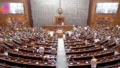
The Shiv Sena (UBT) meeting has been scheduled one day before the Lok Sabha is due to reconvene on November 30. The special parliamentary sitting is scheduled to continue until December 3, with the government preparing to move the revised bills during this period.
The Centre’s legislative agenda includes the Constitution (132nd Amendment) Bill, the Delimitation (Second) Bill and the Union Territories Laws (Amendment) Second Bill, which deals with extending the women’s reservation framework to the legislative assemblies of Delhi, Jammu and Kashmir and Puducherry.
The constitutional amendment will require the special majority prescribed under Article 368. Depending on the provisions amended, ratification by at least half of the state legislatures may also be necessary.
With the opposition preparing its response and regional parties taking different positions, the coming parliamentary proceedings are expected to involve detailed discussions about women’s representation, delimitation and the federal balance between states.
Party Coordination Becomes Important Before Parliamentary Debate
Shiv Sena (UBT)’s three-line whip highlights the importance the party has attached to internal coordination before the delimitation legislation reaches Parliament. The November 29 meeting will allow its MPs to discuss the proposal together and receive guidance from the party leadership.
The warning of disciplinary action also underlines the party’s expectation that its parliamentary representatives will remain aligned with its formal directions during the legislative process.
As the special session approaches, the positions taken by individual parties and the level of coordination among their MPs could become important in determining the outcome of the proposed constitutional amendment. For Shiv Sena (UBT), the immediate priority is to ensure its lawmakers are present in Delhi and prepared for the debate beginning November 30.
For breaking news and live news updates, like us on Facebook or follow us on Twitter and Instagram. Read more on Latest India on thefoxdaily.com.



COMMENTS 0