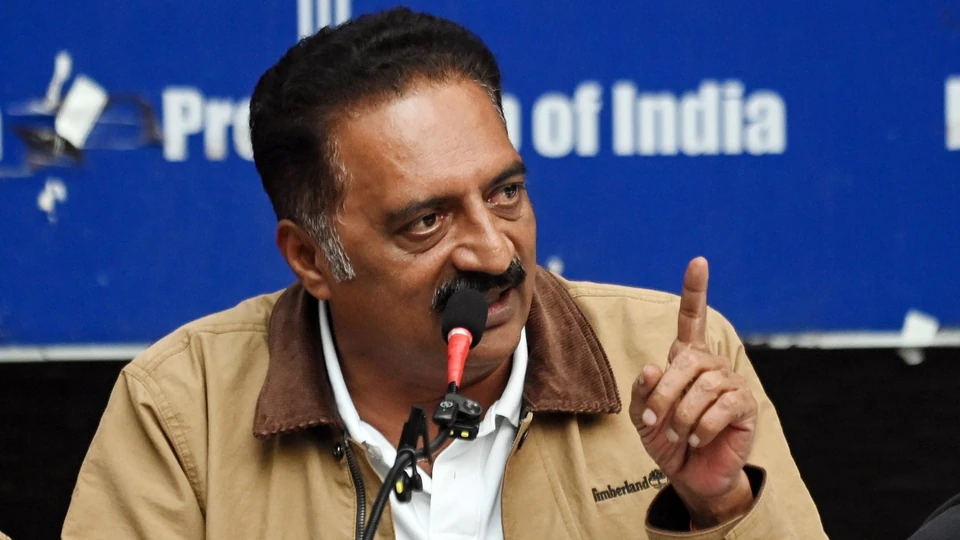
Actor Prakash Raj has urged Dravida Munnetra Kazhagam (DMK) president MK Stalin to reconsider the party’s decision to support the Centre’s proposed delimitation legislation, describing the move as an “act of betrayal” and a departure from the principles the party has historically championed. Raj accused the DMK of making a “selfish decision” and alleged that its support for the Bill amounted to “aiding communalism”.
The actor’s appeal came on Saturday, November 28, 2026, hours after the DMK announced that it would support the revised delimitation proposal, saying the Centre had incorporated the party’s key demands. In a video posted on his official X account, Raj directly addressed Stalin and described the proposed legislation as “extremely dangerous”, warning that the party could make what he called a historic political mistake.
The disagreement comes ahead of the special Parliament session scheduled from November 30 to December 3, during which the government plans to introduce the Delimitation (Second) Bill, 2026, and the Constitution (132nd Amendment) Bill. The legislation is linked to a proposed 50 per cent increase in legislative seats and the implementation of one-third reservation for women.
Prakash Raj Calls DMK’s Support for Delimitation an Act of Betrayal
In his video message, Prakash Raj questioned why the DMK was prepared to support a proposal that he believes conflicts with the party’s longstanding political position on states’ rights, federalism and social identity.
“The DMK, which once made everyone aware of these dangers, is now aiding communalism is this not an act of betrayal,” Raj said.
He described the party’s decision as selfish and appealed to Stalin to reconsider its support before Parliament takes up the legislation. Raj argued that the DMK had previously played an important role in raising awareness about the possible consequences of delimitation and defending the interests of states.
“Mr. Stalin, the Delimitation Bill which the BJP is rushing through with amendments is extremely dangerous,” he said.
Raj also claimed that the proposed legislation went against principles associated with religion, language and ethnicity, and raised concerns about its implications for national sovereignty. These are the actor’s political objections to the Bill, rather than established findings about the legislation’s effects.
He warned that the DMK could be remembered for making a historic blunder if it supported the proposal despite its earlier concerns.
“This decision, which betrays the people at large, cannot be accepted. The DMK, which fought for states’ rights and showed the way for the rest of India, must not make a decision that becomes a historic blunder,” Raj said.
Actor Appeals to Stalin to Consider How Future Generations Will View the Decision
Raj’s message went beyond the immediate parliamentary vote. He urged Stalin and the DMK leadership to consider how their decision would be viewed by future generations, arguing that the party’s position could have lasting political consequences.
In the caption accompanying his video on X, the actor wrote: “A request to Thiru Stalin sir. In the interest of the nation, please reconsider your support to #DelimitationBill.”
His intervention adds to the public criticism of the DMK’s decision from sections of the political and cultural sphere. The central question raised by Raj is whether the assurances offered by the Centre are sufficient to justify the party’s support for a proposal it had previously opposed.
The DMK, however, has defended its decision by arguing that the revised framework incorporates the safeguards it had demanded to protect Tamil Nadu’s representation in Parliament.
Why Has the DMK Decided to Support the Delimitation Bill?
Stalin has said the revised proposal addresses the DMK’s concerns about the possible impact of delimitation on Tamil Nadu and other states. The party had repeatedly argued that changes in parliamentary representation should not disadvantage states that have made progress in controlling population growth.
The DMK’s two central demands were that Tamil Nadu retain its existing 7.18 per cent share of Lok Sabha seats even if the total strength of the House increases, and that the existing proportion of parliamentary representation among states, based on the 1971 Census, remain protected for another 25 years.
Stalin said the proposed legislation had accepted the party’s demands and urged people to examine the consequences of missing an opportunity to secure the safeguards.
“One must pause and think without getting carried away about what would happen if we were to miss out on this Delimitation Bill, which provides a 50 per cent increase in constituencies for all states based strictly on the 1971 population,” Stalin said.
The DMK’s argument is that an increase in the number of constituencies can be accepted if the relative share of representation among states is protected. Under this approach, Tamil Nadu could receive additional seats without losing its existing proportion of representation in the Lok Sabha.
What Does the Centre’s Revised Delimitation Proposal Include?
The Centre’s revised legislative package includes the Delimitation (Second) Bill, 2026, and the Constitution (132nd Amendment) Bill. Together, the proposals seek to facilitate the expansion of legislative representation and implement the one-third reservation for women in the Lok Sabha and state assemblies.
The revised delimitation framework proposes a 50 per cent increase in the number of Lok Sabha and state assembly seats. The proposed expansion would take the maximum strength of the Lok Sabha to 850 seats, with up to 815 seats for states and 35 for Union Territories.
The proposal also provides for a delimitation exercise to readjust constituency boundaries and seat allocation. The revised framework seeks to preserve the relative distribution of seats among states while increasing the overall size of legislative bodies.
The Constitution amendment is intended to enable the implementation of women’s reservation after the first delimitation exercise following its commencement. This makes delimitation a central part of the government’s proposed mechanism for operationalising the one-third quota.
However, the debate involves two separate questions: how many seats legislatures should have and how constituencies should be distributed within states. Protecting the relative share of seats among states does not necessarily mean that existing constituency boundaries will remain unchanged.
Why Delimitation Has Become a Major Political Issue in Tamil Nadu
Tamil Nadu’s concerns over delimitation are linked to the relationship between population, parliamentary representation and federal balance. States with lower population growth have argued that a purely population-driven redistribution could reduce their relative influence in the Lok Sabha compared with states that have experienced faster population growth.
The DMK has consistently made the protection of Tamil Nadu’s 7.18 per cent share of Lok Sabha seats a central demand. The party has also sought to preserve the existing balance of representation among states for another 25 years.
The revised proposal’s reference to the 1971 population and the protection of state-wise representation has provided the basis for Stalin’s decision to support the legislation. The party leadership believes these provisions address the principal concerns it had raised during the earlier debate.
Critics such as Prakash Raj, however, question whether the revised assurances are enough to justify supporting the wider delimitation framework. His argument is that the DMK should remain cautious because the legislation could have consequences beyond the immediate question of increasing seats.
Women’s Reservation Linked to the Delimitation Exercise
The Constitution (132nd Amendment) Bill is intended to facilitate the implementation of one-third reservation for women in the Lok Sabha and state legislative assemblies. The government has linked the rollout of the quota with the proposed delimitation exercise.
The women’s reservation framework is aimed at increasing women’s representation in elected institutions. Under the proposed package, delimitation would help determine the constituencies and seat allocation required to implement the reservation.
The link between the two issues has become a major point of disagreement. The Centre’s position is that the expansion and delimitation process will provide the framework for implementing the quota, while opposition parties have argued that women’s reservation should not be used as a reason to undertake a wider restructuring of parliamentary constituencies.
The Congress, for instance, has demanded that the existing strength of the Lok Sabha be retained and the women’s quota be implemented within the current 543 elected seats. The party has also called for the proportion of seats held by different states to remain frozen for another 25 years.
Parliament’s Special Session to Take Up Revised Bills
The government has scheduled a special parliamentary sitting from November 30 to December 3, 2026, to take up the revised legislative package. The Delimitation (Second) Bill and the Constitution (132nd Amendment) Bill are expected to be among the key proposals considered during the session.
The constitutional amendment will require the special majority prescribed under Article 368 of the Constitution. Depending on the provisions affected, ratification by at least half of the state legislatures may also be required.
The outcome will depend on the government’s ability to secure the necessary parliamentary support and complete the applicable constitutional procedures. The DMK’s decision to back the revised proposal could influence the political arithmetic, particularly as several opposition parties continue to oppose the legislation.
DMK’s Delimitation Decision Creates Political Tension
Prakash Raj’s criticism has brought renewed attention to the DMK’s shift from opposing the earlier delimitation proposal to supporting the revised version. While Stalin has presented the decision as a result of securing written safeguards for Tamil Nadu, Raj believes the party should reconsider its position because of the broader implications of the legislation.
The disagreement reflects a wider political debate over whether the Centre’s assurances adequately protect federal representation and whether women’s reservation should be linked to a major restructuring of constituencies.
For the DMK, the immediate challenge is to explain why the revised proposal meets its demands and why supporting it does not represent a departure from its commitment to states’ rights. For critics such as Prakash Raj, the concern is that accepting the revised framework could undermine principles the party has historically defended.
With Parliament set to consider the bills during the upcoming special session, Stalin’s decision is likely to remain under scrutiny. Whether the DMK maintains its support or responds to calls for reconsideration will be an important part of the political debate surrounding delimitation, women’s reservation and India’s federal structure.
For breaking news and live news updates, like us on Facebook or follow us on Twitter and Instagram. Read more on Latest India on thefoxdaily.com.






COMMENTS 0