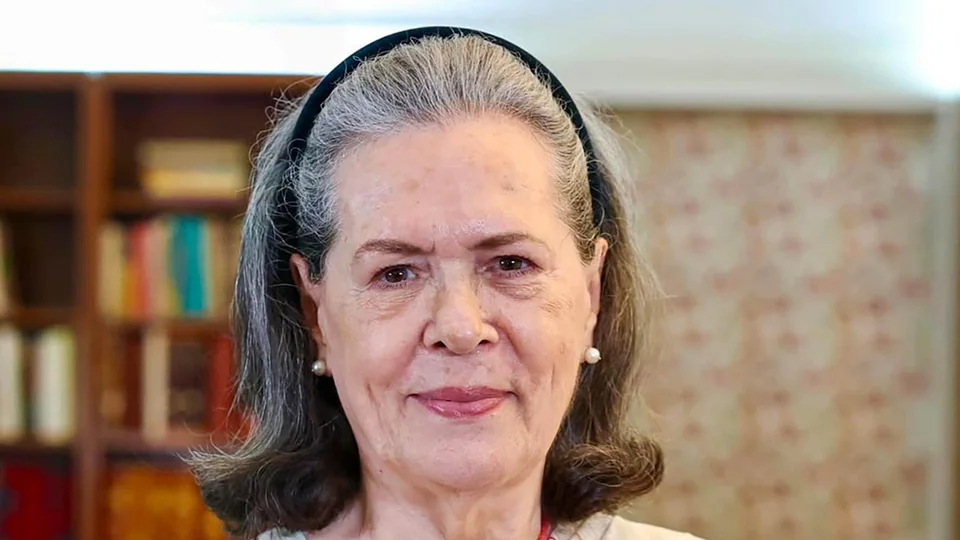
Congress Parliamentary Party chairperson Sonia Gandhi has said that democratic rights were curtailed during the Emergency imposed in 1975, but maintained that the suspension of those rights took place constitutionally. Reflecting on the decisions taken by her mother-in-law, former Prime Minister Indira Gandhi, she said the government was dealing with rapidly deteriorating circumstances marked by protests, violence and organised unrest.
In an interview published by The Hindu on Saturday, November 7, ahead of the release of her book Belonging: A Journey of Love, Sonia Gandhi offered her perspective on the Emergency and the political decisions that shaped the period. She also acknowledged the seriousness of the restrictions imposed on civil liberties and pointed out that Indira Gandhi later expressed regret over the excesses committed during that time.
Sonia Gandhi Says Indira Faced Pressure From Senior Colleagues
One of the central questions in the interview concerned the responsibility for excesses committed during the Emergency, particularly the role of Sanjay Gandhi, whose name has frequently been associated with the period.
Asked whether the situation could have been different if Indira Gandhi had listened to her elder son Rajiv Gandhi and other people who held different views, Sonia Gandhi said Sanjay was not the only person responsible for what happened.
She said there had been considerable pressure from some of Indira Gandhi’s senior colleagues and that relatively few people around the then Prime Minister, including Rajiv Gandhi, offered a different perspective.
Sonia Gandhi also said that Indira eventually began to understand the situation and took steps to address it. According to her account, Rajiv would bring complaints and feedback to his mother, offering a different point of view during a period when the government was facing intense political pressure.
Her remarks do not absolve the government of responsibility for the restrictions imposed during the Emergency. Instead, they offer her interpretation of the political circumstances surrounding Indira Gandhi’s decisions and the influence of people within her administration.
The role of Sanjay Gandhi remains particularly controversial because of his influence during the Emergency, despite not holding an elected government position at the time. His association with forced sterilisation drives, slum demolitions and other coercive measures has made him a prominent figure in accounts of the period.
Why Was the Emergency Declared in 1975?
The Emergency was declared on June 25, 1975, following a period of political unrest, protests and a major legal challenge to Indira Gandhi’s election. The government invoked Article 352 of the Constitution, which at the time allowed a national Emergency to be proclaimed on grounds including internal disturbance.
The immediate political crisis followed a judgment by the Allahabad High Court on June 12, 1975. Justice Jagmohanlal Sinha found Indira Gandhi guilty of electoral malpractice in her 1971 Lok Sabha election from Rae Bareli. The judgment set aside her election and disqualified her from holding elected office for six years.
Indira Gandhi appealed to the Supreme Court, which granted a conditional stay on June 24. The order allowed her to remain Prime Minister and attend parliamentary proceedings, but restricted her from voting in Parliament while the appeal was pending.
Meanwhile, opposition protests intensified. Jayaprakash Narayan, popularly known as JP, emerged as a prominent leader of the movement demanding political change. Demonstrations and calls for civil disobedience increased pressure on the government.
The government argued that the situation threatened internal stability and public order. Critics, however, viewed the declaration as an attempt to protect Indira Gandhi’s position following the court judgment and growing political opposition.
Just before midnight on June 25, President Fakhruddin Ali Ahmed signed the proclamation of Emergency on the advice of the Prime Minister. The proclamation was subsequently placed before the Union Cabinet and ratified.
What Happened During the 21-Month Emergency?
The Emergency lasted from June 25, 1975, until March 21, 1977. During this period, the central government exercised extraordinary powers, while several constitutional freedoms and democratic institutions faced significant restrictions.
One of the most consequential measures was the suspension of the enforcement of certain fundamental rights. Political opposition was severely restricted, numerous opposition leaders and activists were arrested, and preventive detention was widely used.
Prominent opposition figures, including Jayaprakash Narayan, Morarji Desai, Atal Bihari Vajpayee and Lal Krishna Advani, were among those detained during the period. Several political organisations and activists faced restrictions on their activities.
The press also faced censorship. Newspapers were required to comply with government restrictions on the publication of material considered objectionable by the authorities. Reports critical of the government could be blocked, and journalists worked under pressure from censorship rules.
Other controversial developments included forced sterilisation campaigns and demolitions of settlements in urban areas. The sterilisation drive, particularly in northern India, became associated with coercive implementation and the use of administrative pressure to meet population-control targets.
Slum-clearance operations in Delhi, including demolitions around Turkman Gate, also became symbols of the human cost of policies pursued during the Emergency.
These measures generated lasting criticism because they affected individual freedoms, political participation and the relationship between citizens and the state. The period remains an important reference point in discussions about constitutional safeguards and executive power in India.
What Does Sonia Gandhi Mean by Saying It Was Done Constitutionally?
Sonia Gandhi’s statement that democratic rights were curtailed but the action was constitutional refers to the legal mechanism used by the government to proclaim the Emergency. The proclamation was issued under Article 352 as it existed in 1975.
However, the constitutional procedure used to declare an Emergency and the legality or legitimacy of every measure taken during that period are separate questions.
The Constitution at the time gave the executive extensive powers following an Emergency proclamation. The government used those powers to restrict the enforcement of fundamental rights and introduce measures that significantly reduced the space for political opposition and public criticism.
One of the most controversial legal developments was the Supreme Court’s 1976 judgment in ADM Jabalpur v. Shivkant Shukla. By a majority of four to one, the court held that during the Emergency, individuals could not approach courts to enforce certain rights to personal liberty when the relevant presidential order was in force.
Justice H.R. Khanna delivered the lone dissenting opinion, arguing that the right to life and personal liberty could not be taken away without legal authority. His judgment later became an important part of India’s constitutional jurisprudence.
The Supreme Court subsequently repudiated the majority position in the ADM Jabalpur case. In the 2017 Puttaswamy judgment, which recognised privacy as a fundamental right, the court described the earlier decision as seriously flawed.
Therefore, Sonia Gandhi’s characterisation of the Emergency as constitutionally imposed should be understood in the context of the legal framework that existed at the time. It does not settle the broader historical and constitutional debate over the restrictions, arrests and violations of individual rights that took place during those 21 months.
How Indira Gandhi Ended the Emergency
In her interview, Sonia Gandhi pointed out that Indira Gandhi eventually called for fresh elections in March 1977 and released political prisoners. She also said that the former Prime Minister later publicly expressed regret and apologised for the excesses committed during the Emergency.
On January 18, 1977, Indira Gandhi announced that elections to the Lok Sabha would be held. The government lifted several restrictions and released political prisoners as the country prepared for the general election.
The election took place in March 1977 and produced a major political defeat for the Congress. Indira Gandhi lost her Rae Bareli seat, while Sanjay Gandhi was defeated in Amethi.
The Janata Party, formed through the coming together of several opposition groups, secured a parliamentary majority. Morarji Desai became India’s first Prime Minister from outside the Congress Party.
The Emergency officially ended on March 21, 1977. The election result demonstrated that despite the restrictions imposed during the Emergency, the electorate retained the ability to remove the ruling party through a national vote once elections were held.
The defeat also became a defining moment in Indian political history. It reshaped the national political landscape and established the Emergency as a central subject in debates about democracy, executive authority and the protection of civil liberties.
How the Emergency Changed India’s Constitutional Safeguards
The experience of the Emergency led to significant changes in India’s constitutional framework. The Janata government, which came to power in 1977, introduced reforms intended to make it more difficult for a future government to impose an Emergency and restrict civil liberties in the same manner.
The 44th Constitutional Amendment Act, passed in 1978, made several important changes to the Emergency provisions.
- Stricter conditions: The grounds for declaring a national Emergency were changed from “internal disturbance” to “armed rebellion”.
- Written Cabinet advice: The President could issue an Emergency proclamation only after receiving written advice from the Union Cabinet.
- Parliamentary approval: The proclamation became subject to stricter parliamentary approval and renewal requirements.
- Protection of key rights: The right to life and personal liberty under Articles 20 and 21 was protected from suspension of enforcement during an Emergency.
These changes were designed to strengthen safeguards against the concentration of power in the executive. They also reflected concerns raised by the experience of the 1975-77 Emergency, particularly the restrictions on personal liberty and the limited ability of citizens to challenge detention.
The reforms remain relevant because the Emergency provisions are still part of the Constitution. The safeguards introduced after 1977 are intended to ensure that extraordinary government powers are subject to stronger legal and parliamentary checks.
BJP Continues to Criticise Congress Over the Emergency
The Emergency remains a point of political disagreement between the Congress and the Bharatiya Janata Party (BJP). The BJP has repeatedly criticised the Congress for the decisions taken by Indira Gandhi’s government, describing the period as an assault on democracy and constitutional freedoms.
The BJP has used the Emergency as a reminder of the arrests of opposition leaders, press censorship, restrictions on civil liberties and other measures taken during the period.
The Narendra Modi government designated June 25 as Samvidhan Hatya Diwas, or Constitution Murder Day, to commemorate the imposition of the Emergency in 1975. The annual observance was formally announced in July 2024.
The government’s stated objective is to remember the restrictions imposed during the Emergency and highlight the importance of protecting constitutional and democratic values. The commemoration has also become part of the wider political debate over the Congress’s historical record.
Congress leaders, meanwhile, have argued that the party has acknowledged the mistakes of the Emergency and that the period should be examined in its historical context. Sonia Gandhi’s latest remarks reflect this approach: she acknowledges the curtailment of rights while explaining the political circumstances she believes influenced Indira Gandhi’s decisions.
Sonia Gandhi’s Book Launch Brings the Emergency Back Into Focus
The interview comes ahead of the release of Sonia Gandhi’s memoir, Belonging: A Journey of Love, scheduled for November 10, 2026. Published by HarperCollins India, the book traces her personal journey, her relationship with Rajiv Gandhi and her experience of becoming part of the Nehru-Gandhi family.
The book also discusses the values and experiences that shaped her public life. In the interview with journalist N. Ram, Sonia Gandhi addressed historical and political questions alongside subjects connected to her personal story.
Her reflections on the Emergency have attracted particular attention because the period remains closely associated with Indira Gandhi’s political legacy and the Congress party’s record in government.
The remarks also revisit the different perspectives within the Gandhi family during the Emergency. Sonia Gandhi’s account presents Rajiv Gandhi as someone who sometimes offered his mother a different view, while pointing to pressure from senior colleagues around the then Prime Minister.
Her comments are a personal retrospective rather than an independent historical assessment of every decision made during the Emergency. The period has been extensively documented through government records, court judgments, parliamentary proceedings and accounts from political leaders, journalists and people affected by the restrictions.
Why Sonia Gandhi’s Remarks Matter in the Current Political Debate
The Emergency continues to influence political discussions in India because it raises fundamental questions about the limits of executive authority, the protection of civil liberties and the role of constitutional institutions during a crisis.
Sonia Gandhi’s remarks are significant because they address a difficult part of the Congress party’s history while attempting to explain the circumstances in which Indira Gandhi acted. Her acknowledgement that democratic rights were curtailed is an important part of the statement, as is her emphasis on the constitutional mechanism used to declare the Emergency.
At the same time, the distinction between a legally issued proclamation and the consequences of government actions remains central to understanding the period. The Emergency was declared under constitutional provisions, but the subsequent restrictions on political activity, press freedom and personal liberty generated serious legal and historical criticism.
The BJP’s annual observance of Samvidhan Hatya Diwas ensures that the Emergency remains part of the national political conversation. Congress leaders, in turn, continue to respond to criticism of the period and argue over how its legacy should be understood.
Ultimately, the historical significance of the Emergency extends beyond the political fortunes of any one party or family. It remains a reminder of how constitutional powers can affect democratic freedoms and why institutional safeguards, judicial independence, a free press and the right to challenge state action matter.
What to Take Away From Sonia Gandhi’s Statement
Sonia Gandhi has offered a perspective on the Emergency that acknowledges the curtailment of democratic rights while placing Indira Gandhi’s decisions within the political unrest of 1975. She has also said that Indira later recognised the excesses and expressed regret for what happened.
The historical record, however, shows that the Emergency involved far-reaching restrictions on civil liberties, political opposition and press freedom. The experience led to constitutional reforms intended to strengthen protections against the misuse of extraordinary executive powers.
With the release of Belonging: A Journey of Love approaching, Sonia Gandhi’s comments have brought renewed attention to a period that continues to divide political opinion. The debate is likely to remain relevant as India examines the relationship between constitutional authority, democratic accountability and the protection of individual rights.
For breaking news and live news updates, like us on Facebook or follow us on Twitter and Instagram. Read more on Latest India on thefoxdaily.com.






COMMENTS 0