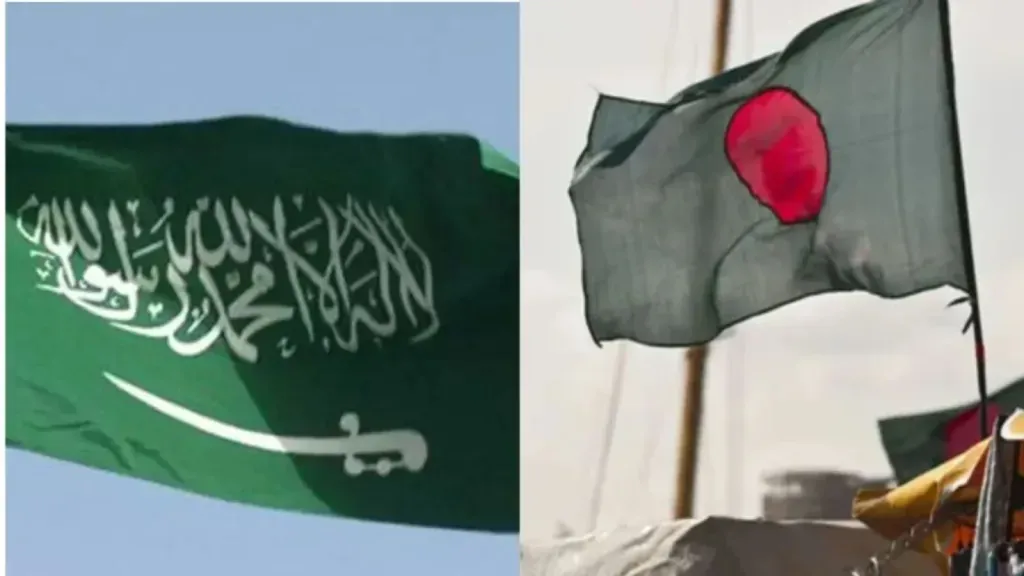
Nazrul Islam, a Bangladeshi migrant worker who travelled to Saudi Arabia in search of employment, was executed in Mecca on October 14, more than three years after his detention by Saudi authorities. The 22-year-old was executed alongside a woman identified in Bangladeshi media reports as Sweety Akhtar.
Saudi Arabia’s Interior Ministry said the two had been convicted of committing an “indecent act” inside a mosque in Mecca. However, the ministry did not specify the exact nature of the alleged act in its announcement.
The case has raised questions in Bangladesh after records reportedly shared with Bangladeshi authorities showed that Nazrul and Sweety had been detained in August 2023 over allegations that included adultery. According to reports citing consular and prisoner records, the documents did not mention that either had been sentenced to death.
Saudi authorities said the death sentences were imposed under ta’zir, a category of punishment in Islamic law in which the judge determines the offence and the appropriate penalty. The available reports do not establish the full details of the court proceedings or explain why the sentences were imposed.
Nazrul’s family has said it was not notified of the execution beforehand. His relatives are now seeking an investigation into the circumstances of his death and asking the Bangladesh government to arrange the return of his body at state expense.
Who Was Nazrul Islam Basir?
Nazrul Islam, also identified in Bangladeshi media reports as Nazrul Islam Basir, came from Birampur village under Sultanpur union in Brahmanbaria Sadar upazila of Bangladesh. He was the eldest of four siblings, and his family had hoped that his employment abroad would help improve their financial circumstances.
Nazrul travelled to Saudi Arabia on November 10, 2022, to look for work. He reportedly worked as a cleaner in the kingdom, joining the large number of Bangladeshi migrant workers who travel overseas for employment and to support their families back home.
His life took a different turn when Saudi police detained him in August 2023 over allegations connected to an incident at a mosque in Mecca. A young woman named Sweety Akhtar was also reportedly detained in connection with the case.
According to his family, Nazrul spent approximately three years and three months in detention before his execution. During that period, he maintained contact with his relatives, with his mother, Rahima Begum, saying that he spoke to the family over the phone every Sunday.
Those regular conversations were an important connection between Nazrul and his family while he was imprisoned in a foreign country. His mother said the family was not informed in advance that he would be executed.
Following the announcement of his death, his relatives began seeking answers about the legal proceedings and the circumstances surrounding the execution. They have urged the Bangladesh government to investigate the case and help bring his body back to his village.
Why Was Nazrul Islam Executed in Saudi Arabia?
Saudi Arabia’s Interior Ministry said Nazrul Islam and Sweety Akhtar were executed after being convicted by a court of committing an “indecent act” inside a mosque in Mecca. The ministry did not publicly specify the precise conduct that led to the conviction in the reported announcement.
Bangladeshi media reports have highlighted differences between the Saudi authorities’ announcement and records reportedly shared with Bangladesh. According to The Dhaka Tribune, a confidential consular memorandum and prisoner records indicated that Nazrul and Sweety were detained in August 2023 under separate allegations.
The records reportedly cited cybercrime in one case and adultery in the other. They also reportedly contained no reference to death sentences, despite Saudi authorities subsequently announcing that both individuals had been executed.
The available reporting does not fully explain the relationship between the original allegations, the court’s findings and the final sentences. It also does not provide a complete account of the legal proceedings or establish whether the records available to Bangladeshi officials contained all relevant information about the cases.
The distinction between an arrest allegation and a court conviction is important. An arrest record describes the allegations or circumstances under which a person was detained, while a conviction and sentence follow legal proceedings. Without complete court documents, the precise progression of the cases cannot be independently established from the reported records alone.
The reported absence of information about the death sentences has nevertheless become a central concern for Nazrul’s family. His relatives have questioned whether the family was adequately informed and whether he had a fair opportunity to defend himself before his execution.
These concerns remain allegations raised by the family and issues highlighted by media reports. The available information does not establish an independent legal finding that the execution was unlawful or that the judicial process was invalid.
What Is Ta’zir, the Punishment Cited by Saudi Authorities?
Saudi Arabia’s Interior Ministry said the death sentences were imposed under ta’zir, a form of punishment in Islamic jurisprudence in which a judge determines the penalty for an offence within the applicable legal framework.
The term is used in discussions of Islamic law to distinguish certain discretionary punishments from categories of offences for which traditional jurisprudence prescribes particular penalties. The precise application of ta’zir depends on the relevant legal system and the circumstances of the case.
In Nazrul’s case, Saudi authorities cited ta’zir when announcing the executions. However, the reported statement did not provide sufficient detail to explain the legal reasoning behind the sentences, the evidence considered by the court or the procedures followed before the executions were carried out.
The reference to ta’zir therefore identifies the category of punishment cited by Saudi authorities, but it does not, by itself, answer the questions raised by Nazrul’s relatives about the case.
Understanding the specific legal basis for the executions would require more detailed information about the charges, the court’s judgment and the applicable procedures. Such details were not included in the reports provided.
Family Says It Was Not Informed Before the Execution
One of the main concerns raised by Nazrul’s family is that it was not notified in advance of his execution. His mother, Rahima Begum, said he had regularly contacted the family from prison, speaking to them every Sunday.
The family has said it was devastated by the news of his death and wants the Bangladesh government to investigate what happened. It has also requested that his body be returned to Bangladesh at state expense so that relatives can bring him home for burial.
Nazrul’s relatives have questioned whether he was given an opportunity to defend himself before the sentence was carried out. Their concerns have been heightened by reports that the records shared with Bangladeshi authorities did not mention a death sentence.
The family’s account does not, on its own, establish the full circumstances of the legal process. However, the reported discrepancy between the detention records and the subsequent execution announcement has intensified calls for clarification from the authorities concerned.
For families of migrant workers detained overseas, communication with authorities can be particularly important because legal proceedings take place far from home. Information about charges, court decisions and sentences can help relatives understand what has happened and determine what assistance may be available through diplomatic or consular channels.
In this case, the family is seeking both an explanation of the execution and practical assistance with repatriating Nazrul’s remains. It remains unclear from the available reports whether the Bangladesh government will conduct a formal investigation or what arrangements will be made for the return of his body.
Nazrul’s Father Borrowed Tk 7 Lakh to Send Him Abroad
Nazrul’s death has also left his family facing serious financial concerns. His father, Abdul Basir, had reportedly borrowed Tk 7 lakh to send his eldest son to Saudi Arabia in the hope that overseas employment would help the family improve its financial position.
For families that rely on migrant employment, the decision to send a relative abroad can involve a substantial financial commitment. Travel and recruitment-related expenses may require families to borrow money, with repayment depending partly on the worker’s ability to earn and send money home.
In Nazrul’s case, his father is now dealing with the loss of his eldest son while facing pressure from creditors to repay the money he borrowed.
Speaking to The Daily Star, Abdul Basir said: “The creditors are now pressuring me to repay the debt. I want my son’s body brought back home. If he was executed without just cause, I want justice.”
His appeal reflects the family’s immediate concerns: recovering Nazrul’s body, understanding the circumstances of his execution and obtaining answers about the legal process that led to his death.
The family’s financial difficulties add another dimension to the case. The money borrowed to send Nazrul overseas was tied to hopes of employment and a better future. His death has left those hopes unfulfilled while the debt remains.
Without further information about the family’s financial circumstances or any assistance that may be offered, the full extent of its economic difficulties is unclear. However, Abdul Basir’s account makes clear that repayment pressure has become an additional burden following the loss.
Family Seeks Government Investigation and Repatriation of Body
Nazrul’s family has urged the Bangladesh government to investigate the execution and arrange for his body to be returned home at state expense.
The request for an investigation is linked to the family’s questions about the legal proceedings, the reported absence of information about a death sentence in records shared with Bangladeshi authorities, and the lack of advance notification about the execution.
According to The Daily Star, Brahmanbaria Deputy Commissioner Md Abu Sayeed said the local administration had not received instructions regarding the matter and that the family had not submitted an application at that point.
“We have received no instructions from the administration, and the family has not submitted any application either. If the body is brought back to Bangladesh, we will assist according to the rules, as he was a resident of Brahmanbaria,” Abu Sayeed said, according to the newspaper.
His remarks indicate that the local administration had not yet received formal instructions or an application from the family when he was asked about the case. He also said assistance would be provided according to the applicable rules if the body were brought back to Bangladesh.
The statement does not establish whether the family will receive state-funded repatriation assistance or whether the government has initiated a separate inquiry. Those questions remain unresolved in the available reporting.
Repatriating the remains of a citizen who dies abroad can involve coordination between the family, local authorities and officials in the country where the death occurred. In this case, the family has specifically requested government assistance because it wants Nazrul’s body returned despite its financial difficulties.
Nazrul’s Family Reports Another Death Following the News
The consequences of Nazrul’s execution have extended beyond his immediate household. According to the supplied report, his paternal aunt, Abeda Begum, died of a heart attack on Wednesday night after hearing the news of his death.
His mother, Rahima Begum, also reportedly broke down repeatedly after learning that her son had been executed. The family is now coping with the loss while trying to establish what happened during his detention and why it was not informed beforehand.
The reported death of Nazrul’s aunt adds to the distress described by relatives, although the available information does not provide further medical details about her death.
For the family, the immediate priorities remain understanding the circumstances of the execution, obtaining official clarification and bringing Nazrul’s body back to Bangladesh.
What Happens Next in the Nazrul Islam Case?
Several important questions remain unanswered following Nazrul Islam’s execution in Saudi Arabia. These include the precise circumstances of the alleged offence, the details of the court proceedings, the legal basis for the death sentence and the reasons the reported records shared with Bangladeshi authorities did not mention the sentence.
The family is seeking an investigation, but the available reports do not confirm whether a formal inquiry has begun. Further statements from Bangladesh’s authorities or additional details from Saudi officials could help clarify the sequence of events.
The return of Nazrul’s body is another unresolved issue. His family has requested that the government arrange repatriation at state expense, while the Brahmanbaria deputy commissioner said the local administration would provide assistance according to the rules if the body were brought back to Bangladesh.
The case has also drawn attention to the difficulties families can face when a migrant worker is detained and prosecuted overseas. Access to clear information about legal proceedings and sentences can be crucial for relatives seeking assistance through official channels.
At present, the available reporting does not establish whether the concerns raised by Nazrul’s family will lead to a formal investigation or what further information the authorities may provide.
For his family in Birampur village, the immediate struggle is both personal and practical: grieving the loss of a 22-year-old son and brother, dealing with debt incurred to send him abroad, and seeking answers about his final months in detention.
Until further details emerge, key aspects of the case remain unclear. The family’s appeal for an investigation and the return of Nazrul’s body continues to be at the centre of its efforts to obtain answers following his execution.
For breaking news and live news updates, like us on Facebook or follow us on Twitter and Instagram. Read more on Latest World on thefoxdaily.com.






COMMENTS 0