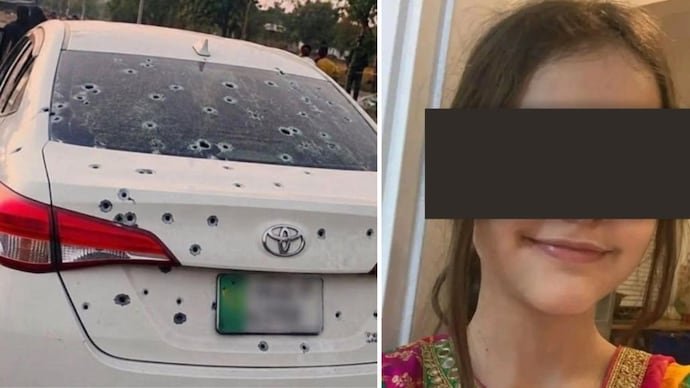
A vacation is supposed to create cherished memories. For one Australian Family visiting Pakistan, it became a nightmare that ended with the death of a child and left two other family members injured.
The death of nine-year-old Hania Ahmed has become the center of a growing Controversy after reports emerged that police allegedly opened fire on a vehicle carrying the family, believing it was occupied by armed criminals.
The tragedy occurred in Pakistan’s Punjab province and has drawn reactions from both Pakistani and Australian authorities. As details continue to emerge, the case is raising difficult questions about law enforcement tactics, hostage rescue protocols, accountability, and the protection of innocent civilians during police operations.
For Hania’s family, however, the issue is far more personal. They are seeking answers about how a holiday turned into a fatal hostage ordeal.
What Happened During the Family’s Trip to Pakistan?
According to reports, Hania Ahmed and her family were traveling in a rental vehicle on June 10 when armed men allegedly intercepted their car.
The attackers reportedly stopped the vehicle at gunpoint and took control of it, effectively turning the family into hostages.
What followed appears to have been a rapidly evolving and highly dangerous situation.
The family allegedly remained trapped inside the vehicle while the armed men attempted to evade authorities.
At some stage during the incident, police launched an operation targeting suspected dacoits, a term commonly used in South Asia to describe armed bandits or highway robbers.
Authorities reportedly believed the vehicle involved was carrying criminal suspects.
According to accounts that have emerged, officers then opened fire.
Tragically, the vehicle also contained innocent civilians.
The Hostage Situation That Ended in Tragedy
Hostage situations are among the most challenging scenarios faced by Law Enforcement agencies anywhere in the world.
Officers are often required to make rapid decisions based on incomplete information while attempting to neutralize threats and protect civilians.
However, when identification errors occur, the consequences can be devastating.
Reports suggest that Hania’s family had already survived the trauma of an armed hijacking before becoming caught in a police operation.
Instead of being rescued, they allegedly became victims of the very operation intended to stop the criminals.
The nine-year-old suffered fatal injuries.
Her father, Adeel Ahmed, and her brother were also reportedly wounded.
The incident transformed what should have been a routine family holiday into an international tragedy.
Why the Case Has Attracted International Attention
The death of an Australian child overseas automatically attracts significant diplomatic and public attention.
Several factors have amplified interest in the case:
- The victim was a nine-year-old child
- The family were reportedly hostages rather than suspects
- The shooting allegedly involved law enforcement officers
- The incident occurred during a holiday trip
- Cross-border diplomatic concerns are involved
- Questions remain about operational procedures
As a result, the tragedy has become more than a local criminal Investigation. It now carries international implications.
Australian Government Calls for Answers
The case has prompted calls for a comprehensive investigation into the circumstances surrounding Hania’s death.
Australian Prime Minister Anthony Albanese has publicly emphasized the need for a proper examination of what occurred.
Such requests are common when citizens die abroad under disputed circumstances, particularly when government agencies or law enforcement operations may have played a role.
The investigation is expected to focus on determining:
- How the family vehicle was identified
- What intelligence officers possessed at the time
- Whether hostages were known to be present
- What rules of engagement were followed
- Whether operational procedures were properly observed
These questions will likely shape public confidence in the outcome of any official inquiry.
Understanding the Risks of Police Pursuits and Armed Operations
The tragedy also highlights broader challenges associated with armed law enforcement operations.
Police agencies worldwide frequently face situations involving:
- Hostage rescues
- Vehicle pursuits
- Armed robberies
- Kidnappings
- Terror-related incidents
In such circumstances, officers often have only seconds to assess threats and make decisions.
Even highly trained units can face enormous difficulty distinguishing between criminals, hostages, and bystanders when information is limited.
This reality is one reason why modern policing increasingly emphasizes intelligence gathering, surveillance, communication, and de-escalation whenever possible.
The Challenge of Identifying Hostages in Moving Vehicles
One aspect receiving particular attention is the apparent difficulty authorities faced in determining who was inside the vehicle.
Vehicle-based hostage situations present unique operational challenges.
Factors that complicate police responses include:
- Tinted windows
- Nighttime conditions
- Rapidly moving vehicles
- Limited communication with occupants
- Changing threat environments
- Incomplete intelligence information
In many countries, police tactical units rely heavily on aerial surveillance, electronic monitoring, negotiations, and coordinated containment strategies to reduce the risk of civilian casualties.
Investigators will likely examine whether similar options were available or considered during this operation.
The Human Cost Often Overlooked in Headlines
News coverage of security incidents frequently focuses on investigations, procedures, and political reactions.
Yet behind every headline is a family dealing with profound loss.
For Hania’s parents and relatives, the incident represents far more than a Policy Debate.
Families involved in hostage situations often experience long-term psychological consequences, including:
- Trauma
- Anxiety
- Grief
- Post-traumatic stress
- Loss of trust in institutions
When a child dies, those impacts become even more severe.
The emotional toll can persist for years after investigations conclude and public attention fades.
Why Accountability Matters in Cases Like This
Public confidence in law enforcement depends heavily on transparency and accountability.
When civilians are injured or killed during police operations, independent investigations serve several important purposes:
- Establishing facts
- Identifying operational failures
- Improving future procedures
- Providing answers to families
- Maintaining public trust
Even if officers acted based on information available at the time, authorities typically review such incidents carefully to determine whether policies should be updated.
Lessons learned from one tragedy can sometimes prevent future loss of life.
Comparing International Standards for Hostage Operations
Many countries have significantly revised hostage-response protocols over the past two decades.
Modern approaches increasingly emphasize:
| Traditional Approach | Modern Approach |
|---|---|
| Rapid armed intervention | Intelligence-led operations |
| Immediate confrontation | Negotiation where possible |
| Limited surveillance | Advanced monitoring technology |
| Reactive responses | Risk-based planning |
| Short-term resolution focus | Civilian safety prioritization |
While every situation differs, international policing trends increasingly prioritize minimizing risks to hostages and bystanders.
Any investigation into Hania’s death may examine whether operational decisions aligned with these principles.
The Diplomatic Impact of the Incident
Whenever a foreign national dies during a law enforcement operation, diplomatic considerations naturally follow.
Governments typically seek:
- Access to investigation findings
- Transparency from local authorities
- Consular support for families
- Assurances regarding accountability
The handling of the investigation may therefore influence not only public perception but also broader diplomatic discussions.
Cases involving children tend to attract particularly intense scrutiny because of their emotional and humanitarian dimensions.
The Critical Question Investigators Must Answer
The central issue is not merely whether a shooting occurred.
The key question is whether the family vehicle was properly identified before force was used.
If investigators determine that authorities lacked adequate information about the vehicle’s occupants, attention may focus on intelligence failures.
If information regarding hostages existed but was not effectively communicated, scrutiny could shift toward operational coordination.
The findings will likely determine how the incident is ultimately understood by both the public and policymakers.
The Insight Many Reports Are Missing
Much of the coverage understandably focuses on the fatal shooting itself.
However, the broader issue extends beyond one operation.
The tragedy highlights a growing challenge facing law enforcement agencies worldwide: balancing speed with certainty.
Modern policing increasingly demands rapid responses to dangerous threats, yet acting too quickly without complete information can produce catastrophic outcomes.
The tension between these two priorities lies at the heart of many controversial incidents involving civilians.
As criminal networks become more mobile and operations become more complex, the ability to accurately identify threats before using force becomes increasingly important.
Future Outlook: Investigation Will Determine the Next Chapter
The death of nine-year-old Hania Ahmed has already become a deeply emotional and internationally significant case.
What began as a family holiday reportedly turned into a hostage ordeal and ultimately ended in tragedy during a police operation.
Now, attention turns to the investigation.
Authorities face growing pressure to establish exactly what happened, how the family vehicle came to be targeted, and whether operational failures contributed to the child’s death.
For the grieving family, the search for accountability is only beginning.
For policymakers and law enforcement agencies, the findings could influence future hostage-response procedures and operational standards.
And for the wider public, the tragedy serves as a painful reminder that in high-risk security operations, the difference between rescue and catastrophe can depend on information, judgment, and decisions made in just a few critical moments.
For breaking news and live news updates, like us on Facebook or follow us on Twitter and Instagram. Read more on Latest World on thefoxdaily.com.






COMMENTS 0