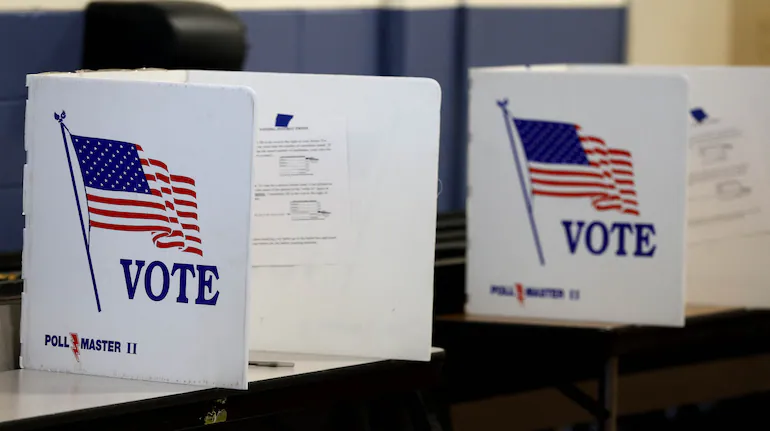
The US midterm elections could have consequences far beyond Washington, particularly for global financial markets and economies such as India. A strong Democratic performance could weaken Republican control of Congress, increase scrutiny of President Donald Trump’s policies and introduce greater uncertainty around energy, tariffs, technology regulation and government spending.
Financial markets have already begun responding to expectations of a Democratic sweep. The US dollar index and Treasury yields have fallen as investors assess the possibility of reduced Republican control and changes in the political direction of the country.
For investors, the implications extend across several sectors. Oil prices could react to developments surrounding the Iran conflict, financial and energy companies may face increased regulatory scrutiny, and technology firms could encounter greater uncertainty over artificial intelligence and data-centre expansion.
India could benefit from a weaker US dollar and lower Treasury yields, which may improve foreign investor sentiment and ease pressure on the rupee. However, continued uncertainty over US tariffs and the unresolved bilateral trade agreement could limit the positive impact.
What could a Democratic sweep mean for global markets?
A Democratic victory in Congress would not automatically reverse the policies introduced by the Trump administration. However, it could increase congressional oversight, create obstacles to certain legislative priorities and make it more difficult for the administration to implement parts of its economic agenda.
The extent of the impact would depend on the size of the Democratic victory and the areas in which congressional control changes. Markets are particularly focused on the implications for oil, tariffs, financial regulation and the technology industry.
1. Oil prices: Could a Democratic Congress ease geopolitical pressure?
Crude oil is among the most closely watched assets as investors assess the possible consequences of a Democratic victory. One expectation is that a Democratic-controlled Congress could increase pressure on President Trump to withdraw from the Iran conflict or pursue a less confrontational approach.
Any reduction in geopolitical tensions involving Iran could provide relief to global oil markets. Lower concerns about potential supply disruptions may help crude prices ease, offering some relief to countries that depend heavily on imported energy.
However, the possibility of a quick change in US policy remains uncertain. Congress can increase scrutiny of the administration’s actions, but President Trump retains significant executive authority, including the ability to use executive actions and emergency powers.
His previous approach to governing suggests that congressional opposition may not necessarily translate into an immediate change in foreign or energy policy. Consequently, investors will need to monitor developments in the Iran conflict, the administration’s decisions and any changes in the geopolitical risk premium attached to crude oil.
For India, lower crude prices would generally be favourable because the country relies heavily on imported oil. A sustained decline could reduce the import bill, ease inflationary pressure and improve the external financial position. Conversely, continued geopolitical tensions and elevated oil prices could increase economic pressure.
2. Financials, energy and Big Tech could face greater pressure
Financial companies, energy businesses and parts of the technology sector could experience some of the earliest effects of a Democratic sweep. These industries are particularly exposed to potential changes in regulatory oversight and congressional scrutiny.
According to Emkay Global, a stronger Democratic result could bring greater attention to deregulation, fossil fuels, artificial intelligence and large technology companies. Investors may also begin considering the possibility of higher taxes and tighter regulation after 2028 earlier than previously expected.
For financial companies, the possibility of stronger oversight could create uncertainty around the regulatory environment and business operations. Energy companies could face additional pressure if lawmakers seek greater scrutiny of fossil-fuel policies and environmental regulations.
The energy sector also faces a separate market risk. If geopolitical tensions ease and elevated oil prices begin to reverse, companies benefiting from higher crude prices could come under pressure.
However, a Democratic victory would not automatically give Congress complete control over every aspect of US energy policy. Trump would retain considerable executive authority over areas such as permits and energy regulation.
For Big Tech, the political shift could bring renewed attention to competition, regulation and the growing influence of large technology companies. The possibility of tighter oversight may affect investor expectations, particularly for businesses whose growth depends on favourable regulatory conditions.
3. Tariffs: Democratic lawmakers could increase scrutiny, but a quick rollback is unlikely
US tariff policy is another major concern for global investors and companies with international supply chains. A Democratic-controlled Congress could increase scrutiny of Trump’s trade measures and challenge aspects of their implementation through legislation.
However, a change in congressional control would not necessarily result in an immediate reduction or removal of tariffs. The president retains considerable executive authority over Trade Policy, meaning that the administration could continue pursuing its existing approach despite greater political opposition.
This distinction is important for businesses that depend on imported components, raw materials and manufacturing inputs. Companies may continue facing uncertainty over trade costs, supply-chain planning and the possibility of further tariff-related changes.
For global manufacturers, the key concern is whether tariffs remain in place, expand or become subject to new restrictions. Even without an immediate policy change, increased political disagreement could make long-term business planning more difficult.
India will also need to monitor developments closely. Any increase in US tariffs or uncertainty around trade arrangements could affect Indian exporters and companies connected to global supply chains.
4. AI and data centres: Political divisions could complicate infrastructure growth
The artificial intelligence boom and the rapid expansion of data-centre infrastructure represent another important area to watch after the US midterm elections.
Major technology companies continue investing in the infrastructure required to support artificial intelligence, including data centres and computing capacity. However, the development of these facilities increasingly depends on decisions made by state and local governments.
International financial services firm Morgan Stanley expects investment in AI infrastructure and the broader buildout to continue. At the same time, it expects American state and local governments to play a larger role in shaping data-centre development through infrastructure planning and regulatory decisions.
This could make local political decisions particularly important for companies seeking to expand their facilities. Data centres require significant infrastructure, and their development can be influenced by regulatory approvals and local government policies.
A divided Congress could also make it more difficult to establish a consistent federal policy framework for the sector. This may create uncertainty for companies operating across multiple states, even as investment in AI infrastructure continues.
For investors, the key issue will be whether political divisions affect the pace of development, regulatory requirements or the broader environment for technology investment.
What could a Democratic victory mean for India?
For India, the consequences of a Democratic sweep are likely to be more geopolitical than directly market-related. Changes in the US political balance could influence the dollar, Treasury yields, crude oil prices and trade relations, all of which have implications for the Indian Economy.
A weaker US dollar, lower borrowing costs and reduced crude prices would generally create a more favourable external environment for India. However, continued tariff uncertainty and geopolitical tensions could offset some of these benefits.
1. Weaker US dollar could support the Indian rupee
A decline in the US dollar index could offer some relief to the Indian rupee. When the dollar weakens, pressure on emerging-market currencies can ease, although the actual movement of the rupee also depends on domestic economic conditions and capital flows.
A weaker dollar may also improve the outlook for foreign investors considering investments in Indian financial markets. Currency movements can influence the returns investors receive when converting their investments back into dollars.
However, a weaker dollar alone does not guarantee sustained foreign investment into India. Investors will continue assessing corporate earnings, economic growth, market valuations and global risk conditions.
2. Lower US Treasury yields could benefit Indian markets
Falling US Treasury yields are another potentially positive development for India. US government bond yields influence global borrowing costs and investment decisions, particularly because Treasury securities are widely treated as a benchmark for international financial markets.
When US yields decline, the relative attractiveness of emerging-market assets can improve. This may encourage foreign institutional investors to consider markets such as India, depending on broader financial conditions and their assessment of investment risks.
Lower global yields can also ease borrowing-cost pressures. For India, this could provide a more supportive external financial environment and potentially improve sentiment towards domestic equities and other assets.
Nevertheless, the impact will depend on whether the decline in yields is sustained and whether other factors, including inflation, crude oil prices and geopolitical developments, remain favourable.
3. Crude oil movements remain important for India’s economy
Oil prices will remain a critical factor for India because changes in global crude prices can affect the country’s import bill and inflation outlook.
If tensions involving Iran ease and crude prices decline, India could benefit from lower energy import costs. This may reduce pressure on the country’s external balances and provide some relief to businesses and consumers exposed to energy prices.
On the other hand, an escalation in geopolitical tensions could keep oil prices elevated. Such a development would create additional risks for India, particularly if higher energy costs persist alongside currency weakness.
Therefore, the direction of crude oil prices could be just as important as movements in the US dollar and Treasury yields when assessing the impact of the US election on Indian markets.
India-US trade deal remains uncertain
Despite the potential benefits of a weaker dollar and lower Treasury yields, the outlook for the India-US trade agreement remains uncertain.
The possibility of a Democratic victory in Congress does not automatically resolve the differences between the two countries on trade. A change in congressional control may increase scrutiny of Trump’s tariff policies, but the president would continue to hold considerable authority over important trade decisions.
Emkay Global said the prospect of a credible trade deal remained as remote as it had been three months earlier, adding that the midterm election outcome was unlikely to change that assessment significantly.
This suggests that investors and businesses should not assume a quick breakthrough in bilateral trade negotiations following the elections.
For Indian exporters, the uncertainty surrounding tariffs and market access remains an important consideration. Companies with exposure to the US market may need to account for the possibility that existing trade-related challenges continue even if the balance of power in Washington changes.
Why the strength of the Democratic victory matters
Beyond the immediate market reaction, the scale of a Democratic victory could offer clues about the political direction of the United States ahead of the 2028 presidential election.
A decisive win could indicate a shift in voter sentiment and strengthen expectations of a possible change in the administration in the next presidential contest. That possibility could influence how investors assess future taxation, regulation, energy policy and trade priorities.
However, midterm election results do not determine the outcome of the next presidential election. They provide an indication of the political environment at a particular moment, while the 2028 contest will depend on a separate campaign and its own set of economic and political developments.
For markets, the immediate question is how much influence Democrats gain over legislation and congressional oversight. The longer-term question is whether the election signals a broader change in the country’s political direction.
What investors should watch after the US midterm elections
The market implications of a Democratic sweep will depend on how political developments translate into actual policy decisions. Investors tracking the impact on India and Global Markets should pay attention to several developments:
- Crude oil prices: Any easing or escalation of tensions involving Iran could influence global energy prices and India’s import costs.
- US dollar and Treasury yields: Continued weakness in the dollar and lower bond yields could support emerging-market sentiment, including India.
- Tariff policy: Congressional scrutiny may increase, but executive authority means a rapid rollback of existing tariffs is not guaranteed.
- Technology regulation: Greater oversight of AI, Big Tech and data-centre development could influence investment decisions and infrastructure expansion.
- India-US trade negotiations: The progress, or lack of progress, in bilateral trade discussions will remain important for Indian exporters and investors.
Disclaimer
The information presented in this article is for informational purposes only and should not be considered investment advice. Market conditions, political developments and economic policies can change. Readers should consult certified financial advisers before making investment decisions.
For breaking news and live news updates, like us on Facebook or follow us on Twitter and Instagram. Read more on Latest World on thefoxdaily.com.






COMMENTS 0