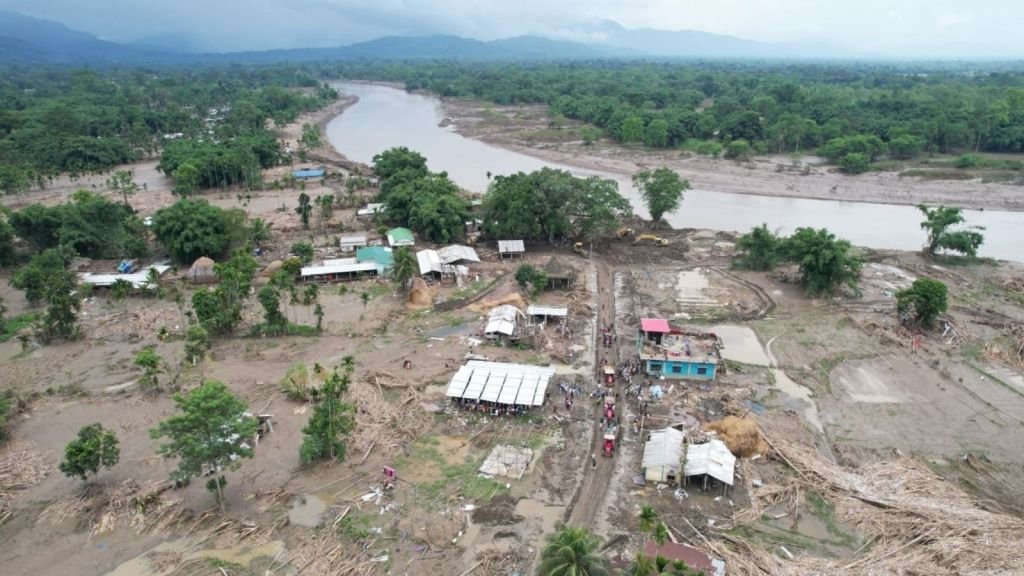
Assam continues to battle the aftermath of one of its latest flood emergencies, with the death toll rising to 89 and more than 1.22 lakh people still affected across the state, according to the Assam State Disaster Management Authority (ASDMA).
While water levels have started receding in several inundated areas, the crisis is far from over. Hundreds of villages remain affected, thousands of residents continue to live in relief camps, and weather forecasts indicating further heavy rainfall have prompted authorities to remain on high alert.
The Assam government has expanded relief operations, announced compensation surveys, and intensified efforts to restore safe drinking water and other essential services in flood-hit districts.
Current Flood Situation in Assam
According to the ASDMA, the Floods have affected 365 villages spread across 25 districts of Assam.
The disaster has also damaged more than 15,000 acres of agricultural land, adding to the challenges faced by farming communities already coping with displacement and infrastructure damage.
Although floodwaters are gradually receding in several locations, officials have cautioned that the overall humanitarian impact remains significant.
More Than 1.22 Lakh People Still Affected
Relief operations remain underway across the state.
Chief Minister Himanta Biswa Sarma said the government has established:
- 39 relief camps.
- 16 relief distribution centres.
- Shelter for more than 74,000 displaced residents.
Relief camps are providing food, drinking water, Healthcare and other essential services to families who were forced to leave their homes due to flooding.
Fresh Rainfall Could Worsen the Situation
Even as conditions improve in some districts, authorities have warned that additional rainfall could trigger fresh flooding.
Citing forecasts issued by the India Meteorological Department (IMD), the Assam State Disaster Management Authority said extremely heavy rainfall accompanied by thunderstorms is expected in parts of Meghalaya and Arunachal Pradesh between August 3 and August 5.
Since several rivers flowing through Assam originate or pass through neighbouring states, heavy upstream rainfall has the potential to raise river levels downstream.
Districts identified as potentially vulnerable include:
- Cachar
- Dima Hasao
- West Karbi Anglong
- Biswanath
- Lakhimpur
- Dhemaji
- Tinsukia
Authorities have instructed district administrations to maintain preparedness and take precautionary measures wherever necessary.
Weather Alerts Issued Across the Region
The IMD has issued orange and red alerts for several districts in Meghalaya and Arunachal Pradesh.
The alerts cover areas including:
- East Khasi Hills.
- West Jaintia Hills.
- East Jaintia Hills.
- Papum Pare.
- Kurung Kumey.
- East Kameng.
- East Siang.
- Lohit.
- Changlang.
A yellow alert has also been issued for Nagaland districts bordering Assam, raising concerns about possible impacts in Charaideo, Sivasagar, Jorhat and Golaghat districts.
Government to Conduct Damage Assessment Surveys
The Assam government has announced that door-to-door surveys will begin on August 9 to assess damage caused by the floods.
According to Chief Minister Himanta Biswa Sarma, government teams will inspect affected homes and properties before compensation is disbursed.
The surveys are expected to help authorities determine the scale of losses suffered by individual households and prioritise rehabilitation efforts.
Chief Minister Visits Flood-Affected Areas
Chief Minister Sarma personally visited flood-hit villages in Sivasagar and Demow to review the relief operations and interact with affected residents.
During one interaction shared publicly, a resident informed the Chief Minister that the entire area remained submerged.
Sarma assured residents that assistance would be provided and reiterated the government’s commitment to supporting affected families throughout the recovery process.
He also shared images of Union Health and Family Welfare Minister J.P. Nadda visiting Dibrugarh during the ongoing flood response.
Emergency Water Treatment Unit Deployed
One of the immediate concerns after floodwaters begin receding is access to safe drinking water.
To address this, an emergency water treatment unit has been deployed in Sivasagar district.
The system draws water from available local sources before filtering and disinfecting it, allowing communities returning to their homes to access potable water while damaged hand pumps and tube wells are repaired.
The treatment unit was demonstrated to Chief Minister Sarma during his visit to the district.
Why Safe Drinking Water Is Critical After Floods
Floods often contaminate wells, tube wells and surface water sources with sewage, debris and other pollutants, increasing the risk of waterborne diseases.
According to the Indian Council of Medical Research (ICMR), contaminated floodwater poses a significant Public health risk, particularly for children.
Ensuring access to clean drinking water is therefore one of the first priorities during post-flood recovery, alongside sanitation and healthcare.
Financial Assistance for Households
The Assam government has announced financial support to help affected families restore access to safe drinking water.
Eligible households will receive ₹10,000 to install hand tube wells.
The initiative is being supported by UNICEF India, which is working with the Public Health Engineering Department (PHED) and district authorities to strengthen water quality monitoring and sanitation measures.
Support for Families of Flood Victims
During his visit to relief camps, the Chief Minister also announced additional financial assistance for families who lost loved ones in the floods.
According to the Chief Minister’s Office:
- Families of ten flood victims received ₹5 lakh each from the Chief Minister’s Relief Fund.
- The families had already received ₹4 lakh each under the State Disaster Response Fund (SDRF).
The additional assistance is intended to provide further support to affected families during the recovery period.
Relief Camps Continue to Provide Essential Services
According to the Chief Minister’s Office, district officials have been instructed to ensure that relief camps continue providing:
- Nutritious food.
- Safe drinking water.
- Healthcare services.
- Facilities for children.
- Support for women.
- Care for elderly residents.
These measures are aimed at addressing immediate humanitarian needs while longer-term rehabilitation work progresses.
Timeline of the Current Flood Response
| Development | Status |
|---|---|
| Flood impact | 89 deaths reported and more than 1.22 lakh people remain affected. |
| Relief operations | 39 relief camps and 16 distribution centres established. |
| Agricultural damage | More than 15,000 acres of cropland affected. |
| Safe water initiative | Emergency water treatment unit deployed in Sivasagar. |
| August 9 | Government teams scheduled to begin door-to-door damage assessment surveys. |
What Could Happen Next?
The immediate outlook will depend largely on weather conditions over the coming days. If heavy rainfall materialises in neighbouring states as forecast, river levels in parts of Assam could rise again, potentially affecting districts that are still recovering from the present floods.
Meanwhile, attention will increasingly shift toward rehabilitation. Damage surveys, restoration of drinking Water Infrastructure, compensation payments and rebuilding of homes and agricultural livelihoods are expected to become the focus as emergency response efforts gradually transition into long-term recovery.
Why the Situation Remains Significant
Although receding floodwaters are an encouraging sign, Assam’s flood emergency is entering a critical recovery phase rather than ending. Thousands of displaced residents remain dependent on government assistance, agricultural losses are likely to affect rural livelihoods, and public health measures such as clean water supply and sanitation will be essential in preventing secondary crises.
With fresh rainfall still forecast and relief operations continuing across multiple districts, authorities remain focused on balancing immediate humanitarian assistance with longer-term rehabilitation for communities affected by one of the state’s recurring natural disasters.
For breaking news and live news updates, like us on Facebook or follow us on Twitter and Instagram. Read more on Latest India on thefoxdaily.com.






COMMENTS 0