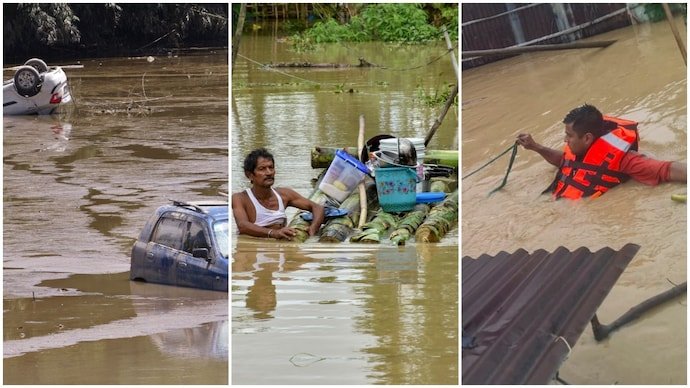
The Assam floods 2026 continue to pose a major humanitarian and environmental challenge as the flood-related death toll has climbed to 78, according to the latest update from the Assam State disaster management Authority (ASDMA). While floodwaters have started receding in several areas, more than 3 lakh residents across seven districts remain affected, thousands are still living in relief camps, and critical Infrastructure has suffered extensive damage.
The India Meteorological Department (IMD) has now issued fresh warnings of heavy to very heavy rainfall between July 30 and August 1, raising concerns that vulnerable districts could witness renewed flooding, flash floods, waterlogging, and landslides. The latest forecast has prompted authorities to keep emergency response teams on high alert even as rehabilitation efforts continue.
The ongoing disaster highlights the recurring challenges posed by the annual monsoon in northeastern India, where overflowing rivers, intense rainfall, and fragile terrain combine to create one of the country’s most flood-prone regions.
Latest Assam Flood Situation: Key Highlights
| Category | Latest Update |
|---|---|
| Flood-related deaths | 78 |
| People affected | 3,00,031 |
| Districts affected | 7 |
| Villages impacted | 551 |
| Revenue circles | 21 |
| Crop area submerged | 21,523.08 hectares |
| Relief camps | 71 |
| People in relief camps | Over 16,500 |
| Relief distribution centres | 30 |
| Livestock affected | More than 17,000 |
| Animals washed away | Over 11,000 |
Three More Deaths Push Toll to 78
Authorities confirmed that three additional flood-related deaths were reported on Wednesday two from Sivasagar district and one from Golaghat. These fatalities have increased the cumulative death toll from this year’s floods to 78.
Although water levels have shown signs of receding in many locations, officials warn that flood-related risks remain significant. Damaged roads, weakened embankments, contaminated water supplies, and unstable ground continue to pose dangers to residents attempting to return home.
More Than Three Lakh Residents Continue to Face Hardship
The latest government bulletin shows that 3,00,031 people remain affected across seven districts:
- Charaideo
- Sivasagar
- Golaghat
- Jorhat
- Nagaon
- Biswanath
- Kamrup Metropolitan
Among these, Charaideo remains the worst-hit district, followed by Sivasagar and Jorhat. While the overall number of affected people has declined compared to previous days, authorities caution that many communities remain isolated and require continued humanitarian assistance.
Worst-Hit Districts by Population Affected
| District | People Affected |
|---|---|
| Charaideo | 1,37,561 |
| Sivasagar | 84,600 |
| Jorhat | 49,911 |
The concentration of affected populations in these districts demonstrates how localized flooding can create severe humanitarian challenges even as conditions improve elsewhere.
Thousands Continue Living in Relief Camps
Flood recovery extends well beyond the receding of water. More than 16,500 displaced people continue to stay in 71 officially operated relief camps, while another 72,000 people are receiving Food, drinking water, medicines, and essential supplies through 30 relief distribution centres.
Medical teams, veterinary professionals, disaster response personnel, and local volunteers remain deployed across affected districts to support both human and animal welfare.
Healthcare services remain particularly important following floods, as stagnant water often increases the risk of waterborne diseases, mosquito-borne illnesses, and sanitation-related Health issues.
Agriculture Suffers Heavy Losses
Floodwaters have submerged more than 21,523 hectares of agricultural land, dealing another setback to rural livelihoods. Assam’s monsoon floods frequently damage paddy cultivation and other seasonal crops, affecting both farmers’ incomes and local agricultural production.
Beyond crop losses, the disaster has also impacted livestock. According to official estimates:
- Over 11,000 animals have been washed away.
- More than 17,000 livestock remain affected.
For many rural households, livestock represent an essential source of income and financial security. Their loss significantly increases the long-term economic impact of flooding.
Infrastructure Damage Slows Recovery
Floodwaters have damaged public infrastructure across multiple districts, including:
- Roads and bridges
- Protective embankments
- Residential houses
- Government buildings
- Schools
- Public utilities
Chief Minister Himanta Biswa Sarma noted that many families are unable to return home because their houses remain filled with mud and silt or have suffered structural damage.
Road connectivity also remains disrupted in several areas due to mudslides originating from the adjoining hill regions, making relief distribution more challenging.
Urban Flooding Continues to Trouble Guwahati
While river flooding has eased in some districts, urban flooding continues to affect parts of Kamrup Metropolitan, including Guwahati.
Several important residential and commercial localities continue to experience waterlogging. Urban flooding differs from river flooding because it often results from inadequate drainage systems, intense rainfall over short periods, and rapid urban development that reduces natural water absorption.
Although no official population has been listed as affected in these urban areas, persistent waterlogging continues to disrupt daily commuting, emergency services, and local businesses.
Fresh Heavy Rain Warning Raises New Concerns
The India Meteorological Department has forecast heavy to very heavy rainfall across Assam, Arunachal Pradesh, and Nagaland over the next three days.
An Orange Alert has been issued for Tinsukia district, while neighbouring districts in Nagaland are also expected to receive significant rainfall that could influence river levels in adjoining parts of Assam.
According to the IMD, the approaching weather system may lead to:
- Flash floods
- Fresh waterlogging
- Overflowing rivers and streams
- Localized landslides
- Traffic disruptions
- Damage to vulnerable infrastructure
Authorities have urged residents living near rivers, embankments, and landslide-prone hillsides to remain alert and follow official advisories.
Central Government Reviews Relief Operations
The flood situation continues to receive close attention from the central government. Union Home Minister Amit Shah held discussions with Assam Chief Minister Himanta Biswa Sarma to review relief operations and assured continued assistance for rescue, restoration, and rehabilitation.
The conversation reflected ongoing coordination between state and central agencies, with disaster response resources remaining available as required.
The Assam government has also announced measures aimed at supporting flood-affected families during recovery, including discussions with banks regarding financial assistance for borrowers impacted by the disaster.
Army Continues Supporting Civil Administration
The Indian Army remains actively involved in flood relief efforts across affected areas. During his visit to the Eastern Theatre, Army Chief General Dhiraj Seth reviewed ongoing humanitarian operations alongside operational preparedness.
Army personnel have been assisting civil authorities with rescue missions, logistics, transportation of relief materials, and restoring connectivity wherever possible.
Such civil-military cooperation plays an important role during large-scale disasters, particularly in remote regions where access becomes difficult after floods.
Why Assam Experiences Severe Floods Every Year
Flooding in Assam is a recurring natural phenomenon driven by a combination of geographical and climatic factors.
- Heavy monsoon rainfall across Northeast India.
- The massive Brahmaputra River system carrying enormous water volumes.
- Numerous tributaries overflowing simultaneously.
- Erosion of riverbanks.
- Sediment deposition that raises riverbeds over time.
- Low-lying floodplains that become inundated during intense rainfall.
Climate experts have also noted that increasingly intense rainfall events can contribute to higher flood risks, making disaster preparedness even more important.
Flood Recovery Extends Beyond Immediate Relief
Even after floodwaters recede, rebuilding communities often takes months. Families must clean damaged homes, restore farmland, repair infrastructure, replace lost livestock, and resume livelihoods.
Recovery also involves restoring schools, healthcare services, drinking water supplies, and transportation networks. In many flood-prone regions, rehabilitation becomes as significant a challenge as emergency rescue operations.
What Residents Should Do During Heavy Rain Alerts
- Monitor official weather and disaster management updates.
- Avoid flooded roads and fast-moving water.
- Move valuables and important documents to higher ground.
- Keep emergency supplies ready.
- Follow evacuation instructions if issued.
- Stay away from landslide-prone slopes during heavy rainfall.
Looking Ahead
Although the overall flood situation in Assam has shown gradual improvement compared to previous weeks, the crisis is far from over. More than three lakh people continue to require assistance, infrastructure repairs remain extensive, and agricultural losses will have lasting economic consequences for many families.
The IMD’s latest rainfall forecast serves as a reminder that recovery efforts remain vulnerable to changing weather conditions. Over the coming days, authorities will closely monitor river levels, rainfall intensity, and landslide risks while continuing relief and rehabilitation operations across affected districts.
For breaking news and live news updates, like us on Facebook or follow us on Twitter and Instagram. Read more on Latest India on thefoxdaily.com.

COMMENTS 0