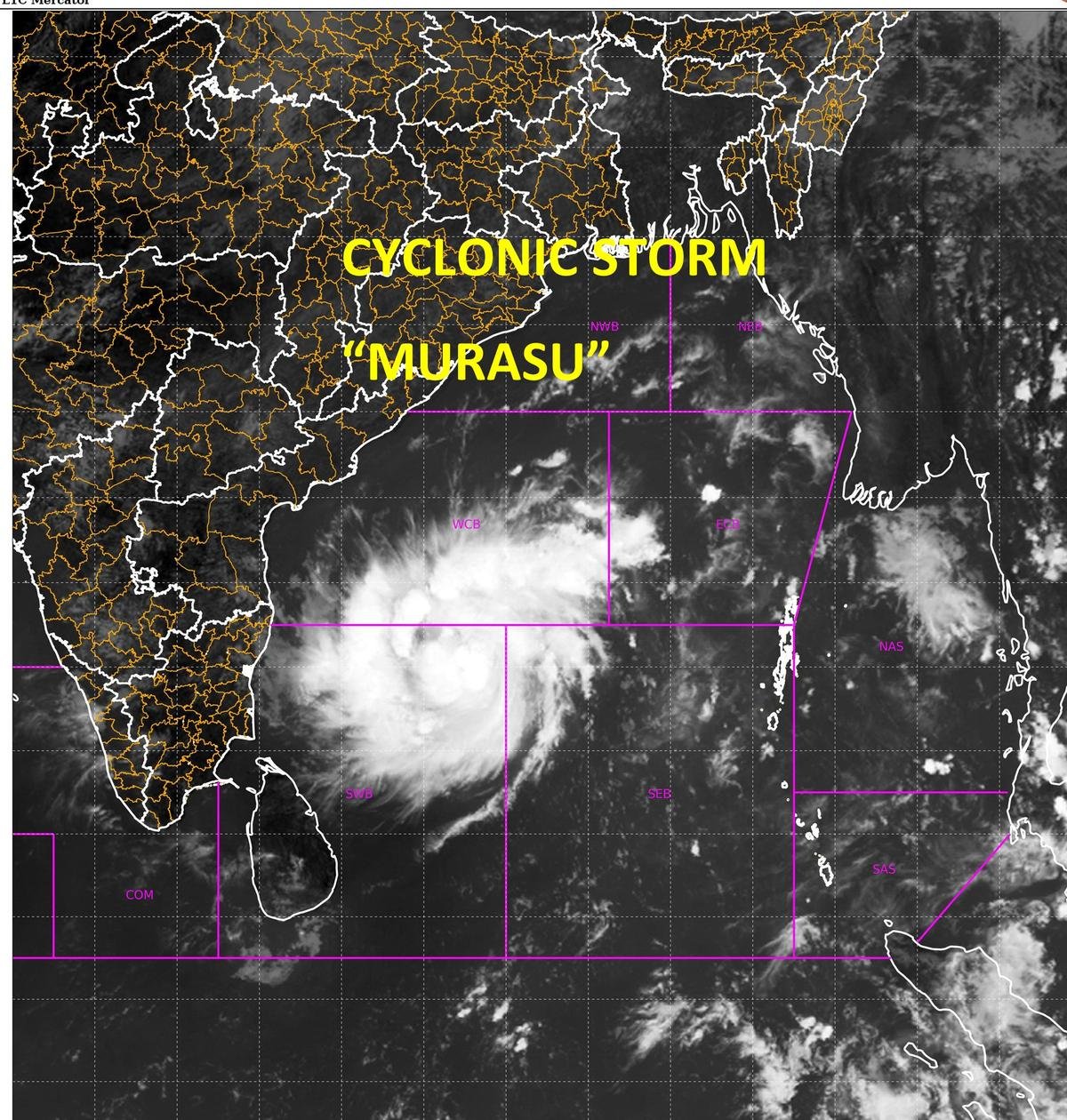
A deep depression over the Bay of Bengal intensified into Cyclone Murasu on Sunday, prompting Odisha to step up disaster preparedness across its southern districts. The developing storm has raised concerns as the state continues relief and restoration work following the damage caused by Cyclone Arnab and subsequent flooding.
According to the India Meteorological Department (IMD), the system is expected to strengthen further and move towards the Andhra Pradesh coast. The forecast cited in the supplied report indicates a possible landfall on the morning of November 3, between Nellore and Narsapur, with sustained wind speeds of 100–110 kmph and gusts reaching 120 kmph.
Odisha authorities have placed the southern region on high alert, ordered preparations for evacuations from vulnerable locations and increased monitoring of areas at risk of flooding and landslides.
Cyclone Murasu Expected to Intensify Before Landfall
The latest weather system developed over the Bay of Bengal before intensifying from a deep depression into a cyclone on Sunday. The IMD forecast cited in the report suggests that it could strengthen into a very severe cyclonic storm before approaching the Andhra Pradesh coastline.
The projected landfall zone lies between Nellore and Narsapur. The forecast wind speeds of 100–110 kmph, with gusts of up to 120 kmph, indicate the potential for damaging winds in areas along and near the storm’s path.
The cyclone has been named Murasu by India. The name means “war drum”.
Although the expected landfall is in Andhra Pradesh, neighbouring Odisha is also preparing for heavy rainfall and possible weather-related disruption. The storm’s influence is expected to extend into southern parts of the state, where communities are already dealing with the effects of the previous cyclone.
Southern Odisha on High Alert as Rainfall Forecast Begins November 2
Manorama Mohanty, director of the Meteorological Centre in Bhubaneswar, said Odisha is expected to receive rainfall from November 2. Rainfall intensity is forecast to increase on November 3 and continue through November 4 under the influence of Cyclone Murasu.
The expected period of rainfall has raised concerns in districts that have recently experienced flooding and damage to homes, crops and infrastructure. Saturated soil and continued rainfall could also increase the risk of landslides, particularly in hilly areas.
Ganjam is among the districts under close attention. The district was severely affected by Cyclone Arnab, and authorities are now preparing for another spell of adverse weather before recovery work from the earlier disaster is complete.
Odisha Government Orders Evacuations From Vulnerable Areas
State Disaster Management Minister Suresh Pujari said the government was fully prepared to respond to the approaching cyclone and appealed to residents not to panic.
According to Pujari, a high alert has been sounded across southern Odisha, including Ganjam. The government has directed officials to evacuate people living in low-lying areas and vulnerable hilly locations before Cyclone Murasu approaches the coast.
The evacuation preparations are intended to reduce the risk to residents exposed to flooding, strong winds and landslides. Authorities are also focusing on communities that may face difficulties accessing roads and essential services during severe weather.
The administration’s challenge is particularly significant because several districts are still managing the consequences of the previous cyclone and the floods that followed it.
Nearly 1.18 Lakh People Affected by Cyclone Arnab and Floods
Odisha’s Special Relief Commissioner Rajesh P Patil said the state was managing two major responsibilities simultaneously: relief and restoration for people affected by Cyclone Arnab and the floods that followed, and preparations for the approaching Cyclone Murasu.
According to Patil, Ganjam and Kandhamal were among the worst-affected districts. Around 1.18 lakh people have been impacted by the earlier disaster, placing additional pressure on local administrations and emergency response teams.
“Relief and restoration work is progressing on a war footing… Ganjam and Kandhamal districts have been affected the most by Cyclone Arnab and resultant floods. As many as 1.18 lakh people have been impacted by this disaster,” Patil said.
The state is continuing to assess damage and provide assistance to affected households while preparing for the possibility of further rainfall and disruption.
Landslides Raise Concerns in Odisha’s Hilly Districts
Authorities are giving particular attention to hilly and landslide-prone locations ahead of Murasu. Patil said landslides had emerged as a major challenge for disaster management following the incessant rainfall associated with Cyclone Arnab.
Odisha has reported 10 landslides and five deaths in the earlier calamity, according to the relief commissioner. The latest preparations therefore include identifying vulnerable slopes and moving residents away from locations where landslides could threaten homes and access routes.
In Gajapati district, officials have identified around 150 locations considered prone to landslides. Patil said people living in these areas would be evacuated by Monday afternoon, November 2.
The focus on hilly terrain reflects the risk that prolonged or intense rainfall can destabilise slopes, damage roads and isolate communities. Evacuating residents before conditions deteriorate is intended to reduce the danger to people living in vulnerable settlements.
Cyclone Arnab Damage to Crops and Houses
The previous cyclone and subsequent flooding also caused substantial damage to agriculture and residential property in Odisha. According to Patil, around 75,388 hectares of crop area were affected, while 1,672 houses were damaged.
The agricultural losses could create additional difficulties for farming households already dealing with the effects of flooding. Damage to homes has also increased the need for relief and restoration support in affected communities.
With another cyclone approaching, officials face the challenge of protecting residents and infrastructure while continuing recovery operations from the earlier storm.
More Than 6,400 Staff Deployed to Restore Power
Power restoration work has been accelerated in cyclone-affected parts of southern Odisha. More than 6,400 personnel have been deployed to help restore electricity supplies in areas affected by Cyclone Arnab.
Electricity restoration is an important part of the recovery process because prolonged outages can affect households, communication systems, healthcare facilities and other essential services. The approaching storm could complicate these efforts if additional damage occurs.
Authorities are therefore working to restore services while strengthening preparations for possible disruptions caused by Murasu.
What Is the Latest IMD Forecast for Cyclone Murasu?
The IMD’s November 1 bulletin confirmed that the deep depression had intensified into Cyclone Murasu over the southwest and adjoining west-central Bay of Bengal. It forecast further intensification into a severe cyclonic storm over the west-central Bay of Bengal on November 2.
The official forecast placed the likely landfall window between 11:30 p.m. on November 2 and 4 a.m. on November 3, along the south Andhra Pradesh coast between Nellore and Narsapur. The expected wind speed was 100–110 kmph, with gusts reaching 120 kmph. :chatgpt-content-reference{index=”0″}
While the supplied report describes the storm as likely to become a very severe cyclonic storm, the IMD bulletin available on November 1 classified the expected intensification as a severe cyclonic storm. The forecast may be updated as the system develops, so residents should follow the latest official IMD warnings and instructions issued by local authorities. :chatgpt-content-reference{index=”1″}
Odisha Faces Back-to-Back Disaster Preparedness Challenges
Cyclone Murasu is approaching at a time when southern Odisha is still dealing with the consequences of Cyclone Arnab and the flooding that followed it. The reported damage to homes and agricultural land, along with landslides and power disruptions, has made the latest preparedness exercise particularly challenging.
The state government’s response includes evacuating people from low-lying and hilly areas, identifying landslide-prone settlements, restoring electricity and continuing relief operations for families affected by the earlier disaster.
Although the forecast landfall is along the Andhra Pradesh coast, Odisha is preparing for rainfall and related risks from November 2 to November 4. The coming days will be important for emergency teams as they work to protect vulnerable communities and limit further damage.
For breaking news and live news updates, like us on Facebook or follow us on Twitter and Instagram. Read more on Latest India on thefoxdaily.com.






COMMENTS 0