- What Exactly Is the Kohinoor Diamond?
- Why India Wants It Back
- Britain’s Position: Legal Ownership
- Why Mamdani’s Statement Matters
- The Bigger Debate: Restitution in the Modern World
- Comparison: Legal vs Moral Claims
- Why the Issue Keeps Returning
- Could the Kohinoor Ever Be Returned?
- A Symbol Larger Than Itself
- Conclusion: A Debate That Reflects Changing Times
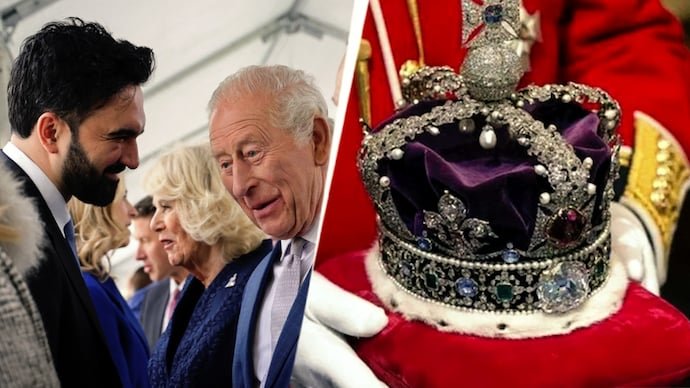
The Kohinoor diamond one of the most contested jewels in the world is back in global conversation after New York City Mayor Zohran Mamdani said he would urge Britain’s King Charles III to return it to India. The comment, made during the monarch’s visit to the United States, may not have been part of any official diplomatic agenda, but it has reignited a debate that has spanned generations.
At its heart, the issue goes far beyond a single gemstone. It touches on History, identity, colonial legacy, and the evolving global push for restitution of cultural artifacts.
What Exactly Is the Kohinoor Diamond?
The Kohinoor, meaning “Mountain of Light,” is a 105.6-carat diamond with origins in the Indian subcontinent. Over centuries, it passed through the hands of multiple empires each transfer marking a shift in power.
Its journey includes:
- Ownership by various Indian dynasties
- Possession by Mughal emperors
- Seizure by Persian and Afghan rulers
- Final transfer to the British East India Company in 1849
Today, it is part of the British Crown Jewels and is displayed in the Tower of London, embedded in a royal crown.
Why India Wants It Back

India’s claim is rooted in history and in how that history unfolded.
The diamond was handed over under the Treaty of Lahore in 1849, following the annexation of the Sikh Empire. The treaty required Maharaja Duleep Singh, then a minor, to surrender the gem to the British.
India argues that this transfer was not voluntary, but the result of colonial coercion.
From this perspective, the Kohinoor is not just a jewel it is a symbol of colonial extraction and lost sovereignty.
Britain’s Position: Legal Ownership
The United Kingdom maintains that the diamond was acquired legally under the terms of the treaty.
This legal argument forms the backbone of Britain’s stance. From its perspective, returning the Kohinoor could set a precedent for numerous other claims involving artifacts acquired during the colonial era.
In other words, the issue is not just about one diamond it’s about the potential ripple effects.
Why Mamdani’s Statement Matters
At first glance, a mayor’s comment might seem symbolic. But in global Politics, symbolism often carries weight.
Mamdani’s remark is significant for several reasons:
- Global Platform: It brings the issue into an international spotlight during a high-profile visit
- Diaspora Voice: Reflects sentiments within the global Indian community
- Renewed Momentum: Adds to ongoing calls for cultural restitution worldwide
Even if no formal discussion took place, the statement itself has revived public discourse.
The Bigger Debate: Restitution in the Modern World
The Kohinoor Controversy is part of a broader global movement questioning the ownership of cultural artifacts.
Across museums and royal collections, countries are increasingly seeking the return of items taken during colonial periods.
Key arguments in this debate include:
For Return
- Artifacts were taken under unequal power dynamics
- They hold cultural and historical significance for their countries of origin
- Returning them is a step toward historical justice
Against Return
- Legal ownership was established through treaties or transactions
- Museums provide global access and preservation
- Returning one item could trigger widespread claims
This tension between legal frameworks and moral arguments makes resolution complex.
Comparison: Legal vs Moral Claims
| Aspect | Legal Argument | Moral Argument |
|---|---|---|
| Basis | Treaties and agreements | Historical context and fairness |
| Focus | Ownership rights | Cultural justice |
| Outcome | Status quo maintained | Potential restitution |
The Kohinoor sits precisely at this intersection legally owned, but morally contested.
Why the Issue Keeps Returning
Despite decades of discussion, the Kohinoor debate resurfaces regularly. That’s because it represents more than a historical dispute it’s a living symbol.
Each time it is mentioned, it reopens questions about:
- Colonial history and its legacy
- National identity and pride
- The evolving standards of global ethics
As global conversations around decolonization grow stronger, such issues are unlikely to fade.
Could the Kohinoor Ever Be Returned?
While the idea captures public imagination, the reality is complicated.
Several challenges stand in the way:
- Legal barriers: Existing ownership claims are firmly established
- Diplomatic implications: Any decision would involve high-level negotiations
- Precedent concerns: It could open the door to numerous similar claims
That said, there are emerging middle-ground approaches being discussed globally, such as long-term loans, shared custodianship, or rotating exhibitions.
A Symbol Larger Than Itself
The Kohinoor’s significance lies not just in its size or value, but in what it represents.
For India, it is a piece of history tied to identity and sovereignty. For Britain, it is part of a historical collection embedded in its monarchy’s legacy.
For the world, it has become a case study in how nations confront their past.
Conclusion: A Debate That Reflects Changing Times
Zohran Mamdani’s call to return the Kohinoor may not immediately change policy, but it has done something equally important it has brought the conversation back into focus.
As global attitudes toward history, ownership, and justice continue to evolve, questions like these are likely to become more frequent, not less.
The Kohinoor may remain in the Tower of London for now. But the debate surrounding it is far from settled.
Because in the end, this is not just about a diamond it’s about how the modern world chooses to reckon with its past.
For breaking news and live news updates, like us on Facebook or follow us on Twitter and Instagram. Read more on Latest World on thefoxdaily.com.





COMMENTS 0