- Why Taiwan Is So Important to China
- Why the United States Supports Taiwan
- The Taiwan Issue Has Become More Dangerous Than Before
- Xi Jinping’s Warning Signals Growing Chinese Frustration
- Could Taiwan Trigger a US-China Military Conflict?
- The Semiconductor Factor: Why Taiwan Matters to the Global Economy
- Trump’s China Policy Could Shape the Next Phase of Tensions
- The “One China” Policy Explained
- How Taiwan Became a Symbol of Wider US-China Competition
- Global Markets Are Watching Closely
- Can the US and China Avoid Conflict Over Taiwan?
- Conclusion: Taiwan Remains the Most Explosive Issue Between the US and China
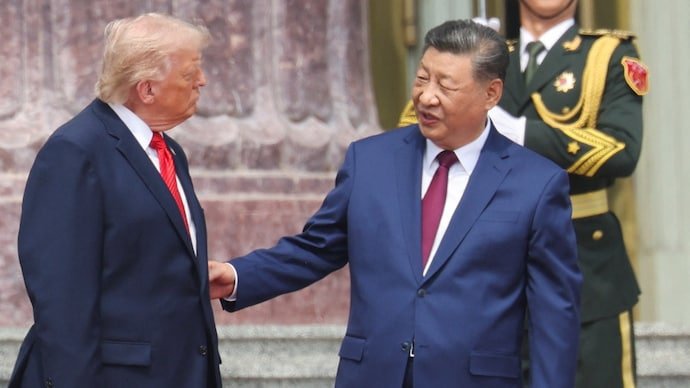
China’s President Xi Jinping has delivered one of his strongest warnings yet to US President Donald Trump over Taiwan, cautioning that mishandling the issue could push relations between Beijing and Washington into “a very dangerous place.”
Speaking during a summit in Beijing, Xi reportedly described Taiwan as the single most important and sensitive issue in US-China relations. According to Chinese state media, the Chinese leader warned that if the matter is not handled carefully, the two countries could “clash or even come into conflict.”
The remarks highlight a growing reality in global Geopolitics: Taiwan has become the most dangerous fault line between the United States and China, with military tensions, economic rivalry, and competing visions of Global Power increasingly converging around the island.
While Washington and Beijing continue cooperating on selective issues like trade and climate Diplomacy, Taiwan remains the issue most capable of triggering a serious international crisis.
Why Taiwan Is So Important to China
For Beijing, Taiwan is not merely a foreign policy issue it is tied directly to national identity, sovereignty, and political legitimacy.
China considers Taiwan part of its territory under the “One China” principle, despite the island operating with its own democratic government, military, constitution, and political system for decades.
The Chinese Communist Party views eventual reunification with Taiwan as a historic mission tied to what Xi Jinping calls the “great rejuvenation of the Chinese nation.”
That is why Beijing reacts aggressively to:
- US arms sales to Taiwan
- Visits by American officials to Taipei
- International recognition of Taiwan
- Statements supporting Taiwanese independence
- Military cooperation between Washington and Taipei
From China’s perspective, these actions undermine its sovereignty claims and encourage separatist sentiment on the island.
Xi’s warning to Trump reflects Beijing’s belief that Taiwan is not negotiable in the same way trade or economic disputes might be.
Why the United States Supports Taiwan
The United States officially recognizes Beijing rather than Taipei diplomatically, but Washington also maintains close unofficial ties with Taiwan through the Taiwan Relations Act.
Under that framework, the US provides Taiwan with defensive weapons and maintains the capacity to resist coercion against the island.
American support for Taiwan is driven by several strategic factors:
- Preventing forced territorial changes in Asia
- Protecting democratic allies and partners
- Maintaining regional military balance
- Securing critical trade and semiconductor supply chains
- Containing Chinese military expansion in the Indo-Pacific
Successive US administrations Republican and Democrat alike have increased military cooperation and political engagement with Taiwan in recent years.
China sees this as a direct challenge to its red lines.
The Taiwan Issue Has Become More Dangerous Than Before
Although tensions over Taiwan are decades old, the current environment is far more volatile than during previous periods.
Several major shifts have increased the risk:
1. China’s Military Has Grown Dramatically
China now possesses one of the world’s largest navies and has rapidly expanded its missile systems, air power, cyber capabilities, and regional military presence.
Beijing regularly conducts military drills near Taiwan, including simulated blockade and invasion exercises.
2. US-China Strategic Rivalry Has Intensified
The relationship between Washington and Beijing is no longer centered primarily on trade. It now involves:
- Technology competition
- Military rivalry
- Artificial intelligence dominance
- Supply chain control
- Global political influence
That broader rivalry makes compromise on Taiwan more difficult.
3. Taiwan’s Political Identity Has Shifted
Many people in Taiwan increasingly identify as Taiwanese rather than Chinese, especially younger generations.
This cultural and political evolution has complicated Beijing’s long-term reunification ambitions.
Xi Jinping’s Warning Signals Growing Chinese Frustration
Xi’s latest remarks suggest Beijing believes Washington is gradually moving closer to supporting Taiwan more openly.
Chinese officials have repeatedly criticized:
- US naval patrols near Taiwan
- American military aid packages
- Congressional visits to Taipei
- Defense cooperation agreements
- Strategic ambiguity debates in Washington
China fears that incremental US actions could slowly normalize deeper diplomatic or military ties with Taiwan.
That concern partly explains why Beijing increasingly uses sharper language during high-level meetings.
Xi’s warning to Trump was likely intended not only for Washington, but also for domestic Chinese audiences eager to see strong leadership on sovereignty issues.
Could Taiwan Trigger a US-China Military Conflict?
This question has become one of the most discussed scenarios among military strategists worldwide.
Most analysts agree that neither Beijing nor Washington wants a direct war. The economic, military, and global consequences would be catastrophic.
However, the danger lies in escalation, miscalculation, or unintended confrontation.
Potential flashpoints include:
- A military accident in the Taiwan Strait
- A Chinese blockade of Taiwan
- A declaration of formal Taiwanese independence
- A major US military deployment near the island
- Escalating air or naval encounters
Even limited clashes could spiral rapidly given the stakes involved.
Xi’s statement that mishandling Taiwan could push ties into a “very dangerous place” reflects genuine concern about how quickly tensions could escalate.
| Key Taiwan Flashpoint | Why It Matters |
|---|---|
| US arms sales to Taiwan | China sees them as interference in internal affairs |
| Chinese military drills | Increase pressure and risk of accidental escalation |
| Taiwan Strait naval patrols | Create direct military interaction between powers |
| Semiconductor supply chains | Taiwan is central to global chip production |
| Independence rhetoric | Triggers Beijing’s strongest political warnings |
The Semiconductor Factor: Why Taiwan Matters to the Global Economy
One reason Taiwan attracts enormous international attention is its critical role in the global technology industry.
Taiwan is home to some of the world’s most important semiconductor manufacturers, including companies producing advanced chips used in:
- Smartphones
- Artificial intelligence systems
- Military technology
- Cars
- Cloud computing infrastructure
Any military conflict or blockade involving Taiwan could severely disrupt global supply chains.
That economic reality means the Taiwan issue is not just regional it directly affects markets, industries, and consumers worldwide.
For Washington, protecting Taiwan also means protecting access to critical technology ecosystems.
Trump’s China Policy Could Shape the Next Phase of Tensions
Donald Trump’s relationship with China has historically mixed confrontation with negotiation.
During his presidency, Trump launched a trade war against Beijing, imposed tariffs, restricted Chinese technology firms, and frequently criticized China on economic issues.
At the same time, Trump also emphasized direct leader-to-leader diplomacy with Xi Jinping.
That unpredictability makes future Taiwan policy difficult to forecast.
Some analysts believe Trump could pursue tougher economic pressure on China while seeking selective cooperation in trade or investment. Others argue he may reduce overseas military commitments if he prioritizes domestic economic issues.
Beijing is likely trying to clarify its red lines early to avoid miscalculations.
The “One China” Policy Explained
A major source of confusion in global discussions is the difference between China’s “One China Principle” and America’s “One China Policy.”
China’s Position
Beijing insists Taiwan is an inseparable part of China and opposes any international recognition of Taiwanese sovereignty.
America’s Position
The US acknowledges Beijing’s position but does not formally endorse Chinese sovereignty over Taiwan in the same absolute terms.
Washington intentionally maintains “strategic ambiguity,” meaning it does not clearly state whether it would militarily defend Taiwan in every scenario.
This ambiguity is designed to:
- Deter China from invading Taiwan
- Discourage Taiwan from declaring formal independence
- Prevent either side from dramatically changing the status quo
However, as tensions rise, maintaining that balance becomes increasingly difficult.
How Taiwan Became a Symbol of Wider US-China Competition
Today, Taiwan represents far more than a territorial dispute.
For China, reunification symbolizes national revival and resistance to foreign interference.
For the United States, Taiwan represents democratic resilience and regional stability in the Indo-Pacific.
As US-China rivalry expands, Taiwan increasingly functions as:
- A military pressure point
- A technology battleground
- A test of alliance credibility
- A symbol of competing political systems
This symbolic importance makes diplomatic compromise politically sensitive on both sides.
Global Markets Are Watching Closely
Financial markets react carefully to developments involving Taiwan because the consequences of instability could be enormous.
Major concerns include:
- Disruption to semiconductor production
- Shipping interruptions in Asian trade routes
- Energy market volatility
- Global stock market uncertainty
- Military escalation affecting international trade
Even without conflict, prolonged tension can influence investment decisions, supply chain planning, and defense spending worldwide.
Many multinational companies are already exploring ways to diversify manufacturing away from potential geopolitical hotspots.
Can the US and China Avoid Conflict Over Taiwan?
Despite increasingly sharp rhetoric, most experts believe both Washington and Beijing still prefer deterrence over direct confrontation.
China understands that military conflict would carry enormous economic risks, especially given its dependence on global trade.
The United States also recognizes that a war involving China would be vastly more dangerous than previous regional conflicts.
That shared caution is one reason diplomatic communication between the two powers remains critical even during periods of heightened tension.
Military hotlines, high-level summits, and strategic dialogues are designed partly to reduce the risk of accidents or misunderstandings.
Still, the challenge is growing harder as nationalism, military competition, and technological rivalry intensify.
Conclusion: Taiwan Remains the Most Explosive Issue Between the US and China
Xi Jinping’s warning to Donald Trump underscores a geopolitical reality that has become impossible to ignore: Taiwan is now the single most sensitive and dangerous issue in US-China relations.
While trade disputes, technology sanctions, and diplomatic competition dominate headlines, Taiwan carries far greater long-term risks because it touches sovereignty, military power, national identity, and global strategic balance all at once.
China views the island as central to its territorial integrity and national revival. The United States views stability around Taiwan as essential to regional security and the global economic order.
That collision of interests creates a tense equilibrium where both sides seek deterrence without triggering direct conflict.
For now, diplomacy, strategic ambiguity, and economic interdependence continue preventing the worst-case scenario.
But Xi’s remarks make one thing unmistakably clear: if Taiwan is mishandled, the consequences could extend far beyond Beijing and Washington affecting global security, technology markets, and international stability for years to come.
For breaking news and live news updates, like us on Facebook or follow us on Twitter and Instagram. Read more on Latest World on thefoxdaily.com.




COMMENTS 0