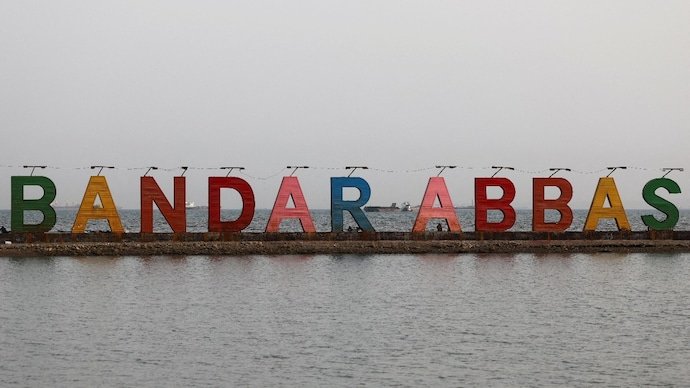
The fragile diplomatic calm between Iran and the United States is once again under strain after Tehran accused Washington of violating a recently negotiated ceasefire through fresh military strikes near the Strait of Hormuz. The confrontation, unfolding around one of the world’s most strategically important maritime chokepoints, has already rattled global oil markets and complicated efforts to stabilize the Middle East after months of escalating violence.
Iranian officials condemned the strikes in Hormozgan province, describing them as a direct breach of the nearly seven-week truce intended to reduce military tensions and restore safe commercial shipping through the Gulf. The United States, however, defended the operation as a “defensive action” targeting alleged Iranian naval mine deployment activities and missile infrastructure threatening maritime security.
The incident highlights a deeper geopolitical reality: even temporary ceasefires in the Middle East now exist under constant pressure from military mistrust, competing strategic interests, proxy warfare, and global economic consequences tied to energy supply chains.
Why the Strait of Hormuz Matters to the Entire World
The Strait of Hormuz is not just another regional waterway. It is arguably the most important oil transit corridor on Earth.
Located between Iran and Oman, the narrow passage connects the Persian Gulf to international waters and serves as the primary route for oil exports from Saudi Arabia, Iraq, Kuwait, the United Arab Emirates, and Qatar. Nearly 20 percent of the world’s daily oil supply and a major portion of global liquefied natural gas shipments move through this corridor.
Any military escalation in the area immediately affects energy markets, shipping insurance costs, supply chains, and inflation expectations across the global economy.
That explains why even limited military operations near Hormuz trigger intense international concern. Traders, governments, and energy companies understand that prolonged instability could sharply increase fuel prices worldwide.
| Strategic Importance of the Strait of Hormuz | Estimated Impact |
|---|---|
| Global oil transported through route | Nearly 20% of world supply |
| Global LNG trade passing through | Roughly one-third |
| Key exporters dependent on route | Saudi Arabia, UAE, Iraq, Kuwait, Qatar |
| Main economic risk | Energy price shocks and shipping disruption |
How the Latest US-Iran Confrontation Escalated
The newest crisis began after reports emerged of explosions in Iran’s Hormozgan province early Tuesday. Iranian state-linked media quickly blamed the United States, accusing Washington of undermining ceasefire commitments.
US officials responded by saying the strikes targeted missile systems and fast boats allegedly preparing naval mining operations near international shipping lanes.
The dispute reflects the persistent security dilemma dominating Gulf Politics. Iran views expanded US military activity near its coastline as aggression and intimidation. The United States argues its naval presence is necessary to protect international commerce and deter attacks on shipping routes.
Both sides are effectively operating under opposing interpretations of “defensive action,” making ceasefire enforcement extremely fragile.
Even more concerning is the absence of trust between Tehran and Washington. Decades of sanctions, proxy conflicts, nuclear disputes, and military confrontations have left both governments skeptical of each other’s intentions.
Frozen Iranian Assets Become the Central Diplomatic Obstacle
While military tensions dominate headlines, the real negotiations appear increasingly focused on economics.
Iran is reportedly demanding access to approximately $24 billion in frozen assets as part of any broader agreement with the United States. Those funds, held abroad under sanctions frameworks, have become one of Tehran’s primary bargaining tools.
For Iran, unlocking frozen assets would provide desperately needed economic relief after years of sanctions pressure, currency instability, and inflation.
For Washington, however, releasing such funds carries political and strategic risks. Critics argue that easing financial restrictions could strengthen Iran’s regional influence or indirectly support military-linked networks.
This dispute demonstrates how modern geopolitical conflicts are no longer fought solely through missiles and military operations. Financial systems, sanctions, banking access, and frozen reserves have become central instruments of international power.
Why Oil Markets Reacted So Quickly
Global energy markets reacted almost immediately to the renewed tensions.
Brent crude prices reportedly surged roughly 3.5 percent toward the psychologically significant $100-per-barrel threshold after news of the strikes spread.
Energy traders remain highly sensitive to disruptions involving Hormuz because the global oil market currently faces several overlapping pressures:
- Lingering supply chain instability
- Ongoing geopolitical conflicts
- Volatile shipping insurance costs
- Strategic petroleum reserve concerns
- Slowing but still elevated inflation globally
Even temporary disruptions in Gulf shipping traffic can ripple through transportation costs, manufacturing expenses, airline pricing, and food supply chains worldwide.
For developing economies already struggling with inflation, prolonged instability near Hormuz could create additional economic pain.
The Iran-Israel-Lebanon Connection Is Expanding the Crisis
The ceasefire tensions are not isolated to Iran and the United States alone. The broader regional conflict now increasingly overlaps with ongoing fighting involving Israel and Hezbollah in Lebanon.
Iran has reportedly pushed for an expanded de-escalation agreement that would also reduce hostilities in Lebanon, where clashes have continued despite earlier truce announcements.
Meanwhile, Israeli Prime Minister Benjamin Netanyahu has signaled plans to intensify military operations against Hezbollah positions.
This overlapping conflict structure creates a dangerous chain reaction risk:
- US-Iran tensions influence Gulf security
- Iran-Hezbollah ties affect Lebanon
- Israeli operations increase regional volatility
- Shipping disruptions impact global economies
In practical terms, the Middle East conflict is no longer confined to a single battlefield. It has evolved into an interconnected regional security crisis involving military, economic, cyber, and diplomatic dimensions simultaneously.
Iran’s Strategic Messaging and Domestic Politics
Iran’s leadership is also using the crisis to reinforce domestic political narratives.
Statements from Supreme Leader Mojtaba Khamenei emphasizing continued opposition to the United States and Israel suggest Tehran wants to project strength rather than compromise under pressure.
Such rhetoric serves multiple purposes:
- Maintaining internal political unity
- Deterring foreign adversaries
- Preserving revolutionary legitimacy
- Strengthening regional alliances
Iran’s leadership understands that appearing weak during negotiations could carry domestic political costs, especially after months of military confrontation and economic strain.
At the same time, Tehran likely wants to avoid a full-scale war that could devastate its economy and infrastructure.
This balancing act partly explains why Iran continues participating in negotiations while simultaneously issuing aggressive public warnings.
The Role of Drones and Modern Gulf Warfare
One of the most important but under-discussed aspects of the crisis involves drone warfare.
Iran’s Revolutionary Guards claimed their forces downed one US drone and engaged additional aerial assets over the Gulf region.
Drones have fundamentally changed military dynamics in the Middle East. Compared to traditional fighter jets or naval fleets, unmanned systems allow governments and militias to conduct surveillance, attacks, and intimidation with lower political risk and lower operational costs.
The Gulf region has become one of the world’s most active testing grounds for drone warfare strategies.
This creates a particularly dangerous environment because small incidents involving drones can rapidly escalate into larger military confrontations before diplomatic channels have time to respond.
Shipping Traffic Remains Far Below Normal Levels
Although Iranian authorities claimed dozens of commercial vessels crossed Hormuz under Iranian authorization over the past 24 hours, maritime traffic reportedly remains significantly below pre-conflict levels.
Shipping companies remain cautious for several reasons:
- Risk of naval mines
- Potential missile strikes
- Insurance premium increases
- Possibility of vessel seizures
- Rapidly changing military conditions
Even if ceasefire negotiations survive, restoring full confidence in Gulf shipping routes may take months.
Insurance markets are especially important here. During regional conflicts, insurers often sharply increase war-risk premiums for vessels operating near contested waters. Those additional costs eventually spread across global trade and consumer prices.
Internet Restoration in Iran Signals Another Strategic Shift
The partial restoration of internet access inside Iran after a lengthy blackout may appear unrelated to the military crisis, but it actually reflects another important strategic calculation.
Governments often restrict internet access during wartime to manage information flow, suppress unrest, and limit cyber vulnerabilities.
The gradual reopening of digital connectivity suggests Iranian authorities may believe the immediate risk of internal instability has decreased, at least temporarily.
However, restoring connectivity also increases exposure to foreign media narratives, cyber threats, and public criticism.
The internet blackout itself reportedly lasted nearly 90 days, underscoring how deeply the conflict affected Iranian domestic life.
Comparison With Previous Hormuz Crises
The current standoff resembles several earlier Gulf confrontations but differs in one critical way: today’s global economy is far more interconnected and fragile.
Previous Hormuz crises, including tanker seizures in 2019 and tensions during the Iran-Iraq “Tanker War” of the 1980s, primarily affected energy markets.
Today, disruptions influence a much broader system involving:
- Global inflation trends
- Supply chain logistics
- Artificial intelligence infrastructure energy demands
- Shipping technology networks
- Financial market stability
That means even limited regional conflict now carries far greater worldwide economic consequences than similar confrontations decades ago.
What Happens Next?
The next few days could prove critical for regional stability.
US Secretary of State Marco Rubio indicated negotiations toward a broader framework agreement may still continue despite the latest violence.
However, several unresolved issues remain highly volatile:
- Release of frozen Iranian assets
- Security guarantees in Hormuz
- Iran’s nuclear program
- Israel-Hezbollah fighting
- Future US military presence in the Gulf
If diplomatic talks collapse entirely, the region could face renewed military escalation with potentially severe consequences for global energy supplies.
Conversely, even a limited agreement restoring safer shipping conditions could help calm oil markets and reduce immediate geopolitical risks.
Conclusion: Why the Hormuz Crisis Could Shape the Global Economy in 2026
The latest confrontation between Iran and the United States near the Strait of Hormuz is more than another Middle East flashpoint. It is a reminder that modern geopolitics and the global economy are now inseparably linked.
Every missile strike, naval maneuver, or drone encounter near Hormuz carries implications far beyond the Gulf region. Energy prices, inflation, supply chains, financial markets, and international diplomacy all react almost instantly.
The crisis also demonstrates how fragile ceasefires have become in an era defined by proxy warfare, economic sanctions, cyber conflict, and rapid information warfare.
While negotiations may still produce a temporary framework for de-escalation, the deeper tensions between Iran, the United States, Israel, and regional actors remain unresolved.
Until those structural conflicts are addressed, the Strait of Hormuz will likely remain one of the world’s most dangerous geopolitical pressure points and one capable of influencing the global economy within hours.
For breaking news and live news updates, like us on Facebook or follow us on Twitter and Instagram. Read more on Latest World on thefoxdaily.com.




COMMENTS 0