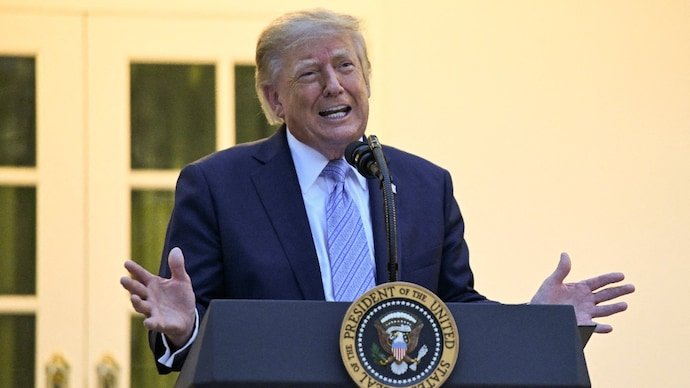
British Prime Minister Andy Burnham is preparing for his first face-to-face meeting with US President Donald Trump on the sidelines of the United Nations General Assembly in New York, in talks expected to focus on Ukraine, the Strait of Hormuz and the economic consequences of the conflict with Iran.
The meeting will be an important early test of Burnham’s approach to Washington after he became prime minister in July. It also comes against the backdrop of a difficult period in the US-UK relationship, with the two governments differing over several foreign-policy and domestic issues while continuing to rely on one another for cooperation on defence, intelligence, trade and international security.
Burnham is due to address world leaders at the UN on Tuesday, where he is expected to set out his view of Britain’s role in a more fragmented international environment. His meeting with Trump will take place as the United States continues its confrontation with Iran and as Britain seeks to protect its economic interests from the disruption caused by the conflict.
Ukraine and air defence expected to dominate talks
One of Burnham’s principal objectives is expected to be securing stronger American support for Ukraine, particularly additional interceptor missiles to reinforce the country’s air-defence network ahead of another winter of war.
Ukraine has repeatedly warned about pressure on its air-defence capabilities as Russia continues missile and drone attacks. Interceptor missiles are particularly important because they are designed to destroy incoming threats before they reach populated areas or critical infrastructure.
Burnham’s focus on the issue follows his visit to Kyiv, his only other foreign trip since becoming prime minister before the UN gathering. The visit gave him an opportunity to reaffirm Britain’s support for Ukraine and discuss the military requirements facing Kyiv.
The British government has also been looking at ways to strengthen Ukraine’s longer-term ability to defend itself. For London, the issue is both a matter of supporting Ukraine and maintaining a broader European security position in which the United States remains a central military power.
Burnham’s challenge in Washington will be to press Britain’s case without allowing disagreements over Ukraine to damage cooperation with the Trump administration on other issues.
Strait of Hormuz becomes an economic priority
The second major issue is the Strait of Hormuz, where disruption to shipping has become one of the most serious economic consequences of the US-Israeli war with Iran.
The waterway is a critical route for Global energy supplies, connecting the Persian Gulf with international shipping routes. Prolonged restrictions on maritime traffic have created additional pressure on oil markets and increased transportation costs.
For Britain, the disruption has direct economic consequences. Higher energy prices can feed into household bills, transportation costs and inflation, complicating the government’s efforts to improve living standards and revive an economy that has struggled with weak growth.
Burnham’s government wants to restore the free movement of commercial shipping through the strait. The issue therefore connects Britain’s foreign-policy priorities with its domestic economic agenda.
The British position is also linked to wider maritime security concerns. Any prolonged disruption to the waterway affects not only countries in the Gulf but also economies that depend on stable international Energy Markets.
Burnham’s past criticism of Trump
The meeting carries an additional political dimension because Burnham has previously been openly critical of Trump.
In 2017, when Burnham was mayor of Greater Manchester, he said Trump would not be welcome in the city. Two years later, he said he would refuse to meet the US president if Trump visited.
Burnham’s position has changed since he entered Downing Street. After becoming prime minister, he said he tries to find “common ground” with other politicians, reflecting the different responsibilities that come with leading the British government.
The shift illustrates the difference between political campaigning and government diplomacy. As mayor and opposition politician, Burnham could express stronger personal criticism of a foreign leader. As prime minister, he must manage a relationship that Britain considers strategically important regardless of personal or ideological differences.
Trump has described Burnham as “a nice guy”, and the two leaders have spoken twice since Burnham replaced Keir Starmer as Labour leader and became prime minister.
Disagreements remain between London and Washington
Despite the relatively positive tone in their initial conversations, several issues have created friction between the British government and Trump.
Trump has irritated British officials by backing Irish unification and making comments about the future of the Falkland Islands, which are claimed by both Britain and Argentina. London has also faced criticism from Washington over its policies on immigration, green energy and North Sea oil and gas production.
Burnham is expected to make a decision on whether to approve new oil and gas developments off Scotland. The issue could become another point of disagreement with Trump, who has repeatedly called for greater energy production and criticised policies that restrict fossil-fuel development.
Britain is also preparing for possible US criticism of its restrictions on trade with Israeli settlements in the occupied West Bank and its approach to regulating major American technology companies.
These disagreements mean the UN meeting is unlikely to be limited to Ukraine and Hormuz. Trade, energy, technology and wider foreign policy could all influence the broader relationship.
From Starmer’s Trump strategy to Burnham’s approach
Burnham inherits a US relationship that his predecessor, Keir Starmer, had worked to strengthen. Starmer sought to establish a close personal relationship with Trump and presented him with an invitation from King Charles III for a second state visit to Britain during a meeting in the Oval Office in February 2025.
British officials believed that engagement helped create conditions for a trade agreement between the UK and the Trump administration. However, the relationship later became more complicated after Starmer declined to join the US military campaign against Iran.
Trump also repeatedly criticised Britain’s approach to immigration and energy policy during Starmer’s time in office.
Burnham now has to maintain the benefits of close US ties while establishing his own foreign-policy approach. That means managing differences without allowing them to undermine cooperation in areas where Britain and the United States have overlapping interests.
Labour Party chairwoman Bridget Phillipson has described Burnham’s expected approach as pragmatic. She said Britain and the United States would not agree on everything but argued that maintaining the relationship remained important to Britain’s national interests.
Greenland dispute adds another layer to the relationship
Relations between Washington and European allies were also strained by Trump’s previous threats involving Greenland, the autonomous Arctic territory within the Kingdom of Denmark.
Burnham was among European leaders who welcomed an agreement involving Greenland, Denmark and the United States that expanded the American military presence while keeping Greenland under Danish control.
The issue matters for Britain because developments in the Arctic have implications for European security, NATO cooperation and the strategic balance in the North Atlantic.
It also highlights the broader challenge facing British foreign policy: London must maintain its close security relationship with Washington while remaining committed to European partnerships and the interests of its NATO allies.
Britain looks toward Europe and other middle powers
Burnham’s meeting with Trump comes at a time when several middle-sized powers are seeking closer cooperation in response to a more unpredictable international environment.
Canadian Prime Minister Mark Carney has been among the leaders most openly advocating stronger partnerships between countries that do not have the scale of the United States or China. Britain is also attempting to deepen ties with European countries after leaving the European Union in 2020.
Burnham’s government has indicated that Britain wants to play a more active role internationally while rebuilding relationships with European partners.
The approach does not necessarily mean choosing between Washington and Europe. Britain remains deeply integrated with the United States in defence and intelligence while also having geographical, economic and security interests closely tied to Europe.
The challenge is to maintain both relationships when Washington and European capitals disagree over issues such as Iran, Ukraine, trade, energy and international institutions.
Trump has a busy diplomatic week
Burnham’s meeting is taking place during a particularly busy week for Trump. The US president is also scheduled to meet Chinese President Xi Jinping as Washington continues to manage its strategic and economic relationship with Beijing.
Trump’s meetings with foreign leaders at the UN provide an opportunity to discuss several conflicts and economic disputes in a concentrated period of diplomacy.
For Burnham, the timing offers an opportunity to place British concerns directly before the US president while also establishing a working relationship with Trump in person.
The fact that the meeting is taking place at the UN rather than at the White House also gives both governments a setting in which wider international issues can be discussed alongside bilateral concerns.
Pressure from Britain’s opposition
Burnham is also facing pressure at home over how firmly he should challenge Trump.
Liberal Democrat leader Ed Davey has urged the prime minister to adopt a tougher position and to make clear that Britain does not accept every element of Trump’s foreign policy.
Davey’s argument reflects one side of the domestic debate over the US relationship. While some politicians emphasise the importance of maintaining close cooperation with Washington, others argue that Britain should be more willing to publicly challenge US decisions that conflict with British or European interests.
Burnham’s government must therefore navigate pressure in both directions. Too much confrontation could make cooperation harder, while avoiding public disagreements altogether could create political criticism at home.
Economic stakes make the US relationship important
The immediate focus on Ukraine and Hormuz is closely connected to Britain’s economic position.
Energy-market disruption has increased the pressure facing households and businesses, while the government is attempting to improve economic growth and manage the Cost of Living. A prolonged disruption to shipping through Hormuz could make those objectives more difficult.
Britain’s relationship with the United States also matters because of trade, investment and technology. American companies play a significant role in the British economy, while the two countries cooperate extensively in defence and intelligence.
That interdependence means that disagreements over individual policies have to be managed alongside a much broader strategic relationship.
What Burnham’s first Trump meeting could establish
The first face-to-face meeting between Burnham and Trump will provide an early indication of how the new British government intends to handle Washington.
Burnham enters the talks with clear priorities: stronger support for Ukraine, greater security for shipping through the Strait of Hormuz and protection of Britain’s economic interests as the Middle East conflict continues to affect energy prices.
At the same time, he will have to address issues on which London and Washington disagree, including energy policy, immigration, technology regulation, the Middle East and questions involving Britain’s relationships with European partners.
The meeting is therefore about more than the personalities of the two leaders. It will test how Britain balances its long-standing strategic relationship with the United States against its own economic priorities and growing cooperation with Europe and other middle powers.
Burnham has previously criticised Trump, but his responsibilities as prime minister require him to work with the US administration even when their political positions diverge. His stated emphasis on finding common ground suggests that the New York meeting will focus on areas where practical cooperation is possible.
For Britain, the central question will be whether that approach can protect national interests while keeping the US relationship functional at a time when wars, energy disruption and shifting alliances are reshaping the international environment.
For breaking news and live news updates, like us on Facebook or follow us on Twitter and Instagram. Read more on Latest World on thefoxdaily.com.






COMMENTS 0