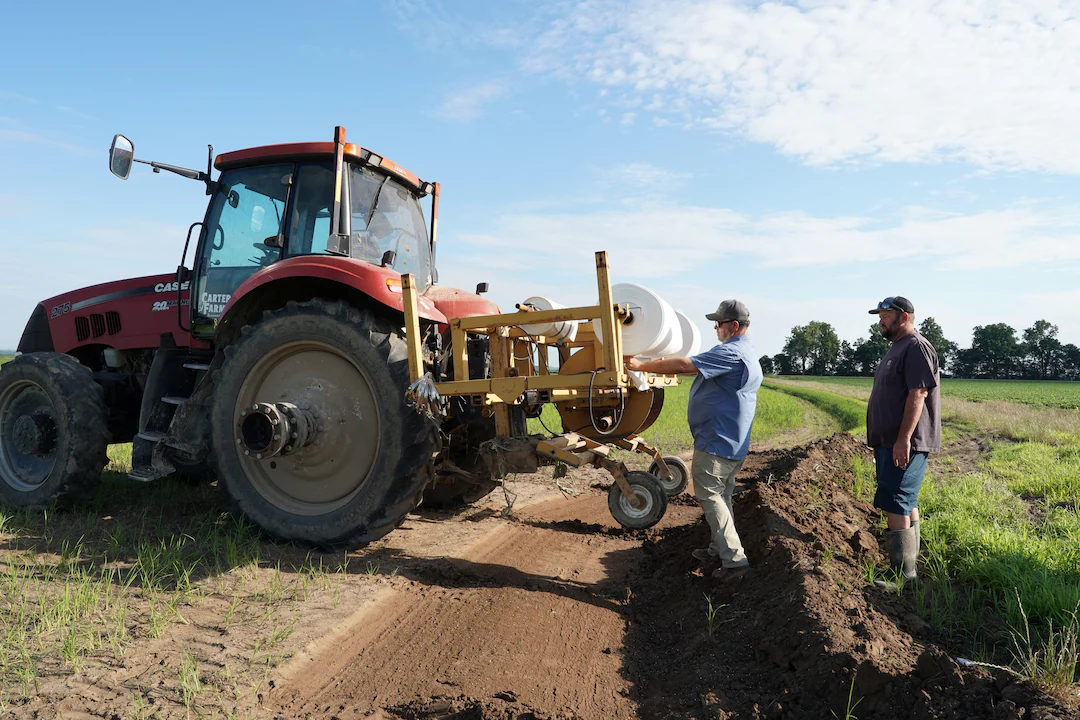
US President Donald Trump has announced an $8 billion support program for American farmers to help offset diesel costs during the 2026 harvest season, unveiling the initiative at a campaign speech in Kansas as his administration faces pressure over rising living expenses and fuel prices.
Trump said on October 19 that the US Department of Agriculture (USDA) would introduce a programme called the Harvest Fuel Relief Program, providing financial assistance to farmers during the harvest period. Following his announcement, the USDA confirmed that $8 billion would be made available for one-time payments to American farmers facing temporary market disruptions and increased agricultural input costs.
The initiative comes as farmers contend with higher operating expenses and the administration seeks to maintain support in agricultural states ahead of the November midterm elections. The Republican Party currently holds narrow majorities in both chambers of Congress, making the elections an important test of its political position.
Although Trump presented the programme as relief for farmers facing elevated diesel costs, the USDA’s description indicates that payments will be calculated using a uniform formula designed to cover a portion of modeled losses during the 2026 crop year. The department has said that its Farm Service Agency will administer the payments.
What Trump announced about the $8 billion farmer relief programme
Speaking at a campaign event in Kansas on Monday, Trump said the USDA would launch a new initiative to help farmers manage fuel expenses during the harvest season.
He described the announcement as an effort to provide $8 billion in support to agricultural producers, specifically identifying diesel costs as a major concern during the harvest period.
The USDA subsequently confirmed the availability of the funding, describing it as one-time assistance for American farmers dealing with temporary market disruptions and higher input costs.
The programme is intended to provide proportional support rather than reimburse every farmer for all fuel expenses. According to the department, payments will follow a uniform formula intended to cover part of the modeled losses associated with the 2026 crop year.
The distinction matters because an $8 billion national funding allocation does not mean every eligible farmer will receive the same payment. The amount distributed to an individual producer will depend on the programme’s calculation method and applicable eligibility requirements.
The USDA’s Farm Service Agency will oversee the payments. Further details about individual payment amounts, application procedures and the precise eligibility criteria will be important for farmers seeking to determine how the assistance applies to their operations.
Why diesel costs matter during the harvest season
Diesel is an important operating expense for many American agricultural businesses. Farmers use diesel-powered machinery for field preparation, planting, harvesting and transporting crops. Fuel is also required to move agricultural products and equipment between farms, storage facilities and other destinations.
Harvesting can concentrate fuel demand into a limited period, when producers must complete fieldwork within the available weather and seasonal window. Higher diesel prices during this period can increase the cost of bringing crops out of the fields, particularly for operations that depend heavily on mechanised equipment.
Fuel is only one part of the broader cost structure facing agricultural producers. Fertiliser, seed, chemicals, machinery, labour, transportation and other inputs can also influence the cost of producing crops. When several expenses rise together, farmers may find it more difficult to maintain their margins, especially when crop prices do not increase at the same pace.
The USDA’s description of the new programme reflects this wider pressure. Although Trump highlighted diesel expenses in his announcement, the department said the payments would address temporary market disruptions and increased input costs.
The programme’s use of modeled losses also suggests that the government will calculate assistance according to a defined methodology rather than simply refunding receipts for diesel purchases. The exact effect on individual farms will depend on the final payment formula and the circumstances covered by the programme.
How the USDA plans to distribute the $8 billion
The USDA said the $8 billion would be distributed through one-time payments to American farmers during the harvest season. Its Farm Service Agency will administer the funding.
The department described the payment structure as proportional support based on a uniform formula intended to cover a portion of modeled losses during the 2026 crop year.
Several elements of that approach are significant for producers.
- One-time assistance: The announced funding is intended to provide a single round of payments rather than establish an ongoing fuel subsidy.
- Proportional support: Payments are designed to reflect a portion of modeled losses, rather than automatically covering every dollar of additional operating expenses.
- A uniform formula: The USDA says a common calculation method will be used to determine support for producers.
- Farm Service Agency administration: The agency will manage the distribution of payments under the programme.
For farmers, the practical questions will include which producers qualify, how losses are calculated, what documentation may be required and when payments will arrive. Those details will determine how quickly the programme can provide relief during the harvest season.
Until the applicable rules and calculation methods are fully established, farmers should not assume that their payment will correspond directly to their diesel expenditure or represent an equal share of the $8 billion allocation.
Farmer assistance comes as the administration faces fuel-price concerns
The announcement comes amid wider concern about the cost of living in the United States. According to the supplied report, fuel prices have risen during the US-Israeli war on Iran, adding to the economic pressures confronting the administration.
Higher fuel costs can affect households directly through petrol and other energy expenses. They can also influence businesses through transportation, production and distribution costs. Agriculture is particularly exposed because fuel is needed to operate machinery and move crops through supply chains.
For farmers, rising diesel expenses can create pressure at a time when many production costs must be paid before crops are sold and revenue is received. Assistance during the harvest period could help eligible producers manage some of that financial burden, although the extent of the benefit will depend on the payments they receive and the expenses they face.
The new programme follows another fuel-related step taken by Trump earlier in October. He signed an executive order that he said would expand access to tax-exempt diesel.
The two announcements represent separate measures described by the administration as responses to fuel-related concerns. The earlier executive order addressed access to tax-exempt diesel, while the newly announced programme involves an $8 billion allocation for one-time payments to farmers.
The available announcement does not establish how much either measure will reduce an individual farm’s total costs. Their practical effects will depend on implementation, eligibility and the extent to which the measures address the expenses producers actually incur.
Why the announcement matters ahead of the November midterm elections
The timing of the farmer relief announcement places it within a broader political effort ahead of the November midterm elections, when control of the US Congress is at stake.
Republicans currently hold narrow majorities in the Senate and House of Representatives. The party is therefore campaigning in an environment where the outcome of competitive races could affect its ability to advance legislation and support the administration’s policy agenda.
Farm states are an important part of this political landscape, particularly where Senate races are competitive. Rising agricultural expenses have created an issue that directly affects producers and communities whose economies depend on farming.
Trump’s announcement offers a specific financial commitment to that sector. By directing support towards farmers during harvest season, the administration is addressing an expense that can have an immediate effect on agricultural operating budgets.
However, the announcement alone does not establish how farmers will respond politically or whether the programme will change voting behaviour. Its significance will depend in part on how eligible producers assess the assistance once the rules are available and payments begin.
The wider political context also includes concerns about household affordability. The cost of fuel and other everyday expenses has become an issue for the administration, while the approaching elections have increased the importance of economic policy announcements.
For voters, the distinction between an announced funding allocation and assistance actually received is important. The programme’s real-world impact will become clearer as the USDA publishes implementation details and farmers learn how much support they can claim.
Trump has made other financial promises to voters
The $8 billion farmer relief programme is the latest in a series of financial promises and proposals Trump has made as the midterm elections approach.
He has separately proposed sending $5,000 checks to all adult citizens if Republicans retain control of both the House and Senate in the midterms. The proposal has drawn scepticism from analysts, economists and some Republican members of Congress, according to the supplied report.
The proposed payments to adult citizens are separate from the farmer assistance programme. The $5,000 payments have been presented as a proposal linked to the election outcome, whereas the USDA has confirmed that $8 billion will be made available for one-time payments to farmers.
Trump also said earlier in October that the US government would send a one-time payment of $90 to more than 20 million Americans enrolled in Medicare, the health insurance programme for older Americans.
These announcements cover different groups and policy objectives. The farmer programme targets agricultural producers facing market disruptions and higher input costs. The proposed $5,000 checks would apply to adult citizens under the conditions Trump described, while the Medicare payment announcement concerns people enrolled in a federal health insurance programme.
They should not be treated as parts of a single confirmed payment scheme. Each measure has its own stated purpose, scope and implementation requirements, and the available information does not establish that all announced payments will operate under the same timetable or rules.
What farmers should watch for next
The USDA’s implementation guidance will be central to determining how the $8 billion programme works in practice. Farmers will need clear information about eligibility, the calculation of modeled losses, payment timelines and any documentation required by the Farm Service Agency.
The payment formula will be particularly important. A uniform approach can provide a consistent basis for distributing funds, but individual farms may have very different production costs, fuel requirements and financial circumstances. The relationship between the formula and actual losses will therefore influence how useful the assistance is to different producers.
Farmers should also distinguish between support calculated for the 2026 crop year and reimbursement for specific diesel purchases. The USDA has described the programme as covering a portion of modeled losses, not as a promise to refund all fuel bills.
The timing of payments will be another key factor. Assistance delivered during the harvest season could help eligible producers manage immediate operating expenses. Payments arriving later may still provide financial support, but their usefulness for meeting time-sensitive harvest costs could differ.
The department’s final rules will help clarify these questions and show how the funding allocation translates into assistance at the farm level.
Will the $8 billion programme fully offset farmers’ diesel expenses?
The announcement does not indicate that the programme will cover all diesel expenses incurred by American farmers. The USDA has described the funding as proportional support intended to cover a portion of modeled losses during the 2026 crop year.
That means the programme is designed as partial relief rather than a guarantee of full reimbursement. The precise benefit for individual producers will depend on the payment formula, eligibility rules and other conditions set by the department.
Although the initiative could help farmers manage some of the pressure from higher fuel and agricultural input costs, it will not automatically remove the wider financial challenges associated with farming. Diesel is only one component of farm expenditure, and the effect of the programme will become clearer as implementation details emerge.
Conclusion
Trump’s announcement of an $8 billion Harvest Fuel Relief Program marks a new federal effort to provide financial support to American farmers during the 2026 harvest season. The USDA has confirmed that the money will fund one-time payments intended to address temporary market disruptions and increased input costs, with the Farm Service Agency responsible for administration.
The programme arrives as agricultural producers face pressure from operating expenses and the Trump administration confronts broader concerns about fuel prices and the cost of living ahead of the November midterm elections.
For farmers, the most important next step will be the publication of detailed eligibility and payment rules. Those details will determine how the funding is distributed, how much individual producers receive and how effectively the assistance helps them manage harvest-season costs.
For breaking news and live news updates, like us on Facebook or follow us on Twitter and Instagram. Read more on Latest World on thefoxdaily.com.






COMMENTS 0