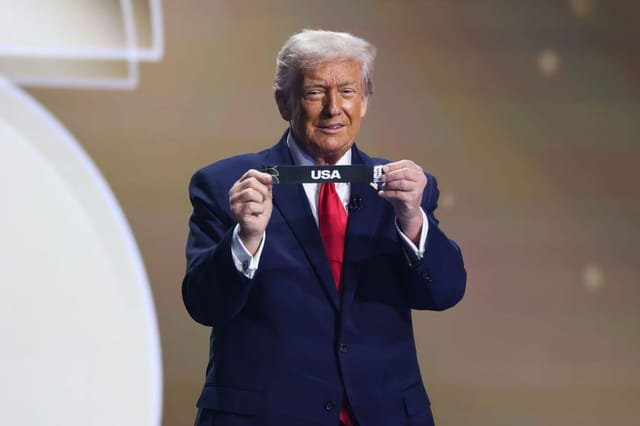
The FIFA World Cup final is one of the most watched sporting events on the planet, attracting billions of viewers and creating iconic moments that transcend football.
However, with less than a month remaining until the 2026 FIFA World Cup final, attention is shifting beyond the players and toward a potential break from one of the tournament’s most cherished traditions.
According to multiple reports, United States President Donald Trump could be granted unprecedented access during the trophy presentation ceremony at MetLife Stadium in New Jersey on July 19.
The move would reportedly allow Trump to remain on stage during the winning team’s celebrations alongside FIFA President Gianni Infantino, a departure from the protocol that has defined World Cup trophy presentations for decades.
If implemented, the decision could reignite debate over the growing intersection between politics, global sporting events, and FIFA’s evolving approach to ceremony and spectacle.
What Is FIFA’s Traditional World Cup Trophy Presentation Protocol?
For generations, FIFA has followed a simple and symbolic process during the World Cup trophy ceremony.
After the final whistle, the winning team’s captain receives the trophy from the FIFA president, often accompanied by the head of state or a senior representative of the host nation.
Once the trophy is handed over, officials traditionally step aside, allowing players and coaching staff to enjoy an uninterrupted celebration.
The moment belongs exclusively to the champions.
This protocol ensures that the focus remains on the athletes who earned football’s most prestigious prize.
Any deviation from that tradition inevitably attracts attention because the trophy lift is one of the defining images of every World Cup.
Why Donald Trump’s Potential Role Is Generating Debate
Reports indicate that Trump is expected to present the trophy alongside Gianni Infantino and could remain on stage during the celebrations.
Such a scenario would mirror events at the 2025 FIFA Club World Cup final, where Trump stayed on the podium as Chelsea celebrated their victory over Paris Saint-Germain.
Images of players appearing surprised by the president’s continued presence quickly circulated across social media, sparking widespread discussion about whether political figures should share the spotlight during sporting celebrations.
The possibility of a similar moment at the World Cup final carries even greater significance given the tournament’s global audience.
Supporters of the move may argue that the host nation’s head of state naturally plays an important ceremonial role.
Critics, however, believe the spotlight should remain firmly on the players and coaches.
How FIFA’s Relationship With Political Leaders Has Evolved
FIFA has long maintained that football should remain separate from politics, yet major international tournaments have historically been intertwined with political symbolism.
World Cup hosts often use the competition to showcase their culture, infrastructure, and global influence.
From opening ceremonies to trophy presentations, political leaders frequently occupy visible positions throughout the event.
However, FIFA has traditionally sought to strike a balance by ensuring that political figures do not overshadow the athletes themselves.
The reported adjustment to presentation protocol suggests FIFA may be embracing a more flexible approach in an era where sporting events increasingly intersect with global politics and media attention.
| Traditional FIFA Protocol | Reported 2026 Scenario |
|---|---|
| Officials hand over the trophy and step aside | Officials may remain on stage during celebrations |
| Players are the sole focus of the trophy lift | Political figures could share the spotlight |
| Minimal official involvement after presentation | Extended ceremonial presence expected |
| Consistent across previous World Cups | Potential departure from established tradition |
Why the 2026 World Cup Carries Unique Political Significance
The 2026 FIFA World Cup is already historic for several reasons.
It is the first edition to feature 48 teams and the first to be co-hosted by three nations: the United States, Canada, and Mexico.
As the primary host nation for the final, the United States will receive significant global attention throughout the tournament.
For any sitting U.S. president, participating in the trophy ceremony offers an opportunity to project national prestige on one of the world’s biggest stages.
That visibility becomes even more significant considering football’s continued growth in popularity across the United States.
The final at MetLife Stadium is expected to attract one of the largest global television audiences of the year.
Could the Ceremony Overshadow the Champions?
The central concern among critics is straightforward: should any individual other than the players be the focus during a World Cup trophy lift?
Football history is defined by iconic celebration images—from Pelé in 1970 to Argentina’s triumph in 2022.
Those moments endure because they belong entirely to the athletes.
If political figures remain on stage during celebrations, there is a risk that discussions after the match shift away from the sporting achievement itself.
In the age of social media, even brief ceremonial moments can dominate headlines and shape public perception.
For FIFA, preserving the integrity and symbolism of the trophy presentation remains an important consideration.
Mauricio Pochettino Highlights the Pressure of Hosting
While off-field discussions continue, United States head coach Mauricio Pochettino has emphasized the immense responsibility of leading the host nation.
The Argentine manager believes hosting the World Cup creates expectations that extend far beyond results on the pitch.
He has spoken about the importance of building a team identity that reflects the country’s football culture while inspiring a new generation of supporters.
Pochettino also noted that previous host nations often experience a lasting transformation in their football ecosystems after staging the tournament.
For the United States, the 2026 World Cup represents a chance to accelerate the sport’s growth domestically.
What This Means for FIFA’s Future Ceremonies
If FIFA allows an exception to its established protocol, it could create a precedent for future tournaments.
Host nations and political leaders may expect similar access during major sporting celebrations, potentially reshaping how trophy ceremonies are conducted.
Alternatively, FIFA could treat the move as a one-time adjustment tied specifically to the unique circumstances of the 2026 tournament.
Either way, the decision highlights how football’s governing body continues to balance tradition with the demands of modern sports entertainment and global politics.
Conclusion
The 2026 FIFA World Cup final promises to deliver unforgettable football moments, but reports surrounding Donald Trump’s potential involvement in the trophy presentation have already added another layer of intrigue.
At the heart of the debate lies a fundamental question: who should own football’s most iconic celebration?
For decades, the answer has been simple—the players.
Whether FIFA maintains that tradition or embraces a new approach could shape not only the final in New Jersey but also the future of World Cup ceremonies.
Regardless of the outcome, the discussion underscores the growing overlap between sport, politics, and global spectacle in the modern era.
For breaking news and live news updates, like us on Facebook or follow us on Twitter and Instagram. Read more on Latest Sports on thefoxdaily.com.




COMMENTS 0