United Nations General Assembly President Khalilur Rahman has put reform at the centre of his new one-year tenure, calling for meaningful changes to the world body and particularly to the UN Security Council.
Rahman, who formally assumed the presidency of the 81st General Assembly session on September 8, said the United Nations faces a serious trust deficit and cannot rely on limited or cosmetic changes if it wants to remain effective in the decades ahead.
Speaking to reporters at a media briefing at UN headquarters in New York, Rahman said he takes the reform process “very, very seriously”. He also pledged to support UN Secretary-General António Guterres’ UN80 Initiative, which seeks to make the UN system more efficient, coherent and effective.
His comments come as the organisation enters its 81st session against a backdrop of wars, geopolitical rivalry, humanitarian crises, economic uncertainty and growing pressure on multilateral institutions. The reform question is therefore not simply about changing an old institution; it is increasingly about whether the UN can adapt to a world that looks very different from the one in which it was created.
Rahman says UN reform must be meaningful, not cosmetic
Rahman made a clear distinction between substantive reform and changes that merely create the appearance of progress.
He said reforms must help the UN regain public trust. Without that, he warned, reform efforts risk being viewed as marginal, routine or “perfunctory”.
That message reflects a long-running frustration among UN member states and observers who believe the organisation’s structures have not kept pace with shifts in global power, population, economics and security.
The UN was founded in the aftermath of the Second World War, when the international system was dominated by a relatively small group of major powers. More than eight decades later, countries across Asia, Africa and Latin America are demanding greater influence in decisions affecting global peace and security.
Rahman’s opening position is that reform must respond to that changed reality rather than simply preserve institutional arrangements created in a different era.
“This is not 1945”: The problem with an unchanged Security Council
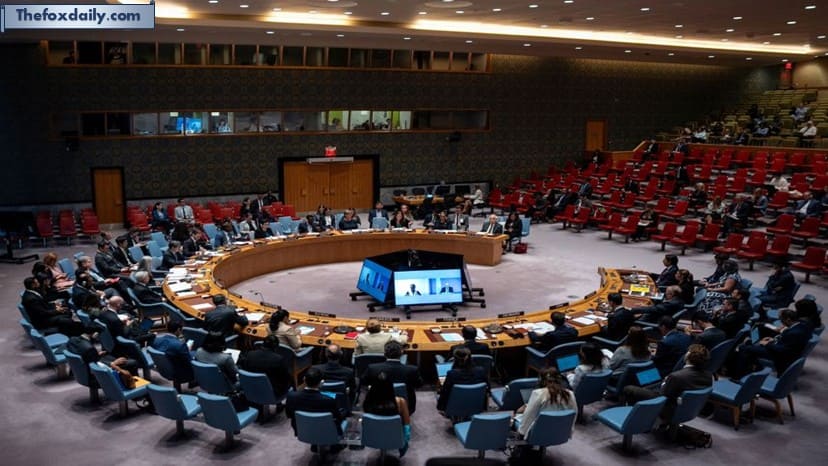
The Security Council is at the heart of the reform debate because its basic power structure remains closely linked to the geopolitical order that emerged after the Second World War.
The Council has 15 members: five permanent members and 10 members elected by the General Assembly for two-year terms. The permanent five china, France, Russia, the United Kingdom and the United States possess veto power over substantive decisions.
Rahman’s statement that “this is not 1945” goes directly to criticism of that structure.
The global balance of power has changed dramatically since the UN Charter was negotiated in San Francisco. Asia has become a major centre of economic and strategic power, Africa’s population and global importance have grown, and countries such as India, Brazil, Germany and Japan have argued that the Security Council should better reflect contemporary realities.
Yet changing the Council is extremely difficult because the permanent members hold powerful positions within the system and member states have sharply different views about who should gain permanent seats and what powers those new members should receive.
Why Security Council reform has taken decades
There is broad international support for discussing reform, but much less agreement over what the final structure should look like.
One major question is whether the Council should add new permanent members. Another concerns the number of additional elected seats and how regional representation should be allocated.
Then comes the most politically sensitive issue: the veto.
Several reform proposals envision an expanded Council that includes new permanent members without necessarily giving all of them the same veto rights enjoyed by the existing five. Other proposals support broader changes to veto arrangements altogether.
Because any amendment to the UN Charter requires a high level of international agreement, the process is not something the General Assembly president can simply impose.
That explains why Security Council reform has remained a diplomatic project for generations. Countries can agree that the Council should change while remaining deeply divided over precisely how it should change.
Rahman was elected after a closely contested vote
Rahman entered the role after winning a competitive election on June 2, 2026.
He secured 99 votes against 91 for Cyprus candidate Andreas Kakouris in a secret ballot, with 190 votes cast. The presidency rotated to the Asia-Pacific group for the 81st session, allowing Bangladesh to put forward Rahman as its candidate.
His victory gave Dhaka one of the UN’s most prominent diplomatic positions at a particularly important moment for the organisation.
Rahman’s year-long presidency will include major debates over international crises, institutional reform and the future direction of multilateral cooperation. It will also coincide with the process of choosing the next UN secretary-general, as António Guterres’ term ends on December 31, 2026.
That combination gives the new Assembly president an unusually consequential diplomatic agenda.
His theme focuses on restoring trust
The theme for the 81st session is “Restoring trust, managing transformation: a United Nations that delivers for all.”
The emphasis on trust is closely linked to Rahman’s reform agenda.
Public confidence in international organisations can weaken when major conflicts continue without resolution or when member states appear unable to agree on collective responses to humanitarian emergencies. The perception that powerful countries can block action through institutional mechanisms can further deepen frustration.
Trust also depends on performance. People are more likely to support international institutions when they can see evidence that they deliver humanitarian assistance, support development, help prevent conflict and coordinate responses to transnational crises.
Rahman therefore faces a two-part challenge: helping change the structures of the UN while also demonstrating that the organisation can continue delivering practical results.
UN80 is about reform beyond the Security Council
Rahman has said he will continue backing the UN80 Initiative launched by Secretary-General António Guterres.
UN80 is broader than Security Council reform. It focuses on making the wider UN system simpler, more efficient, more coherent and better able to carry out its mandates.
The initiative has examined issues such as overlapping responsibilities, fragmented structures, administrative costs, coordination among UN entities and the use of technology and shared services.
That distinction matters because not every criticism of the UN originates in the Security Council. Some problems stem from the way the broader organisation operates across development, humanitarian affairs, peace and security and other areas.
A more efficient UN could therefore improve its performance even if agreement on changing the Council itself remains elusive.
Why reforming the wider UN system matters
The United Nations is not a single institution operating from one office. It is a large system of programmes, agencies, funds and specialised organisations with different mandates, Governance structures and funding arrangements.
That complexity can create overlap. Two UN bodies may work on related issues while using separate administrative processes, reporting systems or procurement structures.
UN80 is intended in part to address those inefficiencies.
The objective is not simply to reduce costs. Better coordination can also make it easier for UN agencies to respond rapidly when multiple crises occur at once.
For Rahman, supporting UN80 allows him to pursue reforms that are more immediately achievable than a complete restructuring of the Security Council, while keeping the larger political question of representation on the agenda.
Rahman acknowledges that diplomacy will take time
The new General Assembly president is not promising instant solutions.
Rahman said he is not naive enough to believe that every international disagreement can be resolved quickly or amicably. Some disputes, he acknowledged, may remain unresolved for years.
His emphasis instead is on finding common ground wherever possible.
That approach is particularly important for Security Council reform because the issue involves competing national interests. Even countries that strongly support expansion can disagree over which states should receive permanent status.
By emphasizing dialogue, Rahman is positioning the General Assembly presidency as a convening role rather than a platform for forcing individual outcomes.
That may prove critical in negotiations where progress often comes through incremental agreements rather than sudden breakthroughs.
The General Assembly has a role even without controlling the Security Council
The General Assembly president does not have the authority to rewrite the Security Council’s structure unilaterally. However, the Assembly itself remains the central forum for discussing reform and building political support for changes.
There are 193 UN member states, and the General Assembly gives smaller and medium-sized countries a formal platform to advocate for greater representation.
Over the years, several groups have pushed different models for expansion. The G4 India, Brazil, Germany and Japan has supported permanent seats for the four countries alongside broader representation for Africa.
African states have also developed a common position seeking permanent and additional non-permanent seats for the continent.
The challenge is turning those broad demands into a model that can attract sufficiently wide support from all regions and overcome opposition from governments that fear losing influence.
India’s long-standing push for a permanent seat
India will be closely interested in the direction of the reform debate because New Delhi has sought a permanent place on an expanded Security Council for decades.
India argues that its population, Economy, diplomatic role and long participation in UN peacekeeping make a permanent seat appropriate.
Supporters of India’s candidacy also point to the changing distribution of global economic and political influence. A Security Council structure that gives permanent representation to major powers of the mid-20th century while excluding some of today’s largest states is increasingly difficult to defend as fully representative.
At the same time, India’s bid faces competition and geopolitical complications. Other countries have their own regional and global ambitions, while some governments remain uncomfortable with expanding permanent membership at all.
Rahman’s call for meaningful reform could therefore create diplomatic space for renewed discussion, even though it does not guarantee a breakthrough.
Africa’s representation is another central issue
Africa is widely cited as one of the strongest examples of the gap between the UN’s current structure and contemporary global realities.
The continent has 54 UN member states, yet none has a permanent seat on the Security Council.
The African Union has pushed for permanent representation and additional elected seats as part of its reform position, often framed through the Ezulwini Consensus.
A greater African role is supported by the argument that many of the conflicts and peacekeeping challenges considered by the Security Council directly affect African countries, while African states have historically contributed significant personnel to UN peacekeeping operations.
But even within Africa, questions about which countries would occupy permanent positions add another layer of complexity.
The veto is the hardest question of all
If the Security Council is expanded, the veto issue will likely determine how meaningful that expansion ultimately becomes.
The existing permanent five view the veto as a core part of the Council’s architecture. Reform advocates argue that creating permanent seats without equivalent decision-making authority could produce a second tier of permanent members.
There is also a broader question about whether the veto itself remains suited to the modern international system.
Supporters argue that it keeps the major powers inside the UN system and prevents decisions that they would never accept. Critics contend that it can paralyse the Council when those same powers have conflicting geopolitical interests.
Any meaningful reform proposal therefore needs to confront not only who sits at the table but also how much influence each member has once there.
The UN is facing a very different set of challenges
Rahman’s argument that the world has moved beyond 1945 reflects more than changes in national power.
The international system now faces problems that could not have been fully anticipated when the UN Charter was written. Climate change, Artificial Intelligence, cyber threats, pandemics, transnational Crime, global displacement and technology-driven economic disruption all require cooperation across borders.
These issues do not always fit neatly into the traditional framework of interstate conflict and military security.
That raises a broader question for the UN: can an institution created primarily to prevent another world war adapt sufficiently to manage problems that are increasingly global, technological and interconnected?
Rahman’s reform agenda suggests that the answer must be yes.
The General Assembly presidency carries another major responsibility
Rahman’s term also overlaps with the selection of the next UN secretary-general.
The current secretary-general, António Guterres, will leave office at the end of 2026 after two terms. The selection process involves the Security Council and General Assembly, with the Assembly president playing a key role in consultations with member states.
The process has already begun, and Rahman inherited responsibility for continuing the General Assembly side of the process from outgoing president Annalena Baerbock.
That puts him at the centre of another important test of UN legitimacy: whether member states can conduct a transparent and broadly credible selection process for the organisation’s top official.
The secretary-general transition and reform debate could therefore reinforce each other, particularly if governments use the leadership change to discuss what they expect from the UN in the coming decade.
Why trust is difficult to restore
Trust in the UN cannot be rebuilt through institutional language alone.
For countries affected by war, sanctions, humanitarian emergencies or political instability, the credibility of the organisation is often judged by what happens on the ground. If international decisions are repeatedly blocked or implementation fails, public confidence can decline regardless of how frequently leaders call for reform.
That makes Rahman’s focus on meaningful change important, but it also raises expectations.
A stronger UN must be able to show that reform improves outcomes rather than simply creating new offices, committees or procedures.
In other words, the ultimate test of reform will be performance.
What Rahman can realistically achieve during one year
Security Council reform has been discussed for decades, so expecting a complete restructuring during a single General Assembly presidency would be unrealistic.
Rahman can, however, help set the tone of negotiations, appoint facilitators for the intergovernmental negotiations on Security Council reform, encourage member states to engage with competing proposals and keep the issue near the centre of the Assembly’s agenda.
He can also support wider institutional reforms through UN80 and encourage cooperation between governments that may disagree on other issues.
The success of his presidency could therefore be measured less by whether the Council is completely redesigned and more by whether negotiations become more substantive and credible.
A crucial test for multilateralism
Khalilur Rahman takes charge of the 81st General Assembly at a moment when faith in multilateral institutions is under considerable pressure.
His core argument is straightforward: the world has changed since the UN was created, and the organisation must change with it.
That means addressing the long-standing imbalance in Security Council representation while also making the wider UN system more efficient and coherent. It also means recognizing that not every dispute can be solved quickly and that sustained dialogue remains essential.
The challenge is translating that philosophy into negotiations capable of producing real results.
Can the UN become “fit for the future”?
Rahman’s first message as UN General Assembly president places meaningful reform and the restoration of trust at the centre of his tenure.
His criticism of superficial change reflects the frustration of many countries that see an international system still shaped by the realities of 1945 rather than the geopolitical landscape of 2026.
The Security Council will remain the hardest part of that reform effort because questions of representation, permanent membership and veto power directly affect the interests of the world’s most influential states.
Yet the reform agenda is broader than the Council. Through his support for UN80, Rahman is also backing changes designed to make the wider UN system simpler, more coordinated and more effective.
The 81st session’s theme “Restoring trust, managing transformation: a United Nations that delivers for all” captures the challenge facing his presidency. The UN does not need to reproduce the world of 1945. It needs institutions capable of responding to the world that exists now.
Whether Rahman can help move that debate from declarations toward concrete agreement will determine how much his year at the helm of the General Assembly ultimately contributes to the future of the United Nations.
For breaking news and live news updates, like us on Facebook or follow us on Twitter and Instagram. Read more on Latest World on thefoxdaily.com.




COMMENTS 0