
India has strongly objected to a United Nations report describing Dawood Ibrahim-led D-Company as an “India-based” criminal group, arguing that the wording misrepresents the organisation’s history and the circumstances surrounding the gangster’s listing under international sanctions. India has also warned that factual inaccuracies in reports issued by UN special rapporteurs could undermine the credibility of the world body.
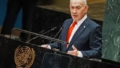
The objection was raised by Raghoo Puri, First Secretary at India’s Permanent Mission to the United Nations, during a discussion in the Third Committee of the UN General Assembly on Wednesday. He was responding to a report by Ben Saul, the UN Special Rapporteur on the Promotion and Protection of Human Rights and Fundamental Freedoms while Countering Terrorism.
According to news agency Press Trust of India (PTI), the report referred to Dawood Ibrahim as the leader of the “India-based D-Company” and noted his association with Al-Qaeda. India disputed that description, saying Ibrahim had left the country well before his 2003 listing under the UN Security Council’s sanctions regime.
India’s central argument was that describing D-Company as India-based without including the relevant background could create a misleading impression about the organisation and its leader. Puri said Ibrahim had been wanted in India in connection with terror attacks since 1993 and that the circumstances surrounding his departure and subsequent UN listing were important to understanding the case.
The exchange has brought renewed attention to the accuracy of UN reporting, the role of special rapporteurs and the international sanctions framework used to address terrorism-related threats.
Why Has India Objected to the UN Report?
India’s objection centres on a description in the report by Ben Saul, which referred to Dawood Ibrahim as the leader of an “India-based D-Company” in the context of his association with Al-Qaeda and the UN Security Council’s listing in 2003.
Speaking before the General Assembly’s Third Committee, Puri said the wording, when read without the wider context, presented a different picture from the one India said was supported by the relevant records.
He argued that the report should have included the circumstances surrounding Ibrahim’s departure from India and the reasons for his listing under the UN Security Council’s sanctions regime.
According to Puri, Ibrahim had fled India before the 2003 listing. He said the listing concerned Ibrahim’s association with Al-Qaeda and Osama bin Laden, rather than establishing that the organisation was based in India at the time described in the report.
India maintained that leaving out this context was a significant factual omission. Its response focused on the distinction between the historical origins or associations of a criminal organisation and the location from which its leader was operating when the international listing took place.
The supplied report does not include a response from Saul to India’s objections. Consequently, the exchange should be understood as India’s stated position on the report rather than as a documented resolution of the disagreement between the Indian delegation and the special rapporteur.
India Warns That Factual Inaccuracies Could Damage UN Credibility
Beyond the specific reference to D-Company, India used the discussion to raise concerns about what it described as recurring factual inaccuracies in reports prepared by UN special rapporteurs.
Puri said India’s delegation had previously expressed concern about reports containing factual errors being released without adequate accountability for those responsible. He argued that such a situation could leave member states confronting published findings that they believe are inaccurate.
According to PTI, Puri said the practice presented member states with a “fait accompli” and described it as particularly unfortunate for an organisation already facing challenges to its legitimacy.
The expression “fait accompli” refers to a situation in which something has already been done or established, leaving others to respond after the fact. In this context, India’s criticism was that disputed information could enter the public record before the affected country had an effective opportunity to correct it.
Puri also described the alleged inaccuracies concerning India as particularly serious. He argued that omitting important information from a report on terrorism and sanctions could affect the accuracy of the account and cause damage to the institution issuing it.
His remarks therefore addressed two related issues: the description of D-Company and Dawood Ibrahim, and the broader responsibility of UN mandate holders to ensure that their reports are factually accurate.
The criticism reflects India’s stated position in this discussion. It does not, by itself, establish that all UN special rapporteur reports contain similar errors or that the wider UN reporting system has accepted India’s assessment.
Who Is Dawood Ibrahim?
Dawood Ibrahim is a fugitive Indian underworld figure associated with D-Company, a criminal organisation that has been linked to organised crime and terrorism-related allegations.
India has long sought Ibrahim in connection with serious criminal cases, including matters related to the 1993 Mumbai bomb blasts. The Indian delegation referred to this history during its response to the UN report, arguing that the background was necessary to understand why Ibrahim was wanted in India.
In his statement, Puri said Ibrahim had left India well before his 2003 listing under the UN Security Council’s sanctions framework. India argued that the report’s description of D-Company as India-based failed to make that distinction clear.
The issue raised by India was not simply whether Ibrahim had historical links to India. It concerned how the report characterised the organisation and its leader in the context of the 2003 sanctions listing and the alleged association with Al-Qaeda.
India’s position was that the report should have clearly stated that Ibrahim had fled the country before the listing and that the UN listing referred to his association with Al-Qaeda and Osama bin Laden.
Claims about the location of fugitive individuals can be difficult to verify independently. In the supplied account, India referred to the country where Osama bin Laden was found and killed as the basis for its assertion about Ibrahim’s whereabouts. The material provided does not establish an independently verified current location for Ibrahim.
What Was the 2003 UN Security Council Listing?
The dispute refers to Dawood Ibrahim’s inclusion in the UN Security Council’s sanctions framework associated with Al-Qaeda.
The Security Council’s sanctions regime was established to impose measures against individuals and entities associated with designated terrorist organisations. Such listings can include restrictions intended to limit access to financial resources, travel and other forms of support, depending on the applicable measures.
India’s representative said the summary explaining the reasons for Ibrahim’s listing made clear the context of his association with Al-Qaeda. Puri argued that the special rapporteur’s report should have included that information rather than using a description that, in India’s view, could be misleading when read in isolation.
According to the statement reported by PTI, India maintained that Ibrahim was listed for his association with Al-Qaeda and Osama bin Laden after leaving India.
The distinction matters because a sanctions listing and a description of an organisation’s geographical base are not necessarily the same thing. A person or group may have historical connections to one country while being associated with activities or networks elsewhere.
India’s objection was that the report did not sufficiently explain this distinction. Its delegation called for the record to reflect the chronology of Ibrahim’s departure and subsequent listing.
India’s Reference to Pakistan and Osama bin Laden
During the discussion, Puri said Ibrahim remained a wanted criminal in India and referred to the UN listing’s account of his alleged location in the same country where Osama bin Laden was found and killed.
The statement was a clear reference to Pakistan, where bin Laden was killed in a US military raid in 2011.
Bin Laden, the founder of Al-Qaeda, was killed by US Navy SEALs during an operation in Abbottabad, Pakistan, in May 2011. The location of the raid has featured prominently in discussions about Al-Qaeda’s presence and the international campaign against the organisation.
India invoked this history to support its argument that the report should have explained the context of Ibrahim’s 2003 listing. Puri said the reference to D-Company as India-based, without the relevant background, painted a different picture from the one India believed the record supported.
However, the supplied material does not provide independent confirmation of Ibrahim’s current whereabouts. India’s statement should therefore be understood as the position it presented to the UN, rather than as independent verification of his present location.
What Did India Say About the Responsibilities of UN Special Rapporteurs?
UN special rapporteurs are independent experts appointed under the UN human rights system to examine and report on specific human rights themes or country situations. Their work can include gathering information, analysing concerns, communicating with governments and presenting findings to UN bodies.
In this case, Ben Saul was acting as the Special Rapporteur on the Promotion and Protection of Human Rights and Fundamental Freedoms while Countering Terrorism.
India’s criticism focused on the quality and accuracy of information in the report. Puri argued that special mandate holders should be accountable for factual inaccuracies and should ensure that relevant information is properly reflected in their findings.
The concern raised by India also highlights the challenges involved in preparing international reports on terrorism, criminal organisations and sanctions. Such reports may rely on information drawn from official records, submissions, public documents and other material. Disagreements can arise over how the information is interpreted, what context is included and whether descriptions are sufficiently precise.
For countries named in such reports, factual accuracy can be particularly important because published descriptions may influence public understanding of national security issues and international policy debates.
At the same time, special rapporteurs operate within a UN framework designed to provide independent scrutiny. Disagreement with a report does not automatically establish that its findings are incorrect. The specific claims and supporting records must be examined to assess the merits of a dispute.
In the present case, the supplied account records India’s objection but does not include a detailed response from Saul or an independent assessment resolving the disputed description.
What Is the UN General Assembly’s Third Committee?
The Third Committee is one of the main committees of the UN General Assembly. It deals primarily with social, humanitarian and human rights issues, including matters related to the protection of human rights and the work of relevant UN mechanisms.
Countries use discussions in the committee to present their views, respond to reports and raise concerns about international human rights and related policy questions.
India’s statement about the D-Company report was delivered during a Third Committee discussion on Wednesday, according to the supplied account. The intervention allowed India to place its objections on the record and challenge the wording used in the special rapporteur’s report.
Statements made during committee discussions can form part of the broader diplomatic record, but an objection by a member state does not automatically amend or withdraw a report. Any subsequent correction, clarification or formal response would need to be established through the relevant UN documentation or official communications.
Why the D-Company Dispute Matters for International Reporting
The disagreement highlights the importance of precision when international institutions describe criminal organisations, individuals and their alleged connections to terrorist networks.
Descriptions such as “India-based” can carry implications about where an organisation operates or is located. If a country disputes such wording, the disagreement may turn on whether the description refers to historical origins, operational activity, leadership location or the circumstances at a particular point in time.
India argued that the report’s description did not sufficiently distinguish between D-Company’s association with India and Ibrahim’s alleged departure from the country before his 2003 UN listing.
The case also illustrates why chronology matters in reports dealing with sanctions and terrorism. A person’s circumstances at the time of a listing may be different from those at an earlier or later stage. Including that context can help readers understand the basis and scope of a designation.
For the UN, disputes of this kind raise questions about the process for verifying information, responding to challenges and clarifying statements when governments identify alleged errors. The supplied material does not establish whether the report will be amended or whether the special rapporteur will issue a response.
Key Points in India’s Rebuttal
| Issue | India’s Position |
|---|---|
| Description of D-Company | India rejected the description of D-Company as an “India-based” criminal group in the report. |
| Dawood Ibrahim’s departure | India said Ibrahim had fled the country before his 2003 UN listing. |
| Reason for the UN listing | India said the listing concerned Ibrahim’s association with Al-Qaeda and Osama bin Laden. |
| Historical context | India argued that the report omitted important information about Ibrahim’s status as a wanted criminal and the circumstances surrounding his listing. |
| UN reporting standards | India warned that factual inaccuracies by special rapporteurs could damage the organisation’s credibility. |
| Response from the rapporteur | No response from Ben Saul was included in the supplied account. |
Frequently Asked Questions (FAQs)
1. Why has India rejected the UN report on D-Company?
India objected to the report’s description of Dawood Ibrahim-led D-Company as an “India-based” criminal group. India’s representative argued that the wording omitted important context about Ibrahim’s departure from India and his 2003 listing under the UN Security Council’s sanctions regime.
2. Who raised India’s objection at the United Nations?
Raghoo Puri, First Secretary at India’s Permanent Mission to the UN, raised the objection during a discussion in the Third Committee of the UN General Assembly.
3. Who authored the report India challenged?
The report was issued by Ben Saul, the UN Special Rapporteur on the Promotion and Protection of Human Rights and Fundamental Freedoms while Countering Terrorism.
4. What did India say about Dawood Ibrahim’s 2003 listing?
India said Ibrahim had left the country before his 2003 listing and argued that the report should have explained the listing’s connection to his association with Al-Qaeda and Osama bin Laden.
5. Why did India refer to Pakistan?
India’s representative referred to the country where Osama bin Laden was found and killed, pointing to Pakistan. Bin Laden was killed by US Navy SEALs during a raid in Abbottabad in 2011.
6. What is the UN Security Council’s 1267 sanctions regime?
It is a UN sanctions framework associated with Al-Qaeda and designated individuals and entities linked to the organisation. The applicable measures are intended to restrict resources and other forms of support available to those listed.
7. What did India say about the credibility of the UN?
India argued that reports containing factual inaccuracies, without adequate accountability, could undermine the UN’s credibility. Its representative called for greater care in presenting information about countries and individuals in special rapporteur reports.
8. Has the UN corrected the report?
The supplied account does not establish whether the report has been corrected or whether Ben Saul has responded to India’s objections.
Conclusion
India’s rejection of the UN report’s description of D-Company as an “India-based” criminal group centres on the chronology of Dawood Ibrahim’s departure from India and his subsequent listing under the UN Security Council’s sanctions regime.
Speaking in the General Assembly’s Third Committee, India’s representative argued that the report omitted important context about Ibrahim’s status as a wanted criminal and his association with Al-Qaeda and Osama bin Laden. India also used the discussion to raise broader concerns about factual accuracy and accountability in reports issued by UN special rapporteurs.
The disagreement underscores the importance of precise language and clear historical context in international reporting on terrorism and sanctions. Whether the report will be amended or receive a formal response remains unconfirmed in the supplied material.
For breaking news and live news updates, like us on Facebook or follow us on Twitter and Instagram. Read more on Latest World on thefoxdaily.com.





COMMENTS 0