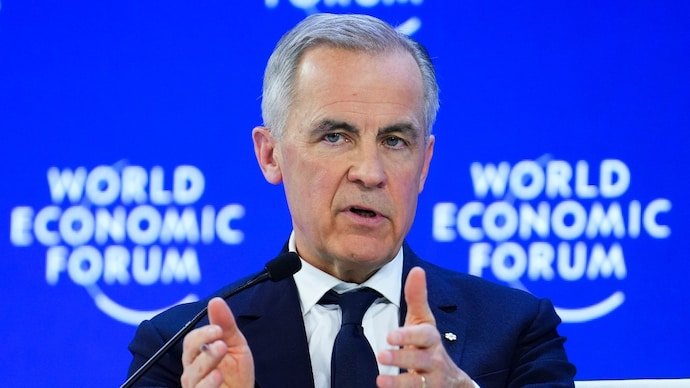
Canadian Prime Minister Mark Carney is stepping up efforts to strengthen Canada‘s economic relationship with Europe as Ottawa seeks to reduce its dependence on the United States amid tariffs, stalled trade negotiations and growing concerns over Washington’s approach to Canadian sovereignty.
Carney’s strategy does not amount to abandoning the United States, Canada’s largest trading partner. Instead, the Canadian government is seeking to build additional markets, investment relationships and strategic partnerships so that the country is less exposed to decisions made in Washington.
The effort has brought Europe to the centre of Canada’s economic and diplomatic agenda. Carney has backed the idea of Canada becoming the European Union‘s first associate member, while also pursuing closer bilateral ties with major European countries and exploring expanded trade with markets such as India.
The proposed relationship with the EU remains at an early stage, and Europe cannot immediately replace the scale of Canada’s existing US Trade. But Ottawa increasingly sees diversification as a long-term economic and strategic priority.
Carney backs closer Canada-EU relationship
Carney has argued that Canada needs greater economic flexibility at a time when access to the US market can no longer be treated as guaranteed.
Speaking about the possibility of Canada becoming an EU associate member, Carney stressed that the proposal would not mean Canada seeking full EU membership. Instead, the concept would provide another framework for closer economic and institutional cooperation while preserving Canada’s independent decision-making.
Carney said access to the United States now comes with a price, pointing to tariffs, investment commitments and demands that can affect domestic policy. His argument is that Canada should have enough economic strength and international partnerships to avoid becoming dependent on a single major power.
During a meeting with French President Emmanuel Macron in Saint-Pierre-et-Miquelon, the French territory located off the coast of Newfoundland, Carney described Canada and Europe as potential partners in building greater resilience.
He said Canada and Europe could develop an alliance that allows both sides to protect their ability to make independent choices while working from shared values.
Europe becomes central to Canada’s diversification strategy
Carney’s recent Travel schedule illustrated the scale of the diplomatic push. He met major investors in Toronto before travelling to Europe, where he engaged with senior European officials and addressed the European Parliament.
He also travelled to Britain for talks with its new prime minister before returning to France for his meeting with Macron. The schedule was followed by discussions with Norwegian Prime Minister Jonas Gahr Store.
The sequence of meetings reflects Ottawa’s effort to develop relationships across Europe rather than rely on a single alternative to the US market.
A Canada-EU summit scheduled for October 29 and 30 in Montreal is expected to provide another opportunity to discuss the proposed closer relationship. The summit could help determine how far the two sides are prepared to take economic and strategic cooperation.
Carney has framed the issue in broader terms, arguing that middle powers need to cooperate when larger countries have greater ability to impose economic pressure.
At the World Economic Forum in Davos earlier this year, he argued that middle powers should act together and warned that countries unable to participate in major economic decisions risk having those decisions imposed on them.
Trump warns against Canada’s closer European ties
Canada’s European outreach has taken place against a difficult relationship with US President Donald Trump.
Trump has imposed tariffs affecting Canadian goods and has repeatedly questioned the structure of the economic relationship between the two North American neighbours. He has also made controversial comments about Canada’s future and has publicly suggested closer integration with the United States.
Trump has indicated that Canada’s move toward closer European ties could be viewed as hostile and has threatened additional tariffs against Europe if he believes the relationship represents an unfriendly move.
That response illustrates the challenge facing Ottawa. Canada wants to diversify its economic relationships without turning diversification into a direct confrontation with Washington.
Carney’s government has therefore continued to describe the United States as an important economic partner while arguing that Canada can no longer afford to rely so heavily on one market.
Why Canada is so dependent on the United States
Canada’s economic dependence on the United States has developed over decades.
The 1989 Canada-US Free Trade Agreement significantly increased economic integration between the two countries. The North American Free Trade Agreement later expanded that integration across Canada, the United States and Mexico, with the current framework operating under the Canada-United States-Mexico Agreement.
Cross-border supply chains became deeply connected in sectors including automobiles, energy, manufacturing, agriculture and industrial goods.
Roughly 70 per cent of Canada’s exports have been directed to the United States, illustrating the scale of the challenge facing any diversification strategy.
For Canadian businesses, the US market provides advantages that cannot easily be replicated elsewhere. Geography, established infrastructure, integrated supply chains and decades of commercial relationships make the United States uniquely important to Canada’s economy.
That reality means that reducing dependence cannot happen quickly. Even if Canada dramatically increases trade with Europe, India and other markets, the United States is likely to remain a central economic partner for years to come.
Canada walked away from stalled US trade talks
Carney’s diversification push accelerated after Canada stepped back from trade negotiations with Washington in August.
The Canadian prime minister said Ottawa could not accept certain terms being discussed and argued that leaving the negotiating table was the right decision.
Carney has acknowledged that the previous model of deep dependence on the United States provided significant economic benefits but also created vulnerabilities.
His argument is that Canada effectively had an easy and highly integrated trading relationship with its southern neighbour, but that arrangement left the country exposed when US policy changed.
The new strategy is therefore not based on ending economic ties with America. It is based on expanding Canada’s options so that American trade policy has less ability to determine Canada’s economic choices.
Ottawa wants to double non-US trade
Carney’s government has set an ambitious objective of significantly increasing Canada’s trade with countries outside the United States over the next decade.
Dominic Barton, Carney’s choice to chair Invest in Canada and a former global head of McKinsey & Co., has emphasized that diversification should not be interpreted as turning away from American businesses.
Instead, Barton has argued that Canada needs to become much more ambitious in developing non-US trade and investment relationships.
Barton, who previously served as Canada’s ambassador to China, has also argued that Canada has historically been too inward-looking. He has described the current pressure from Washington as a jolt that could encourage Canadian companies to expand internationally.
Carney has also expressed the goal of securing a free-trade agreement with India by the end of the year. He has highlighted Canada’s potential access to India’s enormous consumer market as one of the opportunities available through broader diversification.
The strategy reflects a broader shift in Ottawa’s thinking: rather than treating international trade primarily as a relationship with the United States, Canada wants to build a wider network of economic partnerships.
Canada wants to sell itself as a stable investment destination
Diversification is not only about exports. Carney’s government is also trying to attract international investment by presenting Canada as a stable alternative at a time when companies face greater uncertainty over US trade policy.
The government’s message to investors emphasizes Canada’s political and legal institutions, predictable regulatory environment and access to major international markets.
Finance Minister Francois-Philippe Champagne has described trust as an increasingly valuable economic asset, arguing that companies and investors are paying greater attention to the reliability of the countries in which they operate.
That argument forms part of Canada’s attempt to turn the current trade uncertainty into an opportunity. If companies become less comfortable concentrating production or investment in one market, Ottawa hopes some of that activity could move toward Canada.
Barton has similarly argued that the pressure from Washington could ultimately encourage Canada to become more internationally competitive and develop companies with stronger global footprints.
Europe cannot quickly replace the US market
There are clear limits to Canada’s strategy.
The European Union has a huge economy and represents an attractive market for Canadian exporters, but it cannot quickly replicate the scale and integration of the US market.
Canada’s geographic proximity to the United States has helped create supply chains that are difficult to reproduce elsewhere. An automobile component, for example, can cross the Canada-US border multiple times during production, while energy infrastructure is also deeply interconnected.
Replacing those relationships would require substantial investment in infrastructure, logistics, manufacturing capacity and commercial networks.
The proposed EU associate membership also faces uncertainty because there is currently no established EU framework that automatically provides such a status for Canada. Any new arrangement would require negotiations and agreement among the relevant parties.
For those reasons, diversification should be understood as a long-term strategy rather than an immediate substitute for US trade.
Stephen Harper says reducing US dependence is necessary
The argument for diversification has also attracted support from outside Carney’s Liberal government.
Former Conservative prime minister Stephen Harper, traditionally a strong supporter of close Canada-US relations, has said Ottawa had little choice but to pursue a strategy that reduces Canada’s economic reliance on the United States.
Harper has described the relationship with the United States as one of Canada’s most valuable assets, while arguing that the current US administration’s approach has changed the circumstances under which that relationship operates.
His position illustrates how the debate has moved beyond traditional party divisions. The question is no longer simply whether Canada should maintain close ties with America. Instead, it increasingly concerns how much dependence on the US is sustainable when Washington is willing to use tariffs and economic pressure as negotiating tools.
For Harper, maintaining Canadian sovereignty requires reducing that vulnerability even though doing so carries significant economic costs and practical challenges.
Canada faces a difficult balancing act
Carney’s strategy ultimately requires Canada to pursue two objectives at the same time: preserve its vital economic relationship with the United States while building alternatives that reduce its vulnerability to US policy.
That balancing act will be particularly difficult if Washington continues to use tariffs as leverage. Canadian exporters still need access to the US market, while American companies remain deeply connected to Canadian suppliers and customers.
At the same time, Canada’s European partners have their own economic and political priorities. Europe may welcome closer ties with Canada, but European countries are unlikely to assume the entire burden of replacing Canada’s US trade.
Canada will therefore need to demonstrate that diversification can produce tangible results rather than simply becoming a diplomatic slogan.
A longer-term shift in Canada’s economic strategy
Carney’s push toward Europe represents a broader reassessment of Canada’s economic position in the world.
For decades, Canada’s proximity to the United States made deep integration an obvious economic choice. The benefits were substantial, but the result was also an unusually concentrated dependence on one trading partner.
The current dispute with Washington has exposed that vulnerability and encouraged Ottawa to pursue a wider international network involving Europe, India and other markets.
The strategy will not eliminate Canada’s dependence on the United States in the short term. Nor is Ottawa suggesting that the two countries should stop trading or investing in each other.
Instead, Carney is seeking to create more choices for Canadian businesses and policymakers. The proposed Canada-EU relationship, expanded trade with India and stronger links with other middle powers are all pieces of that larger effort.
Whether the strategy succeeds will depend on how quickly Canada can build new markets, attract investment and expand its global companies while maintaining the economic relationship that remains central to its prosperity.
For now, Carney’s European diplomacy signals a clear shift in Ottawa’s approach: Canada is no longer willing to assume that its relationship with the United States will always provide predictable access to the world’s largest economy. As trade talks remain suspended and tariff tensions continue, the government is betting that greater international diversification can provide Canada with more resilience, more bargaining power and greater freedom to make its own economic choices.
With PTI Inputs
For breaking news and live news updates, like us on Facebook or follow us on Twitter and Instagram. Read more on Latest World on thefoxdaily.com.






COMMENTS 0