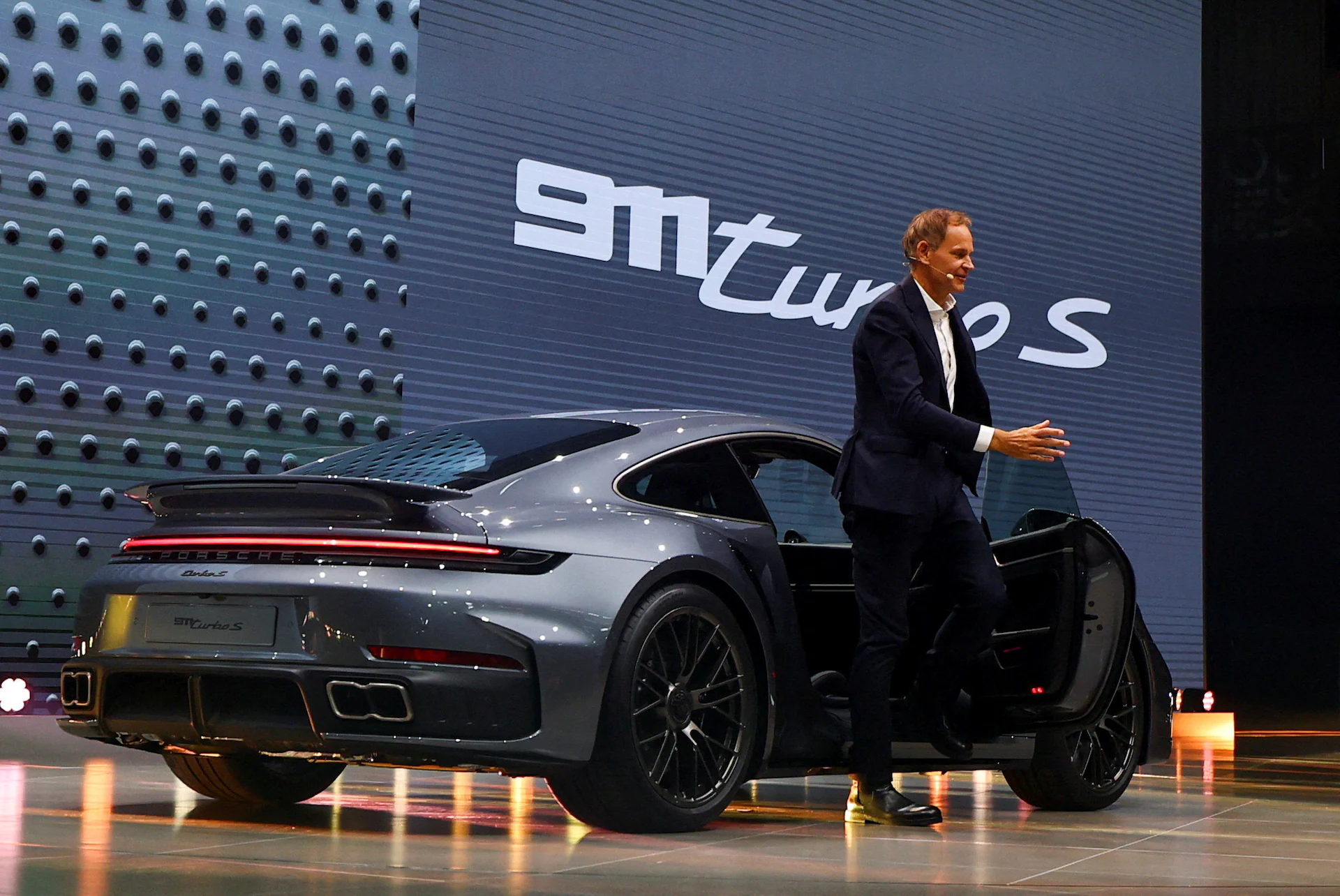
Volkswagen CEO Oliver Blume has called on European policymakers to establish the right conditions for the German automaker to complete its restructuring successfully, arguing that businesses and governments must share responsibility for protecting Europe’s industrial competitiveness. His remarks come as the European Union considers measures to support local manufacturers facing growing competition from lower-cost Chinese Electric Vehicles.
Speaking at an event titled “For Europe” ahead of the Paris Motor Show on Sunday, October 11, Blume described Volkswagen’s restructuring as the biggest transformation programme in the company’s history. The automaker is working to simplify its operations, strengthen its product lineup, and improve competitiveness amid falling domestic sales and intensifying pressure from international rivals.
Blume also backed proposed “Made in Europe” rules designed to encourage local manufacturing and welcomed an agreement between the European Union and China that could reduce Chinese imports of plug-in hybrid vehicles into the bloc by more than half.
Volkswagen CEO Calls for Shared Responsibility Between Business and Government
Blume said Volkswagen was working to reduce complexity across its extensive portfolio of brands, which includes mass-market Volkswagen vehicles and premium marques such as Porsche and Lamborghini.
However, he argued that the company’s transformation would require more than internal cost-cutting measures. European businesses must become more competitive, while policymakers need to establish conditions that support investment, manufacturing, and employment.
“This is a shared responsibility: The business community must become more competitive and create attractive opportunities, while policymakers must establish the right framework conditions,” Blume said.
The Volkswagen chief also stressed that companies selling products in Europe should contribute to the region’s economy through local investment and job creation.
“Those who sell here should compete under comparable conditions and create jobs and value here in Europe too,” Blume said at the event, which was attended by France’s industry minister, Sebastien Martin.
His comments reflect concerns across Europe’s automotive sector about production costs, changing consumer demand, and competition from manufacturers offering electric vehicles at increasingly competitive prices.
Volkswagen Supports ‘Made in Europe’ Manufacturing Rules
Blume expressed support for proposed European rules intended to encourage companies to manufacture more vehicles and components within the region. Such measures could help strengthen local supply chains, support employment, and encourage investment in European industrial capacity.
The proposed “Made in Europe” approach comes as European manufacturers face growing pressure from Chinese competitors that have expanded their presence in the electric vehicle market.
For Volkswagen, incentives for local manufacturing could help create a more predictable environment for investment as the company reorganizes its production network and develops new vehicle platforms.
However, the effectiveness of these policies will depend on their final design and implementation. European policymakers must also consider the potential impact on consumer prices, international trade relationships, and the availability of affordable electric vehicles.
EU-China Agreement Could Reduce Plug-In Hybrid Imports
Blume welcomed a deal between the European Union and China that could cut Chinese imports of plug-in hybrid vehicles into the bloc by more than half. He described the agreement as part of efforts to create more comparable competitive conditions for manufacturers operating in Europe.
The discussions come amid broader concerns about the impact of Chinese vehicle exports on European automakers. Chinese manufacturers have been expanding into international markets as competition and changing conditions in their domestic market create additional pressure to find customers abroad.
European industry leaders argue that local manufacturers need conditions that allow them to compete without facing unsustainable pricing pressure. However, any measures targeting imports could also affect trade relations between Brussels and Beijing.
The EU therefore faces the challenge of supporting its Automotive Industry while balancing consumer interests and the risks associated with trade retaliation.
Volkswagen Faces Pressure From China’s Electric Vehicle Competition
The Paris Motor Show comes at a critical moment for Volkswagen as the company attempts to strengthen its position in the electric vehicle market. Chinese automakers are expanding across Europe, competing through aggressive pricing and increasingly broad vehicle lineups.
Manufacturers such as BYD and Leapmotor have been building a presence in the European market, increasing pressure on established brands to offer competitive electric vehicles.
Volkswagen remains Europe’s top-selling automaker and has maintained a market share of roughly one-quarter over the past decade. Nevertheless, its established position does not shield it from the challenges created by changing consumer preferences and intensified competition.
The company must balance its transition to electric vehicles with the need to control production costs, maintain profitability, and develop products that appeal to customers across different price categories.
Blume is among German automotive industry leaders calling for a more protective approach from the European Union as concerns grow that the price competition seen in China is spreading to Europe.
Job Cuts and Potential Plant Closures Add to Volkswagen’s Challenges
Volkswagen is pursuing a major restructuring programme as it attempts to reduce costs and simplify its operations. The company is working to implement sweeping job cuts and has raised the possibility of closing as many as four plants in Germany.
These measures have increased pressure on Blume to demonstrate that the turnaround strategy can improve the company’s long-term performance rather than simply reduce expenses.
Investors are looking for progress in product development and software, both of which have become increasingly important as vehicles incorporate more digital features and advanced technologies.
The restructuring also has implications for workers, suppliers, and communities that depend on Volkswagen’s manufacturing operations. Any plant closures or substantial workforce reductions could have consequences beyond the company itself.
Blume’s appeal to policymakers highlights the connection between Volkswagen’s internal changes and the broader economic environment in which European automakers operate.
Affordable Electric Vehicles Take Centre Stage at Paris Motor Show
Volkswagen plans to showcase a range of affordable electric vehicles from its volume brands at the Paris Motor Show. The lineup includes models from Volkswagen, Spain’s Cupra, and the Czech Republic’s Skoda.
The focus on more accessible electric vehicles reflects the industry’s need to attract customers who remain sensitive to purchase prices and ownership costs.
As Chinese manufacturers expand their European presence, established automakers face pressure to develop vehicles that combine competitive pricing with practical features, reliable technology, and attractive designs.
Volkswagen will also premiere its new ID. Tiguan electric SUV, adding to its efforts to refresh its electric vehicle portfolio.
The success of these models could help determine whether the company can defend its market position while transitioning towards a more electrified product range.
China’s Domestic Auto Market Creates Export Pressure
Competition in China’s domestic automotive market has become an important factor shaping the global industry. As manufacturers face pressure at home, exporting vehicles to other regions offers an opportunity to reach new customers and maintain sales volumes.
Gregor Williams, an analyst at Rhodium Group, said the automotive industry had become increasingly concerned about the competitive challenge emerging from China.
He noted that the downturn in China’s domestic auto market was creating additional pressure to export vehicles.
“It’s one thing to lose revenues,” Williams said. “But if China also manages to export the price war, the European market could become very unprofitable.”
The concern is that aggressive pricing could force European manufacturers to lower prices to remain competitive, potentially reducing the profit margins available to fund research, development, and new production facilities.
For Volkswagen and other European automakers, maintaining profitability while investing in electric vehicle technology is becoming increasingly difficult as competition intensifies.
Why Europe’s Automotive Industry Wants Stronger Policy Support
Volkswagen’s appeal to European policymakers reflects a wider debate about how the region should respond to the growth of China’s automotive industry.
European manufacturers are seeking policies that encourage local production and support industrial investment. Measures under consideration include incentives for European manufacturing and rules designed to strengthen regional supply chains.
Supporters argue that these approaches could help protect jobs and preserve Europe’s industrial capabilities. At the same time, policymakers must consider the possibility that trade restrictions could lead to retaliation or raise costs for consumers.
European automakers also face pressure to improve their own competitiveness through innovation, efficient manufacturing, and more attractive products. Policy support cannot replace the need to respond to changing consumer expectations and technological developments.
For Volkswagen, the challenge is to combine a more efficient business structure with stronger electric vehicle offerings while navigating an uncertain trade environment.
Outlook: Volkswagen’s Transformation Depends on Competitiveness and EU Policy
Oliver Blume’s remarks highlight the difficult position facing Volkswagen as it attempts to restructure its operations and defend its market share against increasingly competitive Chinese automakers.
The company’s plans to launch affordable electric vehicles, streamline its brand portfolio, and improve software capabilities will be central to its efforts to strengthen its long-term position.
Meanwhile, European Union decisions on local manufacturing incentives and trade policy could influence the competitive conditions facing Volkswagen and its rivals in the coming years.
Blume’s message is that the transformation of Europe’s automotive industry requires action from both companies and governments. Automakers must improve efficiency and develop attractive products, while policymakers must establish conditions that support competitiveness and investment.
As the global electric vehicle market continues to evolve, Volkswagen’s restructuring and the EU’s response to Chinese competition will remain important issues for manufacturers, workers, investors, and consumers across Europe.
For breaking news and live news updates, like us on Facebook or follow us on Twitter and Instagram. Read more on Latest Business on thefoxdaily.com.






COMMENTS 0