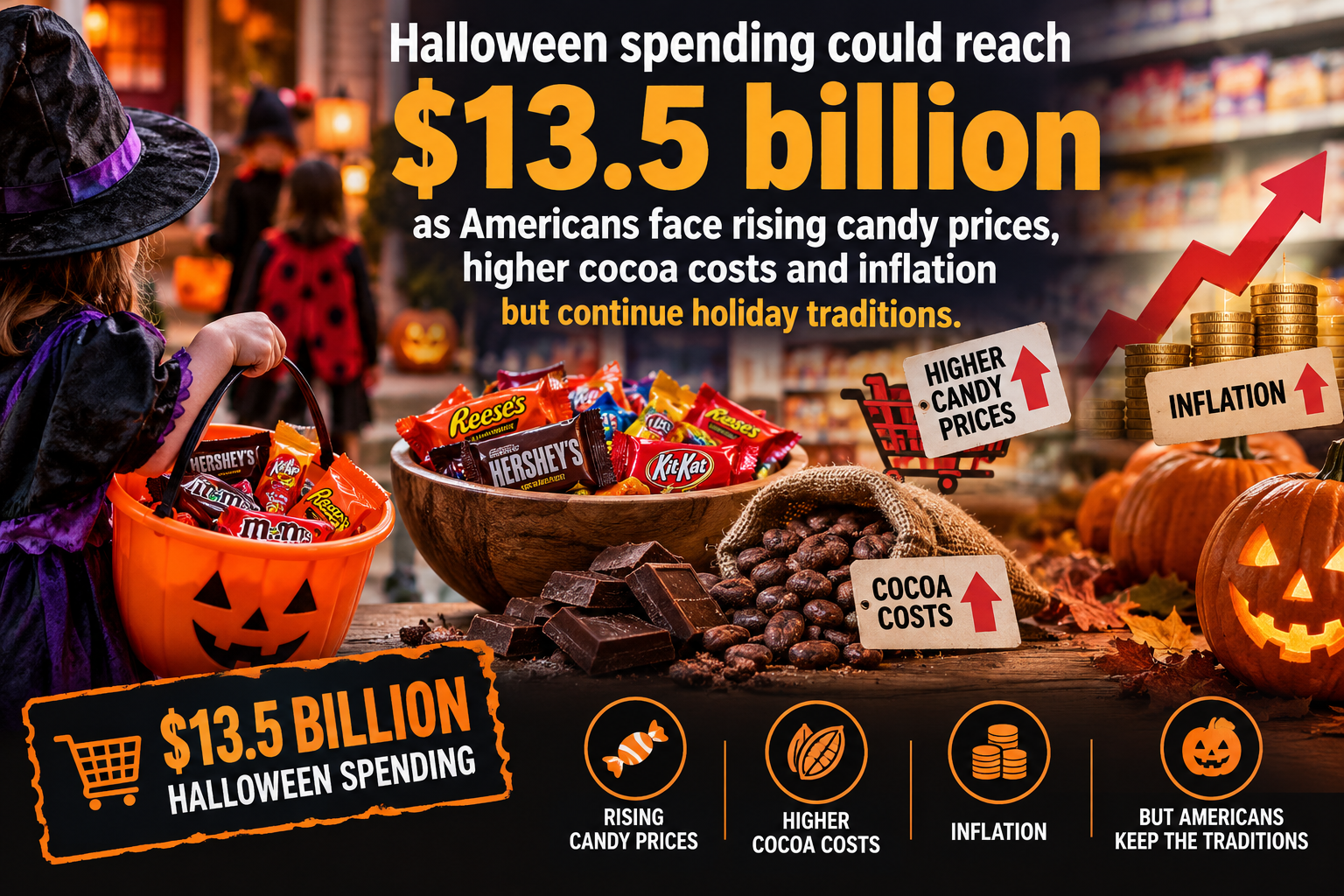
Americans are preparing to spend billions of dollars on Halloween candy this year despite rising living costs, higher grocery bills, and growing concerns about Inflation. While many households are cutting back on everyday expenses, Halloween treats remain a small indulgence that consumers are reluctant to abandon.
Average prices for chewing gum and candy have increased 8.1% over the past year, according to the U.S. Bureau of Labor Statistics. Chocolate prices have climbed even faster in some categories, putting additional pressure on shoppers who want to maintain Halloween traditions without stretching their budgets.
Despite these financial challenges, the National Retail Federation projects that Halloween spending will reach $13.5 billion this season, with 96% of Halloween shoppers expecting to purchase sweets. The figures highlight how Americans continue to prioritize small pleasures even as broader economic pressures influence their spending decisions.
Rising Candy Prices Put Pressure on Halloween Budgets
Higher prices for groceries, gasoline, utilities, and other essentials are forcing many Americans to reconsider their spending habits. Some consumers are walking instead of driving, bringing lunch from home, and finding other ways to reduce everyday expenses.
Lakisha Reardon, a legal assistant, said she has noticed a significant increase in her electricity bill this year, adding approximately $150 to her monthly expenses.
Although she is trying to save money in several areas, Halloween candy is one expense she is unwilling to eliminate.
Her experience reflects a broader consumer trend: households may reduce spending on larger purchases and everyday conveniences while continuing to make room for affordable celebrations and seasonal traditions.
Chocolate Prices Rise as Cocoa Costs Continue to Affect Shoppers
Chocolate has become one of the more expensive items in Halloween shopping baskets. According to PwC, the average price of non-chocolate candy products reached $3.31 this year, an increase of 1.8% compared with the previous year.
Halloween chocolate prices have experienced a much sharper increase. The average price of a chocolate package reached $5.67, representing a 15.5% rise, according to the firm’s figures.
Industry experts attribute much of the pressure on chocolate prices to the sharp increase in global cocoa costs over the past two years. Extreme weather in major cocoa-producing countries, particularly Côte d’Ivoire and Ghana, disrupted supplies and sent prices soaring.
According to International Monetary Fund data cited in the report, global cocoa prices quadrupled between January 2023 and January 2025.
Ali Furman, PwC’s Consumer Markets Industry leader, explained that chocolate manufacturers often purchase cocoa months or even years before their products reach store shelves. As a result, consumers can continue to face higher prices even after the underlying commodity becomes cheaper.
“Cocoa prices have since fallen by about half, but lower costs take time to reach the shelf and won’t show up on shelves this Halloween season,” Furman said.
This delay means the recent decline in cocoa prices may not provide immediate relief for shoppers buying chocolate for Halloween.
Different Research Firms Report Varying Chocolate Price Increases
Although PwC’s figures point to a significant increase in Halloween chocolate prices, research from market intelligence firm NIQ indicates a more moderate rise in some categories.
NIQ reported that chocolate prices overall were up 9.4% from a year earlier, while prices for Halloween-specific chocolate had increased by 1.7%.
The difference highlights how price estimates can vary depending on the products measured, the period examined, and the methodology used by each research firm.
Nevertheless, consumers are still facing higher costs across many grocery categories, making price comparisons and careful budgeting increasingly important during the holiday shopping season.
US Tariffs Add to Candy Manufacturers’ Costs
Tariffs introduced by the United States this year have added another source of pressure for food manufacturers and retailers. In July, the U.S. imposed tariffs ranging from 10% to 12.5% on 60 trading partners, according to the report.
Because cocoa and other ingredients used in chocolate production are sourced internationally, import duties can increase costs for businesses that rely on overseas supplies.
Chris Costagli, head of food and non-alcoholic beverage insights at NIQ, said tariffs have added to the costs manufacturers are experiencing.
“Chocolate comes from elsewhere, so tariffs being added onto it have certainly increased costs that manufacturers are feeling as well,” Costagli said.
Manufacturers may respond to higher production costs through price increases, changes in packaging sizes, or adjustments to product offerings. For shoppers, these pressures can make traditional Halloween purchases more expensive even when they try to stick to familiar brands.
Americans Continue to Buy Halloween Candy Despite Inflation
Even with higher prices, many consumers say the enjoyment of Halloween makes candy worth the expense. For families and individuals, handing out sweets is not simply another shopping decision; it is a way to preserve childhood memories and participate in a community tradition.
Abby Mynatt, a 21-year-old college student living in Knoxville, Tennessee, typically spends around $50 on Halloween candy. She expects to spend somewhat more this year despite feeling additional pressure on her budget.
Mynatt recalled how exciting it was to receive Reese’s Cups as a child and said she wants to offer a similar experience to other children.
“But I still think that certain things, even just little pleasures, are still worth it,” Mynatt said, describing her approach to spending despite financial pressures.
Her decision illustrates why seasonal treats can remain a priority even when consumers are cutting costs elsewhere. The emotional value of familiar traditions may outweigh the financial benefit of eliminating a relatively small purchase.
Halloween Spending Expected to Reach $13.5 Billion
The National Retail Federation expects total Halloween spending in the United States to reach $13.5 billion this season. The projection suggests that consumers are continuing to participate in the holiday despite concerns about the cost of living.
With 96% of Halloween shoppers expecting to buy sweets, candy remains a central part of the holiday economy. Retailers are likely to benefit from continued demand for chocolates, gummies, chewing gum, and other seasonal treats.
However, higher prices do not necessarily mean consumers are buying larger quantities. Some households may spend more to purchase the same amount of candy, while others may switch to less expensive products or reduce the number of treats they distribute.
For retailers and manufacturers, the challenge is to maintain consumer interest while balancing higher costs and shoppers’ growing sensitivity to prices.
Consumers Turn to Small Luxuries Amid Economic Uncertainty
Halloween candy purchases are part of a wider pattern in which Americans continue spending on relatively small pleasures despite worries about inflation and the broader economy.
Some consumers are limiting major purchases while still buying items such as makeup, movie tickets, specialty coffee, and seasonal snacks. These purchases offer moments of enjoyment without necessarily requiring the financial commitment associated with a car, vacation, or home.
However, the economic pressure remains significant. Consumer prices increased 3.4% over the year, according to the Bureau of Labor Statistics figures cited in the report, while wages rose approximately 3% over the same period.
When pay increases fail to keep pace with the cost of everyday necessities, households have less room in their budgets for discretionary purchases. As a result, even relatively inexpensive treats can require careful consideration.
For many consumers, the strategy is not to eliminate every nonessential expense but to choose which purchases provide the greatest personal value.
Some Shoppers Plan to Cut Costs on Halloween Candy
Not every consumer intends to spend more this Halloween. Leonard Smith, a 36-year-old Delaware resident, plans to buy candy but may reduce his spending to preserve money for other expenses.
Smith has developed a cost-saving strategy by purchasing candy after Halloween, when retailers often discount remaining seasonal products.
Buying treats after the holiday may help shoppers secure lower prices, although the approach is less practical for people who need candy ready for trick-or-treaters on October 31.
Other consumers are considering switching to less expensive varieties rather than abandoning the tradition entirely. Comparing package prices, looking for promotions, and setting a spending limit can help households manage costs while continuing to participate in Halloween celebrations.
Why Halloween Traditions Still Matter to Consumers
For some shoppers, handing out candy is about creating a welcoming experience for children in their neighborhoods. Ari Monahan, a 30-year-old nanny in New York City, said she may choose less expensive candy this year but still wants to offer children a memorable Halloween visit.
“I want to be the good house,” Monahan said, explaining that she wants neighborhood children to receive a little treat when they visit.
Monahan also buys small treats for herself, including dark chocolate, coffee, and pumpkin spice products. She said these purchases provide moments of happiness during a period of economic uncertainty.
At the same time, she is concerned about rising living costs and whether she will eventually be able to afford a home. High home prices and elevated mortgage rates have made homeownership more difficult for many prospective buyers.
These competing priorities capture the tension facing consumers: they want to save for major financial goals while preserving small activities that make everyday life enjoyable.
Housing Costs and Inflation Deepen Economic Concerns
Beyond the cost of Halloween candy, consumers are confronting broader financial challenges involving housing, energy, groceries, and transportation.
According to the report, the average rate on a 30-year fixed mortgage topped 7.6% earlier in October, reaching a nearly three-year high. Combined with home prices near record levels, elevated borrowing costs have made purchasing a home more expensive for many Americans.
These pressures can influence how households approach even modest discretionary purchases. Money spent on candy or seasonal treats is money that cannot be used for savings, housing expenses, debt payments, or other necessities.
As a result, consumers are increasingly making trade-offs between long-term financial security and smaller purchases that provide immediate enjoyment.
Halloween Candy Reflects the Balance Between Saving and Spending
Rising candy prices offer a snapshot of the broader challenges facing American consumers in 2026. Higher cocoa costs, tariffs, and persistent inflation have made some seasonal products more expensive, while pressure on household budgets has encouraged shoppers to seek savings wherever possible.
Yet Halloween remains an occasion many Americans are unwilling to give up. Some are spending more to preserve familiar traditions, while others are choosing cheaper products, limiting quantities, or waiting for post-holiday discounts.
The projected $13.5 billion in Halloween spending underscores the continued appeal of seasonal celebrations, even as consumers become more cautious about their finances.
Ultimately, Halloween candy represents more than a routine grocery purchase for many households. It is a small tradition that offers enjoyment and a sense of normalcy during a period of economic uncertainty. For shoppers balancing rising costs with everyday pleasures, the challenge is finding a way to celebrate without putting additional strain on their budgets.
For breaking news and live news updates, like us on Facebook or follow us on Twitter and Instagram. Read more on Latest Business on thefoxdaily.com.






COMMENTS 0